
The Right Way to Use a Pre-Loaded Spoon with Dawn Winkelmann, MS, CCC-SLP
- The exact steps you can take during the first few days of baby-led weaning to help promote your baby’s ability to independently feed from his or her first bites
- Why most of the baby spoons on the market are designed for PARENTS to feed babies and why she developed the ezpz Tiny Spoon that lets BABIES be in charge of self-feeding
- How your baby learns to dip and then scoop and then eat independently - Dawn’s walking us through the various spoon-related feeding milestones in infant feeding
LISTEN TO THIS EPISODE
Episode Description
Can your baby learn to use a spoon and still do baby-led weaning? You bet…and it starts with the pre-loaded spoon technique. In this episode, speech-language pathologist and feeding expert Dawn Winkelmann, MS, CCC-SLP, breaks down how to safely introduce spoons and purees while ensuring your baby is the one leading the way. Dawn shares her 3-step method for pre-loading spoons, explains the developmental milestones behind spoon use, plus a rundown of what’s wrong with most baby spoons and how to get your baby on board with self-feeding by spoon.
About the Guest
- Dawn Winkelmann is a Speech-Language Pathologist and Pediatric Feeding Therapist specializing in infant swallowing.
- Through her private practice, Ms. Dawn provides in-home feeding therapy and online coaching, helping parents start solids safely with the baby-led weaning (BLW) approach. She also teaches techniques to help with picky eating, tube feeding, children with special needs (Autism, Down syndrome, etc.), as well as medically compromised kiddos who struggle to eat a variety of foods + liquids.
- Ms. Dawn is the inventor of several feeding products, including the award-winning ezpz Tiny Cup & Tiny Spoon (for infants) as well as the Mini Cup & Straw-Training System, Mini Utensils, and Mini Feeding Set (for toddlers), available for purchase at Nordstrom’s, Bed Bath & Beyond, Target, and Amazon.
Links from this Episode
- Check out Dawn’s website at msdawnslp.com and follow her on Instagram @msdawnslp
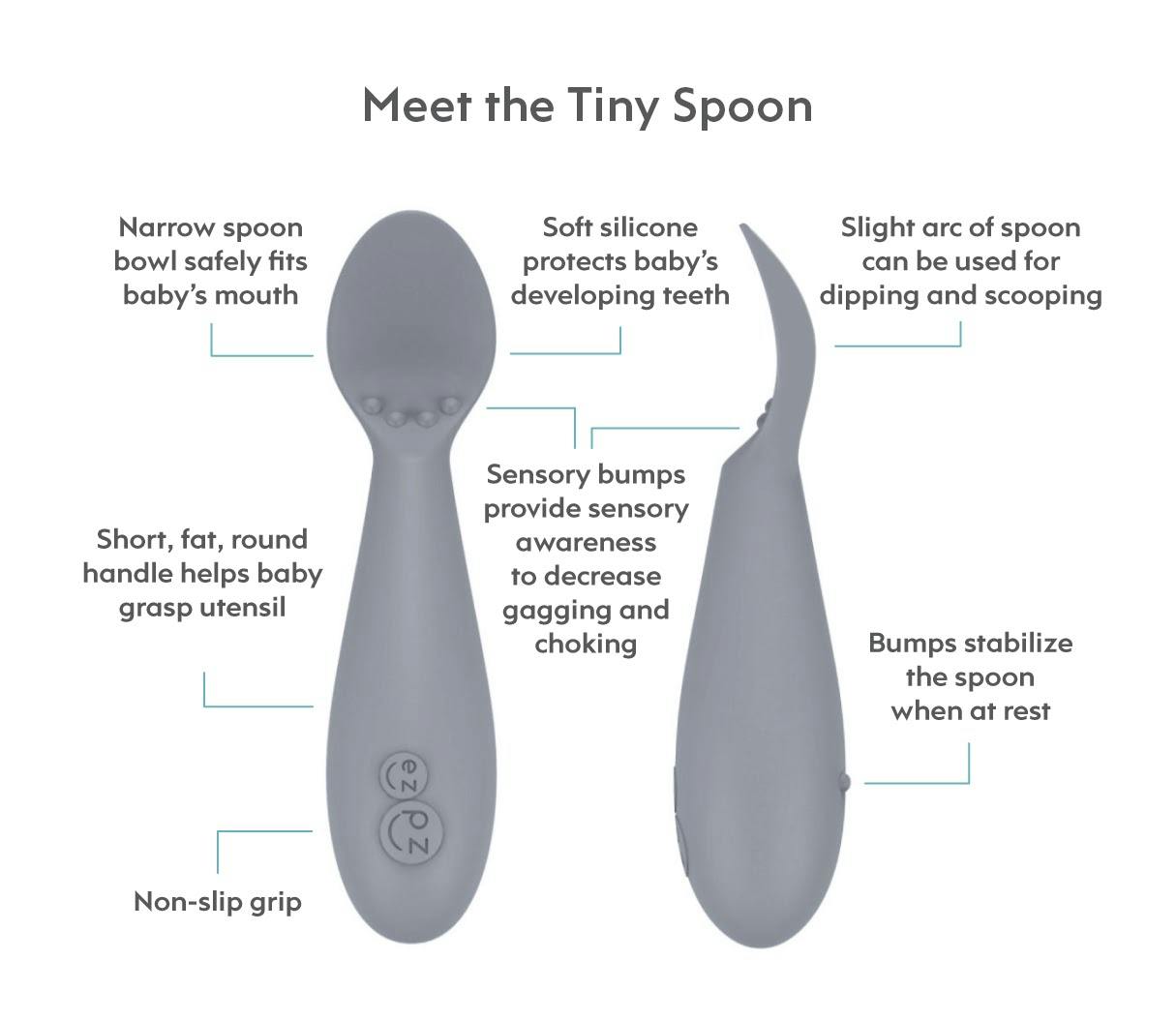
- Check out the ezpz Tiny Spoons and get 15% off with the code BABYLED here (this is an affiliate link)
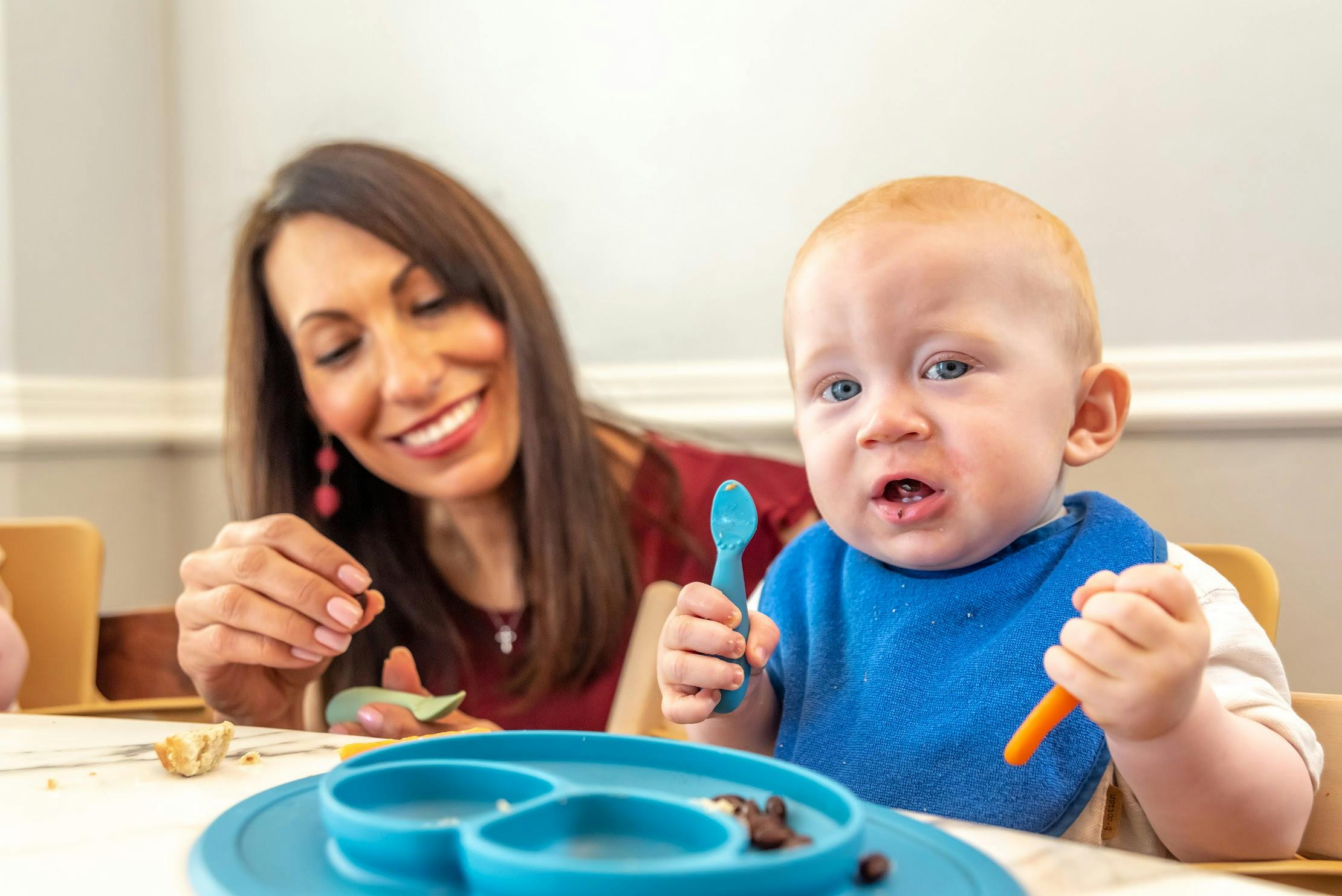
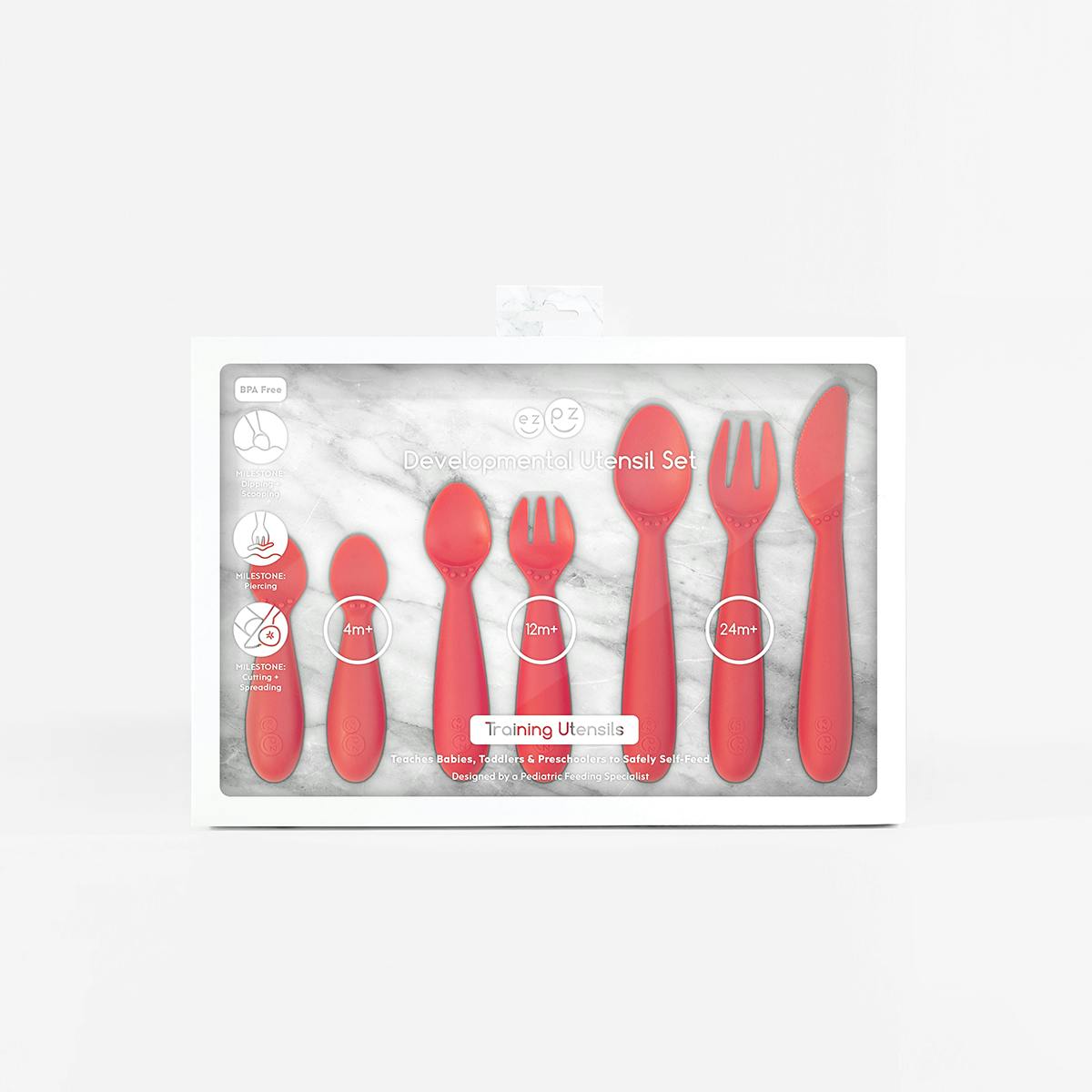
- This is the ezpz Developmental Utensil Set that parents love and get 15% off with the code BABYLED here (this is an affiliate link)
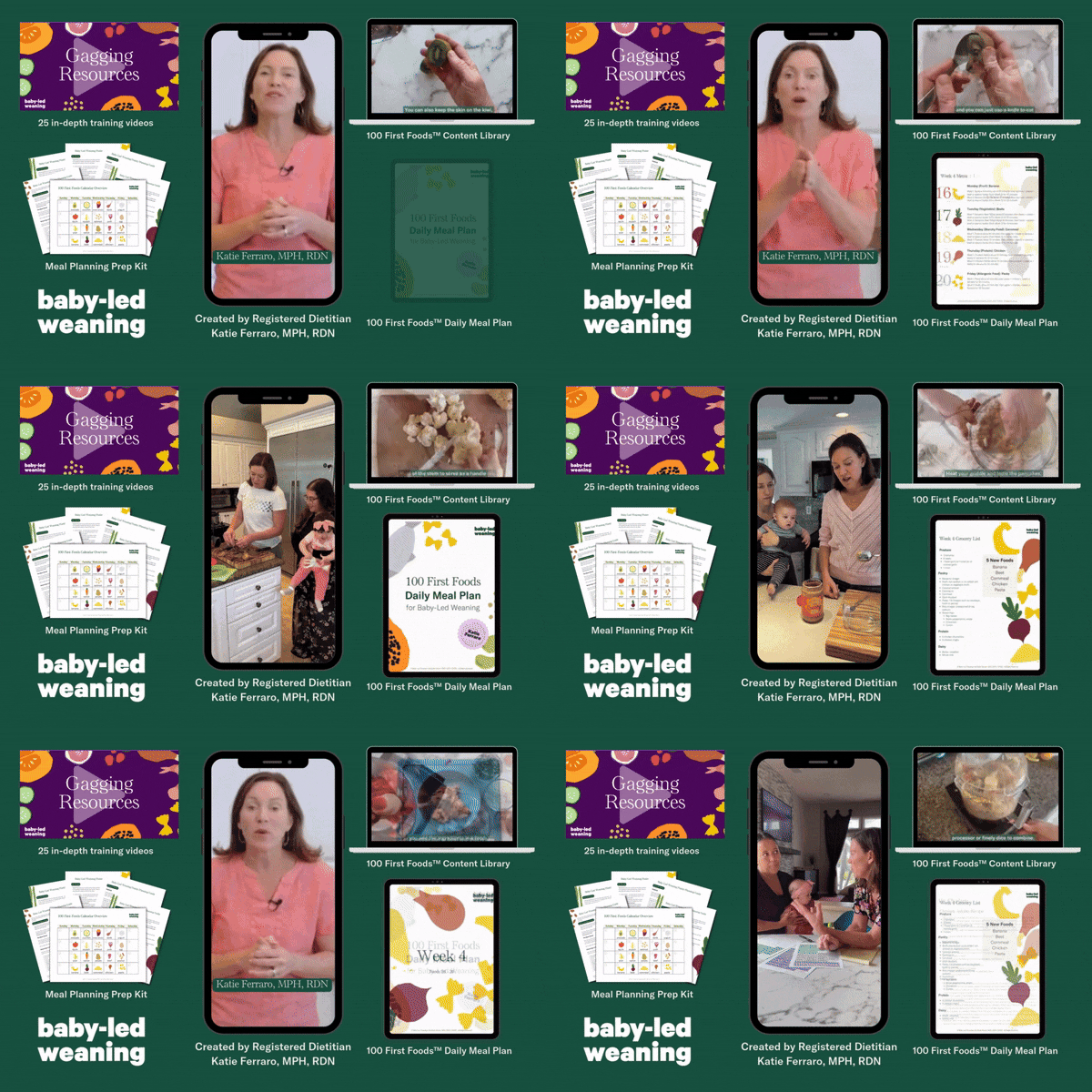
- Baby-Led Weaning with Katie Ferraro program with the 100 First Foods™ Daily Meal Plan, join here: https://babyledweaning.co/program and get $50 off when you sign up using the code BLWPOD50
JOIN NOW AT $50 OFF CODE: BLWPOD50
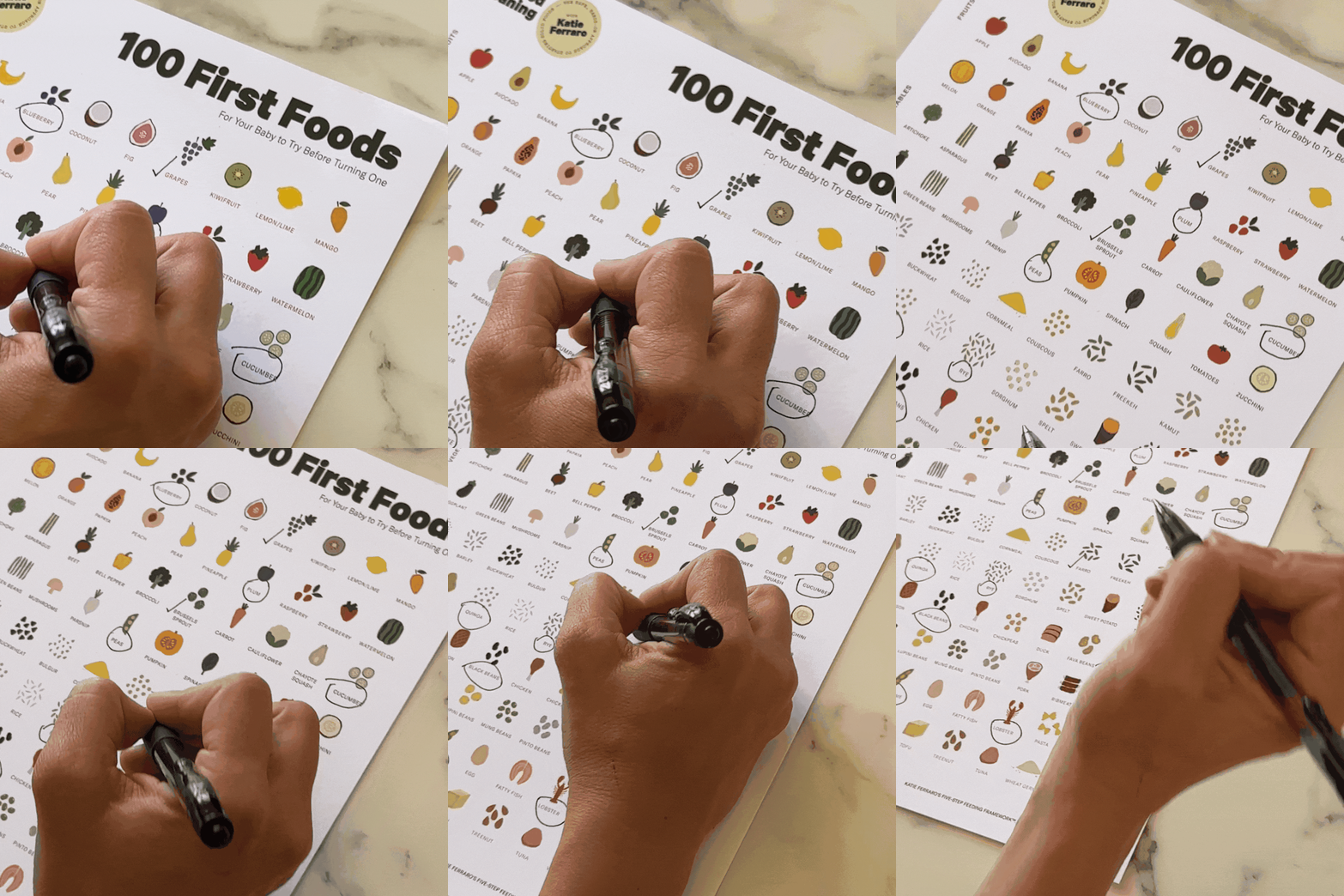
- Baby-Led Weaning for Beginners free online workshop with 100 First Foods™ list to all attendees, register here: https://babyledweaning.co/baby-led-weaning-for-beginners
Other episodes related to this topic:

Latest Episodes


Hungry Root (1s):
It's that cozy comfort food season, time of year, soup season, pumpkin, everything season. But if you're anything like me, it's also just another month of, oh my gosh, how is it already? Dinnertime again. Season chaos work is so busy, which I love, but our kids' sports schedule is extra insane this month. I literally never know what's for dinner for my real family because I spend all day making baby-led weaning eating food and recipes and meal plans for your guys babies. So that's one of the main reasons why I love Hungry Root. Hungry Root is not just another meal kit, it's a personalized grocery and recipe service that thinks ahead. So I don't have to, and because I usually forget to, I tell Hungry Root, Hey, I'm trying to eat more high fiber, gut-friendly, plant-based foods. And then they load my cart up with hearty soups and grain bowls and fall veggies that I love. Plus we just had this like incredible pumpkin spice granola. I am now low-key obsessed with every meal from Hungry Root. Takes 15 minutes or less to prep, which is perfect for that witching hour if you've got that in your house. When the babies are crying and someone else is asking for a snack and I'm trying not to lose my mind. The best part, no food waste. There's no midweek store runs. I actually enjoy cooking for my real family. Again, I'd love if you could check out Hungry Root and I want you to take advantage of this exclusive offer for our listeners. For a limited time, you can get 40% off your first Hungry Root box, plus get a free item in every box for life. Go to hungry root.com/weaning and use code weaning. That's hungry root.com/weaning code weaning to get 40% off your first box and a free item of your choice for life hungry root.com/weaning code weaning and let Hungry Root help you streamline meal prep for your family out of the comfort of your own kitchen.
Rula (1m 53s):
I don't want to pile on, but being a mom and a new parent is not for the faint of heart. All of a sudden you have this tiny person who's totally dependent on you and you are 24/7 fixated on keeping all the balls in the air with parenting and work and relationship. It's a lot. And we all know that periods of burnout or stress or anxiety take a toll on your mental health. And while high quality therapy can help with stressful situations, finding a provider that your insurance actually pays for is a challenge. Rula is changing the game when it comes to finding the right therapist for you. That's in network covered care for most insurance providers because we've all used insurance to cover our physical health, right? So why shouldn't also it cover our mental health? Well rula up makes sure that it does rula up partners with a network of over 15,000 therapists and psychiatrists nationwide, enabling you to find your personalized solution and the right therapist for you based on your needs, your preferences, and the requirements of your state. And what I love about Rula is their commitment to making the average copay just $15 per therapy session. That's real therapy from licensed professionals at a price that actually makes sense. So there's no wait lists or no frustrating back and forth rula makes it easy to find a mental health provider who is accepting new patients and appointments are available as soon as tomorrow. Plus rula sticks with you throughout your journey, checking in to make sure that your care is helping you move forward. Thousands of people are already using RULA to get affordable high quality therapy that's actually covered by insurance. Visit rula.com/weaning to get started. After you sign up, you'll be asked how you heard about them. Please support this show. Let them know I sent you. That's RULA.com/weaning because you deserve mental care that works with you, not against your budget.
Dawn Winkelmann (3m 48s):
Take that spoon and put it towards your baby's tongue. And if you can see your baby's tongue on both sides of that spoon, then it's probably the right sized spoon bowl. But if you can't, which is most of the families that I go into the home and that child is having some choking issues and overt stuffing or not using a spoon, it's because those spoons are way too big for the mouth and so the baby refuses to use it. And then the families are thinking that there's a feeding issue when really parents are offering the wrong size spoon.
Katie Ferraro (4m 18s):
Hey there, I'm Katie Ferraro, registered dietitian, college nutrition professor and mom of seven specializing in baby-led weaning. Here on the baby-led weaning with Katie Ferraro podcast. I help you strip out all of the noise and nonsense about feeding, giving you the confidence and knowledge you need to give your baby a safe start to solid foods using baby-led weaning. What if I told you that your baby can start using a spoon as early as six months, but only if you use the right technique? In today's episode, I'm joined by speech language pathologist and feeding therapist, the pediatric feeding expert.
Katie Ferraro (4m 58s):
Ms. Dawn Winkelmann. She's gonna teach us exactly how to do this preloaded spoon approach. Now Dawn coined the term and originally taught this approach called the preloaded spoon approach and it aligns perfectly with baby-led weaning. Now sometimes parents will say like, wait a minute, I thought baby-led weaning meant skipping purees and not using spoons. Uhuh, that's not true. We can honor the self-feeding principles of baby-led weaning and still offer baby naturally pureed foods like oatmeal and unsweetened apple sauce and whole milk yogurt. And we do that using the preloaded spoon technique. So today Dawn is gonna walk us through what that looks like, what stages your baby goes through, like what you do the first few days and what you transition to in the next couple of weeks.
Katie Ferraro (5m 41s):
And then she's gonna talk about when your baby can start expecting to be dipping and scooping and she's even gonna cover the question on everybody's mind. Okay, I got it about the spoons, but what about the fork? So Dawn is the product designer for EZPZ they're my absolute favorite feeding gear brand. Dawn and I have been teaching together for many years now and actually I was thinking about it in this episode that when the tiny spoon that Dawn developed, that's the first baby-led weaning spoon, which is now like the most popular baby-led weaning spoon out there in my opinion. It's also the best one when it wasn't even on the market yet. I got to test it with my two youngest babies, Gus and Hannah. They were twins so we were like the prototypes or they were like the model babies for some of the earlier tests of this product.
Katie Ferraro (6m 24s):
And now it's just so cool to see like families all over the world using this spoon. Don's also gonna talk about the progression that babies go through with different utensils as they get a little bit older.
Ezpz (6m 33s):
So this is helpful information if you're just starting so you kind of know what direction you're going. If you do wanna check out some of the ezpz products she designed today we're talking about the Tiny Spoon, which I love for baby lead weaning and also the ezpz developmental utensil set. Those are both linked up @ezpzfun.com/babyled. If you go to that page, it has all the baby lead weaning products from EZPZ that I like and it should auto-populate with the Code BABYLED. If you head to ezpzfun.com/babyled, you'll get 15% off all of the ezpz feeding gear.
Katie Ferraro (7m 8s):
And I just love chatting with Dawn about everything related to feeding but especially the areas where she's really made a major impact in infant feeding. And I would say the tiny spoon is definitely right up there. So with no further ado, here's Don Winkelmann teaching us the right way to use a preloaded spoon for baby-led weaning.
Dawn Winkelmann (7m 28s):
I recently worked with a parent who was worried because her baby kept dropping her spoon and she asked if her baby needed feeding therapy. So I observed a mealtime and this is what I saw. The mom was doing a great job preloading the spoon and handing it to her baby. But then as a well-meaning gesture, she would place her hand over her baby's hand and help guide it to her mouth. And the interesting part here is that the moment the mom put her hand over the baby, the baby would instantly let go of this moon. That helpful gesture was actually taking away her baby's sense of control, what looked like a motor skill issue to mom was really just her baby's reaction to not feeling in charge of that feeding process.
Dawn Winkelmann (8m 14s):
So once I educated mom about this, we gave baby back that independence and she held the spoon longer. Her feeding skills took off the meal didn't take nearly as long 'cause they were kind of struggling with that kind of control. And again, it it, it reminds me that sometimes our instinct to help can unintentionally interrupt baby's natural learning process. Preloading that spoon is allowing your baby to self feed even if it's a little bit messy. It's building that confidence, that coordination and that trust not only with the food but with the utensils as well.
Katie Ferraro (8m 48s):
Now you've used that term preloaded spoon a couple of times. I think it's a pretty self-explanatory but like back us up. Talk us through, walk us through what is the preloaded spoon technique actually and why is it such an important self-feeding milestone for babies who are starting solid foods?
Dawn Winkelmann (9m 4s):
A preloaded spoon is a feeding technique where the caregiver scoops or dips food onto a baby-led spoon and then hands that spoon to the baby so that the baby can bring it to their mouth independently. And what it does is it bridges a gap between spoonfeeding and self-feeding. It allows baby to practice the hand and mouth coordination, build the fine motor skills, gain confidence without the frustration of trying to learn to scoop. Because developmentally babies at six months of age are supposed to be able to bring a preloaded spoon to their mouth and we're not really working on scooping until later on in the developmental process.
Dawn Winkelmann (9m 46s):
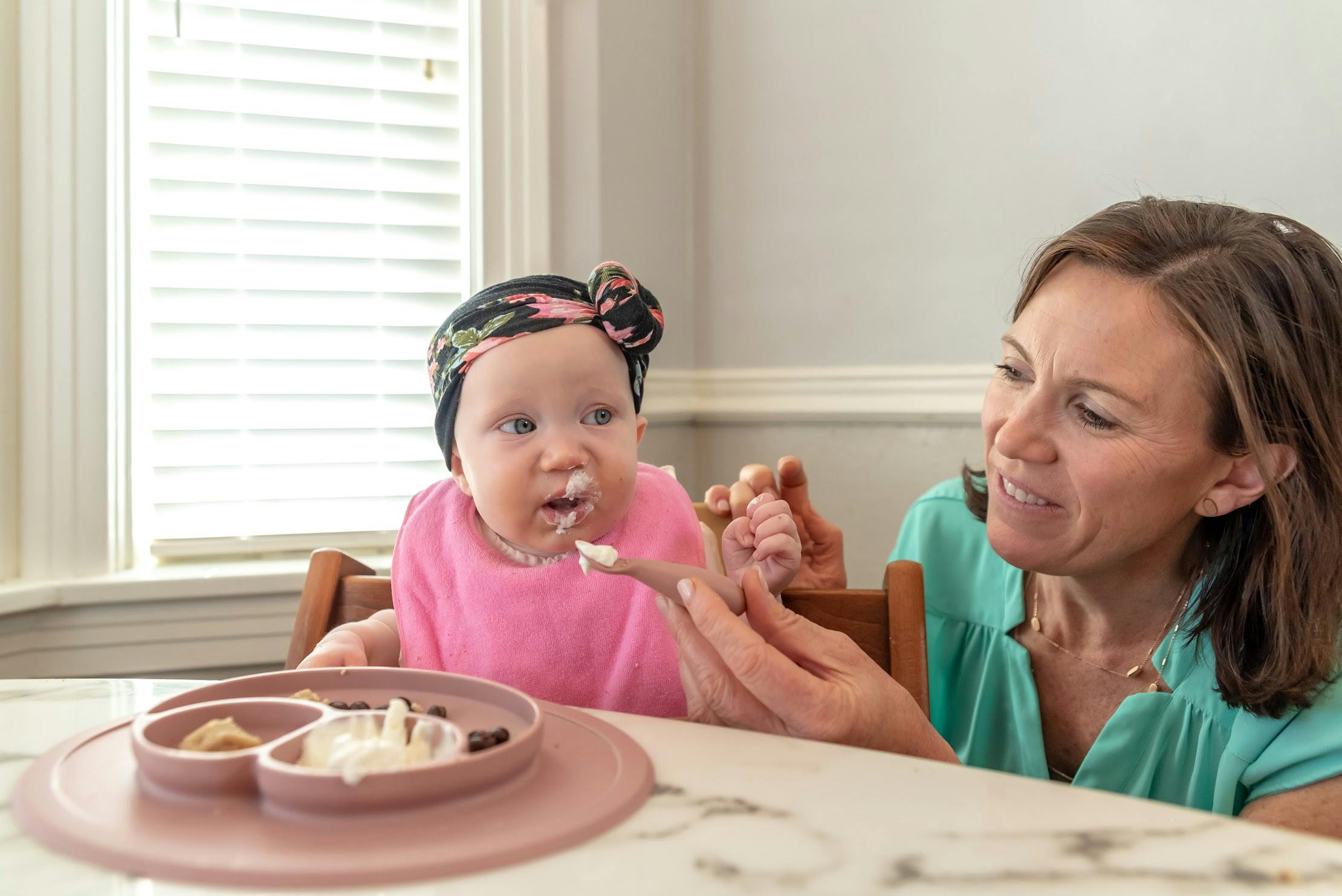
So the way that I teach preloading a spoon for baby is you, well first the parents have to choose the right spoon, right? You want a baby lead spoon instead of a long handled spoon. You wanna select an age appropriate food. Sometimes I watch families that are using, you know, purees that are too runny and it doesn't necessarily have to be a puree either. It could be, you know, you preload a a spoon. It could be like squishing a piece of banana onto the easy peasy tiny spoon for example. And they have the sensory bumps there where you can squish, you know, avocado onto there or or banana and then you're basically loading up that spoon so the baby can bring it to their mouth and then you're going to get your baby's attention while you're doing this dipping and scooping or placing because again we want babies to model this movement so they can learn to be able to scoop the spoon themselves later on.
Dawn Winkelmann (10m 41s):
And then we're gonna hand that spoon to baby and allow baby to be able to bring that to their mouth. And then we're just going to repeat the process. So after every attempt we're gonna kinda reload that spoon and offer it again. And it gives your baby consistent practice with grasping and then scooping and all the mouthing motions to be able to help them.
Katie Ferraro (10m 60s):
And it's important to remember that you know, your baby's been watching you for six months, like they don't know how to do it perfectly and it's gonna get in their ear and their hair and eventually in their mouth but they, they get the general gist of it. And sometimes I've found one tip that's really helpful 'cause we do this approach every day with Baby parents and coaching sessions is that sometimes if you're sitting next to your baby and you have the ezpz baby-led tiny spoon, if you reach around your baby and put it into their hand from the outside, sometimes it's a little bit easier for them to grasp onto it. But like Dawn said, there's always that tendency to kind of wanna help guide the baby's spoon to their mouth. And occasionally you might have to, but Dawn always teaches you wanna do it hand underhand. 'cause you talked about hand overhand before and the hand overhand is rather controlling, but the hand underhand, you're just kind of pointing 'em in the right direction and they, they really do get the hang of it pretty quickly.
Katie Ferraro (11m 47s):
And then you can move on to the next step, which is dipping it and then laying it on the side or the lip of the, the ezpz tiny bowl or the mini bowl if you're using that and your baby will pick it up and bring it to their mouth. But they'll keep, they'll use the wrong side, they'll bang it, they'll smash it in their face and that's, you know, try not to intervene if you can because that's all part of that whole sensory experience that is learning how to eat. Dawn, you mentioned the importance of using a proper spoon. I know that you are the designer of the first baby-led weaning spoon ever the best one out there, the tiny spoon. Tell us what's wrong if you don't mind. With the traditional long handled baby spoons, why are they not appropriate for starting solid foods for babies?
Dawn Winkelmann (12m 26s):
Yeah, when we offer the wrong size of a spoon, let's say we offer the wrong size handle spoon, the long handle babies can't really turn their wrist and have that wrist rotation to be able to put that into their mouth correctly. So you'll see your baby gag easily and consistently on that because it's not a baby-led spoon, it's not for a baby's little hands, it's for adults long hands in long grips and we don't wanna use a spoon that has a flat handle 'cause then your baby can't use their developmental grasp, which is the polymer grasp to be able to put that chunky little fist around that. So then what happened with that flat handle, babies can go too deep into their mouth causing gagging because they're, they're not able to use that good grass.
Dawn Winkelmann (13m 16s):
So it makes their motions ill coordinated. And if we are offering a spoon that is, that has maybe what they call a choking guard round the spoon bowl, well one, it can knock your baby's front teeth out as they start to emerge. Two, they're usually made outta plastic and then we have all the microplastic issues. But three, it doesn't allow baby to grade. And what that means is that it doesn't allow baby to actually put the spoon back slightly too far to help to move that gag reflex back. So what I did to the spoon that I designed the tiny spoon is I put these sensory bumps there to help kind of increase the sensory awareness of that.
Dawn Winkelmann (13m 58s):
So it's still allowing baby to manipulate the spoon into their mouth, still allowing them to be able to place the food and be independent. But giving them more of that input the way that we give utensils to children can really help facilitate developmental swallowing and feeding skills or actually impede them. And so if you see that the spoon that your child is using, if they're flipping that spoon upside down, that spoon bowl is too big. So offering the wrong size spoon bowl. So a spoon consists of two parts, the handle and the what we call in the feeding world a spoon bowl and a large spoon bowl is usually too deep and can cause choking in food refusals and lead to mealtime behaviors, all because the parents just offer the wrong size spoon.
Dawn Winkelmann (14m 47s):
We want that spoon bowl to be relatively flat giving them the appropriate size of food onto that spoon and that's going to help facilitate a baby having a good swallow. And if you're not sure if the spoon is too big, what I always tell families is if your baby is kind of having their tongue sticking out, take that, take that spoon and put it towards your baby's tongue. And if you can see your baby's tongue on both sides of that spoon, then it's probably the right sized spoon bowl. But if you can't, which is most of the families that I go into the home and that child is having some choking issues and overt stuffing or not using a spoon, it's because those spoons are way too big for the mouth and so the baby refuses to use it and then the families are thinking that there's a a feeding issue when really it's just parents are offering the wrong size spoon.
Katie Ferraro (15m 38s):
And I know I've heard you teach too Dawn that the very large spoon bowl size, the one where if you put it over the baby's mouth, like if you think about that, that dramatically increases the risk of choking. You're covering the entirety of your baby's tongue, at which point they don't have that tongue lateralization that you're always talking about. There's the potential that they could occlude the airway and you're now blocking airflow. So bigger is not better when it comes to spoons. And I love the tiny spoon I do also, you mentioned some of the products that have the quote unquote choking guard and I, I just wanna point out to parents that there is absolutely no evidence to support that marketing standpoint. Like they, they put that on packaging but that's marketing. Oh this reduces choking. No it doesn't. In fact, as Dawn explained, it actually has the potential to increase choking risk.
Katie Ferraro (16m 19s):
And when you know, we talk to these people and say, you know what, what data do you have to support this? There's absolutely no data. They can say it's strictly marketing to prey on your fears of your baby eating real food. You don't have to buy a choking prevention device, you just have to buy the right type of spoon for your baby.
Dawn Winkelmann (16m 37s):
Absolutely.
Katie Ferraro (16m 37s):
So Dawn, what are some of the biggest mistakes that parents make when they're trying to introduce a spoon to a baby at six months of age besides choosing the wrong spoon? I think we, you did a great job explaining, you know, the problems with the long handle, with the flat handle, with the choking guard with a deep spoon bowl. What are the other things besides the, the implement of the spoon that parents get wrong?
Dawn Winkelmann (16m 54s):
One of the big things for me is having families stop their baby from actually using their hands. So let's say the baby is, you know, you give them the preloaded spoon, the baby brings that spoon to their mouth, they drop the spoon, which is what they're supposed to do and you need to have that second spoon preloaded and ready but then baby goes back in with their hands and all see caregivers like hold the child's hand down and try to offer them another spoon. And I would encourage parents to wait, let baby grab with their hands and bring that to their mouth because a lot of the time what baby is doing is trying to mimic that movement again, practice that hand in mouth coordination without the utensil in order to feel success again and then they can go back in with that spoon.
Dawn Winkelmann (17m 44s):
So this is how babies can practice their ability to feel comfortable with food or even try to understand the sensory aspects of engaging with that food with their hand and then engaging with that same food with the spoon and you'll see them pick up that spoon and just kind of get back with it. So I wanna encourage parents to not stop baby from using their hands. And another thing is to not stop your baby from chewing on the handle. So you'll see sometimes your baby, you know, taking that preloaded spoon and and putting it in their mouth and then they'll turn the spoon around and start biting the handle and that's completely normal. Baby should be absolutely allowed to do this. This is an actual important stage in the independent spoon feeding process that your baby is going through.
Dawn Winkelmann (18m 28s):
It helps your baby refine their visual motor skills, it helps 'em refine their hand and mouth coordination. And it's a really important way for babies to be able to kind of explore all of the tool, the spoon to really engage back into the food again. And so, which is one of the reasons why I designed all of the baby lid handles for EZPZ to be the same. So if you try our oral development tools, if you try our baby lid toothbrush, if you try our tiny pops, if you try the Tiny Spoon, all of these handles are the same because we wanna give baby that same input that they might need to be able to kind of chew on that.
Dawn Winkelmann (19m 12s):
Maybe it's, it's a, that handle is a little bit harder, it kind of stimulates that gumline and then they can go back in.
KiwiCo (19m 17s):
Hey we're gonna take a quick break but I'll be right back About 10. I spent an entire summer in my garage trying to build a co cart out of scrap wood and bicycle wheels and spoiler alert it did not go that well. But I'll never forget the feeling of sketching out a design and trying and failing and then trying again and it didn't feel like school. It felt like play And without realizing it I was learning problem solving and patience and how it feels like so good to just bring an idea to life. And that is exactly what I love about Kiwi Co. Our kids get to have those same aha moments but with projects that actually work, each Kiwi co crate is designed so that kids are learning the fundamentals while having fun. They're building skills that grow with every new project. So they might start with something simple like a bow and arrow and down the line. I mean they're engineering robots in our house. We've been doing the Tinker crate lately. So my daughter just built a working pinball machine, she's been playing with it nonstop. The best part she did not just put it together, she understood how it works. So there's springs and leader's intention, all those concepts that like really click when you're using your hands to make something real. And Kiwi Co isn't just one size fits all. They have crates for every age and interest science, technology, engineering, art, math, you name it. Plus Kiwi co members get perks like 10% off orders, free shipping in the US and early access to new crates. These Kiwi Co projects do not just get built and tossed aside, they get played with Revisited and they spark that curiosity that kids will carry into everything else that they do. So if you want something that will keep your kids engaged and off of screens and excited to learn, Kiwi Co makes it so easy to spend quality time together while building creativity and confidence you and your kids can tinker, create and innovate with Kiwi Co too. Get up to 50% off your first crate @kiwico.com promo code weaning that's up to 50% off your first crate at KIWICO.com promo code weaning.
Katie Ferraro (21m 25s):
And Dawn, I have to say the consistency of that handle. I am seeing it firsthand for families that I'm working with from the pre-feeding phase four and five months of age when we're using the ezpz, the oral development tools and the tiny pops and the toothbrush, that baby who transitions to the preloaded spoon, they already know what to do with it because, and then it's not to say that you can't if you haven't done those things, but I definitely am seeing that in my practice day to day. Now one other, I don't know if this is problematic but I wanted to point out an interesting situation the other day. I had a baby over a family I'd worked with for a while so I knew this baby quite well. He's just nine months old, he's like on food like 62, 63. So like really jamming on finger foods. We were doing, it was a new recipe for port carnitas and so we also like puree it for all this content stuff and practiced drinking outta the open cup.
Katie Ferraro (22m 8s):
And I noticed when we did the pureed out of the tiny bowl, the mom was continuing to offer him the preloaded spoon and she's my friend and I was like, hey, just a suggestion here, like your baby has had 63 foods your baby has been eating for three months. Like you do not need to be preloading this baby spoon. And and in fact I didn't say this to her but my thought was well now you're impeding the baby's ability to dip and scoop, which they, as I've learned from you should be doing at about this age. So politely, hey, you know, we sometimes forget how much babies can do on their own. So the whole preloaded spoon approach you, you really only have to do it for a few days before you start preloading and then just laying it on the side of the bowl and then a few months into it your baby will get the handle of the hang of dipping and scooping.
Katie Ferraro (22m 49s):
And that's really when everything kind of clicks for them. So I didn't wanna like shame her at all, but I was like, hey you know what's cool is if you let the baby go they should start dipping and scooping now.
Dawn Winkelmann (23m 1s):
Yeah and developmentally, you know, we're gonna preload that spoon probably for that first month because they need to have that consistency. But then after that your, your baby is going to have that mastery and, and especially if they, and that will be shorter if they're using that same type of handle, which is another reason why, you know, I did the pre-feeding tools to help decrease that time that it takes for them to master that. The research shows that we want to have a short fat round handle to help facilitate that. And you know, we're the only spoon that has that short fat round.
Katie Ferraro (23m 38s):
I like look at my old pictures 'cause the tiny spoon wasn't around when my quads were doing baby-led weaning. And I look at these like terrible long handled spoons I have and I'm like, oh my gosh, they're like jamming in the back of their throat. But remember when Gus and Hannah were babies, that's when you were doing the prototype of the tiny spoon, like they got to be like some of the first babies to try it out and they, you know, around 12, 13, 14 months. I know especially with them and as well other families I've worked with since they kind of get frustrated by how small the spoon is. So can you talk about the, the next spoon that once you pass over that one year mark we don't stick with that tiny spoon forever?
Dawn Winkelmann (24m 9s):
Yeah, no. So basically what we want to do is we want to be able to, to facilitate what your baby is able to do and then move on to the next step. So for example, if you are, you have a baby who's six months of age, they're using the tiny spoon, we're using that small, it's basically a smaller spoon bowl. We're you know, watching baby be able to kind of master that, then your baby starts to dip and that happens around nine months of age. Your baby's starting to take the spoon and kind of dip into it. They're not scooping yet because they don't have that wrist rotation yet, but they're starting to kind of dip that spoon into their mouth.
Dawn Winkelmann (24m 49s):
And then once that kind of happens, which can happen between nine and 12 months of age, your baby's getting ready to scoop and they'll need to transition to another spoon, which is why I designed the mini spoon, which is the next spoon which has the same type of handle. But now that spoon bowl, instead of it being food grade silicone, it's made outta nylon so that your baby can actually have a better scooping ability and be able to have that firmer spoon bowl to provide that sturdiness to help with the scooping and be able to lift multiple textures at that time. So maybe your baby is trying to, you know, scoop up some rice that needs to be able to have a bigger spoon bowl to help facilitate that.
Dawn Winkelmann (25m 31s):
But the safety features are still on there. It still has that non slip grip silicone handle. We still have the sensory bumps there to be able to provide that sensory input to help facilitate that. And it still looks like the tiny spoon. A lot of children that go from the tiny spoon to another type of spoon, maybe a stainless steel spoon or a bigger plastic spoon, all of a sudden parents are like, my child forgot how to use a spoon well because it doesn't represent the same thing that they are thinking in their mind. Remember your child is also developing vocabulary and receptive and expressive vocabulary and that doesn't look like a spoon to them.
Dawn Winkelmann (26m 12s):
So I wanted to design the utensils that look very similar as we go from infancy to toddlerhood toddlerhood to preschool to be able to help facilitate that idea and that image that your child has so that they feel really confident in mealtime and being able to trust the utensils that they're using.
Ezpz (26m 33s):
And it was funny 'cause I had a meeting with EZPZ recently when we were looking, you were there I think looking at like as an affiliate, our top performing products. And I was really surprised to see that the developmental utensil set is one of the top, top easy peasy products that I sell. I love it, I just like don't talk about it very often, but you know, your baby's gonna be six months and you know they're gonna be 12 months and you know they're gonna be two years old and here's someone who designed all of the utensils that you need in a package that's discounted when it's bundled and then further discounted. So if you're checking out the ezpz products, if you head to EZPZFun.com/babyled, I've got all my favorite products up there, but I moved the developmental utensil set up to the top because I think parents, it's a great solution. Dawn, so props to you.
Katie Ferraro (27m 14s):
I know that parents listening to an episode of this nature probably in the earlier end of starting solid foods, but could you speak in closing just very briefly about the fork milestone because I know they're wondering like, well what fork should my baby be having at six months?
Dawn Winkelmann (27m 27s):
Yeah, so the natural transition is that your baby should master the dipping and start to get ready for that scooping before we move into a fork. Other feeding brands sell a fork in their baby sets and it really sets parents to feel like they're doing something wrong or that their baby's delayed. And I just wanna remind your listeners that there are no fork milestones for babies. There are fork milestones for toddlers. So from a developmental and safety standpoint, we do not expect babies to use a fork, you know, in the infancy. Although some babies may be ready to start early, we find that in a, and you are too, Kate, that you know, if, if the family is using the oral development tools and the toothbrush and the tiny pops and the baby just does really well with the handles, some babies will use a fork.
Dawn Winkelmann (28m 20s):
Earlier
Katie Ferraro (28m 20s):
I had an 11 month year old the other day using a fork like because like the mom was into it and they're like, don't pressure yourself. She's like, I'm having so much fun with this. Like, I wanna know what's next.
Dawn Winkelmann (28m 30s):
Absolutely. And and developmentally, you know, my colleagues in OT world are like, oh my gosh, I'm, I'm allowing the babies that I work with at 10 and 11 months to start using a fork when we usually don't do that till after baby's first birthday because they have the motor planning with using the other products and, and that is such a, you know, compliment to the design and to the research that's out there that says, you know, we want the development to coincide with, you know, safety. But I also wanna let parents know that I've rounded the edges to that fork. And I always tell families, you know, before you introduce a fork, you take that fork and you stab it up onto the side of your face and if it hurts, you should not offer your baby that fork.
Dawn Winkelmann (29m 13s):
So you can take the mini fork, you can stab it onto the side of the face, it has some rounded edges and it's still sharp enough to be able to pierce watermelon and allow your babies to be able to self-feed with it. But as your baby is starting to practice how to be able to use that wrist rotation, we don't want them to hurt themselves. So it's a great way to be able to allow that new developmental process. Your baby learns how to use the spoon in infancy and then learns how to be able to use the work between infancy and toddlerhood and then uses a knife, a training knife between toddlerhood and preschool. And that's a developmental way that we know from a safety standpoint and in the developmental utensil set that I designed, that's what is included so that parents can transition from one stage to another that have, you know, safety features of that handle getting longer, having those tin, getting sharper with the forks and then being able to move forward with that knife as well.
Katie Ferraro (30m 10s):
Well Dawn tell everybody where they can go to learn more. I mean, you and I could talk about spoons and forks all day long, but you probably gotta wrap it up. But where can I go to learn more and to support your work and your business?
Dawn Winkelmann (30m 22s):
You can find me on my website @missdawnslp.com, that's M-S-D-A-W-N SLP.com. Also on Instagram at Miss Dawn Slp.
Ezpz (30m 31s):
You can also find the products that I designed@ezpzfun.com/babyled And that has all of Dawn's products there that are my favorite products. They're all linked up for Baby-Led Weaning at the top. The Code BABYLED should auto-populate on that page, but that will always get you an extra 15% off everything@ezpzfun.combabyled.
Katie Ferraro (30m 50s):
Thank you so much, Dawn, it's always great chatting with you.
Dawn Winkelmann (30m 53s):
Thank you Katie.
Ezpz (30m 54s):
Well I hope you enjoyed that interview with Dawn Winkelmann. I love hearing about like the behind the scenes of kind the development of some of the products that she has created for EZPZ Again today we talked about the ezpz Tiny Spoon as well as the ezpz developmental utensil set, which has the tiny spoons for six month olds, the mini utensils for 12 month olds and the Happy utensils for 24 months. If you wanna get 'em all bundled together with an additional 15% off the code, BABYLED always works for 15% off@ezpzfun.com. If you go to ezpzfun.com/babyled, you can see all of my favorite Baby-Lead Weaning products and the tiny spoons and the developmental utensil set are right up there at the top. 'cause I think they are so wonderful.
Katie Ferraro (31m 34s):
Don't forget to check out Dawn's website, miss dawn slp.com. Follow her on Instagram at Miss dawn slp. I'll put all the show notes from today's episode on the show notesPage@bwpodcast.com/64, and a special thank you to our partners at AirWave Media. If you like podcasts that feature food and science at Using your brain, check out some of the podcasts from AirWave. We're online@blwpodcast.com. Thank you so much for listening and I'll see you next time.
Proof (32m 8s):
Hi listeners, it's Jack Bishop. I'm the ingredients guy on America's test kitchen's public television show and the host of our award-winning podcast. Proof Proof combines history, science, and culture to tell unexpected stories about food. Every episode is filled with aha moments that you'll want to share at your next dinner party. New episodes drop every Thursday, subscribe wherever you get your podcast and you might never look at food the same way again.
The Program Baby-Led Weaning with Katie Ferraro
A step-by-step digital program for starting solid foods safely and navigating the original 100 FIRST FOODS™ meal plan with baby-led weaning.
 EXPERT-LED, PROVEN APPROACH TO EATING REAL FOOD
 CONCISE VIDEO TRAININGS TO MASTER BABY-LED WEANING
 100 FIRST FOODS DAILY MEAL PLAN WITH FOOD PREP VIDEOS
Baby-Led Weaning for Beginners Free Workshop
Is your baby ready to start solid foods, but you’re not sure where to start? Get ready to give your baby a solid foundation to a lifetime of loving real food…even if you’re feeling overwhelmed or confused about this next stage of infant feeding.
Get baby-led weaning recipes and tips delivered to your email inbox.