
What to Do When Your Baby Won't Eat
- Why it is normal for babies to ignore food at first and why you can stop worrying about how much they eat
- When most babies start eating more and what to do if your baby is not showing that progress yet.
- How to set up calm, consistent practice so your baby builds the skills they need to become a confident self-feeder.

LISTEN TO THIS EPISODE
Episode Description
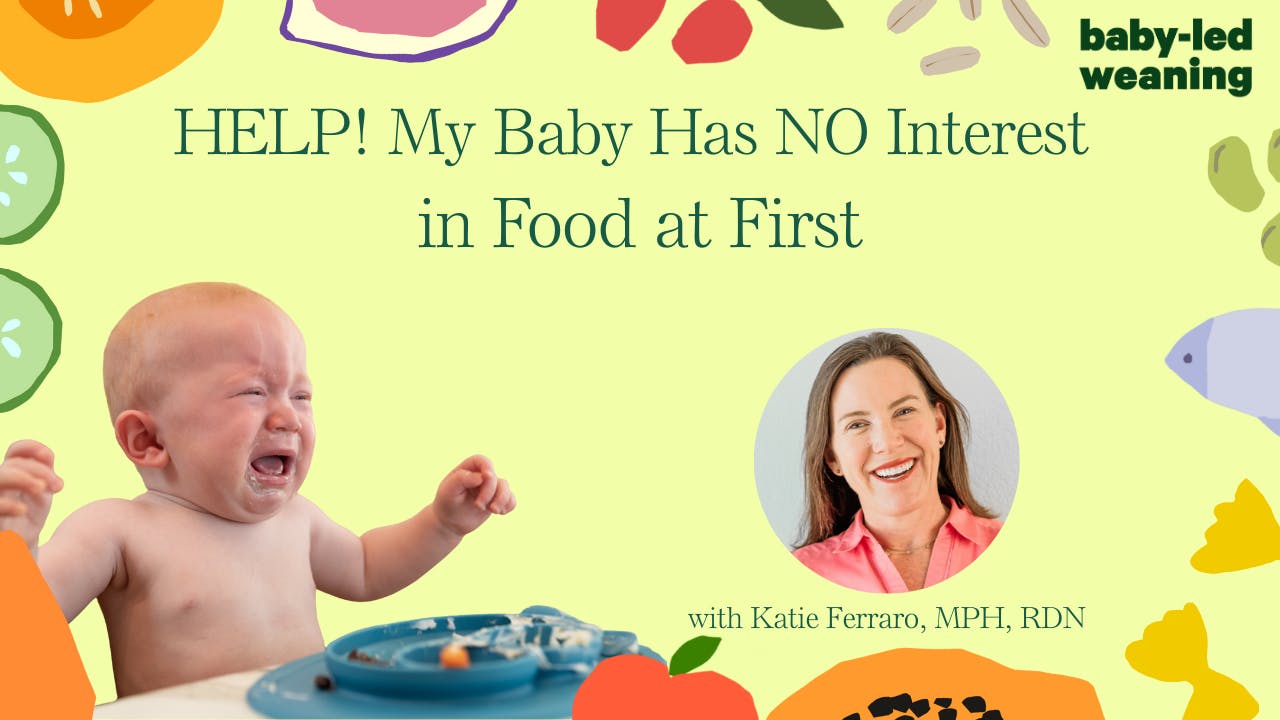
It is hard not to panic when your baby shows no interest in food. They ignore what you offer, barely taste anything, and you start worrying about nutrition, iron, and whether something might be wrong. This slow start is one of the most stressful parts of offering solid foods.
The good news is that most babies take time to learn how to eat, and early disinterest is usually completely normal. In this episode, I explain why many babies ignore food at first, how to support them during this learning phase, what to avoid, and when it might be helpful to get extra guidance.
Links from this Episode
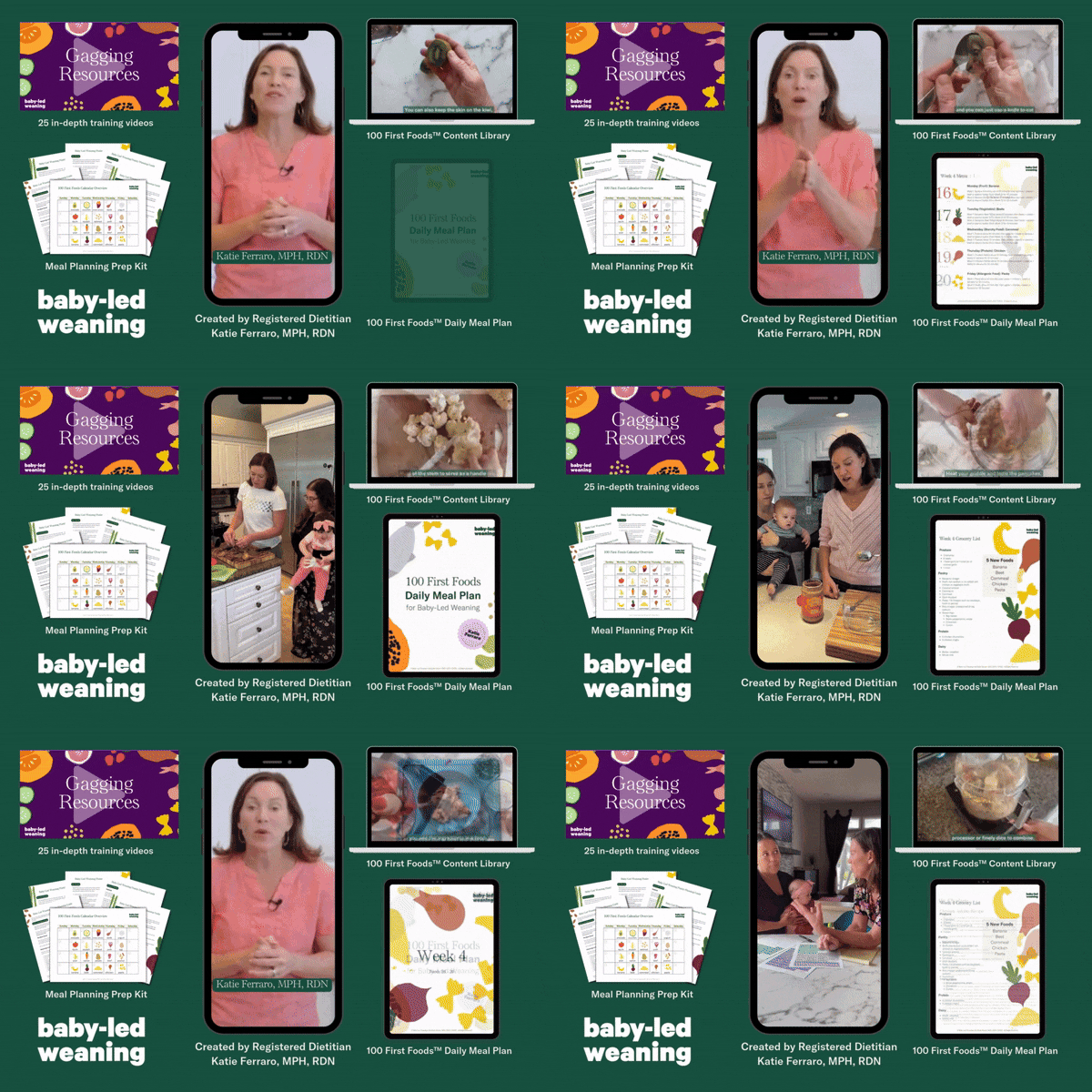
- Baby-Led Weaning with Katie Ferraro program with the 100 First Foods™ Daily Meal Plan, join here: https://babyledweaning.co/program and get $50 off when you sign up using the code BLWPOD50
JOIN NOW AT $50 OFF CODE: BLWPOD50
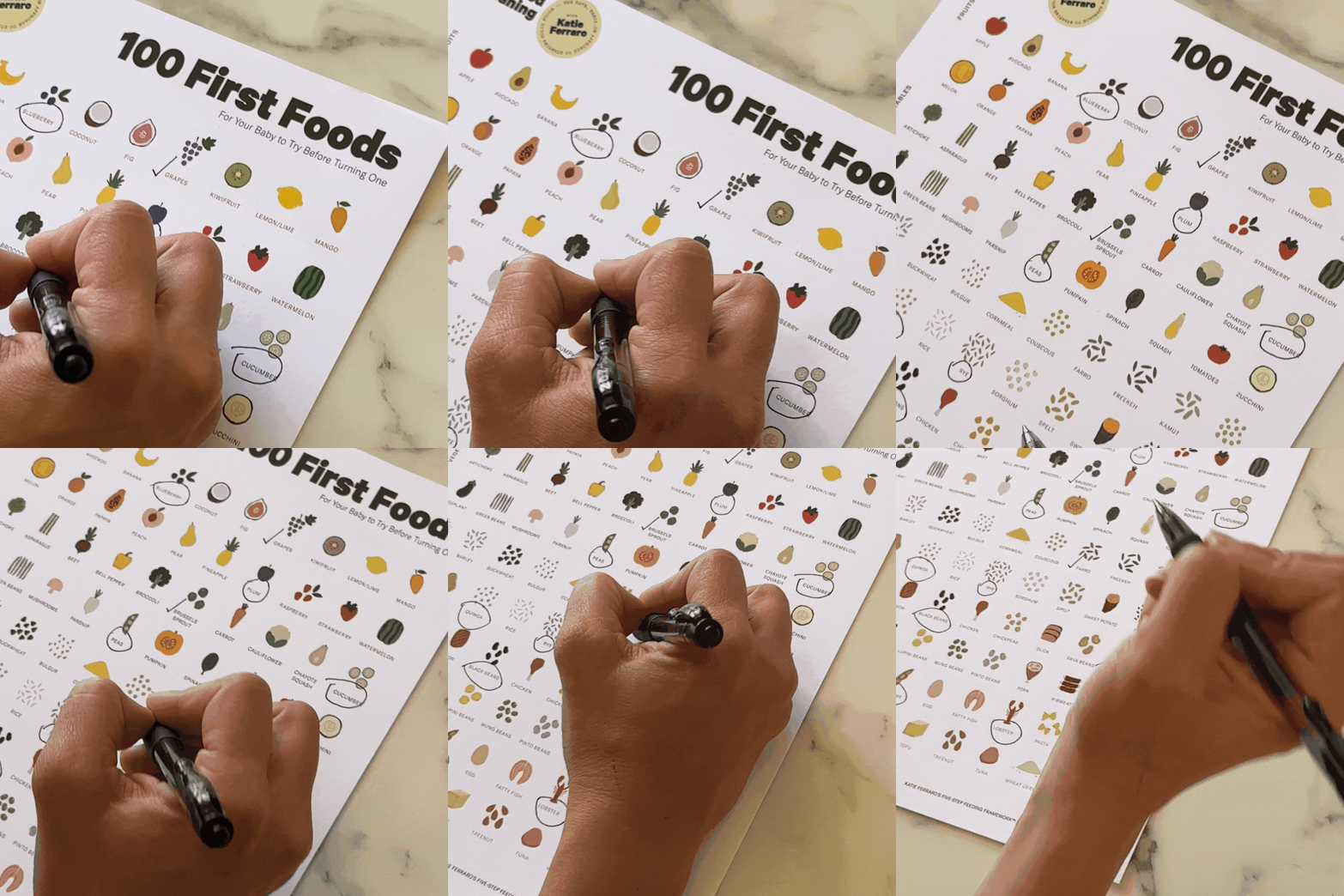
- Baby-Led Weaning for Beginners free online workshop with 100 First Foods™ list to all attendees, register here: https://babyledweaning.co/baby-led-weaning-for-beginners
Other Episodes Related to This Topic

Latest Episodes





Rula (0s):
While telehealth has made mental health care more convenient and accessible for millions of people, there are still critical challenges that remain like finding a suitable therapist or scheduling appointments or dealing with the expensive out of pocket cost. It still keeps many from getting the care that they need. Rula is on a mission to make high quality mental healthcare from a licensed professional, easy and affordable for everyone. RULA has you covered, they take most major insurance plans, and the average copay is only $15 per session. So you can now get the quality care that you need when you need it at a price you can afford. One thing I really admire about RULA is they're not just affordable. They also stick with you throughout your journey, making sure that you get the best therapy and that you're making progress. With Rula, every provider is carefully vetted and chosen for their expertise. So taking that important first step on your journey towards mental wellbeing is easy. Rula starts by asking you a few questions about what's important to you. Then they provide you with a list of licensed in-network providers who match your preferences. You can schedule your preferred time and meet with your therapist as soon as the next day. Go to rula.com/weaning to get started today. And after you sign up, they ask where you heard about them. Please say the baby-led weaning podcast. Go to RULA.com/weaning and take the first steps towards better mental health today because you deserve quality care from someone who cares.
Katie Ferraro (1m 30s):
And this part is stressful, right? Because you spent all this time making this food for your baby and now they're not going to touch it. But when you're feeling that stress of, oh my gosh, my baby's not eating, or My baby's not getting enough, you have to stop and check yourself and remember what your job is and what your job is not. Because your job is not to make your baby eat. It's your baby's job to decide how much or even whether they are going to eat. And remembering that is going to take this huge weight off of your shoulders if you're feeling at all stressed about the fact that your baby's quote unquote not getting enough from solid foods, especially early on. Hey there, I'm Katie Ferraro, registered dietitian, college nutrition professor and mom of seven specializing in baby-led weaning.
Katie Ferraro (2m 15s):
Here on the baby-led weaning with Katie Ferraro podcast. I help you strip out all of the noise and nonsense about feeding, giving you the confidence and knowledge you need to give your baby a safe start to solid foods using baby lead weaning. So you have dreamed of this moment your baby's first solid food meal, right? You waited for the signs of readiness to eat, you prepped the perfect food, you set your baby up in the high chair, and then nothing crickets. Your baby wants nada to do with the food. Maybe they look at it, maybe they touch the food. But ultimately there is not a lot of eating happening.
Katie Ferraro (2m 58s):
What is wrong? Is your baby broken? Is it you stop stressing. You are not alone. Today, I'm going to help you unpack why most babies have very little interest in food at first and why this actually doesn't matter. And then how we can help your baby transition gently to getting there without pressure or panic so that we can all safely start solid foods and maybe even enjoy the process. Now, I like to start each of these solo trainings with a baby led weaning tip of the day. In today's tip, it does not matter how much food your baby eats. That's right. Doesn't matter. 'cause guess what? It's not your job to make your baby eat, but hang tight, because today I'm gonna break it down about what your jobs are.
Katie Ferraro (3m 44s):
You don't get off the hook here. You do have a couple of jobs, but ultimately it is your baby's job to decide how much or even whether they eat. And I want you to know how to react in the right way so that when your baby inevitably doesn't want to eat the food that you so painstakingly and lovingly prepared, you are going to know what to do. So I wanna tell you guys a quick story. When my quadruplets were babies and starting solid foods, I literally had no idea what I was doing with baby lead weaning. I was trying to figure it out. There was four babies. I was like, I definitely can't spoon feeded them. And I struggled a lot with spoonfeeding, my oldest child, the next four, I was like, I gotta figure out this baby led weaning thing. They were all born at the same time, right? 'cause they're quadruplets. And one of our babies, his name is Henry and Henry, he is special to this day.
Katie Ferraro (4m 27s):
Always a little bit behind, not in a bad way, but just like all the different milestones. The first few weeks of starting solid foods, Henry just put his head down on the table like we had a quadruple feeding table and would not participate like the other quads. I had waited till they were like six months adjusted age, which was seven and a half real months of age. Like I was so excited to start solid foods and three of 'em were like going at it and picking up food. And I was like, oh yeah, like this is what you see online. This is what you're supposed to be doing. And then that fourth one was just sitting there with his head down on the table, and I swear to gosh, it was a couple of weeks before he picked his head up and actually started participating with his siblings. And I tell you this story because I just wanna remind you that all babies get ready to start solid foods on their own timeframe.
Katie Ferraro (5m 14s):
So I don't care if you're feeding one baby at a time or four or 400 babies at a time, you gotta remember that your baby is gonna be ready at their own time. So we gotta respect babies and their readiness to eat and don't stress out if you got a Henry on your hands, who by the way is totally fine these days, and he does eat at the same pace as the rest of his siblings. I mean, he cannot tie his shoes as fast as everyone else, but that's okay. We're working on that too. So let's start out by looking at why is it normal for babies to ignore foods at first? Let's start with the good news. Okay? If your baby is not interested in food right now, please know that is completely normal, okay? A lot of babies don't even pick up food or even seem curious about or interested in food during the first few weeks of starting solid foods, okay?
Katie Ferraro (5m 57s):
This is not a sign that something is wrong, okay? It's a sign that they're learning and they're exploring food, and that's what we want, okay? Because remember, eating is a brand new skill. Your baby has never had to pick up the food and chew it and swallow it before, right? They have to coordinate. They're sucking, they're sitting, they're swallowing. There's a lot going on, okay? They're figuring out, gosh, just learned how to sit upright. Now I'm trying to coordinate my hands and my mouth and manage these different textures that this lady's throwing at me all at the same time. And just like walking or talking, right? Every baby learns at their own pace. Some are gonna dive right in. I've seen babies on day one just pick up strips of food and go to town, and I've had others be like, Uhuh not even gonna touch the food.
Katie Ferraro (6m 37s):
Okay? Both of those are completely fine and totally typical. Early baby led. Weaning is not about how much your baby eats, okay? It's about offering your baby the opportunity to learn how to eat safely. I always say practice makes progress. So I like to remind parents that this first phase, generally not the first eight weeks of starting solid foods, it's really just about practice. And practice is what makes progress. 'cause between six and 12 months of age, your baby's gonna make a major shift, right? They are gonna learn what food feels like, how to move it around their mouth. They're eventually gonna start to chew it and swallow it and even enjoy it and start to get more nutrition from food than they do from infant milk.
Katie Ferraro (7m 17s):
But it doesn't start like that, right? At six months of age. Okay? Think about it like sports practice, okay? My husband hates when I do sports analogies preseason. Like if you're, I don't have an NFL team in my town. We live in San Diego. We used to have the Chargers here for like 40 years. We had season tickets in our family. And I remember when I was a kid, my mom would be like, and my dad would be like, do you wanna go? My birthday's in September. Like, do you wanna go to the Chargers game? And I was like, oh dude, I get to go to a Chargers game. It was just the pre-season games that they were taking me to, by the way, I still resented. But the pre-season games, right? That's kind of like what the whole like beginning part of starting solid foods is. It's like the practice time. Like technically it's professional sports, like technically your baby started solid foods, but there's not like a lot of actual action that even really matters going on in the preseason.
Katie Ferraro (8m 2s):
That's a pretty good sports analogy. Okay? Your baby doesn't show up and score touchdown or kick a field goal on day one, all right? They're just working out the kinks and getting used to being on the field there, okay? They practice, they miss, they get messy. But little by little it starts to click and then it's the regular season and your parents aren't gonna invite you to the game 'cause you're just a kid and kids don't get to go to NFL games, or at least that's how it was in my family. So instead of worrying about how much food actually goes in the baby's mouth, I want you to focus on creating a calm, consistent, stress-free feeding environment where you're offering your baby solid foods. When you start solid foods at six or seven months of age, try to offer that baby solid food one to two times a day. And do me a favor, once you start, don't skip a day. Okay? When your baby sits with you and they see the food and they touch it and they smear it and they drop it and they smash it, that is all actually part of the sensory experience that is learning how to eat.
Katie Ferraro (8m 50s):
I know to you, you might be like, oh my gosh, they're literally doing nothing with the food, but playing with it. It's actually part of learning how to eat. These are the experiences that teach your baby how to be confident with food a little bit later down the road. So trust the process that doesn't look like it, but there's actually some magic happening there. Hey, we're gonna take a quick break, but I'll be right back.
Kidsy (9m 14s):
You know how fast babies grow and how fast the cost of baby gear can add up from high chairs and strollers to swings and bassinets. It feels like you blink and then your baby's already outgrown everything. That's where Kidsy comes in. Kidsy makes parenting more affordable and more sustainable by reselling overstock and open box returns from major retailers. Items that would otherwise go to waste. You can save up to 50% on premium baby and kids brands like Greco Duna up a baby, even flow. And even big retailers like Amazon, Macy's and Bloomingdale's, every item on Kidsy goes through multiple rounds of quality control and safety checks. So you're still getting those trusted high-end products just at a smarter price and get this in under two years. Kidsy has already helped over 100,000 families nationwide and they've kept more than a million pounds of baby products out of landfills. So if you love a good deal and you care about reducing waste, it is time to check out kidsy. Go to kidsy.co and use code weaning for 15% off your first order. That's KIDSY.co. And don't forget to use the code weaning at checkout to save 15% off your first order.
Katie Ferraro (10m 42s):
Let's talk next about your job versus your baby's job and what we call the division of responsibility in feeding theory. So one of my favorite frameworks to help parents stop stressing about starting solid foods is called the division of responsibility in Feeding theory. Now, this was developed by Ellen Satter. She's a registered dietician, she's also a licensed therapist. And Ellen Satter's whole division of responsibility. It's like very simple but very powerful. Your job as the parent, okay, you've got some jobs, you're important here. You are in charge of what the baby eats. You are in charge of when the baby eats and you are in charge of where the baby eats. But your baby is ultimately in charge of how much or even whether they decide to eat it all.
Katie Ferraro (11m 22s):
And I wanna say that again 'cause like your job is very important, but it's very distinct and different from your baby's job, your three jobs, what the baby eats, where they eat and when they eat your baby's job is to determine how much or even whether they wanna eat. So you've gotta offer safe age appropriate foods, which I spend lots of time teaching families how to make those safe foods. As a registered dietician who specializes in baby lead weaning. If you need help making those foods, I got a whole program that shows you how to make all the foods on my hundred first foods list. It's called Baby Lead Weaning with Katie Ferraro. If you wanna check it out, go to baby led weaning.co/program. If you use the code B LW Pod 50, you can sign up for $50 off and get started today.
Katie Ferraro (12m 4s):
'cause your job is to make the food safe and age appropriate so I can show you how to do that. Your job is also when to offer food so babies don't eat around the clock, okay? We don't let them graze whenever they want to. You gotta have set mealtime. So I help you inside of the program, set up feeding schedules for your baby's age agent stage. Work in that solid food in between your precious nap schedule and your infant milk schedule. You're also in charge of where the baby eats. So they need to be positioned safely in their hi chair. So we spend a lot of time talking about safe hi your positioning, because if you wait till your baby's ready and you prepare the food safely and they're positioned properly, guess what? They're not gonna joke on food. So your job is to be in charge of what and where and when the baby eats, but your baby is ultimately in charge of how much or even whether they eat.
Katie Ferraro (12m 44s):
So when you feel pressure like, oh my gosh, my baby is not eating enough, take a breather, check yourself and be like, guess what? That's not my job. It's not your job to make your baby eat. That helps a lot. It helps you not feel that pressure. You don't need to coax them, you don't need to coach them. You don't need to. As my friend and feeding colleague Marsh client says, you don't need to excessively cheer lead for them. I call it micromanaging when parents like literally can't let their baby do anything without like, oh my gosh, you're amazing. You did such a good job. Like you don't have to do that. Okay, let the baby go chill. Okay? You don't have to sneak bites in with a spoon 'cause you're worried they're not gonna get enough. Your job is just to make eating a low pressure experience with lots of opportunities to practice on a regular basis in a safe eating environment.
Katie Ferraro (13m 25s):
You can do that. All right? So the more you trust your baby to do their job, the more confident they're gonna become and the more curious they're gonna be around food. Now, how do you support your baby? Even if you're secretly frustrated, like, oh my gosh, I'm making this food and they're not eating it. So what can you do to actually help a baby who's not eating? Here are a few things that will really make a difference. Number one, keep your mealtime short and calm. I was talking to a mom the other day. I was like, oh, it takes my baby like an hour to eat. And I was like, and you're doing it. She's in phase two, which is the second eight weeks, the baby led weenie where the baby eats two to three times a day. And she's like, yeah, I'm doing like two to three times a day. Like you are sitting with your baby for two to three hours a day. I mean, props to you if you want to, but like that's a lot of time.
Katie Ferraro (14m 5s):
Okay? Generally, most babies can handle sitting in their high chair for about 15 to 20 minutes, okay? So aim for like 10 to 15 minutes at the beginning and then bump it up to 15 to 20 minutes if you can handle that. All right? If your baby fusses right away, that's okay. All right? If don't immediately need to take them outta the, we know that babies who don't love being in their stroller or don't love being in their car seat, also tend not to love being in their high chair. So I recommend get your baby acclimated to the high chair even before you start solid foods. You've got a whole pre feeding section in our program that shows parents lots of activities and exercises you can do before your baby starts solid foods so that you're not totally like freaking out on day one when you're like, oh my gosh, I didn't know this was gonna happen. Help your baby get used to being in their highchair, making this part of their routine and part of their day.
Katie Ferraro (14m 49s):
Step two, offer safe, easy to hold foods. The ideal shape of food for baby led weaning are food shaped about the size of your adult pinky finger. They're gonna use that whole hand or their Palmer grasp to rake in food. That pinky sized food up into their mouth. They got that little extra inch or so sticking outta their cute fat little baby fist, and they can bring that food to their mouth. Okay? The goal is that they get exposure to the foods, but we don't wanna be preoccupied about how much they're eating. Number three, offer your baby food in a supportive and safe seating situation. Okay? We wanna make sure that your baby's sitting upright. That means their back is flat, okay? We don't want them to recline backwards because that opens the airway, which can increase the risk of choking.
Katie Ferraro (15m 29s):
Okay? We want your baby's feet resting flat on a solid foot plate, okay? That helps support a safe swallow. Your baby's feet resting flat on a solid foot plate, stabilizes their core and supports a safe swallow. This makes stability so much easier and it makes swallowing a lot safer. Number four, stick to set meal times at the six and seven month mark. We like to see your baby eating solid food one to two times a day. When you get to phase two, which is the second eight weeks of baby lead weaning around eight and nine months of age, bump that up to two to three times a day. And then generally by 10 months of age, we like to see your baby eating three times a day. Remember, your baby is still getting most of their nutrition from breast milk or formula. Okay? So at the earlier stages of starting solid foods, milk does not replace nutrition, right?
Katie Ferraro (16m 10s):
You start solid foods at six months of age when a hundred percent of your baby's nutrition is coming from infant milk. And if you fast forward and you move that to the 12 month mark, at that point, most of your baby's nutrition can be coming from solid food, but it doesn't happen overnight, right? There's a switch usually about halfway through, somewhere around the eight or nine month mark when you've been doing solid foods for about eight to 12 weeks. That's when it all clicks for your baby. That's when they get super interested in food. That's when they start picking it up and eating it more. And you'll notice they're less interested in breastfeeding or their bottle, and that is baby led weaning in action. They're starting to get more nutrition from food. They're starting to get less nutrition from milk. It doesn't happen overnight. So if you give up on day one or week one or week four or six, don't give up that early, okay?
Katie Ferraro (16m 50s):
Hang in there. Most babies, it takes about eight weeks for them to get the hang of it. Now, when do you need to get extra help for babies? For most babies, things are gonna click somewhere around that eight week mark. It's eight weeks after you started solid foods. By that point. Most of the babies have the hang of it. In some cases, I'll work with families. We're like, Ooh, we crossed that eight week mark and they're not digging it. We check in at nine, check in at 10, check it at 11. But almost always, by 12 weeks after starting solid foods, they really have the hang of it. Okay? That's when you're gonna notice the uptick in food and you're gonna be like, oh my gosh, Katie was totally right. That you'll notice more food going in the mouth, less food going on the floor, and definitely less formula that you're having to buy or less interest in breastfeeding, which sometimes moms get a little bit sad about, and I get that, but your baby's getting older and they're getting more nutrition from food.
Katie Ferraro (17m 36s):
So that's what you're supposed to be doing, is working them toward that one year mark where most of their nutrition is coming from food. But what if it doesn't happen? Okay? If your baby is nine or 10 months of age and after a few months of consistent practicing, they're still not touching or tasting any food, it's something you definitely would want to mention to your pediatrician. I almost never see babies go past 12 weeks of practice with solid foods when they're really not interested in it. In those very rare cases, I would refer to my colleagues who are feeding therapists. You can ask for a referral to a feeding therapist that's either a speech language pathologist or an occupational therapist who has extra training in infant feeding, and they can kind of help you figure out some different strategies. Sometimes just even a few sessions of feeding therapy can make a huge difference. But for most babies, this phase passes.
Katie Ferraro (18m 18s):
Okay? Keep offering a variety of foods, keep practicing a number of times a day. Be patient. You are building a foundation of a lifetime love of real food. But you also gotta remember, you gotta let the baby do their job. Don't be a micromanager. Don't be an excessive cheerleader. Let your baby do their job, which is to determine how much they're going to eat, or even whether they're going to eat. If you need ideas of what foods to offer your baby. 'cause you can't just do avocado, banana, and sweet potato over and over. I know you want to. I've got a list of a hundred first foods that your baby can eat before they turn one. If you wanna download a copy of that, I give it to everybody on my free online workshop called Baby-Led Weaning for beginners. This free workshop is the best place to learn, like comprehensive.
Katie Ferraro (19m 1s):
Look at what baby led weaning is, how to do it, what not to do, and everybody on that workshop gets a copy of that original 100 first foods list. So you can print it out, put it on your fridge, and start knocking off those foods for your baby. And again, if you're ready to get started making all those foods on the hundred first foods list for your baby, I'm here to help you do that safely. Check out my program, baby-led weaning with Katie Ferraro. I've got a hundred First Foods daily meal plan in there with 20 weeks of a done for you menu. So you don't even have to think about what food. I literally picked out every food and made 20 full weeks of meal plans for your baby, including weekends with the allergy maintenance plan. So it's actually 140 days, but you know, whatever. It's a hundred day meal plan, and that's part of the program too.
Katie Ferraro (19m 42s):
I've got a 100 first foods content library in there with a ton of all the videos and instructions and recipes on how to make those a 100 foods safe for your baby's age and stage. Check it out@babyledweaning.co/program. Grab that code BLWPOD 50 for $50 off to get started today. And I think that's all I got for you. I'm gonna put all these links if you want 'em on the show notes page for this episode, which you can find@blwpodcast.com/73. And a special thank you to our partners at AirWave Media, if you like podcasts that feature food and science, and using your brain checkouts of the podcast from AirWave Media or online@blwpodcast.com.
Katie Ferraro (20m 22s):
Thank you so much for listening and watching, and I'll see you next time. Bye now.
Rinse (20m 34s):
Rinse takes your laundry and hand delivers it to your door expertly cleaned and folded so you could take the time once spent folding and sorting and waiting to finally pursue a whole new version of you. Like tee time you, or this tee time you, or even this tee time you. So did you hear about Dave? Or even tee time? Tee time. Tee time. You, Hmm. So update on Dave, it's up to you. We'll take the laundry, rinse. It's time to be great.
The Program Baby-Led Weaning with Katie Ferraro
A step-by-step digital program for starting solid foods safely and navigating the original 100 FIRST FOODS™ meal plan with baby-led weaning.
 EXPERT-LED, PROVEN APPROACH TO EATING REAL FOOD
 CONCISE VIDEO TRAININGS TO MASTER BABY-LED WEANING
 100 FIRST FOODS DAILY MEAL PLAN WITH FOOD PREP VIDEOS
Baby-Led Weaning for Beginners Free Workshop
Is your baby ready to start solid foods, but you’re not sure where to start? Get ready to give your baby a solid foundation to a lifetime of loving real food…even if you’re feeling overwhelmed or confused about this next stage of infant feeding.
Get baby-led weaning recipes and tips delivered to your email inbox.