
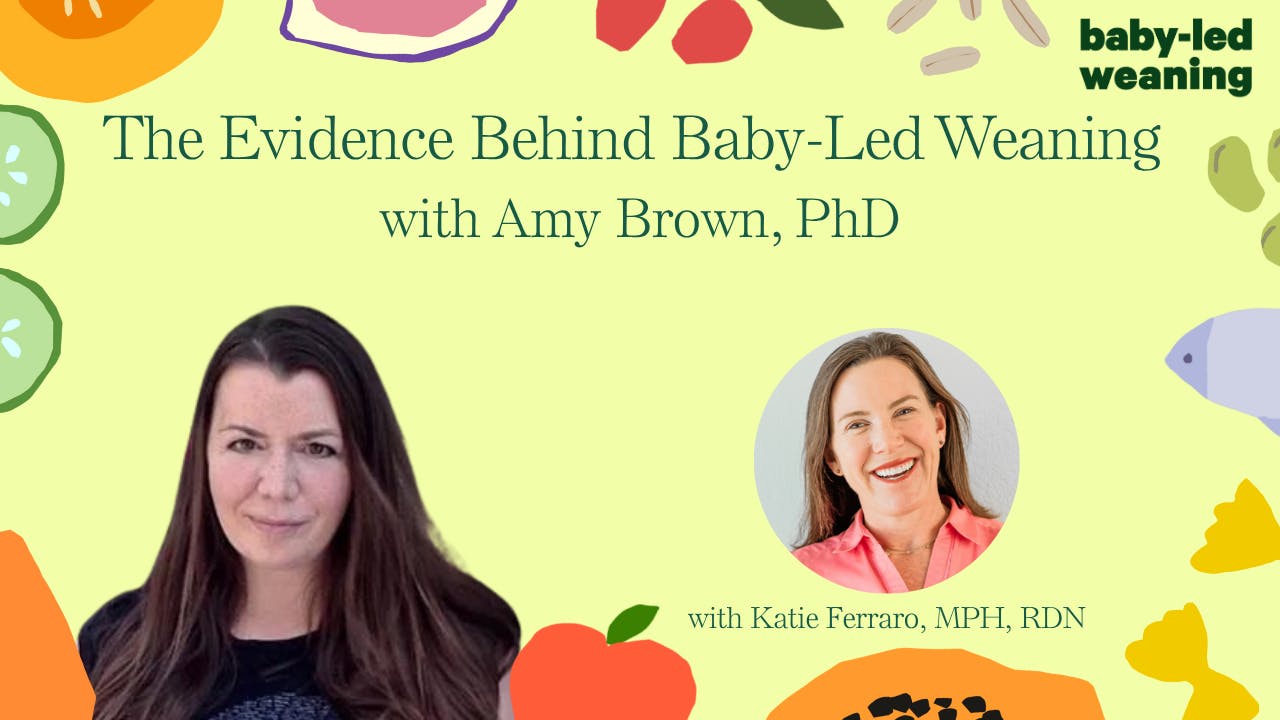
The Evidence Behind Baby-Led Weaning with Amy Brown, PhD
- Why it’s kind of even ridiculous that we have to PROVE that babies can feed themselves since prior to the advent of commercial baby food, that’s all babies for generations have been DOING! (...but also, Amy’s doing the research, so SHE is allowed to call it ridiculous :)
- How there’s no evidence to support all of the things opponents of BLW sometimes claim: it does NOT increase choking risk, BLW babies do NOT have growth faltering, they do NOT have nutrient deficits...and a ton more info about what the research DOES show as benefits including responsive feeding outcomes, family bonding and self-pacing intake.
- Differences in the US vs. UK when it comes to advertising of baby foods, infant formula and toddler or “follow-on” formulas as they’re called in the UK. And why parents and caregivers would be better served to totally bypass the commercial infant food aisle at their local stores, no matter WHERE you live!
LISTEN TO THIS EPISODE
Episode Description
There is a real and credible body of emerging evidence that supports a baby-led approach to feeding. In this episode baby-led weaning expert, author, researcher and Professor Amy Brown is joining us to help break down the evidence behind baby-led weaning.
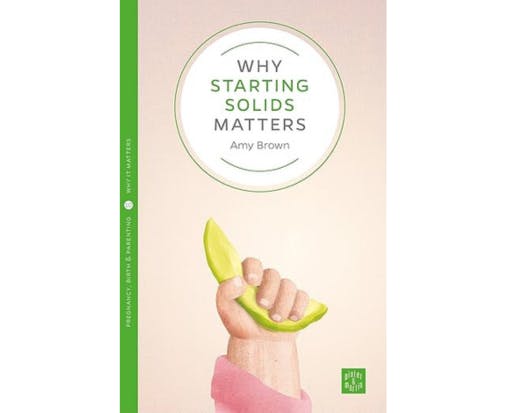
Dr. Brown is the author of the book “Why Starting Solids Matters” and numerous research publications exploring the safety and efficacy of a baby-led approach to feeding.
About the Guest
- Amy Brown is a psychologist by background and a professor of Public Health in Policy and Social Sciences at Swansea University in the UK.
- Her research focuses on early experiences in parenthood with a focus on infant feeding, mental health and baby behavior.
- She has published widely across these topics and her research helps inform policy and practice in both the United Kingdom and around the world.
Links from this Episode
- Professor Amy Brown’s website is here.
- Follow Amy on Instagram @prof_amybrown.
- Her book “Why Starting Solids Matters” is here.
- Dr. Brown’s review article “Baby-Led Weaning: The Evidence to Date” is here. This is a great place to start your lit review or jump off to her other research (...all of which is located under the Research tab on her website, first link above).
- Baby-Led Weaning with Katie Ferraro program with the 100 First Foods™ Daily Meal Plan, join here: https://babyledweaning.co/program and get $50 off when you sign up using the code BLWPOD50
JOIN NOW AT $50 OFF CODE: BLWPOD50
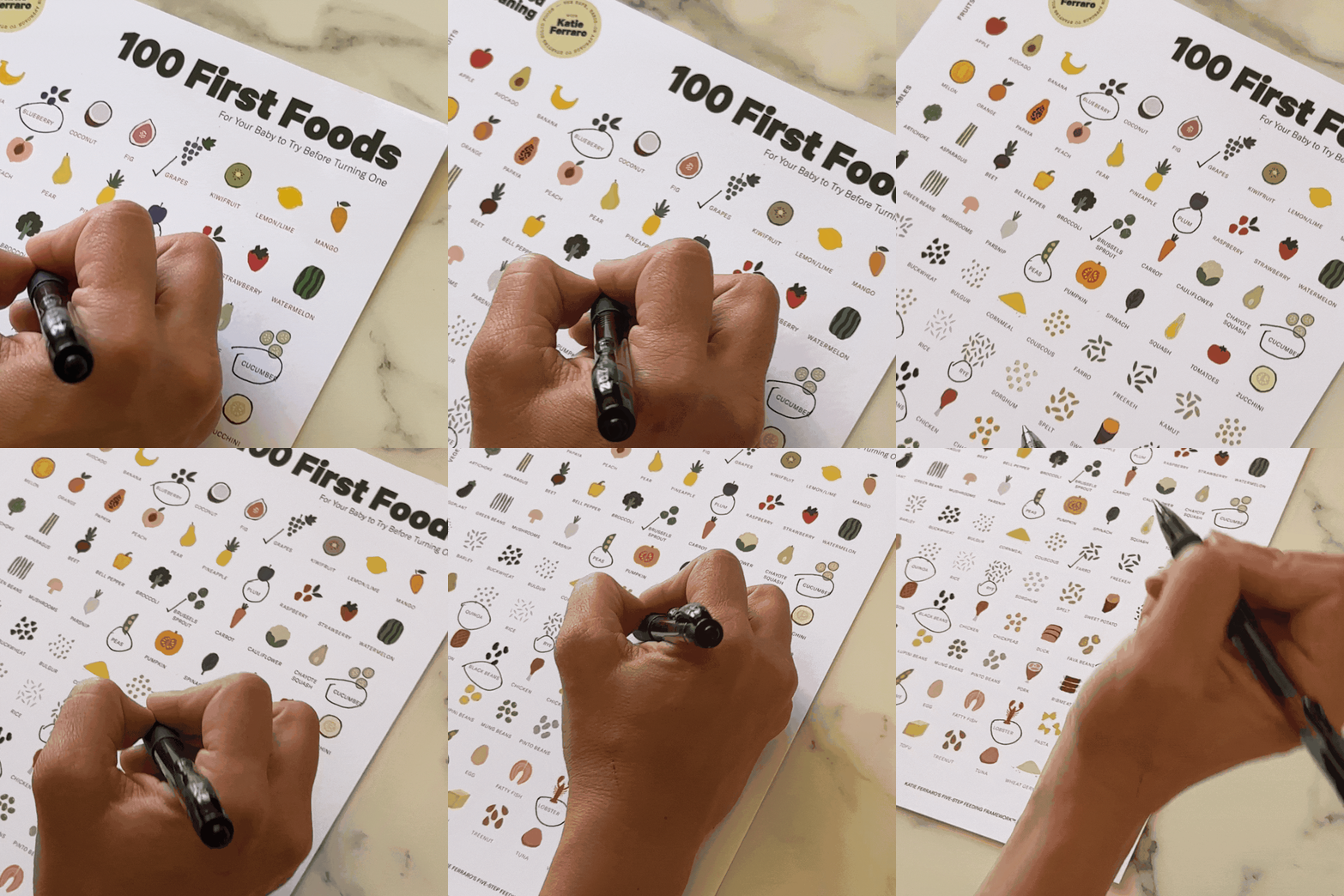
- Baby-Led Weaning for Beginners free online workshop with 100 First Foods™ list to all attendees, register here: https://babyledweaning.co/baby-led-weaning-for-beginners

Latest Episodes

Rula (0s):
While telehealth has made mental health care more convenient and accessible for millions of people, there are still critical challenges that remain like finding a suitable therapist or scheduling appointments or dealing with the expensive out of pocket cost. It still keeps many from getting the care that they need. Rula is on a mission to make high quality mental healthcare from a licensed professional. Easy and affordable for everyone. RULA has you covered. They take most major insurance plans and the average copay is only $15 per session. So you can now get the quality care that you need when you need it at a price you can afford. One thing I really admire about RULA is they're not just affordable. They also stick with you throughout your journey, making sure that you get the best therapy and that you're making progress. With Rula, every provider is carefully vetted and chosen for their expertise. So taking that important first step on your journey towards mental wellbeing is easy. Ruler starts by asking you a few questions about what's important to you. Then they provide you with a list of licensed in-network providers who match your preferences. You can schedule your preferred time and meet with your therapist as soon as the next day. Go to rula.com/weaning to get started today. And after you sign up, they ask where you heard about them. Please say the Baby-Led Weaning podcast. Go to RULA.com/weaning and take the first steps towards better mental health today because you deserve quality care from someone who cares.
Hungry Root (1m 28s):
Is your holiday stress levels starting to tick up just a little bit? Can you feel it? This is the time of the year when the calendar starts to fill up the to-do list triples and the what are we having for dinner? Comments. I'm like dinner becomes, oh my gosh, whatever I can grab while we're standing up. Hungry Root is my secret weapon right now. Hungry Root takes the stress out of mealtime by filling your cart with personalized picks and planning your week of meals. It gets smarter with every order. So with over 15,000 recipes to choose from each week, many of which are ready in just 15 minutes or less, plus a wide grocery selection. I mean we've got things like smoothies and kids snacks, sweets salad kits, ready to eat meals and supplements. It is so easy to find options that fit your whole family's tastes and nutrition goals. So Hungry Root handles the grocery shopping, the meal planning, and even restock snacks with no stress on your part. I told Hungry Root recently, I need quick meals with clean ingredients, high fiber plant-based. My last box came with these, this amazing like tofu dish, which I thought my kids wouldn't love tofu and they absolutely devoured it. We had a cauliflower mac and cheese, which is amazing. These addictive chocolate chia bites that are definitely mine and not for sharing because they were so amazing. It's like Hungry Root knew that I was heading into holiday survival mode and then planned accordingly. Their best price program also helps me stay on a budget while still getting high quality hormone free meats 'cause we we're still doing some animal foods even though we're trying to do a lot more plant stuff, we're getting organic produce and trusted brands and everything is so fast, like dinner in 15 minutes fast, which I know that you also need in your household. If you'd like to check out Hungry Root, I'd love if you could take advantage of this exclusive offer for our listeners for a limited time. You can get 40% off your first box plus get a free item in every box for life. So go to hungry root.com/weaning and use code weaning, that's hungry root.com/weaning code weaning to get 40% off your first box and a free item of your choice for life. Again, that's hungry root.com/W-E-A-N-I-N-G and use that same code weaning and check 'em out for your holiday survival guide.
Katie Ferraro (3m 52s):
When it comes to streamlining mealtime prep for your family,
Amy Brown, PhD (3m 57s):
To me the main core bit is not necessarily around the spoons or the purees. It's about the baby being in charge and the baby being fed responsibly, however they are being fed.
Katie Ferraro (4m 11s):
Hey there, I've Katie Ferraro, registered dietitian, college nutrition professor and mom of seven specializing in baby-led weaning. Here on the baby-led weaning with Katie Ferraro podcast. I help you strip out all of the noise and nonsense about feeding, giving you the confidence and knowledge you need to give your baby a safe start to solid foods using weaning. Does baby lead weaning actually work? As in can babies really feed themselves safely? Can they get enough iron and grow well all without you the adult spoonfeeding them pureed food. Today I'm talking to one of the most well-known baby-led weaning researchers to get the real scoop when it comes to the research.
Katie Ferraro (4m 55s):
Her name is Amy Brown and she's a PhD researcher based in the United Kingdom at the University of Swansea. Amy is the author of a number of research publications about baby-led weaning and she has a particular emphasis in her studies on safety and in particular looking at choking risk. So Amy's also written books about the topic, my favorite of which is called Why Starting Solids Matters. This is a great just kind of tiny like pocket-sized handbook. If you're a healthcare professional or a parent who's really looking to synthesize all of the research out there about starting solid foods. If you've ever had, I don't know, a skeptical pediatrician or a nervous partner or maybe you yourself are feeling doubtful about whether baby lead weaning is truly evidence-based, today's interviewed episode with Amy's gonna give you the science and the confidence you need to let your baby feed themselves.
Katie Ferraro (5m 41s):
The interview today was recorded a while back, but the research Amy covers is still very relevant. It's cited very heavily in other recent baby-led weaning publications. So I think it's worth having to listen to. I'm gonna link to Amy's review paper, it's called Baby-Led Weaning. What does the evidence say? This is a great one to kind of get your head wrapped around where the data stands with regards to baby-led weaning and choking risk growth, faltering and nutrient adequacy. She particularly looks at iron from a baby-led weaning diet. So if you're a data dork, this interview is for you. And with no further ado, here is Professor Amy Brown talking about the evidence behind baby led weaning.
Amy Brown, PhD (6m 23s):
Thank you for having me.
Katie Ferraro (6m 25s):
Now, could you tell us just a little bit about your background? I'm very familiar with your work as someone who works exclusively in baby led weaning, but for other parents and caregivers who might not know about your work yet, tell us how you came to be interested in pursuing all the different areas of parenting that you conduct research in, but especially baby-led weaning.
Amy Brown, PhD (6m 42s):
Okay, so I am actually a psychologist by background, wanted to do a PhD, always been interested in eating behavior, so stuff around why we end up eating in the way that we do or the kind of different social and cultural influences. I wanted to do something with older children and was interested in adult eating behavior, particularly disordered eating. But then I had my own babies and had all these different experiences you have with them so you know, breastfeeding them or giving them formula and introducing them to solids. And when I had my first baby, I started coming across this idea of baby led weaning.
Amy Brown, PhD (7m 23s):
So the concept as something different was actually quite new back then. This would've been oh late 2006, early 2007 and I got really interested in it. There were lots of different forums you could go on at the time the baby led weaning book didn't come out until a little bit after that. But as a researcher I was just really interested in trying to look at what the evidence behind this was because there were so many parents now following it and I went to the literature and went, oh there is actually nothing here, let's fix that. So we started at the beginning completely at the beginning just kind of documenting what parents were doing and why they were doing it.
Amy Brown, PhD (8m 6s):
And since then we've been looking at follow up data and all sorts of things around the experience and what it might lead to and why parents choose it and the problems they have.
Katie Ferraro (8m 18s):
So a lot of times, at least in my experience, parents worry that baby led weaning when they first hear about they say, oh it sounds interesting, but that's just, that's a fad or that's a trend. It's some, you know, woo woo parenting technique. And I always try to counteract that by pointing out that there is this research coming out, a lot of it done by you and your group and a number of studies have been published in the past that do support and in infants ability and desire to safely self-feed. So I was curious, do you have tips for parents and our listeners who are worried that maybe baby led weaning is just a passing trend or a fad?
Amy Brown, PhD (8m 52s):
I mean I, I think I'd say two things to that and that's a really common thing that people say to me and I think we just kind of have to go back a little bit in history. You know, when we were kind of evolving the baby food industry didn't evolve alongside us. We didn't have a baby food industry of pure age specialized foods until about 1930. And if you kind of look into the history of that, I think it was sort of the UK and the US at kind of similar points in the 1930s, they developed the ability to be able to can and store food for longer life. And they were doing that with vegetables for adults. So they, you know, they were, they were canon carrots and some kind of bright people had this idea that if you could do that in kind of big jars, then why couldn't you do it in smaller jars and have specific foods for babies?
Amy Brown, PhD (9m 43s):
I mean it was a bit more complicated than that but that's the kind of history of it. And it was the idea that from then on you then have this idea of special baby foods that you give to babies and of course there's a big market in an industry behind it and as soon as you start making money outta something, it becomes more and more and more. If you go back to even 10, 20 years before that, this concept of specialized baby food was just non-existent. If you kind of look at weaning records it, most babies were probably just given family foods when they were around nine, 10 months of age. I mean some of it might have been mashed down a bit, but this concept of a special pureed food that give your baby was non-existent until we learnt how to make money out of the idea.
Amy Brown, PhD (10m 29s):
So I think a lot of people, you know, if you say to them that this is a new idea of baby-led weaning and they look at you like you've, you've gone crazy because it's just what we did for generations before. And I'm sure most people when they have, you know, by the time you get to about your third baby, this idea of weaning routines and special foods and schedules and things like that goes out the window and they just get what they're lucky to have essentially, you know, they get thrown a little bit of food. So it is not some new thing. The other kind of other side of that is that there is no evidence base to show that spoon-feeding and pureed special baby foods are a safe or a good thing.
Amy Brown, PhD (11m 11s):
They literally came about when industry back in the thirties created them. Nobody did tests or demanded research or demanded evidence that this was a good thing, yet we come kind of full circle and they're giving our babies family foods again and we're suddenly told, oh well you need to provide evidence for that and you need to prove that's safe and you need to prove that babies eat enough even though the spoon and baby food industry never had to do the same thing. So it's one of the reasons we ended up doing the research is because every time we talk to like say the Department of Health here in the UK and said, okay, we need some recommendations around baby led weaning, they'd come back and say, well what's the evidence?
Amy Brown, PhD (11m 51s):
What's the evidence that it's safe? What's the evidence that's beneficial? So it, it's kind of that we've kind of got stuck in a way, but I think we need to think back and actually think about where those ideas are kind of coming from, that it might not be safe or it might not be beneficial because if parents start moving towards just giving their baby family foods and not paying money, the market around baby foods wouldn't do so well. So I think we kind of need to think about where the idea comes from and it's certainly not that it's not safe or good for babies, it's just what we always used to do for generations.
Katie Ferraro (12m 26s):
I love that approach when someone says baby led weaning is a fad or a trend we might respond with actually commercial baby food is a fat or a trend and has been around for significantly less period of time than feeding your child modified versions of the same foods the rest of the family eats. So that's a good marketing technique. You gotta sometimes fight fire with fire when it comes to marketing. So I know the United States at least we have a lot of pediatricians in our audience and many pediatricians who are educating themselves about baby-led weaning and looking into the research years included. But the reality is, as a professor of nutrition myself here in the US more than 90% of physicians in our country have never taken a dedicated nutrition course. So parents will sometimes say things to me like, oh my pediatrician doesn't believe in baby-led weaning and I always then recommend your review article, it's called Baby-Led Weaning the Evidence to Date.
Katie Ferraro (13m 17s):
And I say to parents who maybe aren't familiar with this publication, take this, find this, here's the link, go to your doctor and talk about this. So I was curious, for those of us who maybe haven't read the whole review article, could you briefly summarize where we're at regarding the evidence behind baby led weaning?
Amy Brown, PhD (13m 33s):
Oh yeah. So there, there's new stuff coming out every day and I mean I think we wrote that article, I think it's 2017 and we've done quite a bit since. So sort of the the main kind of areas that have been backed up by research and obviously we need further research still a big one is around the choking risk that often comes up, oh you can't give babies whole foods, they'll choke looking at kind of evidence from across a number of studies. Now that's basically been shown not to be true. There is no increased risk of giving a baby finger foods to eat compared to giving them a puree as long as the foods are appropriate. So they're not kind of nuts or things you shouldn't really give a baby anyway.
Amy Brown, PhD (14m 16s):
Or things like very hard uncooked carrot sticks or hard uncooked apple slices. Things that can break off in the baby's mouth maybe as a skill to be able to eat If, if we're looking at introducing solids after around six months, then babies have the physiological skills to be able to pick things up and and chew them. So obviously you can't do any kind of randomized trial around choking. You can't, you know, try and get babies to choke and see what happens. So it has to come from sort of observational data from the research that is happening. But there's probably probably about four or five papers now that show that it's just not an additional choking risk and there's, there's no reason why it would be any more than it is an adult choking.
Amy Brown, PhD (15m 1s):
So that's the, the choking side of things. In terms of weight, there's been a few studies now looking at the impact of baby-led weaning versus spoon feeding on babies' weight. And some of them show that when babies are baby-led we they're more likely to be a healthy weight. So there are two studies, main studies I can think of there that show that on average the baby who feeds themselves is less likely to be overweight than the spoon fed baby and it makes a lot of sense 'cause it's all to do with responsive feeding and it's all about those babies stopping when they're full. So if they're feeding themselves once they're full, they can just stop eating.
Amy Brown, PhD (15m 42s):
Where if you're spoon feeding a baby, the baby might, you know, they might take a few extra bites if you keep kind of encouraging them to eat a little bit more and that over time could lead to additional weight. The other thing I think with the weight is that when a baby is self-feeding, sort of what I call real foods rather than pureed special baby foods, it's gonna be a slower process. So by the time they pick it up and they put it in their mouth and they chew it, they've given their body time to respond. So we know with adults, don't we, if the adults who eat more slowly are more likely to be a healthy weight compared to those who rush their meals because they don't get that signal that they're full so quickly say those studies there. But the the two, the two study of I'm thinking about are observational, they're about parents who have chosen to either spoon feed or baby led wean.
Amy Brown, PhD (16m 33s):
There has been a trial going on in New Zealand for quite a few years looking at parents who are randomized to follow a traditional weaning approach versus a baby-led weaning approach. They didn't find any differences in weight between the two groups at 12 months or 24 months. It just didn't have any impact on weight. My main thoughts about that study, and people will probably hear me talk about this quite a lot, is actually how suitable randomized control trials are when it comes to feeding babies things because it's such a complex subject and we know from a kind of medical perspective we like a trial, don't we? We say it's the gold standard of data and perhaps if you've got a medication and you want to randomize whether someone has one dose or another dose, then that's a fairly straightforward behavior.
Amy Brown, PhD (17m 22s):
All you have to do is get people to take their dose. We know that that can be problematic in itself, but when it comes to randomizing stuff like breastfeeding or randomizing how a baby is introduced to solid foods, you start hitting all sorts of problems because families aren't that simple, they aren't that straightforward, they're affected by lots of different things. So as with many of the trials that try to look at early infant feeding though that study in New Zealand didn't have a situation where everybody in the baby led weaning group did baby-led weaning and everybody in the traditional group ended up doing traditional weaning, you had crossover. So my question is always, well what exactly are we measuring there?
Amy Brown, PhD (18m 5s):
And it's, you know, it's, it's a limitation to me well-designed study, but as always people are people so that can affect the results. Just one more study on on that is actually a recent publication from one of my PhD students, Sarah Jones. What she looked at is she weighed and measured a lot of babies for her PhD and then she looked at their, their weight outcomes at around 12 months and she didn't just look at whether they were spoon fed or baby led weaned, she also looked at the interaction with how they were given them milk feeds. So she looked at whether they were breastfed or whether they're formula fed.
Amy Brown, PhD (18m 47s):
And because in the UK we don't have many babies who are exclusively bottle fed express milk, we tend to have two main groups. They're breastfed directly or they're bottle fed most of the time. And what she found there is that when babies were baby-led weaning, how they were milk fed didn't seem to impact upon their weight. So the babies who were baby-led weaning and formula fed or a similar weight to the babies who were baby led weaning and breastfed, but when babies were spoonfed, if they were also bottle fed, they were more likely to be a heavier weight than all the other three groups. And one of the reasons we think this is happening is that because when you're spoon fed and you're bottle fed, you have very little opportunity to be fully in control of how much milk and food you're taking in.
Amy Brown, PhD (19m 38s):
So it all comes back to this idea as responsive feeding again say it is maybe something we want to pick up on on another question but it it's, it is just kind of thinking about how baby led weaning can really encourage responsive feeding and put babies in control of their own appetite.
KiwiCo (19m 55s):
Hey, we're gonna take a quick break but I'll be right back. When I was a kid, my siblings and I used to spend a lot of our holiday break building forts out of the boxes that our Christmas presents and toys came in. I mean I love the gifts but really I remember the building, the pretending, the creating something together with those boxes. Like that's what really made those memories stick. And now as a mom of seven, I love watching my kids get that same spark of creativity doing projects that teach them how to do things. And that's why I'm such a huge fan of Kiwi Co. Their crates make the perfect holiday gift because kiwi co crates don't just sit on a shelf, okay, they're hands on fun and educational. And when you give a kiwi co crate, you're not just giving a toy, you're giving kids the tools to create their own fun. So in our house we've been doing the tinker crate, which is for kids ages nine to 12. My daughter recently built a working pinball machine, she could not stop playing with it, but what I loved most was watching her understand how it worked to get the levers and the springs and the tensions and like all those science concepts just came to life right in front of her for younger children. The panda crate that's for ages zero to 36 months has research backed activities that engage all five senses for your baby and your toddler. For those of you with other children, age three to six, the koala crate helps your little scientists explore the world through pretend play. Another thing I love about Kiwi Co is that all these projects are screen free so they spark that same sense of wonder that we all felt as kids, that joy of discovery and trying and failing and then figuring it out with eight different crate lines for every age and interest from art to engineering, Kiwi co makes gifting easy crates ship right to your door. So even if you can't be there in person, you can still give something thoughtful and fun. So this holiday season tinker, create and celebrate with Kiwi Co you can get up to 50% off your first crate@kiwico.com promo code weaning, that's K-I-W-I-C- O.com promo code weaning for up to 50% off your first crate.
Katie Ferraro (22m 10s):
And that's so important because we're taught, especially when you're learning how to breastfeed, is that obviously beyond the nutrition benefits, bonding, et cetera, you baby is engaged in responsive feeding. And I always think it's so ironic when at six months of age we just flip a switch with traditional spoon feeding and throw that right out the window where now the baby's no longer in control me, the parent or caregiver, I will arbitrarily choose this amount of spoonfed puree that I will then essentially force feed the baby. And I love that the concept of responsive feeding is becoming so much more in the forefront. Like it's a term that yes researchers have used for so long but parents are starting to learn about and even here in the US I was just helping to edit a very well established introduction to nutrition textbook.
Katie Ferraro (22m 51s):
It's in its 16th edition, we all use it and it finally is the first edition where they use the term responsive feeding when they're mentioning feeding babies, even though it's all over the breastfeeding stuff, we sometimes forget about it in that second six months of life. And as you point out, it really is so important. So what I actually wanted to ask too is I know so much of the data is evolving and it's dynamic and it's oftentimes based on self-reported intake and and there are challenges to designing those studies, but I think it's important for parents to hear as well that there are no definitive studies that show that baby-led weeding increases choking risk or leads to growth faltering or babies can't meet their nutrients. Like would you say that that statement is fair for the parents who say, oh my doctor says I can't do it because the baby will choke, they won't get enough iron and then they also won't get enough nutrition, there's no data to support those statements.
Katie Ferraro (23m 40s):
Am I correct
Amy Brown, PhD (23m 41s):
There? There is no data to support that. Another one of my PhD students has a paper and a review at the moment. So her PhD has actually been looking at nutrient intake amongst spoonfed and baby led babies. She has looked at various different types of ways of measuring that. So food frequency questionnaires, you know, how often does your baby have this, which we know is really more of a measure of exposure rather than intake. So those studies don't accurately measure how much the baby has actually eaten, just whether they've been offered it. She did another study looking at 24 hour diet diary and again that really does kind of look at exposure really rather than how much the baby is having.
Amy Brown, PhD (24m 23s):
But certainly the babies in her study, the ones who were baby-led weaning were being exposed to more things like different sources of protein and different vegetables. They had a much higher exposure rate there and there were no difference in exposure rates for things like iron rich foods. Her paper now she has, it's a fairly small sample, but that's quite usual with this type of research. She had asked parents to complete a three day weighted food diary. So what that meant is that parents actually kept a diary of everything their baby actually ate. So involved taking a pair of small kitchen scales around with them and literally weighing everything before they gave it to their baby and then trying to work out how much you know, the baby could actually eat in none of it.
Amy Brown, PhD (25m 9s):
So we had these poor parents, you know, scraping food off a bib and picking up food off the floor. So she has a really accurate idea intake and again, pretty much finding that babies are eating very similar amounts dependent on whether they're spoonfed or baby-led weaning. We find that your average baby led weed baby is eating less than your average spoon fed baby. But that's actually a good thing because babies aren't meant to be eating huge amounts of food. I mean I think how much your baby eats is a really big concern for new parents, but the idea that they should be eating loads is completely incorrect. I mean the World Health Organization recommends around two calories a day from solid foods for babies at you know, six to eight months old.
Amy Brown, PhD (25m 54s):
It's a tiny amount if you split it over three meals or you know, several small bits over the day. So she has found that babies who are baby led wind eating closer to that amount, whereas babies who are spoonfed are eating much more than that on average. I mean there's obviously variation between babies
Katie Ferraro (26m 11s):
And it's so important to to point that out to parents because especially I'm a dietitian and I have a lot of dieticians in my community and they get so hung up on the quantity or the portion or the calories or the milligrams. The point is your baby is learning how to eat and so we wanna focus on giving the baby the opportunity to learn how to eat instead of focusing on how much the baby is eating. And so I understand the importance of doing the research to measure the milligrams, but the idea of like scraping the food out of the baby's hair to measure it, to prove that they're eating enough, it is during a period when they should be given the grace to learn how to eat, knowing that breast milk and or formula still provides most of their nutrition.
Katie Ferraro (26m 50s):
Would you agree?
Amy Brown, PhD (26m 52s):
Absolutely, it's, it's a learning experience. It's about moving from that process of milk feed to family foods when they're older. It's about tastes and textures and playing with it and all of that. And we've really lost sight of that I think under the kind of pressure to get food into your baby. And I, I think a lot of it comes from industry in pushing anxiety and products on the parents and of course baby led weaning is really against that. So it's always gonna be kind of fighting an uphill battle. And again, this idea that we even need to prove that these babies are eating enough when nobody has come along and said Right, we need to check that spoon fed babies are having the right nutrients. There isn't that data, there's such little data on what babies are actually eating.
Amy Brown, PhD (27m 37s):
So the idea we have to prove it is, is quite crazy. I mean her data, again in terms of nutrient intake, she didn't find very many differences between baby lead and spoon fed babies at all for macro or micronutrients. One of the things she did find is that most babies were quite low on iron intake. Again suggesting that the idea that babies should perhaps be having the backup vitamin drops that baby-led wing babies were eating too little and it was that most babies weren't perhaps getting the nutrients that they maybe should. So it should be a focus on nutrient rich food for all babies. But I can really see how under the kind of wrong kind of person wanting to be against baby led weaning, you could take that finding in isolation and go, oh baby led wean babies aren't having enough iron when actually it's something that modern parents struggle with quite a bit I think in terms of that transition.
Katie Ferraro (28m 33s):
And the critics do the same when it comes to weight. Oh well you don't have any studies that show that baby-led weaning prevents obesity. However, we do have lots of studies that show that babies who start with a baby-led approach are not necessarily going to have growth faltering. Like they have the capability to feed themselves adequate amounts of food that in conjunction with formula and or breast milk would allow them to thrive and grow and have those experiences where they continue to learn how to eat so they can then get more of their nutrition from the food. So I love the research that you do, but I do respect what you're saying which is it's ridiculous that we even have to do this in the first place because for generations babies have learned how to eat without the input associated with the entire world of commercial baby food.
Katie Ferraro (29m 16s):
But for the parents who don't have the time or the effort or perhaps even the desire to read all of the peer review published articles and the review articles and the world that you work in, I know that you've also written a fabulous book, one of my favorite books called Why Starting Solids Matters. And I was curious if you could just tell us a little bit about the book, what was your impetus for writing it and then also where we can get it because it is on my most recommended reading list for parents who want to learn about starting solids safely with baby led weaning.
Amy Brown, PhD (29m 47s):
It's not a how to introduce solid foods books. You won't find a single recipe or portion size suggestion in that.
Katie Ferraro (29m 55s):
Thank you, thank you, thank you for that. There's plenty of that out there. We need to know why this even matters.
Amy Brown, PhD (30m 0s):
It's more about the evidence behind why we do what we do when it comes to introducing solids and what really matters. So it talks a bit about what I've already said around the history of how we've got to where we're now with, you know, supermarkets with a huge array of you know, so many products that they're, they're pushing on parents all the anxieties parents have and all the tricks. I mean people seem to know a lot more about perhaps the tricks of the baby milk industry of how they try to sell products, but there's a lot of trickery that's going on around baby foods as well and trying to get parents to buy different things.
Amy Brown, PhD (30m 42s):
So it looks a lot at that around advertising and labeling of baby foods. I mean your laws might be very slightly different in the US but here certainly the way foods are labeled in terms of their title can be very misleading in terms of their content. So you actually only have to have quite a low, really low percentage of a food in your baby food to be able to have that name in the title. So you know, you can call it a chicken dinner and it's actually got a very low proportion of chicken in it but parents are misled by it
Katie Ferraro (31m 19s):
And it is certainly the same here you have to have like almost an advanced degree in order to truly decipher a food label and it's, it's mostly marketing and a commercial on the front of the package and I think a lot of parents don't recognize that
Amy Brown, PhD (31m 30s):
And a lot of kind of the new kind of tendency for super foods and things like that. So we have things like baby foods are labeled as kale or
Katie Ferraro (31m 39s):
Oh but it's really just green apple sauce
Amy Brown, PhD (31m 42s):
With a tiny little bit of kale in it and there is, I can't remember what brand of baby food it is now. Probably best not to mention it.
Katie Ferraro (31m 50s):
Of course
Amy Brown, PhD (31m 51s):
They have the same food that they sell in the UK and in the US so it's exactly the same product but it's called a different thing in the US compared to the UK in terms of the order of the name because they did market research and found that parents in the US like this food best and parents in the UK like this food best.
Katie Ferraro (32m 12s):
Can I ask if you have, do you guys have the shelf stable yogurt products for babies which always just knocks my socks off. Like if it were actually yogurt it would require refrigeration and yet here it is sitting on the shelves for months on end and you think it's yogurt like it's almost laughable sometimes how far removed from food all of the baby food is and I tell parents, you can totally avoid that entire aisle at the store and your baby will be perfectly fine. And I think sometimes they actually like that it's almost a relief and you kind of see them just, oh wow, so I don't have to spend all my time and money trying to figure this stuff out. Nope, you could bypass that entire aisle because your baby can learn to eat real food
Amy Brown, PhD (32m 50s):
And the like, we've got a big push on baby healthy snacks supposedly at the moment that are supposedly vegetable stick crack crisps and you know they're vegetables and they're high-end fiber and you look at them and you go, no, they're crisps,
Katie Ferraro (33m 4s):
It's potato, starch and salt and all it will do is prevent your baby from eating food at the actual meal. So snacks are great if you'd like to sabotage their intake one hour later when you're trying to get them to eat dinner.
Amy Brown, PhD (33m 15s):
So it look, it looks at things like that about whether you need to buy, you know, these specific foods. It looks at the idea of why we, the evidence suggests introducing solids at around six months and not earlier. It looks at recommendations around amount, it looks at you know, stuff behind fussy eating and how to try and what we know about that and how we can try and reduce that. It looks at all the myths as well. You know the, you know if you give your baby solids they'll sleep longer. Oh your baby's looking at your food, they want it. No, no, none of this is true
Katie Ferraro (33m 50s):
And you have a very eloquent way of undoing some of those myths because sometimes I just, the one about the one teaspoon of baby cereal and your baby's bottle's gonna make them sleep through the night is like, do you know how many calories are in an actual teaspoon of baby cereal Or even the same with pouches. All the times we encounter parents who say, well he didn't eat very much at the meal so I'm gonna finish the meal off with a pouch just so I know he gets something. I said turn that pouch over, there's 32 calories in that pouch on what planet do you think that's going to keep your baby full? That's not the point here. We need our babies to have again, the opportunity to learn how to eat. I honestly think Amy, your next book, at least for us parents should be, you know you have what why starting Solids Matters but it's why the drinks you offer your baby matters because we have a whole situation and I, I'm assume it's somewhere in the UK but with toddler milks and the very aggressive marketing of toddler milks and then these transition formulas that start at nine months.
Katie Ferraro (34m 39s):
Well I mean we should be focusing on transitioning our baby to cow's milk at 12 months, not a whole other subset of formulas that can be very, very confusing to parents. Do you guys have the same issue with toddler milks or transition formulas there in the uk?
Amy Brown, PhD (34m 52s):
Yeah, they're called follow-on formulas here. So they're from six months. So we have obviously different advertising laws here around advertising infant milks at all. So by law we are not allowed to advertise first stage infant formula that is suitable for babies from naugh 12 months because you're not allowed to advertise any product that is aimed at replacing breast milk for babies under six months old. So for us, our kind of follow on milks that are supposedly suitable from six to 12 months are basically a way to partially get around that law because you are allowed to advertise follow on milks and then you can pick up that market from six months.
Amy Brown, PhD (35m 39s):
So even though parents are told that first stage healthy formula is all your baby needs up to 12 months old and then you can move on to cow's milk, the advertising messages and regulations, the messages that the the industry use start creeping in from six months and of course parents then switch to it because they use all these different slogans, this one will make your baby sleep. You know this one has got added made up ingredient in it that has no evidence behind it and all of that
Katie Ferraro (36m 8s):
And all of the immunity messaging now on top of everything is further confusing to parents. Yeah
Amy Brown, PhD (36m 12s):
And they, they, their brand recognition then means that basically serves as an advert for their first stage milk because even though their packaging should be different, it very rarely is that different. So we've just done research showing that a lot of parents misinterpret the follow on milk adverts for actually first stage baby milk and they think it's being advertised anyway and also they are believing the statements from the follow on advertising. So quite interestingly when when we say to them, you know, are you affected by advertising? They all go, oh no, absolutely not affected. And we say, well someone must be or they wouldn't be doing it,
Katie Ferraro (36m 50s):
I wouldn't be the fastest growing segment of the formula industry.
Amy Brown, PhD (36m 54s):
So then they say, oh well yeah I give this one to my baby because it's the most scientific, it's the one that's got the most research behind it or this is the one that helps my baby sleep or this is the one that my baby needs because they're particularly hungry. So the messaging is getting through and it's just, you know, industry should not be anywhere near infant diet. It's too important to be misinterpreted or downright lies around the impact of different milks on babies when it's not evidence-based. That's nothing against the actual formula if parents need or choose to use it, but it's around the tactics of the industry that are trying to sell it to them. And I dunno if you have this issue, we have an entire range of first agent for formulas that are very hugely in price.
Amy Brown, PhD (37m 40s):
So you can get a supermarket owned brand one which is around four pound for roughly 800 grams or you can go to the more expensive ones that are closer to 16 pounds. So there's a, there's a huge difference in cost for something that will last a baby maybe a week when actually the content has been shown to be pretty much identical. If there were any added ingredients found by research to have a real impact on babies, then by law here they'd have to be added to every first stage infant formula. So they're not different but they're hugely different in price and that's the advertising. It's parents will buy the one that has been shown to be appealing to them based on whether they want the scientific one or the one with the happy baby on the front.
Katie Ferraro (38m 23s):
And at the end of the day it's non-fat milk powder with some corn syrup and it with added sugars that children should be minimizing anyway. I think parents don't even recognize all the different, at least in the United States, there's so many different ingredients that can potentially represent added sugars. I mean the last place we wanna be getting it from is milk. So I was curious too just regarding the sentiment in the UK versus the us like in the United States I do a fair amount of work. I'm in California with the California WIC Association, so that's the special supplemental nutrition program for women infants and children. And they've always espoused a traditional spoonfeeding approach, but in the last few years they speak at our annual convention and we're slowly talking about, we call it a baby-led approach to feeding. They don't love the term baby-led weaning.
Katie Ferraro (39m 4s):
That's fine, we can turn it around. But increasingly even our bigger government agencies are starting to adopt this as, wait a minute, this is certainly something that's a follow on to all of the responsive feeding techniques that we teach for breastfeeding and they are becoming more open to talking about it, incorporating it. I just, you helped me, which was fabulous on a presentation I just did for all of our healthcare professionals in California. That was all about the evidence behind it because of course it does need to be evidence-based, but we also need to acknowledge that babies do have the ability and the desire to feed themselves starting at around six months of age. So I was curious in the UK is there, what is the sentiment about baby-led weaning or a baby-led approach to feeding or responsive feeding, whatever you may call it as as far as you're concerned?
Amy Brown, PhD (39m 50s):
I think again, we're kind of stuck because they don't deem it to have enough evidence to be able to actively promote it to parents. So in terms of baby-led feeding, they see that as being baby-led weaning. We end up in a situation where because there is no official guidance that health professionals don't give consistent messaging or they might tell parents not to do it, which we know doesn't work for anything does it? I mean we've, we've finally kind of recognized around safe sleep guidance that parents need advice around how to, you know, safely bed share with their baby if that's what they're gonna do telling them to do. It doesn't stop them from doing it. It's better to be safe. And the same happens with introducing solids.
Amy Brown, PhD (40m 31s):
If you don't give parents good advice around what they wanna do, they'll do it without that advice or they'll hide it from you. So it seems a sort of backwards way of thinking. To me, we do have a big emphasis on responsive feeding, but the only official evidence is really around spoonfeeding. It is kind of baby led weaning and things like that are kind of creeping in. There's more kind of mention of them I would say, compared to 10 years ago in terms of actual guidelines about how to do baby led weaning than no, but saying that our official guidelines are to start giving your baby solid foods at around six months and to do a mixture of finger foods and pureed or mash foods.
Amy Brown, PhD (41m 16s):
So one of the questions we have is, you know, at what point is baby lead weeding, baby led weaning, can you only do baby lead weaning if you never spoonfeed your baby? What is baby led weaning actually about? Is it actually to do with the spoons and the purees or is it to do with the responsive feeding and the baby being in control? So to me the main core bit is not necessarily around the spoons or the purees, it's about the baby being in charge and the baby being fed responsibly, however they are being fed and also the other kind of stuff around it. So the things like them having finger foods to play with and touch and learn about and it being gradual and things about them sitting around the family meal table and having a bit of what everybody else is eating and joining in that social learning experience.
Amy Brown, PhD (42m 11s):
To me it's those things that are really the most important things. Not whether a baby occasionally has a puree or is spooned because you know, you've just cleaned them all year round. Your, the grandmother's house has got white carpets and white sofas and you don't want food everywhere. You know, or you want to give them some yogurt and you don't want it all over your walls. To me it's, it's about the way of thinking the mindset behind your baby being in charge and trusting your baby and letting them being in control of things and it being a learning social experience rather than necessarily the spoons and the purees
Katie Ferraro (42m 48s):
That's so wonderfully put. Like as a researcher you have to focus on the mil milligrams and the micrograms and the ounces and the portions, but in real life we all want our babies to learn how to be in control of and to listen to and respond to their own hunger and fullness cues. And in reality, baby led weaning does allow them to do that. So thank you again for sharing all of the research that you and your PhD students and your group is doing. For our audience who would like to learn more about your work, Amy, where can they go to learn more?
Amy Brown, PhD (43m 17s):
I've actually got a brand new website that has got all of, well it's nearly got all of my research on it. I started adding all of my research papers one at a time and then realize I published over a hundred and this might take some time. So it's a, it's a work in progress, but there's everything on there. So it's Professor Amy Brown co UK, nice and simple. Alright,
Katie Ferraro (43m 35s):
Professor Amy brown.co. Do UK and you guys, I will go ahead and link up all of the papers that Dr. Brown has published with regards to baby-led weaning. 'cause we are huge fans of your work and have like all of them because we're citing them regularly to talk to parents, especially when we're talking to healthcare professionals that yes, this is a real, and there is a real emerging body of evidence to support this alternative to traditional spoonfeeding. All of the resources that Amy mentioned will be in the show notes for this podcast episode and you guys can find that@bLwpodcast.com slash six two. And I'll link to Dr. Brown's site as well where you can go to learn more about her research. So Amy, thank you again for being here. This was such a fabulous conversation and so useful for our audience to hear.
Katie Ferraro (44m 17s):
Thank you.
Amy Brown, PhD (44m 17s):
Having me. I've enjoyed,
Katie Ferraro (44m 20s):
Well, I hope you guys enjoyed that interview with Amy Brown. Again, she's a researcher at Swanee University in the United Kingdom. She's got a wonderful review paper called Baby-Led Weaning. What does the Evidence say? She's also got a great book about starting solid foods called Why Starting Solids Matters. She's also a breastfeeding advocate, so she's got a lot of really great breastfeeding publications. If you're kind of looking for info on how to transition from breastfeeding to starting solid foods, definitely check out some of Amy Brown's work. I will go ahead and link all of the resources and references that she mentioned today on the show notes page for this episode, which you can find@blwpodcast.com/70. And a special thank you to our partners at AirWave Media.
Katie Ferraro (44m 60s):
If you like podcasts that feature food and science and using your brain, check out some of the podcasts from AirWave Media. We're online@blwpodcast.com. Thanks so much for listening and I'll see you next time.
Rula (45m 18s):
You know how if your baby gets sick, they spike a fever or they get a rash, you can, in most cases, call up your pediatrician's office, hopefully get in to see someone that same day. And best case scenario, your insurance covers most of it. Now imagine that kind of access, but for your mental health, that's what rula is doing. They are making it that straightforward to get the therapy and the mental health care that you need with the licensed providers covered by insurance with no long wait lists. And this isn't just therapy in theory, this is actual care. Every provider in Ruler's network is vetted, experienced, and focused on helping you make real progress. So appointments are often available as soon as the next day and with most major insurance plans accepted, you are gonna pay as little as $15 per session, sometimes nothing at all. Plus, rula offers end-to-end support, including medication management. So even if you're not totally sure what you need, they've got a team that can help you figure it all out. Thousands have already trusted ruler to support them on their journey toward improved mental health and overall wellbeing. If you head over to ruler.com/weaning, you can get started today. So after you sign up, they're gonna ask you where did you hear about them? Please say the baby led weaning with Katie Ferraro podcast and help support our show. If you go to RU la.com/weaning, you can take the first step towards better mental health today because you deserve quality care from someone who cares.
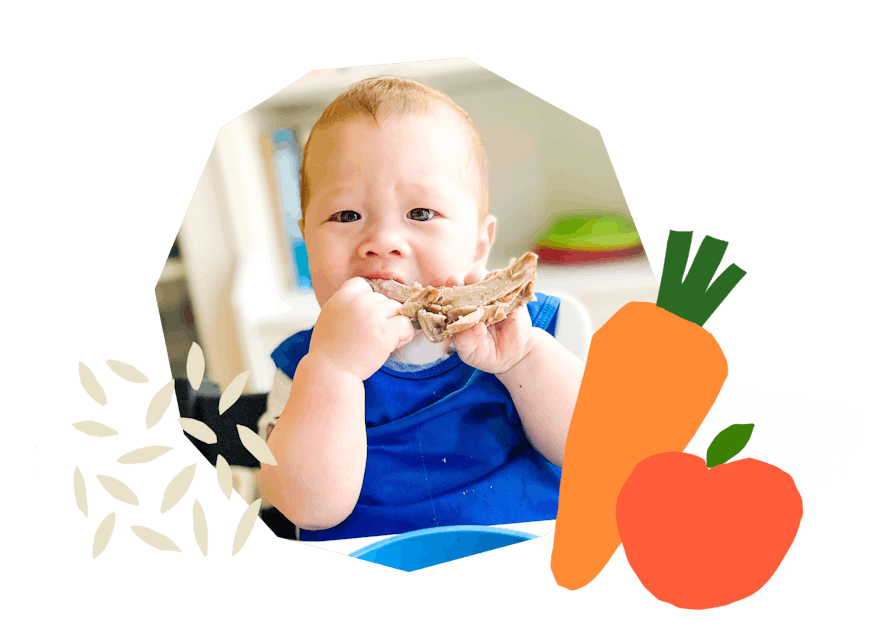
The Program Baby-Led Weaning with Katie Ferraro
A step-by-step digital program for starting solid foods safely and navigating the original 100 FIRST FOODS™ meal plan with baby-led weaning.
 EXPERT-LED, PROVEN APPROACH TO EATING REAL FOOD
 CONCISE VIDEO TRAININGS TO MASTER BABY-LED WEANING
 100 FIRST FOODS DAILY MEAL PLAN WITH FOOD PREP VIDEOS
Baby-Led Weaning for Beginners Free Workshop
Is your baby ready to start solid foods, but you’re not sure where to start? Get ready to give your baby a solid foundation to a lifetime of loving real food…even if you’re feeling overwhelmed or confused about this next stage of infant feeding.
Get baby-led weaning recipes and tips delivered to your email inbox.