
Postpartum Core and Pelvic Floor: Healing Your Body After a Baby with Marcy Crouch, DPT
- What postpartum core and pelvic floor symptoms are common at six months after having a baby, and which ones are not something you should ignore.
- How everyday tasks like feeding, lifting, and carrying your baby can affect your pelvic floor…and simple ways to reduce strain.
- Why addressing pelvic floor health now can help you feel stronger, more comfortable, and better prepared for future pregnancies.

LISTEN TO THIS EPISODE
Episode Description
Many moms expect their bodies to “bounce back” after having a baby…but months later, odds are they’re still dealing with leaking, pressure, weakness, or discomfort and wondering if this is just how it’s going to be forever? In this episode, I’m joined by Marcy Crouch, DPT, a board-certified women’s health physical therapist and founder of The Down There Doc, to break down what postpartum core and pelvic floor recovery really looks like. We talk about what’s normal, what’s not, and how moms, including those thinking about future pregnancies can start healing their bodies with confidence, even if they’re six months or more postpartum.

About the Guest
- Marcy Crouch is A Doctor of Physical Therapy (DPT) and Board-Certified Women’s Health Clinical Specialist (WCS) with 15+ years of experience in pelvic floor, pregnancy, and postpartum recovery.
- The Founder of The Down There Doc, an education platform helping moms heal their core and pelvic floor through evidence-based, at-home programs.
- …a mom herself, known for her clear, no-shame approach to breaking the silence around postpartum pelvic floor health and recovery.
Links from This Episode:
- Check out Marcy’s website The Down There Doc https://www.thedowntheredoc.com/
- Join Marcy’s Program The Down There Done Right Bundle https://www.thedowntheredoc.com/product/down-there-done-right-bundle-course/
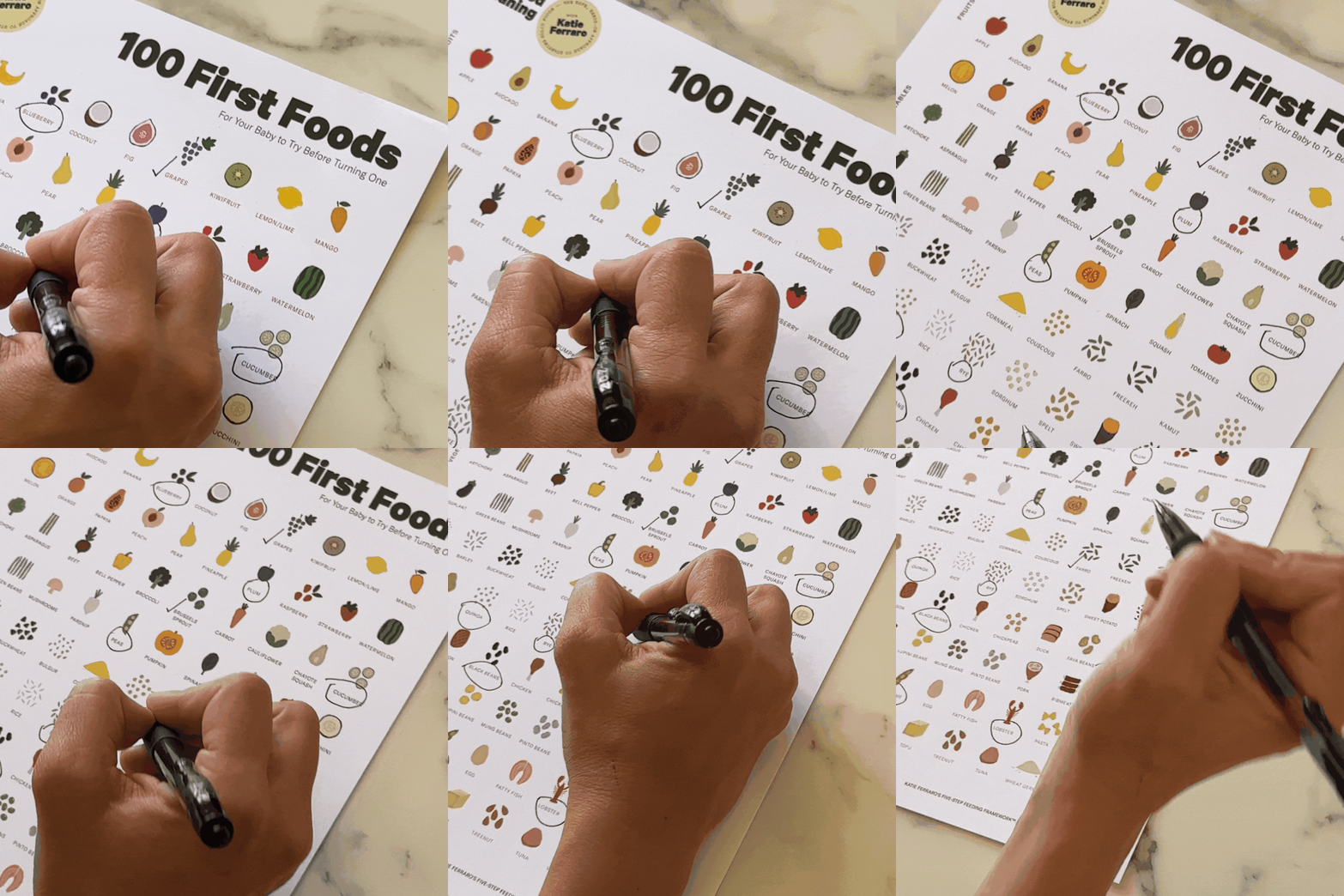
- Baby-Led Weaning with Katie Ferraro program with the 100 First Foods™ Daily Meal Plan, join here: https://babyledweaning.co/program and save $50 when you sign up using the code BLWPOD50
JOIN NOW AT $50 OFF CODE: BLWPOD50

- Baby-Led Weaning for Beginners free online workshop with 100 First Foods™ list to all attendees, register here: https://babyledweaning.co/baby-led-weaning-for-beginners
Other Episodes Related to This Topic:

Latest Episodes






Hungry Root (0s):
I know that December is all about giving and giving to others. But if I may say, I sometimes do give gifts to myself. And the best gift that I gave myself this year was Hungry Root. Hungry Root takes the stress out of mealtimes by filling your cart with personalized picks and planning your week of meals, it gets smarter with every order. Like Hungry Root now knows I do not like beets. We accidentally got some beets in something and I made some tweaks. Their, their technology is amazing with, there's over 15,000 recipes, first of all, that they choose from each week. My brain can't handle that. What I said is like, I want meals that are ready in just 15 minutes or less. There's this super wide grocery selection. There's things like smoothies and kids snacks and sweets and salad kits, ready to eat, meals, supplements. It is so easy to find options that are gonna fit your whole family's taste and nutrition goals too, because I know that you're in the thick of it with baby life and holiday madness and you're working and trying to maybe maintain a friendship or relationship. Or two. Figuring out food every day for your family is a lot. Hungry Root knows that they fill my cart with the exact groceries and recipes that I need. Nothing more, nothing less. Everything is based on my own dietary goals. Our family food preferences. A little bit about what my kids will actually eat, but also kind of pushing the boundaries. Sometimes trying new foods. It literally gets better every single time we use it. No holiday crowds. No last minute store runs. No guesswork. Hungry Root gets us. My last box had this cinnamon oat bake. Now I want every morning. I love the pre chopped veggies, the easiest beef stir fry I've ever made with a sauce that like was so delicious. I, I would never think of that on my own is all I have to say. I love that. Hungry Root is now like my kitchen brain. It's all clean ingredients, no junk. The meals are done in under 15 minutes. Truly a holiday miracle. Give yourself one less thing to worry about this season. If you want to check out Hungry Root, please take advantage of this exclusive offer for our listeners. For a limited time, you can get 40% off your first box, plus get a free item in every box for life. So go to Hungry Root.com/weaning and use code weaning. That's Hungry Root.com/weaning code weaning to get 40% off your first box and a free item of your choice for life Hungry Root.com/weaning code weaning. And check it out. I think you'll love how much hungry Root's gonna help streamline the meal prep in your family's life.
Sierra (2m 30s):
Every day at Sierra, you'll find top brand apparel, footwear, and gear for 20 to 60% less than department and specialty store prices. And during clearance time at Sierra, those incredible prices are 40 divided by 2.5 carrier, one even lower. And when you shop clearance at Sierra, you can save a whole lot more on everything you need to get active and outside. That's a line of saving epic brands. Fast selection, teeny, tiny prices. That's Sierra. Visit your local Sierra store today or shop online@sierra.com.
Marcy Crouch (3m 3s):
The problem is, is that because it's like, oh yeah, it's just part of being a mom like everybody. Ha ha. Like I gotta, you know, it's like, oh, you know, I'm like leaking when I sneeze. You know, I'm teasing. It's like, yeah, we can laugh about it and it's funny and that's fine. Takes away the shame. But the reality is, is that that's a major dysfunction and it only gets worse as we age because of pelvic floor muscles or skeletal muscles. So we're gonna lose strength, we're gonna lose endurance, we're gonna lose elasticity, especially as we go through menopause.
Katie Ferraro (3m 34s):
Hey There, I'm Katie Ferraro, registered dietitian, college nutrition professor and mom of seven specializing in baby led weaning. Here on the Baby led weaning with Katie Ferraro podcast. I help you strip out all of the noise and nonsense about feeding, giving you the confidence and knowledge You need to give your baby a safe start to solid foods using baby led weaning. Okay, Be honest. How old were you when the phrase pelvic floor health entered your orbit? I mean, I know I had never even heard of pelvic floor health until after I started having babies and it was definitely not from my doctor.
Katie Ferraro (4m 14s):
Something that would occasionally pop up on social media and he was usually like really cringe memes about moms always peeing on themselves or stuff like that. But I did come across Dr. Marcy Crouch thanks to social media where she's known as the down there doc. And at first when I heard about the down there doc, I was like, is this a gynecologist? No, Marcy is a board certified women's health physical therapist. So she has a doctorate in physical therapy and she's the founder of the down there doc that's an online company that offers courses and trainings for women on a variety of pelvic floor health topic. So she's a pelvic floor health practitioner essentially. And what I love about Marcy is that she's an in-person practitioner.
Katie Ferraro (4m 58s):
Like she's walking the walk. She's not just online making memes, okay? She's got a brick and mortar clinic business too. She's a mom and she thrives on helping women get ready for pregnancy but also heal their bodies in the postpartum period. So Here on the Baby led weaning podcast, we're over 500 episodes deep. And I've never covered the topic of pelvic floor health, but I know it's of interest to our audience because your lugging that baby around after birth. And as Marcy says, postpartum is forever. So maybe you're gonna have more kids down the road, who knows? And there are some pregnancy precautions you can take that Marcy's gonna teach about to ensure better birth outcomes for your body.
Katie Ferraro (5m 38s):
But there's also things you can do now to improve your pelvic floor health that you might not even realize. Little tweaks. She's gonna teach about Marcy's here to talk all about Postpartum Core and Pelvic Floor healing for your body after a baby. So with no further ado, here's Marcy Crouch, AKA, the down there
Marcy Crouch (5m 58s):
Doc. So I had this patient that came in, I saw her, she was pregnant with her second baby. First baby tore her vagina to shreds. She had a grade four tear right into her booty. Like very bad situation, lots of trauma. It was like awful. And I see patients like this all the time. Like women both online and in the clinic usually have a pretty traumatic first delivery. A lot of musculoskeletal problems, whether it's like C-section or big tears or multiple tears or whatever. So she's pregnant with her second. She's had pain ever since she had the delivery. Like had pain with sex with her hubs, couldn't wear tampons very well, like just, I mean it's a huge scar and a lot of muscle tightness.
Marcy Crouch (6m 41s):
I mean when you think about that, you know, if you had like a full thickness rotator cuff tear in your shoulder, you would have pain and dysfunction and loss of range of motion and all the things. So just think of that and a surgical repair, but like in your vagina. So anyway, so she got pregnant with her second. She was still having a lot of pain. I saw her through her pregnancy 'cause her whole goal was, she was like, I wanna have another vaginal delivery. I'm totally freaked out that I'm gonna like, you know, tear my vagina again And I don't know what to Do. You know, blah blah. So we worked and I did a lot of like birth prep training, which is like really what I love. That's kind of like my, you know, take me to the grave like right on my gravestone. Like she wants to prepare your vagina for birth.
Marcy Crouch (7m 22s):
She lived a long life preparing vaginas for birth. Like it's my favorite. And my whole thing is like, okay, how can we start to get ready for vaginal delivery to reduce the risk of these like really big tears happening? 'cause it would be better from a prevention standpoint than it is like a reactive, right? So we're doing a lot of scar tissue work. I'm teaching her how to push. A lot of women don't know how to push. We think we do, but we don't. Teaching her how to breathe appropriately, what position she can push in the best, how to like mobilize her scar at home in her vagina, you know, all the things. So she had her second delivery, she texted me and she had like a grade two tear, which is so much better than a grade four. And I always go for like two or below is kind of like ideally, I mean obviously would be great if we had no tearing at all.
Marcy Crouch (8m 8s):
But going from a grade four to a two is like a super good outcome. And she was like, oh my god, Dr. Marcy, this was so great. Like the recovery was so different. I could sit down, I could lift the baby, I could breastfeed, like no problems. Because like before she couldn't even sit, you know, she's got this like huge tear in her perineum. She's like, this is a game changer. I could have 10 more babies like this. Thank you, thank you so much. This is like the best. And it was a complete, you know, 180 from the first delivery, both from a physical recovery standpoint and then also from like a mental health, less depression, anxiety. She wasn't so freaked out anymore. She could like go walk, you know, the first couple days. And it's wild
Katie Ferraro (8m 47s):
How it like affects breastfeeding too. I'm actually working on my I-B-C-L-C right now and that was something I didn't even realize. It's like of course the position of your baby that you like. Why would mom choose that position? Well, because she had a massive terror during labor and it's uncomfortable for her to hold the baby in that position. It's like, it's not just something that's defined to labor. It's like has this, it's not a trickle down effect and a cascading effect into your motherhood journey. Yeah,
Marcy Crouch (9m 10s):
Yeah, yeah. And it goes, it goes into kind of every facet too. Because like if you can't sit because you have a big sensitive scar there, then you know, maybe you need to be like breastfeeding laying down, right? But then how are you gonna do that every night? Like I could, I have small boobs. Like I couldn't breastfeed sideways. I tried so many times like, but it just, it didn't work for me. So
Katie Ferraro (9m 31s):
I know as a new mom myself, like I just thought like a lot of moms I think, okay, things like leaking pressure, pain after birth, that's just like part and parcel of motherhood. Could you walk us through the most common postpartum pelvic floor issues? Which ones are normal and then what's not normal?
Marcy Crouch (9m 47s):
So most common post-pregnancy, post-delivery C-section or vaginal does, if you have a C-section, you still can have pelvic floor issues, which is very surprising for a lot of moms. And it's because of the pregnancy itself. It's not just the mode of delivery. So most common ones are leaking urine, gas, or stool. So this could be stress incontinence. So like laugh, cough, sneeze, jumping on the trampoline, leak, pee urge incontinence. This is where it's like, oh my gosh, I have to go to the bathroom. I'm like pulling up to the, in my driveway. I put the key in the door, it's like I can't hold it. And then pee everywhere. Prolapse. So this is where your organs are kind of like sitting a little bit lower in the vaginal canal.
Marcy Crouch (10m 27s):
This can be urethra, bladder, cervix, uterus, rectum. And that's more from like pushing like how you're pushing that strain on there and you know like how many babies you've had. There's other risk factors too, but that's like a supportive problem. And then we have pain syndrome. So this can be kind of general unprovoked pain, pelvic pain, low back pain, si pain, booty hole pain, tailbone pain. And then also we have provoked those. So this would be like upon penetration, do we have pain with tampons? SP limb exam, intimacy, like are we able to put something in the vagina? Usually nine out of 10 women, there was a study done, nine out of 10 have pain with intercourse the first time they have sex after having a baby.
Marcy Crouch (11m 10s):
And out of that sample size, 18 months later it's like 60% of them are still experiencing pain. And so that's a year over a year of having pain with penetration from one delivery. And the numbers of people that have pelvic floor dysfunction are staggering. It's one in three women. So where we get into trouble is that because it's so common, it's considered normal, but none of gotcha, none of those things are normal. Sex should never be painful. You should never leak urine, you shouldn't have your organs falling out of your vagina. You shouldn't have chronic pain. So the problem is, is that because it's like, oh yeah, it's just part of being a mom.
Marcy Crouch (11m 51s):
Like we're just everybody. Ha ha. Like I gotta, you know, it's like oh, you know, I'm like leaking when I sneeze, you know, I'm teasing. Yeah. It's like, yeah we can laugh about it and it's funny and that's fine. Takes away the shame. But the reality is, is that that's a major dysfunction and it only gets worse as we age because of pelvic floor muscles are skeletal muscles. So we're gonna lose strength, we're gonna lose endurance, we're gonna lose elasticity. Especially as we go through menopause.
Katie Ferraro (12m 20s):
So most of our listeners are moms who have babies around six months of age. I know you're, you're really big on the, the pregnancy prep. They're babies at this point gonna be starting solid foods or in the future if you are in six months postpartum, is there stuff that you can do at this stage and what, what's normal for a mom at six months and then what are, 'cause some of the things you said, I just thought they were normal. I mean, okay, your organ's falling out of your vagina, probably not normal but some of the other things I was like, oh, I didn't know that wasn't normal. So talk to the moms at the six month mark. What should they be experiencing or not?
Marcy Crouch (12m 54s):
Yeah, so I always say that postpartum is forever. It doesn't end at six or eight weeks. Okay. So even if you're 15 years out, you are still postpartum. So that's just, I like that
Katie Ferraro (13m 4s):
We're all postpartum. Postpartum. We're
Marcy Crouch (13m 5s):
All still struggling. Yeah, a hundred percent. So again, most common things probably that you're gonna be seeing around the six month mark are leaking urine, a little bit of prolapse, you may be experiencing more pain, kind of just generally musculoskeletal like low back pelvis, tailbone because baby's heavier now. And so if we don't have a lot of this inherent strength in our abdominal muscles from either a separation of the abdominal muscles or just kind of weakness in general, we are having to do more. Like babies are moving around at six months. Like it's happening, you know? So it's like now our load has increased, like those car seats are heavy, you know, like physically
Katie Ferraro (13m 45s):
Your load has increased physically your load, not just your mental load ladies.
Marcy Crouch (13m 48s):
Oh totally. And your pelvic floor is at the bottom of your pelvis. It's like it's a hammock that holds everything together. Not just your organs but your body weight, gravity, the baby that you're holding breasts that are big. Right. And now as we start to kind of introduce solids, you know, maybe your milk is starting to go down a little bit, you know, we're starting to maybe get some periods back. Like sometimes it happens right away, sometimes not for a couple months, but once like we're seeing different hormonal changes now. So like what's happening both from like a physiological standpoint and then what's happening from like a mechanical load standpoint.
Katie Ferraro (14m 23s):
So how does like that lifting that, carrying, feeding your baby, like all that stuff they do, I get it affects your pelvic floor. Are there simple adjustments you can do to help reduce the strain? 'cause like, sorry, I still gotta carry the baby and do all the work and do all the mom stuff. So what do you do there if like is the damage done basically or is there stuff we could be doing? Oh yeah,
Marcy Crouch (14m 41s):
Yeah, no, there's always stuff that you can be doing. Like I said, postpartum is forever. And the beautiful thing about the body and about the pelvic floor is that it's plastic. Like we can always make changes, right? Like just like you would be going to the gym. Like if you've had, you know, a weak bicep your whole life and then you decide you wanna start working out your bicep, your biceps gonna get stronger. Like it just is. Same thing with your pelvic floor. So what I start to tell my moms, if they haven't done any pelvic floor stuff, like before six months, let's just say, and they wanna start now, like maybe baby is sleeping a little bit more and they have a little bit more time. I always start with something called functional ke goals. And I go over this in my program. The caveat is though, however, KE goals are not the answer for everybody.
Marcy Crouch (15m 21s):
They are my frenemy and they are over prescribed. If you have muscles that are too tight or if you're having a hard time even just contracting your pelvic floor muscles, like your brain turns off the connection when you're pregnant, it like doesn't. It's like where did it go? I have no idea. Then you can't just be like contracting willy-nilly, you know, I, if you go to the doctor and they're like, oh you have to do like a hundred kilos a day, like physical therapists, we like cringe because we don't, why would you say that? Like we don't do that for any other muscle in our body.
Katie Ferraro (15m 50s):
I literally think my mom's doctor used to tell her that. Like I remember at the stop sign I'd be like, mom, what are you stoplight? What are you doing? She's like, I'm doing like 20 giggles. And I was like, I mean she's the mom of six kids and now that I have children I'm probably like, oh maybe I should have been more compassionate. But I just thought that was so weird your doctor told you to do that.
Marcy Crouch (16m 6s):
Yeah. And like the thing that's tricky about that is that's not when we're having dysfunction, right? Like we're not leaking
Katie Ferraro (16m 13s):
At the red light. Well I mean I have a lot of dysfunction in my car, but that's more about like my shoulder's behavior. But,
Marcy Crouch (16m 19s):
Well yeah, I mean I have had many a meltdown but I mean it's like we're not leaking when we're sitting down stopped at a red light. We're leaking when we're picking up the baby, when we're sneezing, when we're running after a toddler. So yeah, like you could do that every now and then maybe if it's appropriate, but you're not gonna see change because you have to load it like you would load functionally.
Katie Ferraro (16m 37s):
You teach moms like it's not too late basically.
Marcy Crouch (16m 39s):
No. So no, no, no, no, no. Okay. No, never, never, never. Not too late for leaking. Not too late for prolapse. Not too late for pain. Hey,
Katie Ferraro (16m 46s):
We're gonna take a quick break, but I'll be right back.
Marcy Crouch (16m 53s):
So good. So good. So good
Nordstrom (16m 56s):
New year, new gear. Thousands of fresh active styles are at Nordstrom Rack Stores now save on top brands like Nike, Puma and free people starting at just $35. How did I not know? Rack has Adidas. There's always something new. Plus join the naughty club to shop new arrivals. First unlock exclusive discounts and more great brands, great prices. That's why you rack.
Katie Ferraro (17m 25s):
What kind of improvements can a woman realistically expect? Like is there a diminishing rate of return here?
Marcy Crouch (17m 31s):
Yeah, yeah. So it depends on so many things, depends on genetics, depends on lifestyle, depends on many, many factors. But what the studies show and what I've seen anecdotally in the clinic is that you can have a reduction of a prolapse. Okay? So we grade the prolapse on like four grades. You can have a reduction of a prolapse by an entire grade with really good pelvic floor physical therapy. Okay. So like that may be the difference for somebody like that could make a huge change in their lifestyle both physically and mentally. Leaking is the same. Like we wanna see muscle changes that make sense like six to eight weeks of a progressive resisted exercise program, we'll start to see changes in skeletal muscle.
Marcy Crouch (18m 14s):
Same thing for the pelvic floor. The issue with with moms and women's health and pelvic floor stuff is that it's not so black and white because we have hormonal changes because we're dealing with, you know, load all the time. We're dealing with a lot of things that aren't so like linear I guess. And we can't like put a boot on our vagina like we could with a torn Achilles, you know? Yeah. So it's like we don't, we're fighting against like we don't have rest I guess is what I'm trying to say. That's
Katie Ferraro (18m 45s):
True. You don't have rest and that's, that's a big part of it and that's a lar a symptom of a larger problem. I know my only like experience, I'd never even heard of the term pelvic health, but the only thing I ever knew about prolapsed uterus was I was a Peace Corps volunteer in Nepal after college. So I worked in reproductive health and there would be, I mean very hard life, one of the few countries in the world where male life expectancy surpasses that of females. Like that's how freaking hardcore Nepalese women are. They work so hard that they're dying before the men there who also work hard but like they literally have a baby and they're back in the field working that day. That's not an exaggeration. Like the, the woman in my village totally their story prolapse leaders was a big deal. So there would be, there would be medical camps that would come through with usually foreign doctors and aid workers and they would do, I was like, what is, and and I was a translator so I was fluent in the Nepalese and I would go and I would help these American or whatever European doctors who, whoever they were coming from translate.
Katie Ferraro (19m 36s):
And I was like, we, what are we doing? Because like it was, I knew most of the words were like this is a very different procedure and they were taking basically like a rubber band I think it was and like putting the uterus back up in with like an actual device. And then the women would like, and then they would say like she should rest for two to three days or whatever. And I would laugh and tell them that they're like ha ha they'd go right back to work because rest just wasn't part of their life. Are there physical things you can do to help with that or I mean do you do strictly exercise or are there like actually implements to help with this?
Marcy Crouch (20m 5s):
Yeah, so many, many things. Yeah. So the older kind of devices are called, they're not older but they're called pessaries. And so usually like a doctor or urogynecologist will fit you for one. And this is more for like kind of the older population that is not gonna do well with surgery. Maybe is like, you know, can't really come to therapy. Like this is something that's a little bit more permanent. It's not permanent but like usually it'll get fitted and then you know in six weeks you go back in and check it and whatever. And they're all different like sizes and shade and
Katie Ferraro (20m 39s):
Is it removable? Yes. Pessary and people still do it. This isn't like old school, like we don't do this stuff anymore. No,
Marcy Crouch (20m 45s):
No they still do. They still do. Now there are some that are over the counter. So there are a couple companies that are coming out with like different
Katie Ferraro (20m 52s):
DIY it at home.
Marcy Crouch (20m 53s):
Oh yeah. Yeah. And before this, like before these companies came out, like therapists, like when I started out in residency, you know 15 years ago we would recommend like big Tampas like for people that needed a little bit of extra support because it's basically something that goes into the vaginal canal and like opens up right And like gives the U all
Katie Ferraro (21m 13s):
All and the pressure.
Marcy Crouch (21m 14s):
Yeah. And just kind of like lift, like gives it something to like push against. But now there are different companies out there that make different sizes of inserts and some of my patients do very well with them. Like maybe you're only leaking when you're running, you know, I have a lot of runners. Yeah. So like we might just use that while we're running, while we're rehabbing and doing other things. So Interesting. Yeah, the analogy is pessaries and like inserts into the vagina are like, like orthotics, like foot orthotics or like arch support. And so there's actually kind of a push for physical, the like pelvic floor PTs like myself to be the ones that are fitting people because like
Katie Ferraro (21m 51s):
Yeah that makes sense
Marcy Crouch (21m 52s):
Because we fit them and then we'll be like okay we are gonna run on the treadmill now and how does it feel and we're gonna squat and pick up your baby in the car seat and like is it falling out? Like what are your symptoms like versus just being like fit in an office laying down.
Katie Ferraro (22m 5s):
Yeah. Interesting. Okay. So what about for moms who are thinking about having another baby that pelvic floor rehab 'cause they maybe already had a first one. Is it something that like they should do right before they decide to have a baby they should be doing all the time? Like what's your take on? Like a lot of our listeners are, they don't know if they're gonna have more kids or they're, they're between babies or they're considering it, they just got over having the first one. When do you like focus on this stuff? 'cause there's a lot of other things that moms are taking care of too. This is important but how do we prioritize this?
Marcy Crouch (22m 34s):
Yeah, totally. So I think think it kind of depends if you're, if you had a great first delivery and you're not really experiencing any of those symptoms that I talked about, then I think you can kind of wait a little bit. The good thing about getting a pelvic floor evaluation kind of quick, even if you're not sure if you're gonna have a baby in the next year Or two is that you have a baseline. Like you kind of know what your pelvic floor is doing, what your abs are doing, like what your prolapse is, like if you have one or not. So you can use that as like a jumping off point for when you're ready to get pregnant again. I have a lot of patients that come in pregnant with their first babies and they have zero symptoms at all during pregnancy, but they wanna prevent any sort of like big traumas, tearing, you know, that sort of thing.
Marcy Crouch (23m 15s):
So I work with them. We, if there's no other symptoms we start around like 32, 34 weeks kind of depending, so we have like a good six weeks to really see changes in tissue. And that's not strengthening necessarily, that's more of like birth prep, getting the area ready, teaching mechanics, working manually in the vagina, like all of that. Now I do realize like I don't look at the world through rose floor classes. There are not very many of us, US. So it might be very difficult for most of your listeners or most moms to find a pelvic floor PT in their area. Yeah. One specializes in this and two has availability.
Marcy Crouch (23m 56s):
We're expensive, we can't take insurance because insurance doesn't pay. There are many, many barriers. Okay. So that's why part of the reason why I went online was to increase accessibility and we took what we could do in the clinic and transformed it into like an online thing. So you can start this process of getting a baseline, starting to see where you are preparing for delivery at home without having to like make time to make appointments and get babysitters and you know, like all the other struggles, I mean I'm a mom of two I like, it's hard for me to even just like go to the dentist Yeah. Twice a year.
Marcy Crouch (24m 36s):
You know like so I wanna meet moms where they are and understand that it's like I get it. Like we put ourselves down the list because we have so many things to do. So how can we, how can we help moms have a better experience here? The answer can't be all or nothing. Like there has to be a middle ground.
Katie Ferraro (24m 54s):
And I do think like the work that you're doing online, there's a lot of similarities in both of our fields for sure. And it's accessibility and it's parents talking about it. And I was thinking of you yesterday, so one of like I'm in this I-B-C-L-C course, like it's crazy, I haven't been in a hospital in 20 years and have to do all these like assignments and one of 'em was to go to a hospital breastfeeding class. Like we all did it before we had babies. And so they sent me the guide and it's the hospital where I had all my babies too. So it was cool to see how they like updated the material. So they sent the guide your Guide to pregnancy, birth and parenting and they have a whole section on pelvic floor wellness and pregnancy birth and after delivery. And I was like, and then there's you know, breastfeeding support and it's like not to freak you out moms about the stuff that could go wrong but at least to know what resources are out there and then it's like this is becoming a mainstream issue And I, and I appreciate your take.
Katie Ferraro (25m 45s):
I love, you know you're very off the cuff and like kind of flippant about some of the language. But I think the way you said it like it's to reduce the stigma. Like obviously you're a credential professional, this is what you do, you have the right credentials. But also to even be talking about this like is something that I know even when I had my first baby 11 years ago, there was no mention of pelvic floor health in the pre-pregnancy materials coming outta the hospital system. And so I think even if like mainstream hospitals even mentioning, I mean they finally mentioned baby led weaning, like I mean half the time it's wrong. The stuff they're saying is completely inaccurate and unsafe. But still to even be like in the cultural zeist, it's a lot of the work that we're doing online. It's like you get to this cultural tipping point where parents are gonna turn around and start asking the physicians and the other credentialed practitioners for help in this area.
Katie Ferraro (26m 31s):
But we also have to be online to kind of get their attention. So I think you're, you're kind of in this fine line, this area between okay traditional medicine and like the healthcare system but like you said, there's no insurance that pays for pelvic floor therapy. There's no insurance that pays for baby led weaning because I work with parents of typically developing babies, they just don't know how to make the food safe for their baby. You know like if something was wrong you'd go see a feeding therapist and then you could bill x, Y or Z diagnosis code. But I wanna help you never have to go see a feeding therapist like you wanna help a mom never have to go 'cause she had the stage four thing. But like I think it's pretty cool that at least even hospitals in our jacked up healthcare system are even talking about these things that you and I are like duh, there's all this data to support it. And we've been talking about it online for a really long time to see it kind of come to fruition as and and know that these resources are there for moms.
Katie Ferraro (27m 17s):
Yeah,
Marcy Crouch (27m 17s):
For sure. And it's definitely an uphill battle. So I've been doing this for 15 years and it's an uphill battle it like it, it was in the beginning when I started and it is now. And the interesting thing is that I have moved around the country a lot. My ex-husband's, we would move every three or four years for his work. I've been all over, I've worked in metro, like very metro cities, Los Angeles, San Francisco, Berkeley, Portland, Oregon. I've been in suburbs Now I live in the south and I, I did my residency in Dallas. Like I've seen lots of different types of people in lots of different types of cities and lots of different types of incomes.
Marcy Crouch (27m 59s):
And I will tell you that it doesn't matter. Yeah. Whether you are delivering at Cedar-Sinai in Los Angeles with Beyonce or you are like having a delivery at a hospital like community hospital in the suburbs of Alabama. Every single person that I have seen in person and online, every single one has said, nobody told me about this. I didn't even know about this. Yeah. I have no idea. And I'm, it does, it does not like this is the thread for women and moms is that like it is not something that is standard of care. It is not something that is talked about, it's told it's normal. So why are you even complaining about it? Just you wanted a baby so you know, go with God and like it's just not something that is part is considered part of maternal healthcare.
Marcy Crouch (28m 44s):
Both, yeah. At any stage of reproductive health. Which
Katie Ferraro (28m 47s):
Is wild 'cause it's pretty important especially if you wanna have another baby. Like you need those parts
Marcy Crouch (28m 52s):
Or even just like if you don't wanna have another baby.
Katie Ferraro (28m 54s):
Yeah. Or if you just wanna function as a woman in society. Yeah, exactly. You're right. Regardless of childbearing
Marcy Crouch (28m 59s):
Status. Yeah. And the number one reason that women get admitted to nursing homes is for incontinence.
Katie Ferraro (29m 6s):
Is that true?
Marcy Crouch (29m 7s):
Yeah. And that incontinence started when they had babies. Yeah.
Katie Ferraro (29m 12s):
Hey we're gonna take a quick break but I'll be right back.
Ford (29m 22s):
Ford Blue Cruise hands-free highway driving takes the work out of being behind the wheel allowing you to relax and reconnect while also staying in control. Enjoy the drive in Blue Cruise enabled vehicles like the F-150 Explorer and Mustang Mach e available feature on Equipped vehicles terms apply does not replace safe driving. See four.com/blue Cruise for more details.
Katie Ferraro (29m 53s):
Okay. So talk to the moms about the ones that can't, they don't have a Dr. Marcie in their neck of the woods. What services do you offer online for parents who are interested in getting this stuff under control?
Marcy Crouch (30m 6s):
So my website is the down there doc and I started out like very specific kind of birth prep stuff. So my first online program online course was, it was called Postpartum Power. And it's basically like rehabbing after baby. A lot of what we talk about in those courses are also applicable for grandmothers, for people who are going through perimenopause menopause. It's the same like you don't have to be six weeks postpartum basically is what I'm saying. And we cover everything from strengthening to lengthening to return to intimacy, to are you a runner? Do you have prolapse? Like whatever. And then I kind of like started to grow it a bit and we have a birth prep, we have a partner course, we have a early days, so this is like baby flies out until six weeks 'cause that's just like a chasm of nothing for moms.
Marcy Crouch (30m 53s):
And we kind of address all of those things. We have an app that's gonna be coming out in January and so we're restructuring some of the content a little bit and we're gonna add in more of like the perimenopause stuff more specific to people that are not necessarily like in the baby stage. I think
Katie Ferraro (31m 11s):
It's a great idea to expand like that because you first pay attention to it or hear about it when you have a baby. But if you don't take care of it, who, you're right, it doesn't matter if you're gonna have more babies or not. You, you're, you already did the damage, sorry, now it's time to do the work
Marcy Crouch (31m 25s):
To Yeah. And I think, I think it's really hard for women women because everywhere we go we're seeing that it's normal. I mean if you go to Target, like look at the pad aisle, I mean the incontinent, I
Katie Ferraro (31m 35s):
Never looked at the pad aisle but you're right. But like it is something like moms like joke about it. I mean I'm sure it's like so cringey on social media. I'm like can I not be on that side of the internet? Like I don't wanna see this. I don't think it's funny.
Marcy Crouch (31m 46s):
I think the bigger, the bigger problem too is that this is like the pad industry is like a billion dollar industry. Yeah.
Katie Ferraro (31m 52s):
No joke. I'm like if you do your job, like if I do my job then all my friends that are feeding therapists are outta work. Like, and I joke about that all the time, but like really that's my goal if you do your job like we don't need all the incontinence supplies
Marcy Crouch (32m 3s):
And they bank on the fact that it's not gonna be treated through their lifespan. You're
Katie Ferraro (32m 6s):
Right dude. You have a customer for life.
Marcy Crouch (32m 8s):
Yeah. Because if you look at how what how they go is like you start with liners and you go to pads and then you go to diapers. It's not like it should be the other way around. Right? You should start Yeah, yeah, yeah, yeah. Heavy after baby. And then as you heal you don't need their products as much. Oh
Katie Ferraro (32m 23s):
You better watch out. Like the baby food companies come after me. It's like the the big incontinence companies are gonna be after you.
Marcy Crouch (32m 28s):
Oh yeah. I mean they know. I mean I'm not shy about it and I'm not against those products. I mean yeah
Katie Ferraro (32m 33s):
I just wanna help you never have to buy them.
Marcy Crouch (32m 35s):
I mean yeah I work, I work with a great pad company called Attention Grace and they have these like organic planet friendly whatever and they are very much aligned with that message. They're like, yeah we have these products for like women that need them but our hope and our goal is that they don't need them or like that they don't need them as much as they did earlier in their life. And I really love that message because that's not how the, I mean
Katie Ferraro (32m 57s):
That's not how most of it is structured. Yeah. Freaking DME companies and they're building a ton for these products. Like you said, I didn't realize the nursing home stat though. That's
Marcy Crouch (33m 5s):
Crazy. Yeah, yeah, yeah. That's a, that's a big problem. But like the bigger companies, like the bigger pad companies that are, you know, you see ads for commercials and stuff are saying like, oh this is just like a normal part of being a mom. So like you wanna wear this one because it looks better in jeans than that one. And it's like, no I don't wanna wear one at all. I don't wanna wear
Katie Ferraro (33m 21s):
Any of 'em. Whatcha doing? Yeah, good point. Okay. I feel like I can tell you this because it might be TMI for other guests but not for you. I go to this like bootcamp workout every morning and on the days like I love it and especially when it's cardio day I'm like, this is awesome. But on the days when I see the jump ropes on the floor and I love jump roping, but if I see the jump rope, I have to go immediately to the bathroom and get a pad because I'm like, I mean I want a jump rope but I also don't need to look like I literally peed my pants. But that's what happens, you know? And it's like, and it's so nice that the gym sta stocks, the pads. 'cause I'm like, I don't wanna be buying this stuff like just a jump rope. I would skip jump roping. But, so anyway. Yeah, I'm gonna, okay. Tell us a little bit about the pay. What you do,
Marcy Crouch (34m 1s):
Pay what you can, pay what you want,
Katie Ferraro (34m 2s):
Pay what you can. Okay. This is an interesting model. I like, I follow all your stuff. I saw it come across on email. What was your decision to do that? What, I mean I think that's of interest to parents because this is something that's like, oh my gosh, it's just one more thing to pay for. Like no, this is important and I, I think your pricing model's really interesting.
Marcy Crouch (34m 17s):
Oh, thank you. So I started the down there doc online stuff during COVID when
Katie Ferraro (34m 21s):
Everybody had extra money. I know exactly what I'm talking about.
Marcy Crouch (34m 25s):
Everyone was at home looking at computer stuff, you know, I wasn't in the clinic, I was home with two small kids. I had moved to a new state, like it was, you know, madhouse. And I knew I had wanted to do something that increased accessibility back when I was in LA before we moved here. And for years I had wanted to do this like kind of pay what you can because I know, and now as a single mom who's like paying for her own health insurance from the marketplace, dang girl. Like it's hard, you know? And like I have, I work two jobs and I have two kids and I have a mortgage and I have all the shit. Like I know what it is, I know I'm there, I'm like very empathetic. Like I get it. And I don't want money or lack of insurance coverage to be another barrier for women and mothers to get what I consider and what is not just my opinion, but what is necessary maternal healthcare.
Marcy Crouch (35m 17s):
So for years I was like, I really wanna do this. And you know, my marketing team, they're like, no, no, no. Like that's not, it's like blah blah. And I was like, okay, whatever. So then last year I was like went through this like big kind of like emotional mental health, like reset after my divorce was final and like kind of like restocked everything. And I was like, okay, like I have to do something different. This isn't like, I want this business like the down there doc, this company to be like a direct reflection of what is in my heart and what is in like why I got into PT in the first place. And it's like, I tell this all, I tell this to people all the time, like my North star, like what is your North star? And like my North star is like this mom listening right now that's like feeding her baby at three o'clock in the morning and is like scrolling on her phone and being like, why, why, why is, why am I peeing when I jump rope?
Marcy Crouch (36m 9s):
Why does it look like I have a golf ball in my vagina? Like all of these questions that are unanswered, like that is my north star. So I'm like, okay, how do I reach her and how do I help her? And money is a, it's hard. Like, yeah, it's hard, especially with healthcare now and like, you know, all the things, there's so many things. So I just decided, I was like, eh, I'm just gonna do it. We're re kind of structuring the content anyways, like I said, launching this app. So my original kind of plan was like, all right, we'll do pay what you can, like whatever you can do, you'll get access to everything, lifetime access no matter what all of the programs. And then when we launch the app, we'll go back to kind of like a, you know, one set fee. But you know, honestly I do it. I think I'm gonna stay at pay what you can. Good
Katie Ferraro (36m 49s):
For you. It's your business. Do whatever you want.
Marcy Crouch (36m 51s):
Yeah. And I just don't like, like I said, I just want, it's like a pay it forward kind of thing. I'm gonna have some, I don't, this doesn't matter, but I don't know if like how the platform is, if I could do a pay what you can, but I'm gonna have some categories and then I'm gonna have like a chair, like a buy one for somebody and kind of have like a, like a bank of courses that people can purchase for somebody else and then we can just like enroll them in. Good
Katie Ferraro (37m 15s):
For you. That's, that's really exciting. We'll definitely link it up in our show notes and I think that's, I mean it's nice to see another creator thinking of something besides the bottom line because it is really a tough time for everyone and we're living in this area of information overload and people are gonna be out there, they're searching for this information you've already created kind of the done for you solution for them. Like let's just get it in the hands of as many moms as we can or women as we can. So I like, and I like your idea of expanding to beyond the birth space. So I'll definitely be following along and thank you so much for coming on and explaining this to our audience. I know for me, like we're more than 500 episodes in this podcast and I've never covered this topic, but our audiences overlap and it's like, I always try to remember like, I'm definitely done having babies, but the moms listening might not be done and there's stuff that they can do before the next pregnancy or stuff that they can do even after the last pregnancy.
Katie Ferraro (38m 4s):
And I really like to highlight credentialed professionals in their space. So I, I just wanna reiterate that you are a physical therapist with advanced pelvic floor training. So this is not, you know, you just need to be careful just like with infant feeding where you're getting your information from. If this is a workout gal with a, you know, internet diploma that she got in two days, is that person qualified to be guiding you on a really sensitive part of your body? I
Marcy Crouch (38m 29s):
Don't know. No, no, no. And like also, you know, not I am like a very multidisciplinary, like let's get the team in because people have different knowledge and strengths that I don't have. And most of like the medical community docs, PAs, nurses, like they're amazing at what they do. They are not pelvic floor people. Yeah. So I don't do pap smears. They shouldn't be prescribing pelvic floor exercise. So it's like we work together, we collaborate, we refer back and forth. So sometimes like, you know, we, PTs are the best people to be in there because like we are muscles, nerves, ligaments, function. Yep. Mechanics, those are things like, I'm not gonna do a DNC on somebody or like thing that I get, you know, it's like I'm not ablating anything here.
Marcy Crouch (39m 13s):
And so we need to like really think about that too. Like what, what is our, what are our medical team members? What are the, what is their expertness in and how can we all kind of blend together?
Katie Ferraro (39m 25s):
And I know we both agree like social media is a a double-edged sword. Like it's wonderful for business promotion but it's also like a terrible hellscape. But I found you through social media. Like I know things about pelvic floor, just like moms telling me all the time, like if it weren't for social media, I wouldn't know about you. I wouldn't have joined your program. I wouldn't have had my baby eat a hundred foods before they turned one. It's like it is at this point is necessary evil. So I think it's important that you keep doing that work so that other moms can hear about this. 'cause like they said, a hundred percent of them, no matter where you are in the country, they're like, I never, I never knew any of this stuff before. So that's why we're gonna blast it all over YouTube podcast. Let's do it. Social media, do it. The more the merrier. Well tell tell us your website again so they can go check out the pay what you can, hey,
Marcy Crouch (40m 6s):
What you can. Yeah, so it's the down there doc.com. Super easy. That's all of my social handles. Instagram, TikTok, Facebook, YouTube. I've got a TED talk up on our YouTube as well and on the TED channel and we talk about this also. And then I've got, I'm gonna have like a book coming out next year. But yeah, so lots of things like we're always on Instagram and TikTok so like, you know, come and say hi. You can contact us through the website too. And any questions that anybody has about vaginas and booty holes like I'm your girl.
Katie Ferraro (40m 37s):
Awesome. Well thank you so much. It was great chatting with you.
Marcy Crouch (40m 39s):
Thank you.
Katie Ferraro (40m 40s):
Well I hope you enjoyed that conversation with Marcy Crouch, AKA, the down there doc. Her website is the down there doc. Do c.com. She's got that. Pay what you can, which is a very generous offer for someone who runs an online business because it is really hard to predict your revenue if you don't know people are gonna pay for your product. But I admire her for really aligning her pricing with what she wants, which is to get her product into the hands of as many moms as she can. And I wanna help her do that. So if we could all help her go check it out@thedownthere.dot com, I will put a link to the show notes so that contains all of the links from the stuff we talked about today. That'll be online@blwpodcast.com/82.
Katie Ferraro (41m 21s):
And I wanted to say a special thank you to our partners at Airwave Media. If you like podcasts that feature food and science and using your brain, check out some of the podcasts from AirWave or online@blwpodcast.com. Thanks so much for listening and I'll see you next time. Bye now.
Mint Mobile (41m 44s):
Hey, Ryan Reynolds here for Mint Mobile. You know one of the perks about having four kids that you know about is actually getting a direct line to the big man up north and this year he wants you to know the best gift that you can give someone is the gift of Mint Mobile's Unlimited wireless for $15 a month. Now you don't even need to wrap it. Give it a try At mint mobile.com/switch Upfront payment of $45 for three month plan equivalent to $15 per month for required new customer offer for first three months only speed. Slow after 35 gigabytes of network's, busy taxes and fees. Extra semen mobile.com.

The Program Baby-Led Weaning with Katie Ferraro
A step-by-step digital program for starting solid foods safely and navigating the original 100 FIRST FOODS™ meal plan with baby-led weaning.
 EXPERT-LED, PROVEN APPROACH TO EATING REAL FOOD
 CONCISE VIDEO TRAININGS TO MASTER BABY-LED WEANING
 100 FIRST FOODS DAILY MEAL PLAN WITH FOOD PREP VIDEOS
Baby-Led Weaning for Beginners Free Workshop
Is your baby ready to start solid foods, but you’re not sure where to start? Get ready to give your baby a solid foundation to a lifetime of loving real food…even if you’re feeling overwhelmed or confused about this next stage of infant feeding.
Get baby-led weaning recipes and tips delivered to your email inbox.