
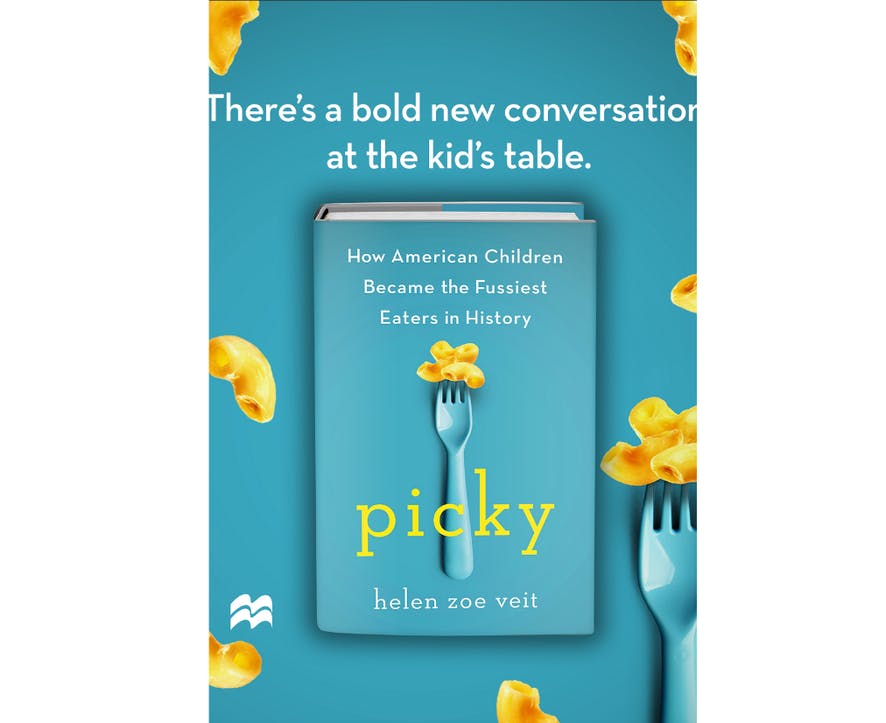
Where did Picky Eating Come From? with Helen Zoe Veit
- Which foods kids used to eat willingly and how whack-o the picky eating landscape is today
- How to avoid early kid food traps to help your child experience “pleasant hunger” at mealtimes
- Where Helen’s mealtime confidence superpower comes from and how it keeps picky eating at bay
LISTEN TO THIS EPISODE
Episode Description
Picky eating can feel like it comes out of nowhere…one day your baby eats everything and then the next day - boom - you have a picky eater on your hands. But did we maybe make picky eating up?
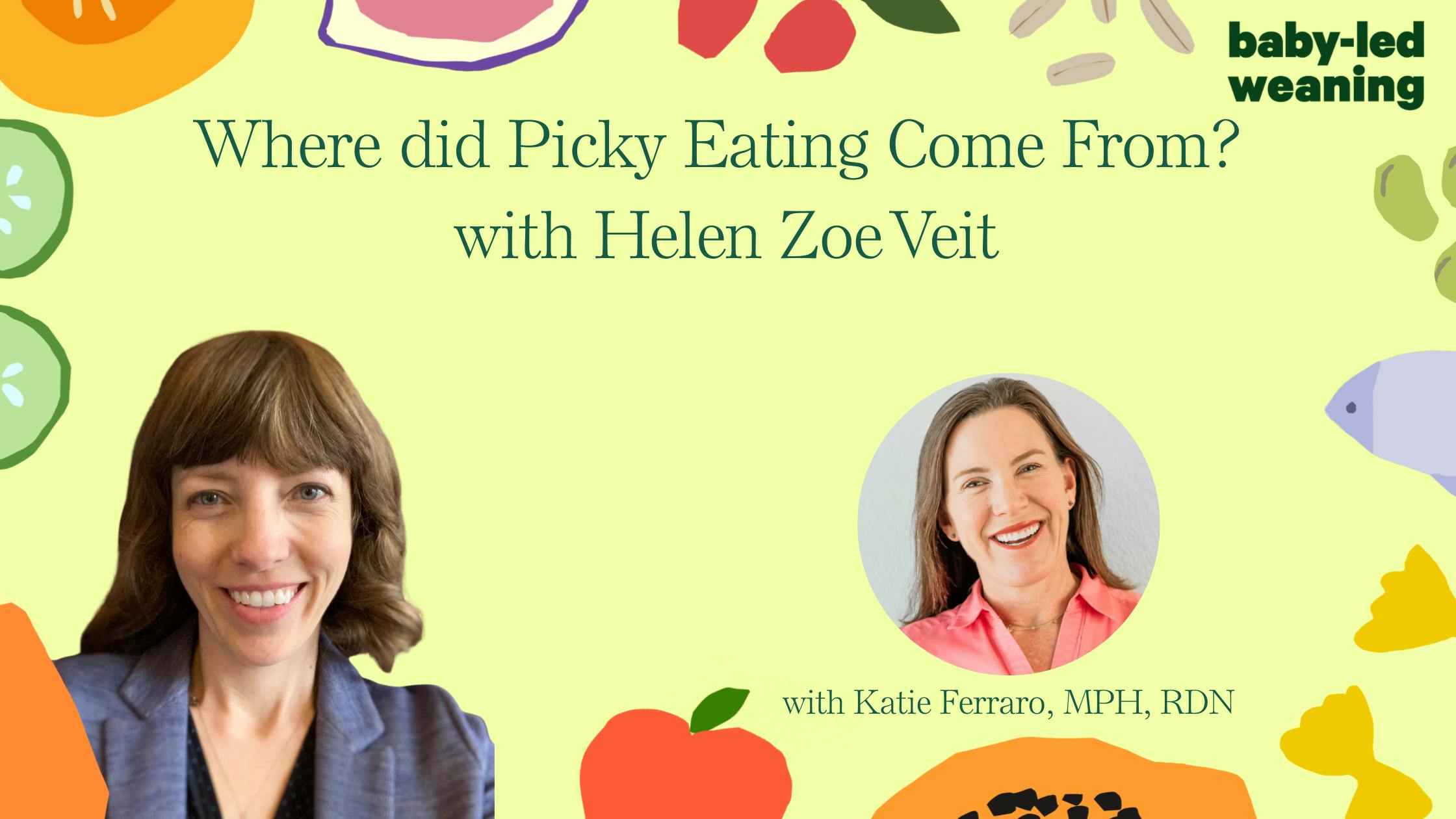
In this episode, I’m talking with food historian Helen Zoe Veit, author of Picky: How American Children Became the Fussiest Eaters in History. Helen helps us zoom out and understand how picky eating became such a big part of modern childhood…and what changed in our food culture to get us here.
About the Guest
- Helen Zoe Veit is a food historian who specializes in the history of American food and how culture shapes what families eat.
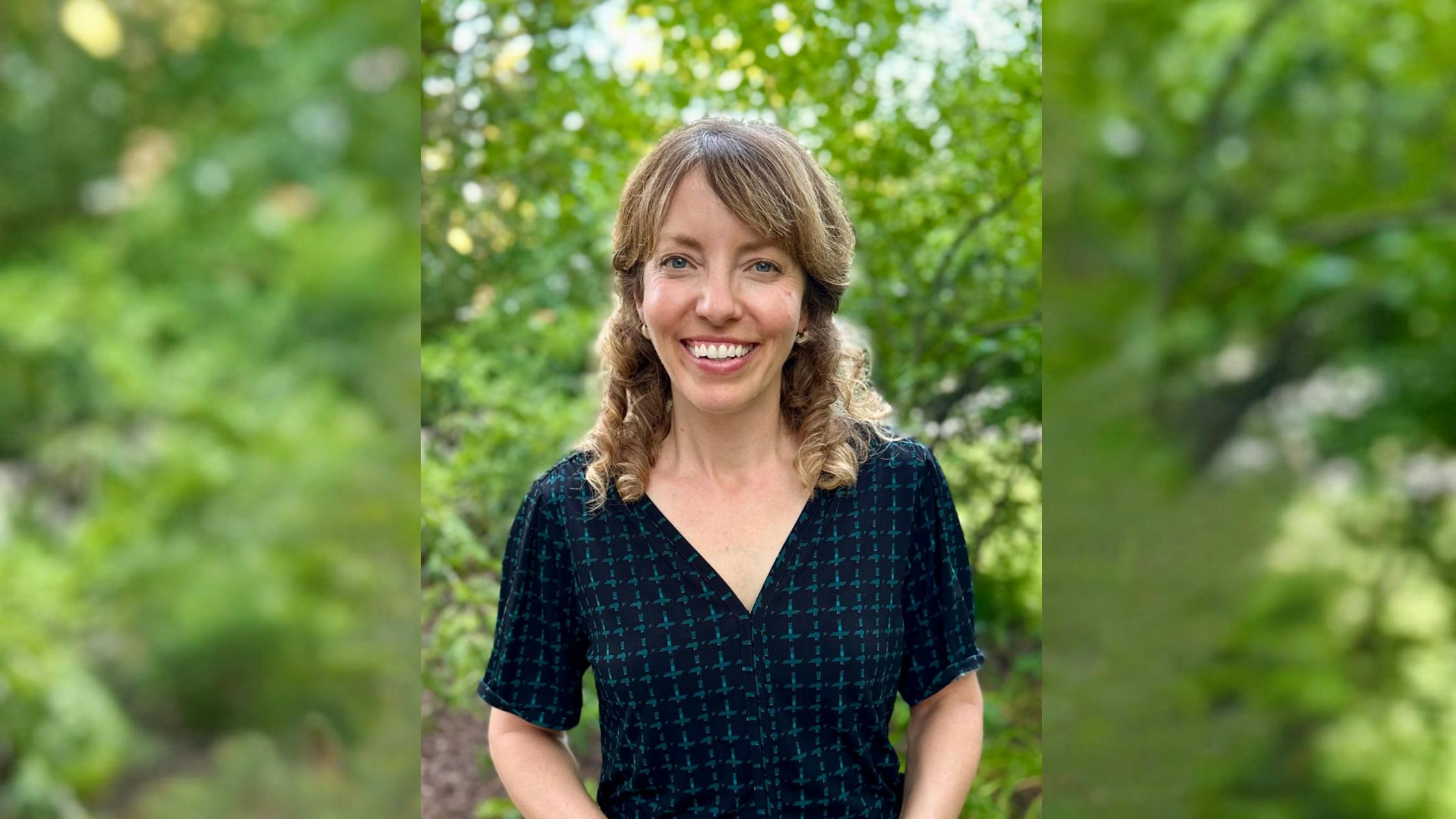
- She’s the author of Picky: How American Children Became the Fussiest Eaters in History (St. Martin’s, 2026), tracing how picky eating evolved from the 1800s to today.
- Helen teaches at Michigan State University and her food-history writing has appeared in outlets like The New York Times, The Atlantic, The Washington Post, and Smithsonian Magazine.
Links from this Episode
- Buy Helen’s book Picky on Amazon here (this is an affiliate link):https://amzn.to/3ZYM261
- Visit Helen’s Michigan State University Faculty Page here: https://history.msu.edu/people/faculty/helen-veit/
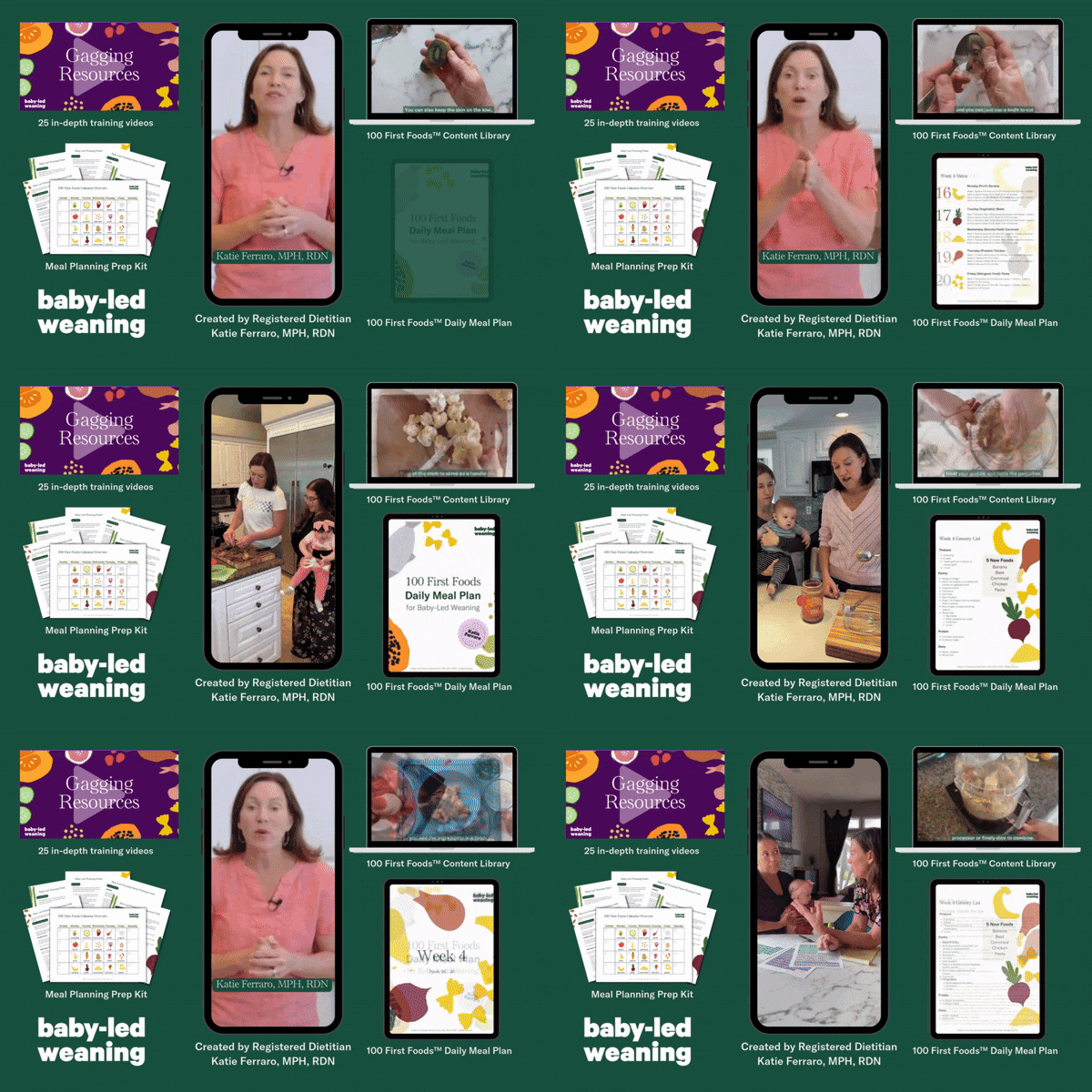
- Baby-Led Weaning with Katie Ferraro program with the 100 First Foods™ Daily Meal Plan, join here: https://babyledweaning.co/program and save $50 when you sign up using the code BLWPOD50
JOIN NOW AT $50 OFF CODE: BLWPOD50
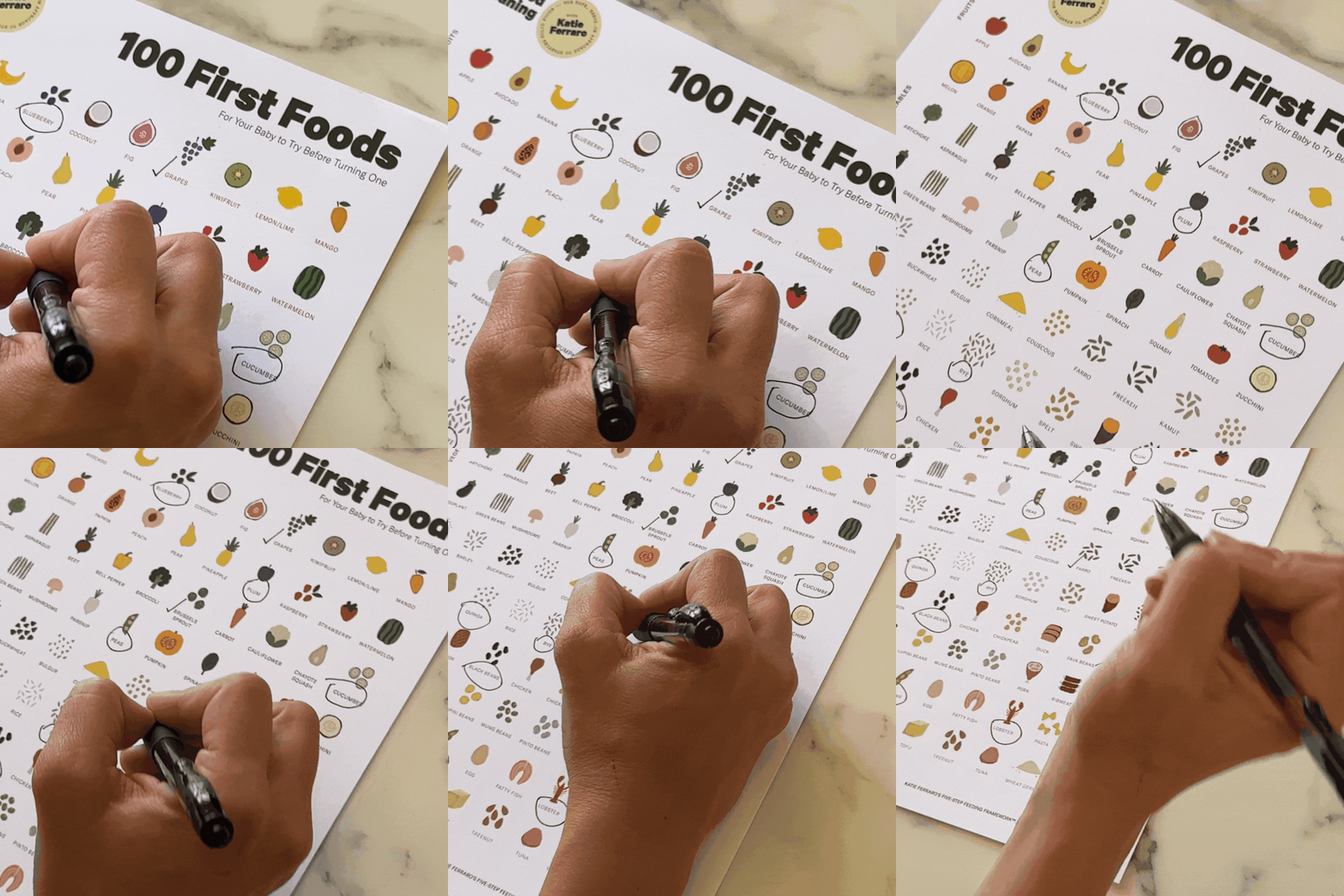
- Baby-Led Weaning for Beginners free online workshop with 100 First Foods™ list to all attendees, register here: https://babyledweaning.co/baby-led-weaning-for-beginners
Other Episodes Related to this Topic

Latest Episodes

Walt Disney World Resort (0s):
We are leaving today and entering a world of Mickey Mouse, waving princess meeting and greeting lightsaber, clashing the Twilight Zone, tower of Terror, dropping Banse, flying Space Mountain, launching Galaxy, rewinding. What's the network of Galaxy rewinding fireworks, igniting world of other worlds for whatever you love. Infinite Worlds await at the most magical place on earth. Walt Disney World Resort.
Helen Zoe Veit (33s):
What I would do is I would always say, here's the meal. I really think you can learn to like it. You know, I would encourage them to try the food multiple times at the same meal. That's also quite unusual that I would say, You know, try it again. Like, just give it another try multiple times. But then I'd say, you don't have to eat it. You don't have to. But if you haven't eaten, You know there's not a snack or a treat. But let me know if you get hungry. I'm gonna save it for you and I'll microwave it if you want it and you can have a few more bites and we'll say that's dinner.
Katie Ferraro (59s):
Hey there, I'm Katie Ferraro, registered dietitian, college nutrition professor and mom of seven specializing in baby led weaning. Here on the baby led weaning with Katie Ferraro podcast. I help you strip out all of the noise and nonsense about feeding, giving you the confidence and knowledge you need to give your baby a safe start to solid foods using baby led weaning. If you've ever offered your child a food that they willingly ate yesterday only to have 'em act like you're trying to give them poison when they see the leftovers today, then this one is for you. Because picky eating can feel so personal, right? It's like you're doing something wrong or I know a lot of you are worried your baby's turning into a picky eater overnight.
Katie Ferraro (1m 43s):
I hear it all the time from parents, oh, we did baby led weaning and now my kid is one and he is starting to show some signs of picky eating. And I always say, well that's typical and picky eating is not a problem to be fixed. But what if picky eating isn't just a phase or a personality trait, but what if it's something that our culture created over time? These are all thoughts that my guest today, Helen Zoe Vit has had. She literally has spent the last 15 years researching picky eating. She is a food historian, she's a college professor, she's the author of the brand new book. This is literally her book baby. It just came to life. It's called Picky, How American Children Became the Fussiest Eaters in History. Helen earned her PhD from Yale.
Katie Ferraro (2m 24s):
She teaches that Michigan State University and her writing on food history has appeared in outlets like the New York Times, the Atlantic, the Washington Post, the Smithsonian Magazine. She's also a mom of three. And in this conversation we are gonna zoom out and Helen's gonna talk about how the whole children's eating landscape has changed dramatically over the last century. It is wild. She gives specifics about what children and babies used to eat. You guys are gonna die. There are so many raw oyster references, I can't handle it. She's gonna talk about how kids food became its own category. We'll talk a little little bit about Dolly Parton, which spoiler alert, Dolly Parton was not a picky eater as a child and she's got some thoughts on big families and whether that helps to prevent picky eating, which as a mom of seven, I was personally interested in Helen's talking about how and why snacking took over and things that you can do starting now to prevent your child from becoming a snack craving monster.
Katie Ferraro (3m 21s):
And then why modern picky eating feels like it's hijacking family life. And Helen is also gracious enough to share some of the things that she actually does in her own family with her three girls to help keep picky eating at bay, which I thought was cool because she's like, I'm not a feeding expert, but just here's what works for my family. So she is an incredible, incredible conversation. Well, I mean, I guess she's not the conversation, she's the author. I stayed up all night reading this book. I am very, very sleep deprived. My kids didn't believe me that I finished the book. I think maybe because every time we go on vacation they're like, why are you reading the same book every time we go on vacation? Can't read a novel to save my life, but when I have a work deadline I can stay up all night and read an amazing book.
Katie Ferraro (4m 3s):
You guys have got to check out Helen's book. It's called Picky. Here she is. Helen Zoe Vi.
Helen Zoe Veit (4m 12s):
Thanks so much for having me. I'm so excited to be here.
Katie Ferraro (4m 14s):
Alright, your book Picky How American Children Became the Fussiest Eaters in History. It arrived yesterday. I read the whole thing cover to cover after my kids went to bed. It literally arrived at dinner time. My dinner and breakfast dishes are still in the sink to prove it. I could not put it down. Your book is fabulous. The whole time I was reading it, I was like, how on earth did she write this book? Like having three children at home. So first of all, tell us your secret. What was your process? While you're at it, please share. Why did you decide to write on this topic of picky eating?
Helen Zoe Veit (4m 42s):
The first question about how did I actually get it done? Well, it just took me so long. It took me, I, I started research for it in 2011 when my oldest was a baby and it was a slow research process, You know, interrupted by COVID eventually and other, other projects. But I just kept at it and it also just turned out to be such a bigger topic than I'd ever imagined. Precisely because it seems like a fun topic. It's like food and kids, it seemed. I think I had a kind of bias going in like, this should be fun and light and easy and I hope that the book I ended up writing is relatively fun and light to read. But the topic was just enormous. It's the history of American food and American childhood, both of those things over 200 years. Yeah, so it took a long time and my secret weapon is probably my husband who's just like a wonderful human and a totally equal partner.
Helen Zoe Veit (5m 29s):
So yeah, he just, his support was just crucial the whole time that I was doing it. How do
Katie Ferraro (5m 33s):
You do it on top of your like day job? I just pictured you like in the library reading Claire Davis's notes from, You know, 1930 or whatever it was. Yeah. Like did you just cram it in the middle of the night? Like when do you actually find time to do that level of research and writing as
Helen Zoe Veit (5m 45s):
A professor? Part of my job is research and writing. So there was, You know, built in structure and summers. Like I worked, You know, in the summers I was there every day in the classroom working a nine to five, getting the stuff done.
Katie Ferraro (5m 55s):
Oh my gosh, you're amazing. Well thank you. I know it's labor of love. It literally came out like yesterday, so that's like pretty amazing since 2011. So it's a newborn.
Helen Zoe Veit (6m 2s):
Congratulations.
Katie Ferraro (6m 3s):
So One of my favorite moments in the book is you drop us like right into what kids' food looked like in the 1930s. So you write that a suggested children's dinner in a recipe booklet that you said was a accompanied by a picture of Shirley Temple would include lima bean squash, cauliflower, asparagus, and stewed tomatoes. Then you had other examples, raw eggs, whole grains, salads made of raw cabbage, carrots, turnips, even dishes like which was my favorite. Creamed calves brains on toast, stuffed P prune salad, lima bean casserole, red hot bananas and liver paste sandwiches. When you lay out that list, it's like, wait, kids were actually eating that. Could you paint the picture for us? What was going on culturally at the table that there was ever a time in history that made those foods seem normal for kids?
Katie Ferraro (6m 47s):
And then what do you think has changed so dramatically that today those same foods like that would read as just like shocking on a kid's menu?
Helen Zoe Veit (6m 55s):
Yeah, so the kind of diversity of foods that you were just reading out, the mind-bending thing is that that wasn't unique to the 1930s. That was the typical way that kids ate in the history of our species up until the mid 20th century. Like the crazy thing is that the way we are doing it now, we're the strange ones. We're the ones doing this mass experiment that has never been done before again and again and again in in historical periods in different cultures across the world. You just don't see childish eaters emerging. And what's so important about that, what's so important about the historical perspective is that today, of course parents assume that that children are naturally sensitive to food.
Helen Zoe Veit (7m 38s):
They're naturally difficult eaters. They have a naturally limited palette. And you'll hear like evolutionary explanations for this. Oh, if kids hadn't been, if kids weren't naturally picky, they would go around stuffing poisonous mushrooms and berries in their mouth and we would've died out. So it's a protective strategy, but clearly whatever protective strategies there are can be really easily and quickly overcome by culture wildly more quickly than we've been told. Because that's what we see in culture after culture. We don't see picky kids, we see these wide ranging eaters eating, eating these incredible varieties of vegetables, organ meats, shellfish, like you name it, spicy foods.
Katie Ferraro (8m 15s):
Dude, there's so many raw oysters in your book. Like everyone was eating raw oysters. Like what's wrong with my kids? They don't eat raw oysters. Yeah,
Helen Zoe Veit (8m 22s):
I know, I know. Yeah, it's just, and that's the thing, it's not just that they would eat like foods that you might like today. Like they were eating things that like, You know, indigenous kids in the 19th century, they're eating like raw deer liver, they're, I mean I didn't even put this in the book, but like some of them that sometimes drank blood, like just things that like are not in the repertoire of what, what anyone would want to eat today. Like kids in the past were eating, think anything that was edible.
Katie Ferraro (8m 48s):
Okay. Can we talk about the power of snacking on picky eating? One of my favorite quotes in the book, you quoted a Pediatrician from 1955 who says, this seems too obvious to mention and yet a persistent cause for trouble at mealtimes is a stomach already full. Can you talk us through how snacking, especially that like anytime anywhere kind of snacking sets the stage for picky eating And when you look at the way like snacking has exploded culturally, what do you think parents today most often miss about like this like snack to mealtime connection? It feels like, do like kids just like come outta the womb today demanding snacks? That wasn't always the case, right?
Helen Zoe Veit (9m 26s):
No. So I think when people today think about why kids in the past ate broadly, they assume either two things. They assume either one, it must've been harsh discipline, like parents were forcing their kids to eat and the kids were miserable. That's that turns out not to be true at all. Kids were joyful eaters, parents hardly talked about discipline, but two, they said, well it must've been scarcity. Everybody was starving. So kids had to eat these terrible foods as the only alternative to starvation. It turns out that wasn't true either. America was the most abundant country in the world in the 19th century and lots of kids, the majority were not poor. They weren't, they weren't like starving by any means. What was important though was hunger. That specific, pleasant preme hunger in a way that we are just depriving our kids of today.
Helen Zoe Veit (10m 14s):
Now I, on a personal level, I, I love snacks. Like I, I eat snacks pretty much between every meal, but I try not to graze. I try not to make it a sort of continuous event of constant feeding. That's what it is for many kids. Snacks are used to entertain kids, to keep them quiet. They're, they are sprinkled throughout the day, You know, this is part of our culture,
Katie Ferraro (10m 36s):
The freaking sports culture. Like you just literally stood on a basketball court for 12 minutes, you don't need a snack.
Helen Zoe Veit (10m 41s):
I know it's amazing. I was, my kids used to do T-ball And they would like, T-ball is a specific, is it especially non cardio sport. But they would like do the T-ball. They, they barely have moved their bodies and then they'd get handed like a Capri Sun and a bag of Fritos. And I was just like, this is, this is off. So the, the fact that so many kids today are snacking a lot between meals and they're also drinking, another thing that I came to think was extremely important was milk drinking. Because milk was heavily pushed to kids in the 20th century up, I'm talking about a quart a day for kids as young, a two as two of whole milk. So kids are coming to meals totally un hungry and it completely changes their receptivity to new food.
Katie Ferraro (11m 21s):
And there's a lot of government input in that, right? As far as our agricultural history goes. And You know, you talked a lot about, the other thing is kids were drinking, kids were drinking a lot of coffee and tea back in the day too. But we know historically the United States Department of Agriculture, you look at the input of You know, the dairy marketing. Like I know as a kid I should think like if I was stranded on a deserted island, my mom's also a dietician and there was one food I could have with me. It better be whole milk, right? Because there's fat and protein and carbs. Like you were kind of brought up to think like this is the perfect food. But you're right. I mean we know the biggest saboteur of the toddler diet, it's milk and snacks. If You know, you don't need milk as a 1-year-old. So if you want it fine and you don't need snacks either.
Katie Ferraro (12m 1s):
So I love that you use that term pleasantly hungry. I use the term casual hunger. I'm not talking about starving your baby out, but we have doctors telling parents, oh your baby at, You know, 8, 9, 10 months of age needs three meals and three snacks a day. I was like, excuse me. No, they don't. Do You know how big their stomach is and the milk that they're drinking, the infant milk they're drinking in between meals, that's the snack that tide them over between meals. We don't need food-based snacks. So we, we hear it from infancy, this constant messaging about snacks.
Helen Zoe Veit (12m 30s):
It's absolutely true and it's so new. I mean Americans in the past also frowned on snacks. Like it was seen,
Katie Ferraro (12m 36s):
It was a sign of weakness.
Helen Zoe Veit (12m 37s):
Yes, it, well it was, it was a logistical issue for one thing. Like there just wasn't that much edible food floating around before refrigerators and processed foods there. Like the meals were the main event. That's when the edible food was available. But it was also for many Americans I moral issue like they did, they did see snacking as unnecessary and as an obstacle to kids learning to be really diverse healthy eaters.
KiwiCo (12m 58s):
Hey, we're gonna take a quick break, but I'll be right back. I was up way too late last night listening to podcasts and cleaning out our toy closet. So I have a weird obsession with just giving away, purging a lot of the toys. Okay? I love to gift them to other families when we've outgrown stuff. But I realized the very few things that we actually keep are our kiwi co crates. I'm a huge fan of Kiwi Co, specifically the Kiwi co panda crates. These are always all over our house and I have to help our kids pick them up and encourage them to pick, pick 'em up and put 'em away. But what I love about Kiwi Co is these aren't just toys that sit on a shelf. These are hands-on fun and educational. When you give a Kiwi co crate, you're not just giving a toy, right? You're giving your kids the tools to create their own fun. I remember when our kids were babies and I actually started ordering Kiwi Co. The first thing I noticed was how intentional everything felt. Like their products are not loud or flashy, they're just thoughtful. Like I remember watching one of the quads just like lock in on the toys and focus on it, turning it over, testing it, figuring it out in that, You know, kind of quiet, serious baby way. And I just like remember, I don't have to entertain them like I don't have to second guess myself. These are child led play in a huge fan of anything baby led. So I do appreciate the trust factor with Kiwi Co Panda crate. Their products are designed by child development experts. They're designed in partnership with experts at Seattle Children's Hospital. The materials are made with care. They're free of BPA phthalates and lead. Everything is non-toxic water-based paints and finishes. If you want to unlock brain building play in your children without the overwhelm, I highly suggest you check out Kiwi CO's Panda crate. You can get 20% off your first panda crate with the code weaning@kiwico.com/panda. That's 20% off your first crate at KIWICO.com/panda code weaning.
Katie Ferraro (15m 17s):
I wanted to ask you about the psychology of picky eating. You wrote a lot about the influence of Dr. Spock, the Pediatrician, the author of the 1946 blockbuster book, the Common Sense of Baby and Childcare. I, I've always loved the doctor quote that famously opened his book telling parents, trust yourself, You know more than you think you do. And I think it's so important for parents to ground themselves in that trust, especially when they're thinking about food. But could you talk about some of the psychological changes that parents of that post World War II era underwent as a result of this whole like generation of Spock babies and his theories, like he did do some weird things like let your kids eat dessert first and how does that impact today's kids' picky eating landscape?
Helen Zoe Veit (15m 58s):
I personally like Dr. Spock a lot. Like a lot of his advice resonates with me as a parent, but he got a lot about food wrong and he actually came to believe that too by the 1970s he was saying he was writing, You know, I made a mistake, I was advocating for too much child children's control around food and not enough parental input in terms of setting structure because what he said, but in the 1940s when he originally published his book was that mothers, he focused on moms mothers should not tell their kids what to eat. In other words, whatever the child wants to eat, you just give them whatever they want. It's annoying for parents to tell their kids what to eat. And it was, You know, it was really grounded in freudianism and this, You know, idea of the fraught mother child relationship and these words like nagging, scolding, brow beating, these, these kind of negative words around motherhood really crop up specifically around food and mothers and, and fathers.
Helen Zoe Veit (16m 54s):
There. There just is this new cultural idea like whatever you do, don't tell kids to eat. Let them eat whatever they want. SP said, You know, if they wanna have their dessert before they've eaten their dinner, just give it to them, that's fine. But he was also living in this world where there were hardly any picky eaters where picky eating was rare. And what he said is, picky eating should last a few months at the very most by age two he said kids should be eating a pretty grownup DI diet. That's a direct quote. He really expected that by age two kids would just naturally be eating the same diversity of foods their parents were eating. Because in his experience that's what kids still did. The tragic irony is that his very advice that parents just stay out of kids' food. They never, they never like, You know, they just let the kid choose what to eat.
Helen Zoe Veit (17m 37s):
You know, whether it's dessert or processed food or whatever it is. This led to an explosion of picky eating
Katie Ferraro (17m 43s):
Later in the book you say the rise of mass childhood pickiness is a story about Americans crumbling confidence in children's ability to love diverse foods. And I know I see as a dietician that firsthand in my work every day with really anxious parents, they're so overwhelmed about starting solid foods And they wanna help their babies achieve a diverse diet. It's like the whole premise behind my hundred First Foods approach to baby led weaning and just the idea like simply introducing families to the idea, oh my gosh, You know, babies can eat so many more foods than we see represented in like the few sterile processed pouches that line the aisles at Target. Not, they're not few, there's tons of them, but the actual foods that are in there, it's like so far removed from food, right?
Katie Ferraro (18m 24s):
You yourself, you're a mom, you're an acclaimed food historian. Like what are some of the approaches that you used with your own children to help them achieve diet diversity?
Helen Zoe Veit (18m 34s):
I really came to think that confidence was a superpower and I had it, I mean I had bedrock confidence that kids could learn to enjoy anything that adults enjoy. And I'm really like, I don't, I've like, I'm really radical on this, like kimchi or coffee or like, You know, name me the most like adult food you can adults food.
Katie Ferraro (18m 54s):
Yeah, like sardine toast. Like people roll their eyes when I say that, I'm like, dude, babies freaking love sardines and beets. Like
Helen Zoe Veit (18m 60s):
Yes that like I really like, I had this deep confidence And that was so empowering as a parent because my kids were neophobic like, which means as you probably know, normal, You know, wary of new foods. Like they were real and You know, sometimes really wary. But I just was like, I know you can learn to like it. I know, I know you can and with joy and love and humor and You know, a variety of techniques that I talk about in the book. I just kept giving them the same foods that we were eating. And where I probably am most radical but also most aligned with the past with history is that I didn't provide alternative foods. And I know that might be something that's that you're uncomfortable others. So you
Katie Ferraro (19m 38s):
Didn't have a safe food. No, not at all. I mean I'm very radical in the sense that it's like there's food tomorrow if you're hungry. I mean, and again I do, I'm gonna ask you in a question in a second question about big family 'cause I'm from a big family, I have a big family. I think sometimes the way we approach things from a big family, you had a Dolly Parton story in your book, which I loved is a little bit different. And So I don't put that into my teaching. I know every family's different. I'm, I'm really interested in your personal experience. You, you didn't offer a safe food that that was something you personally decided not to do. Not that you're telling other families that's good or bad.
Helen Zoe Veit (20m 8s):
No, but I, my children never once ended up skipping a meal. Like never one single time ever raising three kids. What I would do is I would always say, here's the meal I really think you can learn to like it. You know, I would encourage them to try to try the food multiple times at the same meal. That's always, that's also quite unusual that I would say, You know, try it again. Like just give it another try multiple times. But then I'd say you don't have to eat it, you to, you don't have to, but if you haven't eaten, You know, there's not a snack or a treat but let me know if you get hungry, I'm gonna save it for you and I'll microwave it if you want it. And you can have a few more bites and we'll say that's dinner and not, I mean maybe an hour or 90 minutes at most went by at, at like the most extreme time where a child would come back and say, okay, I'm hungry.
Helen Zoe Veit (20m 52s):
Can I have a couple of more bites?
Katie Ferraro (20m 54s):
So you don't, you don't do a kitchens closed approach?
Helen Zoe Veit (20m 57s):
No, I don't. Okay. Because I always, I, I really wanted them to learn to love that food and so, You know, there are various philosophies on this, but this, You know, this to me was a compromise with a historical model that really worked for us And they never once chose to just completely go hungry.
Katie Ferraro (21m 15s):
Okay. So that's kind of a good segue into my next question about Ellen Satter because I know for all the dieticians who are listening, they're Shirley aware of her work and Ellen Satter is a registered dietician, licensed family therapist. If you don't recognize her name you probably may recognize her division of responsibility theory in feeding framework. And that basically says that we as the parents, we have three jobs. Okay? We're responsible for what the baby eats, where the baby child eats but and when they eat. But really it's the child or the baby. In the case of our audience, they're that person, the child, they're ultimately responsible for how much or even whether they eat. I personally as a dietician, nutrition professional, I see a lot of value in that theory in helping parents, You know, stay in their lane when parents are stressed like, oh my gosh, my baby didn't eat enough.
Katie Ferraro (21m 58s):
It's like, hey, that's not your job to make your baby eat. That gives parents a lot of confidence. And you said it just so well a second ago, confidence was your superpower at mealtime. So I like Ellen tha Satter's division of responsibility in feeding theory as a way to help parents stay in their lane when it comes to feeding roles at the table. I'm curious what your thoughts are regarding her work. 'cause you did note in your book that some of her writings and books do echo, you said unfounded theories from Dr. Spock and other mid-century psychologists. So where do you fall on the whole Ellen Satter stuff?
Helen Zoe Veit (22m 30s):
Yeah, So she really does echo a lot of what Dr. Spock was saying personally, I, I like a lot of her advice I, and You know that idea like the child decides how much or weather, You know, that was basically what I did. But for me it meant if they hadn't eaten dinner, they didn't get an after dinner snack, they didn't get an after dinner treat. And also with how much, sometimes they would just wanna have a bite or two and they'd be done, I'd say fine. But then if they asked for a snack half an hour later I'd say, You know, you didn't really have much dinner. You know, if you have another two bites then then you can have a snack. So I, this idea that children have a better sense than adults of what a meal is, is really common today.
Helen Zoe Veit (23m 12s):
But from a historical perspective, I'm not sure it's true. Sometimes adults I think have a better sense of what an appropriate amount to eat is. Now this, this requires, I, You know, I'm saying this cautiously 'cause I think it requires experience and it's, You know, I would never be like it's a clean p play club situation, but if a child, if You know your kid often gets hungry right after meals And they just wanna have like one bite of something, You know, as a parent and also looking to the past, I would say, You know, sometimes you as a parent might be like, You know, I think three bites is a more appropriate amount if you wanna, if you, if you wanna snack later.
Katie Ferraro (23m 48s):
Can we go backwards in time then to Claire Davis because you did spend a lot of time in the book talking about her and we talk about Claire Davis a ton with different historians and authors on the podcast. Where do you fall then with You know, Claire Davis and people would interpret her research as ultimately saying like babies really do inherently know what they need. And could you maybe explain like in a very, You know, 10,000 foot level what Clara Davis's research was for those who aren't aware of it And how do you interpret, as someone who's really looked at the history of picky eating in America, what role did her work play?
Helen Zoe Veit (24m 17s):
So Clara Davis was a Pediatrician born in the 19th century, became a woman doctor at a time when that was rare and did these really interesting feeding experiments in the twenties and thirties where she was working with poor kids in hospitals, poor kids or kids whose parents were too poor to care for them or sometimes children of unwed mothers ethically, like we wouldn't have the situation today where kids are like living in hospitals, a
Katie Ferraro (24m 37s):
Lot of Claire Davis that you can't do do today or years.
Helen Zoe Veit (24m 39s):
Yeah. But she, the kids were just living in hospitals under her care and the care of nurses and so during these experiments the children would be be presented with a buffet of tiny dishes of totally unseasoned whole foods. It was sometimes different kinds of meats, different vegetables, different fruits, grains, water and often a little pile of salt. And that the, the idea was, I mean this is really baby fed leading baby led weeding. Like they were just allowed to eat whatever they wanted with absolutely no adult input. Because the idea that Clara Davis was so interested in exploring was do we have instincts that lead us to choose balanced diets on our own if we can be freed from the influences of civilization as she called it.
Helen Zoe Veit (25m 23s):
And to her, You know, she didn't see it as a state of nature but to her this really removed so many of the cultural pressures and contexts that normally shape how we learn to eat. And what she found is that kids were actually amazing at choosing balanced meals. The problem was with its interpretation, the interpretation of these results were that kids don't need help in deciding what to eat. And when parents put that idea into practice in homes that were filled with highly processed food, at the same time they're being told by psychologists like, don't nag your kids about eating or don't, don't be bossy about food because otherwise you'll mess them up psychologically. And then kids are reaching for the lucky charms or the fruit loops or the potato chips and or the highly sweetened yogurts, You know, eventually and these other, these other highly processed foods, the goldfish crackers, You know, the parents are being told your kid's gonna know what to eat, just let them choose.
Helen Zoe Veit (26m 17s):
But in these contexts of super abundance and ultra processed foods, any nutrition instincts we have seemed to get swamped pretty easily.
Katie Ferraro (26m 27s):
Helen, I gotta ask in your book Picky, which just came out, it's fantastic, but you covered infant weaning diets and you said in other food cultures everybody had special food For infants it was breast milk and when babies began eating solids sometimes at just a few weeks old, they often ate special diets for a few months. So you cited an area now called northern Tanzania for example, the SZA parents supplemented infants breast milk with zebra fat and bone marrow. And in Haiti some parents carefully withheld salt from young babies because they feared it would attract zombies. So in this, but in other context, the way that we traditionally feed babies in western food culture over the past century has gotten like I think very bizarre from like force feeding white rice cereal to now like expecting babies to suck fruit sweetened purees outta pouches.
Katie Ferraro (27m 13s):
Your book does not specifically cover baby led weaning, it's a history book and you said it's kind of, that's kind of a modern parenting phenomenon. But I'm curious what your thoughts are as a food historian and a modern mom. Like what do you think about baby led weaning which this is my area of expertise? I think it's, this is an approach that just seeks to reestablish like the idea of trust in the baby's ability to pick up real wholesome foods that are safely prepared by the parent or caregiver. It's actually like not really anything that new fam babies have always just eaten modified version of the foods the rest of the family eats. It's just like now we call it baby led weaning because we've done this really bizarre thing since the earlier part of the 20th century called baby food.
Helen Zoe Veit (27m 50s):
Yes. This idea that from a really young age the really coincident with weaning from breast milk or like simultaneous with it, kids are just eating what the rest of the family is eating. Like that has been the model for our species like that that is it the idea of having, You know, and You know, sometimes different cultures have approached babies, You know, do you puree it? Do you mash it up? Do you just hand it to them or let them grab hand?
Katie Ferraro (28m 15s):
Do you spit it into their mouth? I mean, yes.
Helen Zoe Veit (28m 17s):
Yeah, so that there's, there's diversity in that but the basic model of you feed the kid what the parents are eating, that was, You know, that was just considered natural. And it was also for most people that's just what they had. That's the food that they had. And the beautiful thing is that over and over again it just raised these broad eating adv, You know, what we'd now see as adventurous eaters, but at the time it's just normal, You know, they just, it was just amazing that this, what we call now acquired taste that for us is synonymous with adult foods. But what we see in, in the past and and across different cultures anthropologically, is that even like really older babies slash younger toddlers can acquire these tastes.
Helen Zoe Veit (28m 58s):
Like it's just, it it, it just blows apart our biological model for taste acquisition when we, when we look even just a little bit comparatively,
Katie Ferraro (29m 6s):
I, my own mother is a dietician and I'm the oldest of six kids and I have seven kids And she thinks it's asinine that I have like an entire career around helping parents learn how to help their babies eat real food. She's like, doesn't everyone just know like by the second kid that the baby just picks the food up off your plate? I'm like Mom, I'm like these parents are just racked by anxiety and they're so fearful of choking and there's just so many external pressures and your book goes through like the entire history of like the social media influencers are not the first people that make you feel bad that you're a bad mom about food. Like this has been going on for generations. I wanna ask you about like the big family factor though because you do talk a little bit about Dolly Parton and I know like I have seven kids, my dad's one of seven, my sister has six kids and I'm not bragging but like no one in my family is picky because like I'm making one meal and that's what you guys are eating and like I watch what some of my friends do and I'm like whoa, you're maybe just way nicer than me that you're gonna be making different meals for different kids.
Katie Ferraro (29m 60s):
Like maybe I'm the meme mom. But talk a little bit about Dolly Parton, like do bigger families just eat different? Obviously she grew up in a very like different socioeconomic status than maybe my family did, but I'm also like pretty frugal and I'm not, I don't have the money to go buy a bunch of different foods for kids too. So what is it about big families that maybe They don't have as much picky eating and that's me saying this anecdotally as a big family person.
Helen Zoe Veit (30m 20s):
Yeah, I mean I would actually have to respond somewhat anecdotally too just because I haven't seen research, I just don't know. I just haven't seen like evidence whether big like larger families today are resulting in less picky eaters. In the past certainly people had larger chil, larger families like the birth rates were higher for a variety of reasons. You know, birth control probably being being number one or lack thereof. Dolly Parton like other kids growing up poor in mid 20th century America was eating a lot like 19th century children. Like people You know in her family they did not have highly processed food or junk food. Like they didn't have running water, they were eating butter beans and greens and You know, this more traditional Appalachian diet and you see that with poor kids in America in the fifties and sixties that they tend to be eating this wide variety of food.
Helen Zoe Veit (31m 4s):
I mean the the thing today though and the thing that makes me question, You know, the large family model of not of of having less pickiness or the reason I'm not just automatically like yes I'm sure that's true is that it's not like other families aren't busy. I think families today even with just one or two or three kids are suffering from an epidemic of busyness. People are stretched super thin and so even if they only have a couple of kids, it's not like they've got all this extra time to That's
Katie Ferraro (31m 30s):
A very good good point. Yeah because my dad, it was like we didn't have enough money and there wasn't enough food. So I like my dad eats so fast still I'm like Dad, no one's gonna take this away from you. He's like, You know like the Ansel key studies like you, you can't get that stuff outta your system if that's how You know you had food scarcity issues when you were growing up. But you're right like and again it's also, it's very hard to objectively measure picky eating. This isn't clearly a subjective situation so that's why I enjoyed your history book 'cause like you've obviously studied all of this but like you can't get a bunch of researchers together to just look at big family data and be like are you picky? Yes or no Because even the way to define picky eating and I appreciate that you didn't spend a bunch of time trying to even define picky eating in your book. I think we all agree it's kind of a subjective thing. So I did learn a ton about taste buds from your book 'cause I thought like every nutrition one-on-one class you always learn like oh this is how many taste buds are on the typical human tongue.
Katie Ferraro (32m 17s):
It's where they're located. But you said those are, and you used the term zombie numbers. So are some kids not just biologically pre-programmed to be picky eaters because of their taste buds?
Helen Zoe Veit (32m 28s):
Are they biologically pre-programmed might be different from the taste bud question. Okay and I, what was fascinating to me 'cause I too had heard like, okay children have twice as many taste buds as adults or sometimes I'd heard like they have some other number different than adults or I'd heard, well they just have more sensitive taste buds. So I was like okay what's the science? I'm gonna go look for the science and find out the number of average taste buds in adults versus children. And it turns out those numbers don't exist. I was shocked by this because if you Google it you'll find, you'll totally find answers if you Google. But as I said, they're like zombie numbers, they're stumbling from like site to site but They don't have any like either they're not based on anything as far as I could tell or there are a few tiny studies but so tiny is to be unreliable and for a variety of reasons I talk about in the book Taste buds are really hard to count.
Helen Zoe Veit (33m 10s):
Like they're really, really hard to count and so far no one's undertaken a really robust count of average taste buds. But in part that's because of a growing understanding. The taste buds numbers might not be the big thing determining how we taste and what we like. Are some kids more biologically predisposed to be picky? Almost certainly, I don't know if people know, You know, have found the exact biological mechanism that's causing it. Whether it's You know, taste buds or some other kind of taste sensitivity or whether it's larger sensory issues or whether it's kind of psychological. But whether there is some predisposition seems almost certain like some kids do come out of the womb seemingly just eager to eat while many others have harder problems and some have a lot of problems.
Helen Zoe Veit (33m 51s):
But what we see historically and You know trans culturally is that that kind of like difficulty or reluctance can also be overcome with practice and exposure and structure. That's the real lesson from history that even if some kids are much more biologically predisposed to pickiness, they too can also learn to be wide ranging eaters if given the right structure. And the problem is the, the advice that we've gotten as parents is that if you provide that structure, like you try to make your kids hungrier or you don't provide alternative foods or you encourage your kids actively to eat certain things, those are big no-nos in our culture and those are precisely the things that people used to do that were preventing picky eating from developing.
Sierra (34m 35s):
Hey, we're gonna take a quick break, but I'll be right back. Sierra has all the best active and outdoor brands for the super athletic stuff like running gear for cruising up the trail Woo And the super athletic ish stuff like fishing gear for chilling by the creek. Nice cast fitness apparel to push for higher reps. You got this and golf ball's price So you can afford to lose one or a few head to Sierra or sierra.com for the brands you want at the prices that let you do it all from athletic to athletic ish Sierra's. Got it.
Katie Ferraro (35m 17s):
Helen, your book picky so amazing I I can't recommend it enough. Any parent listening, if you are feeling overwhelmed by today's feeding landscape, you've gotta check her book out with, I wanna just ask you a parting question. With all the knowledge that you have from the process of researching this book, You know, for the last umpteen years, what advice would you give to a newish mom out there? She's got a baby who's four or five months of age getting ready to transition from like the fairly, like she figured out breastfeeding or bottle feeding. Like that's kind of easy peasy right now. And now she's like inundated in her social media feed and from family members just stressed, anxious about this transition to solid foods. What do you think she should do to get to where you were?
Katie Ferraro (35m 59s):
Which is like that that superpower of confidence because she's not a food historian and author. What can parents today do to kind of, I guess pass some of these pitfalls of picky eating?
Helen Zoe Veit (36m 11s):
I think one of the first things to do is to recognize that today we are living in a really unusual culture of mass pickiness And that there are going to be all sorts of forces pushing you to do the things that will reinforce pickiness and to be really thoughtful about them. Whether it's providing lots of snacks, whether it's providing lots of highly processed foods because those are the packaged kids foods that we see. Whether it's advice from well-meaning family members or friends or commiseration about how naturally picky kids are, I mean there are or kids menus or there's just like gonna be a ton of pressure telling you that this is the way it has to be and as much as possible to, to, to try to get some of that confidence in.
Helen Zoe Veit (36m 52s):
You know, I, I mean that's one of the reasons why I think a history book is actually quite relevant to this a hundred
Katie Ferraro (36m 57s):
Percent. It's not a parenting book and it's not a feeding book. I'm like, I love that you made it a history book and I love that you didn't cover the modern, like you didn't talk about social media, you didn't talk about ai, those who don't study history or doomed to repeat it like it was so analog. I loved it.
Helen Zoe Veit (37m 11s):
Thank you. I I and I really think there's value in it because what you see from, from the research and from the story of the past is, is this alternative landscape and it's gonna sound like science fiction at first, but once you get into it you're like, oh wow, we're the ones who are living in this weird alternative landscape that's different from all humans that, that humans are built to eat widely from a young age. And like trying to imbibe some of that confidence that's, that I think will flow out into all these good parenting methods that are gonna be like encouraging kids to try it again and again that are gonna be, You know, offering interesting foods like these kind this, this confidence will lead to I think the sword of structure and and environment and family culture where we can, we can start to break this cycle of pickiness that has been dominating America and hurting us, hurting parents.
Helen Zoe Veit (37m 58s):
Like this is so terrible for parents. It's so stressful and time consuming and my dream and hope is that knowing more about the history can help us start to develop new better cycles.
Katie Ferraro (38m 8s):
I can't thank you enough. I mean, as someone who spends like my day just talking into the ether, like why is it so hard to get people's attention about helping your baby to eat real normal food? Like that's not that big of a deal. It shouldn't be that big of a deal. But when you read your book, I was like so inspired to keep doing that kind of work because it is possible to do, we don't have to just default to the processed packaged food snack culture. Like you don't have to give up. There is a world in which your child can learn to love and eat and like real food. So thank you so much for this book. It's absolutely beautiful. Tell our audience where can they go to buy the book picky and to support your writing work.
Helen Zoe Veit (38m 45s):
Thank you so much. Picky is available anywhere books are sold, whether it is St Martin's Press website or amazon.com or a bookseller or Barnes and Noble or anywhere else. You
Katie Ferraro (38m 57s):
Know what author, I ask that question every time I interview author and you guys always say that, but like do you really care? Like where do you like really want, can people go to your website and buy it? Like what's the best thing for you as the author or just like a book sales, A book sale? Yeah,
Helen Zoe Veit (39m 8s):
Pretty much. I just link to like my press page and then my press has these links to like Amazon and Barnes and Noble and Powell. So you really don't
Katie Ferraro (39m 15s):
Care. Books Seals. A books seal. All right.
Helen Zoe Veit (39m 16s):
Yeah, pretty for me. I mean, maybe there is something I should be thinking of, but yeah,
Katie Ferraro (39m 20s):
No, you're doing a great job. Thank you so much. This was amazing. Thank you Helen.
Helen Zoe Veit (39m 24s):
Thank you so much.
Katie Ferraro (39m 26s):
Well, I hope you guys enjoyed that interview with Helen Zoe Veit. I was getting a little teared up at the end. Okay. I love to talk to an author who is incredibly passionate about their topic. She's also a professor and she's a mom and it's a hard time. Parenting is hard all the time. Food policy is wackadoodle right now. I feel like food is always so fraught, but it just feels especially hard right now. I can't tell you how enlightening it was to read this history book. Like if you really like to read and you just wanna like go back in time to like what kids ate a couple centuries ago, go pick up Helen Zoe vi's book. It's called Picky. I'm gonna link to a couple places where you can get it in the show notes, in the description, but also it'll be on the internet on our show notes@blwpodcast.com/98.
Airwave Media (40m 13s):
A special thank you to our partners at AirWave Media. If you like podcasts that feature food and science and using your brain, check out some of the podcasts from AirWave or online@blwpodcast.com.
Katie Ferraro (40m 24s):
Thanks so much for listening. I'll see you next time.
Ethnos (40m 35s):
Are you dreaming of the perfect prom, that there's just one thing holding you back? Speak English. Mom, welcome to Ethnos ethnic modification. What Is this place we help you reach your true potential? How are you feeling? It's good to be Hawaii. Hey, new girl. Hey, look at what you've done to yourself. For a new plant to grow, the seed has to die. Slanted weighted R. Only in theaters March 13th. Side effects may occur.
The Program Baby-Led Weaning with Katie Ferraro
A step-by-step digital program for starting solid foods safely and navigating the original 100 FIRST FOODS™ meal plan with baby-led weaning.
 EXPERT-LED, PROVEN APPROACH TO EATING REAL FOOD
 CONCISE VIDEO TRAININGS TO MASTER BABY-LED WEANING
 100 FIRST FOODS DAILY MEAL PLAN WITH FOOD PREP VIDEOS
Baby-Led Weaning for Beginners Free Workshop
Is your baby ready to start solid foods, but you’re not sure where to start? Get ready to give your baby a solid foundation to a lifetime of loving real food…even if you’re feeling overwhelmed or confused about this next stage of infant feeding.
Get baby-led weaning recipes and tips delivered to your email inbox.