
Writing Your Family's Food Story with Chef Julia Nordgren, MD
- Learn how to start solid foods with a blank slate, even if you’re worried about picky eating or repeating unhealthy food patterns from your own childhood.
- Get practical, pressure-free strategies for building a positive relationship with food from your baby’s first bites through the toddler years.
- Feel reassured and supported by a pediatrician who understands real family life — and shows you how small, intentional choices around food can make a big difference.
LISTEN TO THIS EPISODE
Episode Description
Many parents come into starting solid foods carrying their own food baggage harboring worries about picky eating, pressure at the table, or repeating patterns from their own childhood. It’s easy to fear projecting those concerns onto your baby before they’ve even taken their first bites.
In this episode, pediatrician and trained chef Dr. Julia Nordgren shares how to write your family’s food story from a blank slate. We talk about reducing pressure, focusing on exposure over perfection, involving kids with food at every age, and building a positive, confident relationship with eating from the very beginning.
About the Guest
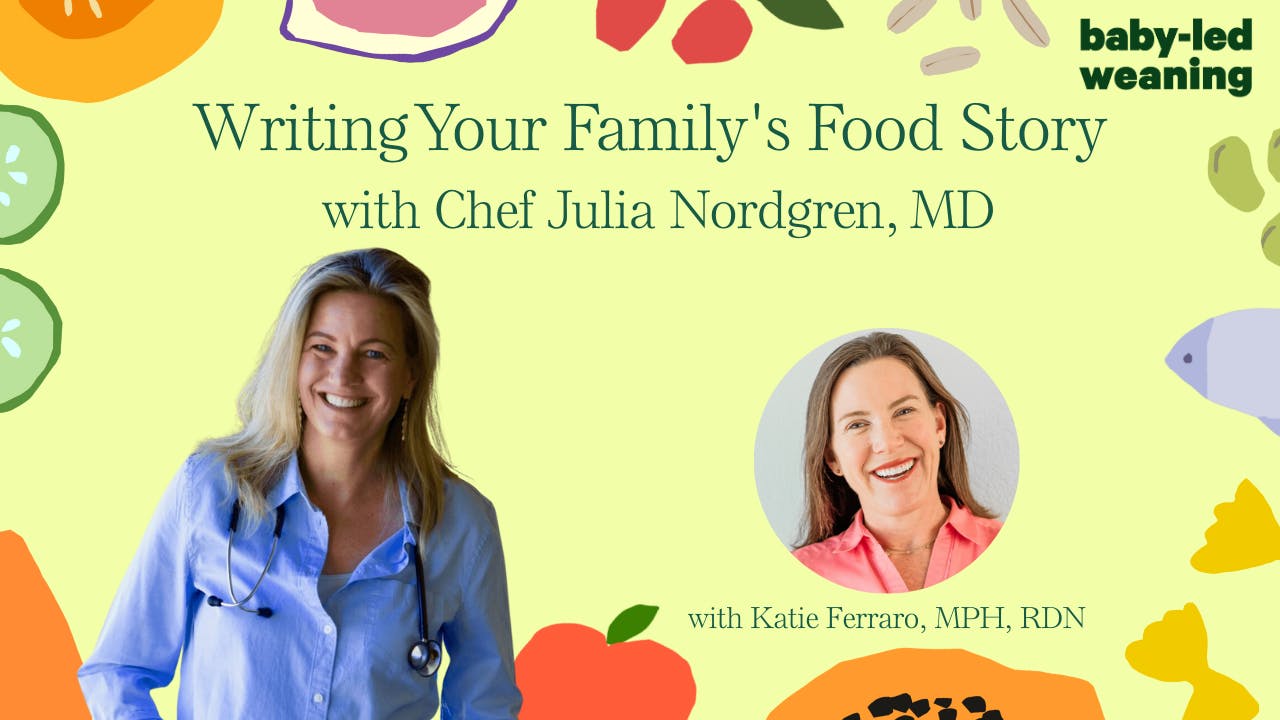
- Dr. Julia Nordgren is a pediatrician, trained chef, and mom who specializes in helping families build healthy, realistic relationships with food.
- She combines medical training with culinary education to focus on joyful, pressure-free feeding that supports long-term health.
- Dr. Julia is the author of The New Family Table, a family-friendly cookbook centered on cooking more, eating together, and staying sane around food.
Links from this Episode
- Dr. Julia Cooks website is here: https://www.drjuliacooks.com/
- The New Family Table: Cooking More, Eating Together, and Staying (Relatively) Sane is available on Amazon (this is an affiliate link) here https://amzn.to/3gOipwB
- The Great Courses’ How Superfoods Work audiobook with Dr. Julia Nordgren https://www.audible.com/pd/How-Superfoods-Work-Audiobook/B08B46DVWW
- Baby-Led Weaning with Katie Ferraro program with the 100 First Foods™ Daily Meal Plan, join here: https://babyledweaning.co/program and save $50 when you sign up using the code BLWPOD50
JOIN AT $50 OFF CODE: BLWPOD50
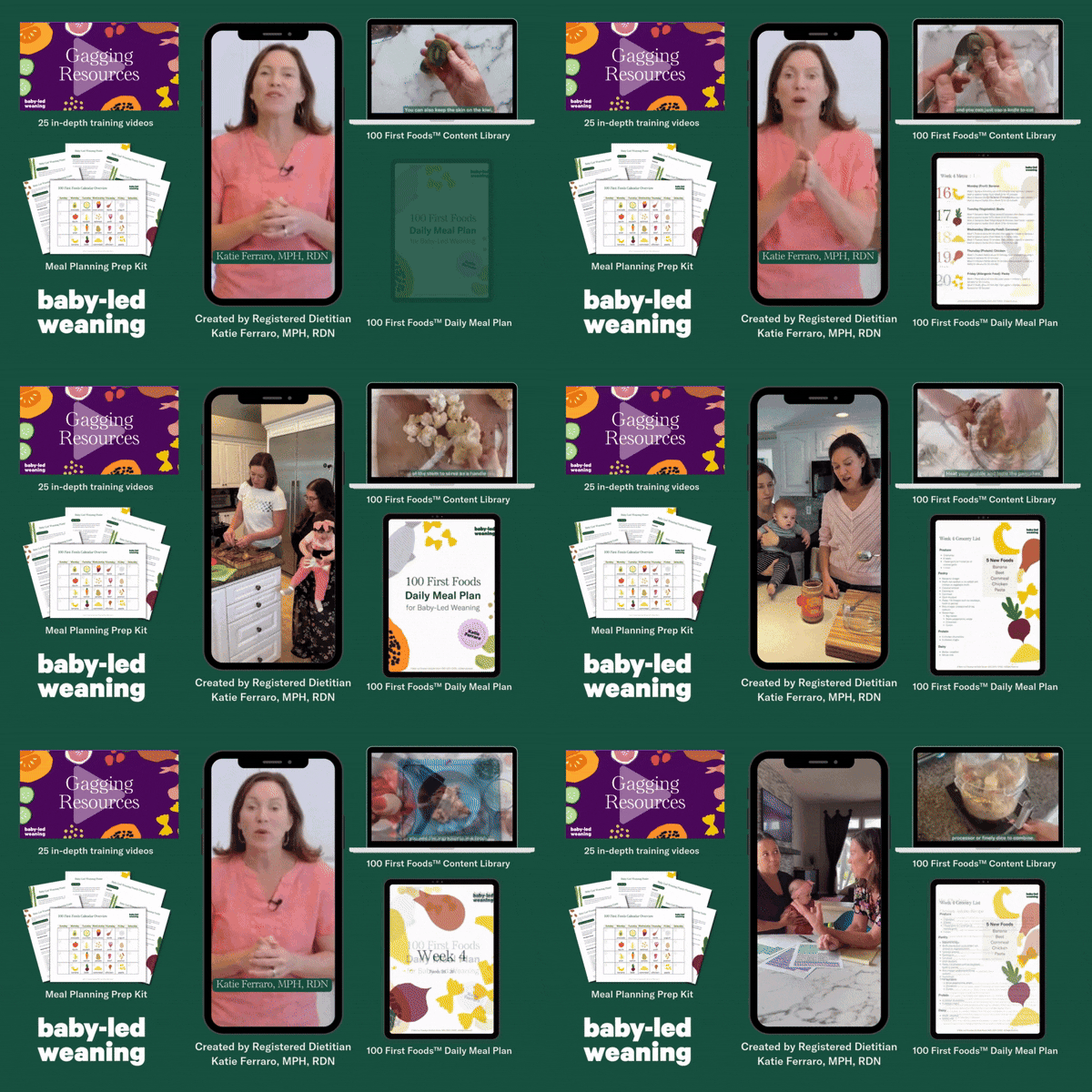
- Baby-Led Weaning for Beginners free online workshop with 100 First Foods™ list to all attendees, register here: https://babyledweaning.co/baby-led-weaning-for-beginners
Other Episodes Related to This Topic:

Latest Episodes

Lowe's (2s):
Time is valuable. That's why Lowe's Blueprint Takeoffs turn blueprints into quotes faster. Bring us your plans and we'll generate itemized material lists to make quoting easier. So you can get back to Building. Plus at the Lowe's Pro desk, you get access to thousands of building materials not sold in store. And when your order's ready, we'll deliver everything to the job site. Improving is easy at Lowe's
The Past and the Curious (30s):
Grownups. If there's a child in your life who is interested in curious about or fascinated by people in places from history, then my podcast, the Past and the Curious might just be a hit in your home. From the invention of microscopes to world, traveling dogs to fashions of the 1890s Gold Rush ghost towns and audiences going wild for walking competitions, we've got a little bit of it all hosted by children's author and museum educator, Mick Sullivan, that's me. The show is fun, funny, engaging, honest and beloved by kids and parents alike. Find the past and the curious at all the usual podcast places.
Chef Julia Nordgren, MD (1m 10s):
And I let the kids tell me, tell me about the vegetables that you do enjoy. So what I encourage families to do is make a list of those things and making sure that the quantity of fruits and vegetables, even if the variety is minimal, that the quantity gets there.
Katie Ferraro (1m 24s):
Hey there, I'm Katie Ferraro, registered dietitian, college nutrition professor and mom of seven specializing in Baby Led Weaning. Here on the Baby-Led Weaning Made Easy podcast. I help you strip out all of the noise and nonsense about feeding, leaving you with the confidence and knowledge you need to give your baby a safe start to solid foods using baby Led Weaning. If you are already feeling stressed about how your child eats and your child is literally like a baby who's barely even started solid foods. Yet, this episode is for you. So Many parents come into starting solid foods, carrying their own food package with worries about picky eating or fears that they're already doing it wrong.
Katie Ferraro (2m 7s):
But the truth is this stage that your baby is in, your baby s a blank slate and you have so much more influence than you might think. In today's interview episode, I'm talking with Dr. Julia Nordgren. She's s a pediatrician, a trained chef and a mom, and we're talking about what she calls writing your family's food story. In this conversation, she's gonna talk about how past experiences with food do not have to dictate your child's future. She'll share some tips on how to take the pressure off of early eating and to focus on what actually matters when it comes to helping kids grow into confident eaters. You are going to learn how to focus on exposure instead of perfection.
Katie Ferraro (2m 50s):
How to involve children in food with age appropriate ways, and how to build habits around meals that support connection and not conflict. Dr. Nordgren is a clinical instructor of pediatrics at Stanford Medicine where she teaches and works with families. She combines her pediatric expertise with culinary medicine. So she's one of those rare doctors that actually knows about food and nutrition and every day she's helping patients and medical students understand how food impacts health. She runs the website, Dr. Julia Cooks and Dr. Julia is also the author of one of my favorite cookbooks. It's called The New Family Table, Cooking More Eating Together, and Staying Relatively Sane.
Katie Ferraro (3m 31s):
I absolutely love her very down to earth approach about food and raising kids and I think she has a very unique perspective. I think you'll find this conversation is reassuring, practical and empowering, especially if you're standing at the very beginning and wondering like, okay, how am I gonna do things differently for my own family and for my own children? I'm very excited to bring you this conversation with Chef Julia Nordgren MD about writing your family's food story.
Chef Julia Nordgren, MD (4m 4s):
Such a pleasure as always to be able to talk to you.
Katie Ferraro (4m 7s):
I usually get to see you 'cause I know we've done a number of Instagram lives together and this topic that we're gonna talk about today, which is writing your family's food story, It really strikes a chord, a good chord with our audience. So I'm so excited that you can be on the podcast 'cause we haven't had a chance to do it in this format to kind of talk about writing our family's food story. Yeah,
Chef Julia Nordgren, MD (4m 26s):
And it's a great opportunity because stories happen in so many ways. They happen in writing, they happen on podcasts and they happen with food. So I think this is a perfect segue to our conversation
Katie Ferraro (4m 37s):
And I love your background because you hear stories and when I first met you, I heard you telling a story. I first met you at the Healthy Kitchens Healthy Lives conference a number of years ago now, and I was like, oh my gosh, she's a mom, she's also a doctor, she's also a chef. Like this lady is like talking to people on so many different levels. But really your overarching message was about food. So I'm just curious for our audience who's not familiar with your story, could you back it up and just tell us a little bit about your background? 'cause you have a very unique skillset that combines a lot of different areas like nobody else on the planet.
Chef Julia Nordgren, MD (5m 10s):
Well that's so funny. It's really true. Well, well the first funny part that I'm not sure if you know, I was an English major and I always wanted to write and I've always loved books and I've always loved stories and when it came time to have a career, I really wanted to do something that I know I could support myself that would be a great career. And in an internship at Brigham Women's Hospital, I just fell in love with medicine. And So I took a turn and I went to medical school and I really just fell in love with taking care of families. I always wanted to be a pediatrician. I really didn't consider any other specialty. So when I went into pediatrics and and started seeing patients, I was just, I felt a little unprepared for really helping these families do what is the, one of the most elemental things of parenting and good health, which is feeding your baby.
Chef Julia Nordgren, MD (6m 1s):
And of course we have nutrition, we have science, we have all that background in medical school. But the conversations in the pediatrics office, I find the most valuable ones are talking about, Hey, how are things going? How are you feeding your child? And when things go off the rails, kids have trouble and so do their parents, whether that's pediatric obesity, high cholesterol, pre-diabetes, all of these problems were getting more and more common, really underlying foundation. And we were all struggling a lot. And I think part of fixing this problem, to me, the joy of fixing the problem wasn't, well don't worry. We always have medications for that. And I wanted to address this in a more positive and joyful and more elemental manner.
Chef Julia Nordgren, MD (6m 44s):
And I've always loved food. So I had gone to the Healthy Kitchens Healthy Lives Conference and met similarly minded people who love food and who love medicine and don't see our role as being prescriptive or you know, eat this and eat that and just take this medicine. So I decided to take a break and really get the training. So that's when I took time off my medical practice and went to culinary school.
Katie Ferraro (7m 5s):
I think that is so amazing. Like so first of all we have a lot of pediatricians and physicians who are in our audience, a lot of whom are interested in Baby Led weaning 'cause they're parents and are Yeah. But also they get a lot of questions from their patients and they're like, gosh, you know, the reality is, and I just like to remind parents because they go to the pediatrician, but more than 90% of physicians in the United States have never taken a dedicated nutrition class. And so sometimes when you ask your pediatrician or your doctor questions about food, they're struggling at the same level that you are. Of course. Especially if their parents, because they're not getting the formal nutrition training. And even if you are formal nutrition training, like if you can't translate it into usable tips about food for parents, it doesn't matter. But I love that you like went to the extent of going,
Chef Julia Nordgren, MD (7m 47s):
I went to the core, so call culinary school, I went to the core. Yeah, well because I wanted to be better equipped. And it's so interesting because it's not only, and I live and work in Palo Alto, California and so my patient base is very culturally diverse and what's so fascinating to me is what I use from culinary school. You can imagine I'm a busy mom, I've got teenage boys, I'm not making them Holland sauce every day. I'm not doing fish souffle. I'm not utilizing those great techniques that we've learned. Although what I use every day are the language of food. I understand when a family tells me they eat non and they eat doll, I know what that means. I've made that before. I know Asian flavor profiles, I understand the basic ingredients and techniques that found our daily food culture.
Chef Julia Nordgren, MD (8m 34s):
And if I don't understand that I can't begin to have a a relevant and meaningful conversation with that family about what their goals are and how they want to feed their children.
Katie Ferraro (8m 44s):
Can you tell me a little bit about the patient population that you see in your medical practice?
Chef Julia Nordgren, MD (8m 48s):
Sure. So I'm a pediatrician but I have a specialty practice where I see kids who are referred to me by a general pediatrician who have high cholesterol or pre-diabetes or are struggling with weight gain. And that could be anything from a weight gain that's happened for an illness or an injury or a pandemic or it could be from chronic obesity. So I see children with all kinds of weight issues that could be longstanding, that could be acute. And we really work to look at the growth charts, understanding where those graphs, the height graph, the weight graph might be diverging and help set a path forward to helping those come together a little more.
Chef Julia Nordgren, MD (9m 30s):
You know, just that supports their physical and metabolic health a little bit better.
Katie Ferraro (9m 34s):
One of the reasons why I love speaking to you is that my entire world is about kids. I have seven of course kids who are younger than your kids, but I feel like you and I are, I mean I was probably older when I had my kids than you are, So I feel like you and I are of the same age except you're like my cool mom friend. 'cause you're kids are a little bit older than mine. Like and I remembered healthy kitchen, healthy lives like taking tidbits of information away from you being like, oh my gosh, her kids are like at the next stage where my kids are gonna be. And you had yes. Such practical tips. And I remember like I'm getting into the age now where my kids are interested in screens. My oldest is yeah, six. And I remember you had like such a cool of like bartering system. So talk to our audience. 'cause like coming down the pike is the screen step.
Katie Ferraro (10m 14s):
Like if you have babies you're not worried about it, you know? Right. The a AP says baby shouldn't watch tv, but like when they become Yeah. Toddlers and kids who do, how do you deal with like having the older kids situation in this era of like everybody wanting screens and we wanna reconnect our families with food. What are your tips for success there?
Chef Julia Nordgren, MD (10m 30s):
Yes. Well, So I have a few tips and it really, really depends on the age. And I think that we are all feeling so much social pressure. It's so fascinating. It's, it comes from the kids but it comes from friends like the ages are getting earlier and earlier where kids have devices. And So I think you just have to really set your intention, what do I really want? Are things going off the rails? Is it too much or does it feel like a good balance? So I think always realizing that you're in charge and you have permission to check in on that balance. And if that balance isn't going well, you absolutely have permission to course correct. I think for little kids toddlers especially who love routine and who love, they love guardrails.
Chef Julia Nordgren, MD (11m 10s):
Setting some clear expectations. So for example, we all know that if you start a habit of every time they get in the car, you get a snack or you get a device if you walk going into the car and they don't have the snack or don't have the device, that's upsetting to them. So I think when you're starting out being clear about what those guardrails are, if you want to expect your kid to sit in the car without a snack or without an iPad, just start that way and have a special time or a special place. Okay, it's Saturday at three o'clock, it's time for your iPad. Then they, they understand the time and the place for it and kids really respond well to that.
Hungry Root (11m 47s):
Hey, we're gonna take a quick break, but I'll be right back. This episode is sponsored by Hungry Root. You know that saying about the cobbler's kids never having any shoes. I feel that to my core because I cook and prep food and tweak recipes for babies all day long in my business. But then the burden of trying to figure out what to feed my actual family for dinner, it just looms large at the end of every workday. And I know I sound like a broken record going on about Hungry Root, but it is one of the things that has truly simplified my life lately. It's been extra helpful 'cause I feel like Hungry Root finally gets me. Here's what I mean. Hungry Root is a personalized grocery and recipe service that plans your food for you. So it fills your cart with meals and groceries that fit your health goals, your food preferences, and your budget. And then delivers everything right to your door. So the mental load relief is real. Like even if I only use Hungry Root for one or two dinners a week, that's a few nights where I know I don't have to do the like what are we eating? Do we have the ingredients? Is anybody gonna complain? Like spiraling outta control? I've just opened the app, I pick what looks good, it's basically handled. Plus there is so much variety. There are over 50,000 chef crafted recipes with many ready in 15 minutes or less. Plus there's over a thousand grocery items now too. I know you're gonna love Hungry Root as much as I do for a limited time. You can get 40% off your first box plus get a free item in every box for life. Go to Hungry Root.com/weaning and use the code weaning that's Hungry Root.com/weaning code weaning to get 40% off your first box and a free item of your choice for life.
Katie Ferraro (13m 34s):
Can you talk about the thing where you were trading? Yes. I forget what you called it, but where you're trading screen time for cooking time? Yes. Like they learned how to cut a carrot. I remember like you had videos of that.
Chef Julia Nordgren, MD (13m 42s):
Okay. There's two things. So then when my kids got a little older and they wanted some more uninterrupted video game time, what you'll find with older kids is you're always coming in and out. Hey, get off the game. Hey, I'm not done with the game. And you can, you know, it causes a lot of conflict and a lot of difficult conversations that nobody wants. It's just, it's irritating. It's annoying to parents when you say, get off your iPad. And they don't. And also what drove, what I learned early on is if on a weekend the kids knew that they could get up and be on their iPad, they'd get up at five in the morning, like Christmas morning and then it comes Monday and you can't get 'em out of bed for school. So what I did is I let them know the rules that if our children wanted their uninterrupted video game time, we would have to participate in Family Hour of Power.
Chef Julia Nordgren, MD (14m 28s):
So to have two hours of video game time uninterrupted for them, they spent an hour uninterrupted with the family cleaning what needs to be done, sweeping the porch, mopping the floor, oh that bathroom really needs to be cleaned. Oh, look at all the leaves on the porch. And what I really felt like it taught them was we have a household and part of the weekend is maintaining our household. And I can't do it alone. I'm a working parent. My husband and I can't do all of that effectively. We want them to help, we need them to help and we want them to learn to see what needs to be done. So after the hour was done, we would give them their video time uninterrupted. So then they trust that we're not gonna say, Hey, get off your game. Hey, get off your game.
Chef Julia Nordgren, MD (15m 9s):
And we'd set timers and that was a win-win for everyone. So that was a really nice way to help them understand we're a family, we have the work of the house is the work of the family. And then downtime, they're enjoyable, reward time, they choose to be on their iPad. I choose to read a book with a cup of coffee. So in that age group that really worked well. The other thing that we decided to do was, of course they started nagging us for phones. So, oh, my friend's got a phone this Joe's got a phone, Sam has a phone. We felt like they were too young for phones. And I felt in particular that having a phone of course is a mature responsibility. I also think knowing how to cook is something that they should learn to do.
Chef Julia Nordgren, MD (15m 50s):
And it's, I really felt that for them learning how to cook and being able to make a few simple dishes was really something important that they learned moving into their adulthood. So I made a deal with them that they would be eligible for a phone when they had mastered 10 dishes, four main courses, three vegetable sides, two hot breakfasts, and one perfectly dressed salad. Because those were the things that I felt were really elemental to developing their own capability and capacity in the kitchen. So when my son would say, mom, I want a phone. I'd say 10 dishes, let me know when you're ready and I'll teach you how to cook.
Katie Ferraro (16m 26s):
And I love in your presentations, you always have like real life snippets from your family of like your kids up there and cooking with you. It's not perfect in stage, which is like so annoying about social media. Like your stuff is real. It's like, oh my God, here's, my kids are giving me some flack. But yeah, get up here and cut some carrots with me. And I think you drive home, that message of it is so important for children to be engaged in food. Like we can't expect them to know about food if we don't let them interact with it. Exactly. And for parents of who are listening, their kids are a little bit younger, babies, toddlers. I know you work with families with children of that age though. Do you have tips for families to start incorporating even from early stages? I mean obviously you can't have a six month old wielding a knife, but like how do you get the younger kids involved in food preparation early on?
Chef Julia Nordgren, MD (17m 8s):
Well, I think you touched on exactly the, it's not just food preparation and it's not just task oriented. Now that my kids are older, I can say, Hey, we have a few tasks to do for dinner. Do you wanna cut the carrot? Do you wanna cut the cucumber? Do you wanna scrub the potato or do you wanna mop the floor? So, but for younger kids understanding food and experiencing food, and when you go to the grocery store and somebody is in the carriage, I would recommend giving them something from the produce aisle to explore. So instead of handing them a device to distract them, hand them a potato, hand them a papaya, hand them an artichoke. And artichoke is something so interesting.
Chef Julia Nordgren, MD (17m 48s):
It has so many, many different colors and textures. What does that smell like? And engaging them experientially, even when they're not eating, I think is a really important way to help kids understand food. I think it's so great to take kids to the farmer's market. Hey, meet Mario, he grows strawberries. Mario, do you have a sample today? Hmm? What does that smell like? What does that taste like? Having these conversations, understanding that people grow the food that nourishes us, introducing them to the people, especially when they can see them week after week. What does Mario have today? Let's go to the market.
Chef Julia Nordgren, MD (18m 28s):
What do you think Mario is growing this season now it's winter. What grows in the winter? Those conversations and those tactile experiences I think are so important to include young children in as they're learning about food.
Katie Ferraro (18m 43s):
And a lot of our audience is interested in Baby Led weaning and they come to it as oftentimes a second time parent because perhaps they have a picky toddler, which through no fault of their own you guys. Oh yeah, of course. Never with all children will experience some degree of picky eating. And they wonder, okay, with my second, I really want to do more of a Baby Led approach, any tips on how to get my toddler involved? And I always say, yeah, get the toddler involved. Like really take advantage of that competitive nature of toddlers, which is the baby is trying a new food. Tell him what color it is, what does it smell like? What does it taste like? Do you wanna be brave and try the artichoke? You can, even with the older child who might not or be a little reticent to new foods, you can engage them from food even if you haven't done it from the beginning.
Katie Ferraro (19m 25s):
And that's what I love about your message. It's like it's never too late to reverse course. And I was curious if you could speak about that next, for the parents who are listening who feel like they themselves maybe don't have the best relationship with food. Yeah. And they don't want to replicate that in their children. Could you talk a little bit about this idea of writing your family's food story?
Chef Julia Nordgren, MD (19m 45s):
Oh yeah, of course. Well, it's so interesting that we all have our own food story. And most of that begins with when I was growing up, my family did this, my family fed me this, this was our circumstance. My food story is that my parents divorced when I was young. So we had two single parent households. And cooking wasn't a priority. My mother was a busy working single mom. We ate a lot out of boxes. My dad actually had taken a cooking class. So we ate, we ate differently at his house. We weren't there all the time. So he took a little more time to make meals on the weekends that he had us. So I remember the smells at his house and the flavors.
Chef Julia Nordgren, MD (20m 26s):
And at my mom's house, things were a little more utilitarian. Our food story comes from where we grew up. Our food story comes from what our parents loved, what did they enjoy serving to us? And if your story, it's easy to see where the flaws were or what you'd like to be different. And it's such a beautiful opportunity to do things a little different for your children. Maybe you were forced to eat foods that you didn't like. Maybe your parents didn't allow you to have certain things that you really loved. Really think about what that meaning is to you. And it's a great opportunity to think, how do I want my children to feel around food at my table? And I think that's just a great place to start because as parents and what I love about having so many great friends who are parents and working moms, we all want the same thing.
Chef Julia Nordgren, MD (21m 13s):
We want to enjoy mealtime with our kids. We want them to come to our tables. We want to develop trust. And I think that relates a little bit to the picky eater. And I see a lot of kids in clinic and the parents are frustrated and they come in, oh, they'll only eat this and they don't like this. And, and the child feels guilty, they feel blamed and the parent feels frustrated. And what I try to do in those situations is reframe that pickiness a little bit. Well first of all in an area of, it just hasn't happened yet. This child isn't a kid who loves 48 different kinds of vegetables. So they're not the ones bragging about their, you know, kale chips that they have every day. These kids aren't, you know, loving 17 different kinds of salad.
Chef Julia Nordgren, MD (21m 56s):
That's okay. And most likely that will change as they grow. Some kids remain very narrow in their choices, but as long as they have a few fruits, a few vegetables that they will reliably eat every day, it's probably okay. It's probably fine that they don't have a huge repertoire of fruits and vegetables that they love to eat. And that could be very different from their sibling who loves to explore this and that and try this with that and have a lot of different kinds of different experiences with food. Sometimes I think this is a little bit like music. Some people are always waiting for their new playlist to drop. Some people can't wait for the new artist to drop an album to get it on their running mix.
Chef Julia Nordgren, MD (22m 40s):
And some people have run to the same Madonna running mix for 20 years
Katie Ferraro (22m 45s):
And they're still alive to tell about it
Chef Julia Nordgren, MD (22m 48s):
And they're fine. And that pleases them and it doesn't bother them. And they don't need the same variety and that same experience with diversity as other kids need and seek out. Some kids are extremely adventurous and they're wardrobe choices. They wouldn't dream of wearing the tights they were yesterday or the same tutu they had on the day before. It's always new, it's always different. And some kids don't need that variety. And we will wear the same blue shorts day after day with the same blue t-shirt and that's fine for them. I'm sure, Katie, you notice this in your children. Some kids are really seeking out adventure artistically, whether it's the colors that they choose to wear or the foods they tend to eat and they're just different.
Chef Julia Nordgren, MD (23m 34s):
And that's fine. And
Katie Ferraro (23m 35s):
Just to play the devil's advocate here though, 'cause you mentioned the some kids aren't just gonna be into 17 types of salad. And I totally agree with you. Yes. However, just like you really cannot send your kid to school in the same dirty blue shorts every day. Like there is some onus on us as parents of course to introduce some, especially with regards to diet, some of the diet diversity because sure, the research does show us that the more exposures babies have. So I of course, So I do like the message that don't feel stressed if your baby's not eating a hundred different foods. But also they don't wake up on their fifth birthday magically liking 17 types of salad if they've never seen a vegetable.
Chef Julia Nordgren, MD (24m 9s):
Exactly. Exactly. And you make such a great point that exposure is important. And I think that's exactly where your audience is for Baby Led weaning. The more exposures you give now, the diversity, the variety, the joy, the interest, and the lack of pressure. And just like it's an exploration, it's a curiosity together, Hey, how does this taste? How does this taste dipped in this? How does this go with this? You're not interested in that. Okay, fine. Couple days later it comes back. And all of that work and all of those tries, and I hate to call them fails, but all those tries and lack of acceptance, that retry, all of that is so important for laying a foundation for later in life, picking those things back up, reengaging with those experiences that they've had positively as an infant and as a toddler.
Chef Julia Nordgren, MD (25m 1s):
Absolutely.
Katie Ferraro (25m 1s):
And I think a lot of our parents feel stressed sometimes. Like I myself don't like 17 different types of mushrooms. And So I always remind parents like, you don't have to reinvent the wheel. Like there are very good resources out there for you. And one of the reasons why I love chatting with you, 'cause I just think your message is so down to earth and something that people can really do. But I also wanna let our audience know that you have a fabulous resource yourself. You guys, Julia wrote a book called The New Family Table, and the subtitle is Cooking More, Eating Together, and Staying Parentheses relatively saying, and I love this book because it's not like, oh, all of a sudden your baby's gonna just start eating unsalted kale chips and you're gonna be this amazing mom.
Katie Ferraro (25m 42s):
It's this progression of like, listen, if you want some ideas of different ways you can incorporate vegetables or whole grains or high iron foods, like these are real life recipes with, I love just the global palate in your cookbook, but it's not over the top things that families are never gonna do. And could you just tell us a little bit about how you came to select some of those items that were in there? 'cause I'm sure some of it's based on the experiences you're seeing in your clinic and with your own family.
Chef Julia Nordgren, MD (26m 6s):
Of course. Of course. Well, you know, it's funny, I wrote the book just because, you know, I was an English major and I love stories and I love writing and I really love cookbooks. And I know that we can get so many ideas on the internet and there's so much that's available. But I think having a bookshelf, it's just like engaging your children with reading, having things on your shelf and having the beautiful pictures and having resources there. I still go to my cookbooks all the time and
Katie Ferraro (26m 31s):
For kids too, go in that cookbook and you pick out three things you wanna make.
Chef Julia Nordgren, MD (26m 34s):
Yes. And I had this great experience. I had the opportunity at Healthy Kitchens to meet Molly Katzen, who is a very famous cookbook author and focuses so much on beautiful vegetarian food. And I was just chitchatting with her and we had the opportunity to have a a, you know, just a sweet conversation together. And she asked me about my family and she asked me about my kids and I told her their ages and she said, oh, that's great. Would you write down your address? A week later she had sent them each a cookbook. Oh wow. Inscribed to each one. That was age appropriate. Dear Andrew, I really hope you enjoy this book, dear Benjamin, good luck on your cooking journey. And I can tell you those kids treasured those books and they went to them and looked at the pictures and could follow the instructions.
Chef Julia Nordgren, MD (27m 18s):
And having that as something that they could hold and have as their own and have as their own part of their story, as they had their own personal guide in Molly Katzen and they would say, I wanna make this recipe. All I had to do was get the ingredients. Yeah,
Katie Ferraro (27m 32s):
I would, some nights I wish my kids would just pick out the recipes. I hate picking them out. I love cooking. Yeah.
Chef Julia Nordgren, MD (27m 36s):
Oh, I know it's so much energy, but
Katie Ferraro (27m 38s):
I wish someone else would just pick it out for me. Exactly. Like the politic.
Chef Julia Nordgren, MD (27m 41s):
Well, and this is what I like to do in terms of, you know, not to make kids feel badly or unsuccessful or that the variety is a key to their success. But I let, I know I let kids be in charge and, and this is a little for older kids, but when, when the parents are struggling, I try to really just encourage them to relax about it and to take stock about what their children will eat. And as you said, they really do need some diversity for their nutritional life. A kid who eats only beige foods, only carbohydrates, foods, only high carbohydrate foods, highly refined carbohydrate foods, those kids do tend to have more health issues. And so we really work to develop a core of their diet that's strong and as diverse and as enjoyable as it can be.
Chef Julia Nordgren, MD (28m 26s):
And I let the kids tell me, well, tell me what, what do you like? Tell me about the vegetables that you do enjoy. Well, I like carrots, cucumber, pears, blackberries. So maybe it comes to five things. Those typically are enough. And So what I encourage families to do is make a list of those things and let kids decide which are there particular nights you'd like to have these things? Do you want me to choose? And making sure that the quantity of fruits and vegetables, even if the variety is minimal, that the quantity gets there. And I think that's really a key message. And then as those kids get accustomed, okay, it really is important that I eat a good quantity of fruits and vegetables, maybe on their own, they'll say, all right, can I try something different?
Chef Julia Nordgren, MD (29m 7s):
Maybe I could add broccoli with the same flavor profile. Maybe I could add green beans. And allowing kids to ask to encourage that variety tends to be a very successful technique.
Katie Ferraro (29m 19s):
And I love that idea of just even having a list. Like, just
Chef Julia Nordgren, MD (29m 23s):
Write it
Katie Ferraro (29m 23s):
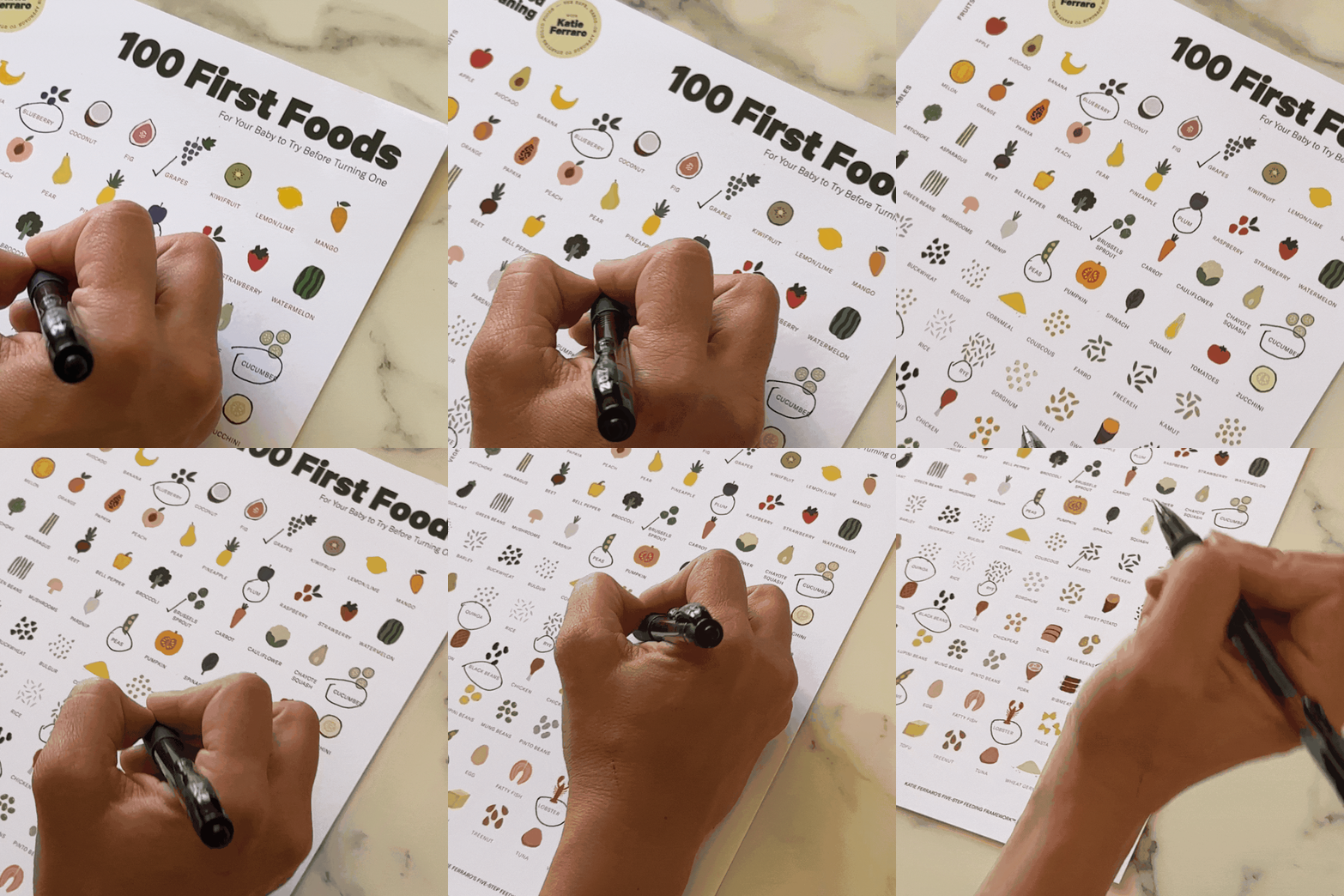
Down. We have a hundred First Foods list for parents. Like, listen, if you're getting stuck in the potato pasta and rice rut, and there's nothing wrong with those foods, but they really are only the tip of the iceberg of the starchy foods that are out there in my hundred First Foods list, there's 20 different types of whole greens. And I'll show you how you can make them safe to feed to your baby. Again, you don't have to go out there and reinvent the wheel. No. We can just kind of point people in the right direction and something as simple as a list can really help.
Chef Julia Nordgren, MD (29m 46s):
Yeah. And sometimes just letting kids, and sometimes parents come to me at a time where they're frustrated and I totally understand that. And I am, I've been there myself. I have I, I have a child who just loves sugar, and if I don't work to it every day, he will just choose the high carbohydrate foods he will choose. He won't on his own. Choose a diet that's rich and varied in fruits and vegetables.
Katie Ferraro (30m 10s):
Hey, we're gonna take a quick break, but I'll be right back
The UPS Store (30m 17s):
This Valentine's Day, the UPS store certified packing experts are helping pack and ship all the ways we can from the lovey-dovey, XOXO gifts, gifts for your Valentine's gout pal, even pet gifts for doggy dearest. When you ship UPS air at the UPS store, your items arrive on time or your money back guaranteed at no extra cost. Exclusively at the UPS store, US retail location. Send your Valentine's on time at the UPS store, visit the ups store.com/air guarantee for full details, terms and conditions apply.
Katie Ferraro (30m 52s):
Do you have any words of wisdom for, I'm thinking of the mom who's out there, who's like, yeah, my family food story was written for me and I think about all the things I don't like about it, and moms who are postpartum and they don't like their body and they don't feel like cooking. Oh yeah. And then all of a sudden there's this blank slate in front of you. You're six month old child who's just starting solid foods. Any words of wisdom or advice for them? And I say moms, it's mostly moms, but dads and caregivers as well as you're stepping forward into writing your family's food story. Like how can they maybe turn some of those experiences around to do it differently for their family? Yeah,
Chef Julia Nordgren, MD (31m 30s):
I think it's a really, it's such a great question and such a great thing to think about. And of course, I know for moms it's not, you almost don't have time to be philosophical and think through everything with great intention. But just think for a minute, gosh, you know, what would I, what do I have the opportunity to do different? And I think acknowledging your food story, and there are good parts about it and there are good parts about it. That's okay. And understanding your parents were living in a different time and they had their own constraints. They had their own food story that they were working with. They had their own things that were joyful and they had their own information that they were working with. And that's just a different time as well. Now our culture is so inundated with carbohydrate foods that are refined and profitable, high sugary foods, we might have to be different.
Chef Julia Nordgren, MD (32m 18s):
We do have to be different and more intentional, I believe, to keep our kids healthy and to eat well. I believe that our current cultural norms are not to eat well if we follow what's currently normal and acceptable and follow kids' menus and preschool snacks.
Katie Ferraro (32m 35s):
Okay. So Dr. Julia Cooks, yes. I know it's the name of your website, but tell us just a little bit more, where can we go to learn more about you and your work, your cookbook?
Chef Julia Nordgren, MD (32m 43s):
Yeah, so there's a few ways so that you can get, my cookbook is on my website, Dr. Julia Cooks and also at some local bookstores up here in the Palo Alto area Books Inc. My book is also available on Amazon, also available on Amazon is my new audible book that was released. So it's something great to listen to, just like a podcast and it's on super foods and you know me by now, I don't believe that one, food or two foods are the panacea for a poor diet, but these, to me are foundational foods, foods to build a healthy life on. And there's so many of those same foods that you encourage in your hundred First Foods.
Katie Ferraro (33m 19s):
Thank you so much for coming on. I know you're incredibly busy and you always make time to share these really practical tips. I love the work that you do and thank you for making food accessible and easy for families to actually enjoy.
Chef Julia Nordgren, MD (33m 32s):
Yes. And I really enjoy talking to you as well. I love what you're doing and your audience there. You know, so many we're all wanting to do right and we're all struggling. We all need to help and support each other. It doesn't have to be perfect, but the more you cook and the more you enjoy food with your kids, I think just by having that faith and having that joy around food, they will be become wonderful eaters, the kind that come back to your table on Thanksgiving when they go to college,
Katie Ferraro (33m 56s):
Hopefully cooking some of the food does. Well, thank you again. This was wonderful. Oh,
Chef Julia Nordgren, MD (33m 60s):
It was so great to talk to you and call anytime.
Katie Ferraro (34m 2s):
Well, I hope you guys enjoyed that conversation with Dr. Julia Nordgren again, she's at Dr. Julia Cooks, her cookbook is called The New Family Table, Cooking More, Eating Together, and Staying relatively Sane. I'll put all of the links from what she spoke about today, including the link to her cookbook on the show notes page for this episode, which you can find@bwpodcast.com/88. And a special thank you to our partners at AirWave Media. If you like podcasts that feature food and science in using your brain, check out some of the podcasts from AirWave. We're online@blwpodcast.com. Thank you so much for listening and I'll see you next time.
Mint Mobile (34m 45s):
Well, the holidays have come and gone once again, but if you've forgotten to get that special someone in your life a gift. Well, mint Mobile is extending their holiday offer of half off unlimited wireless. So here's the idea. You get it now. You call it an early present for next year. What do you have to lose? Give it a try at mint mobile.com/switch. Limited time, 50% off regular price for new customers. Upfront payment required $45 for three months, $90 for six month or $180 for 12 month. Plan. Taxes and fees, extra speeds. May slow after 50 gigabytes per month when network is busy. C terms.
The Program Baby-Led Weaning with Katie Ferraro
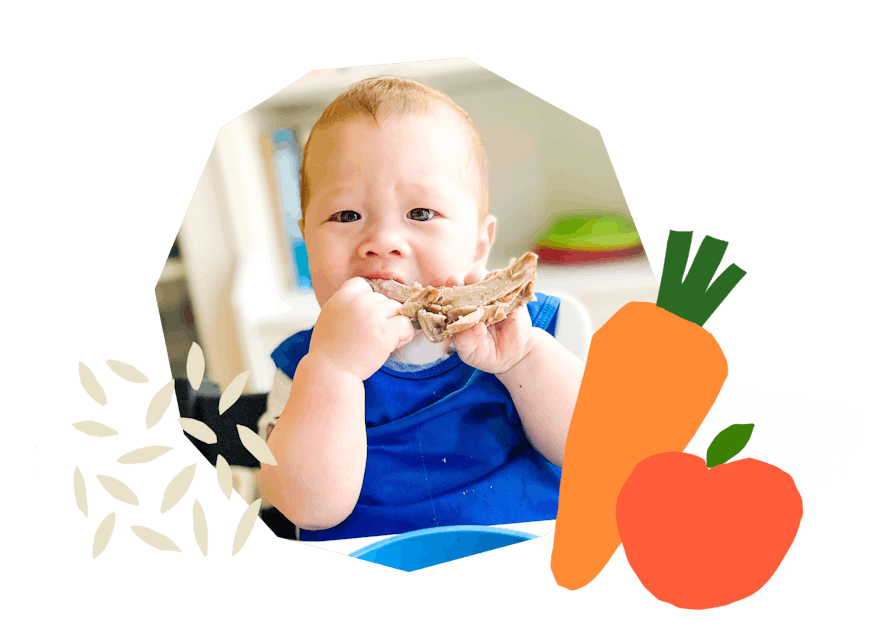
A step-by-step digital program for starting solid foods safely and navigating the original 100 FIRST FOODS™ meal plan with baby-led weaning.
 EXPERT-LED, PROVEN APPROACH TO EATING REAL FOOD
 CONCISE VIDEO TRAININGS TO MASTER BABY-LED WEANING
 100 FIRST FOODS DAILY MEAL PLAN WITH FOOD PREP VIDEOS
Baby-Led Weaning for Beginners Free Workshop
Is your baby ready to start solid foods, but you’re not sure where to start? Get ready to give your baby a solid foundation to a lifetime of loving real food…even if you’re feeling overwhelmed or confused about this next stage of infant feeding.
Get baby-led weaning recipes and tips delivered to your email inbox.