
Straw Cup vs. Open Cup: Which Comes First? with Dawn Winkelmann, MS, CCC-SLP
- What feeding and speech milestones are tied to open cup and straw cup drinking, and why open cup practice comes first
- Why Dawn’s straw cup design includes a beginner side and an advanced side, and how both support safer, more independent drinking
- How Dawn’s 3-phase developmental drinking approach helps your baby build age-appropriate cup drinking skills step by step
LISTEN TO THIS EPISODE
Episode Description
Should your baby learn to drink from an open cup or a straw cup first? In this episode, pediatric swallowing specialist Dawn Winkelmann, MS, CCC-SLP, explains why open cup drinking comes first, how it supports feeding and speech development, and when to introduce a straw cup. You’ll learn the developmental reasons behind both skills and how to help your baby build confidence with drinking at mealtimes.
About the Guest
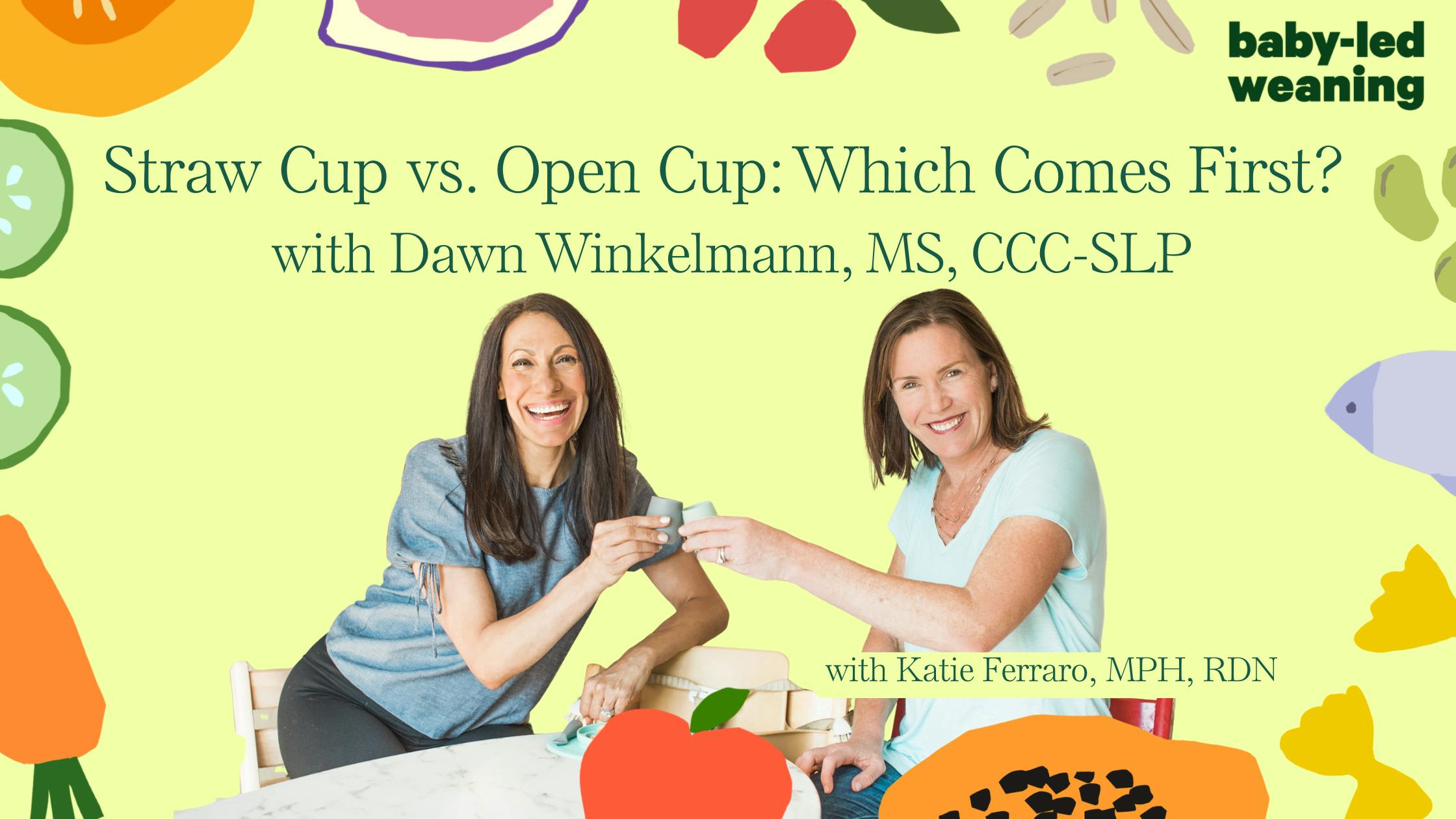
- Dawn Winkelmann is a Speech-Language Pathologist and Pediatric Feeding Therapist specializing in infant swallowing.
- Through her private practice, Ms. Dawn provides in-home feeding therapy and online coaching, helping parents start solids safely with the baby-led weaning (BLW) approach. She also teaches techniques to help with picky eating, tube feeding, children with special needs (Autism, Down syndrome, etc.), as well as medically compromised kiddos who struggle to eat a variety of foods + liquids.
- Ms. Dawn is the inventor of several feeding products, including the award-winning ezpz Tiny Cup & Tiny Spoon (for infants) as well as the Mini Cup & Straw-Training System, Mini Utensils, and Mini Feeding Set (for toddlers), available for purchase at Nordstrom’s, Bed Bath & Beyond, Target, and Amazon.

Links from this Episode
- Check out Dawn’s website at msdawnslp.com and follow her on Instagram @msdawnslp
- Ezpz Mini Cup + Straw System use code BABYLED for 15% off at ezpzfun.com

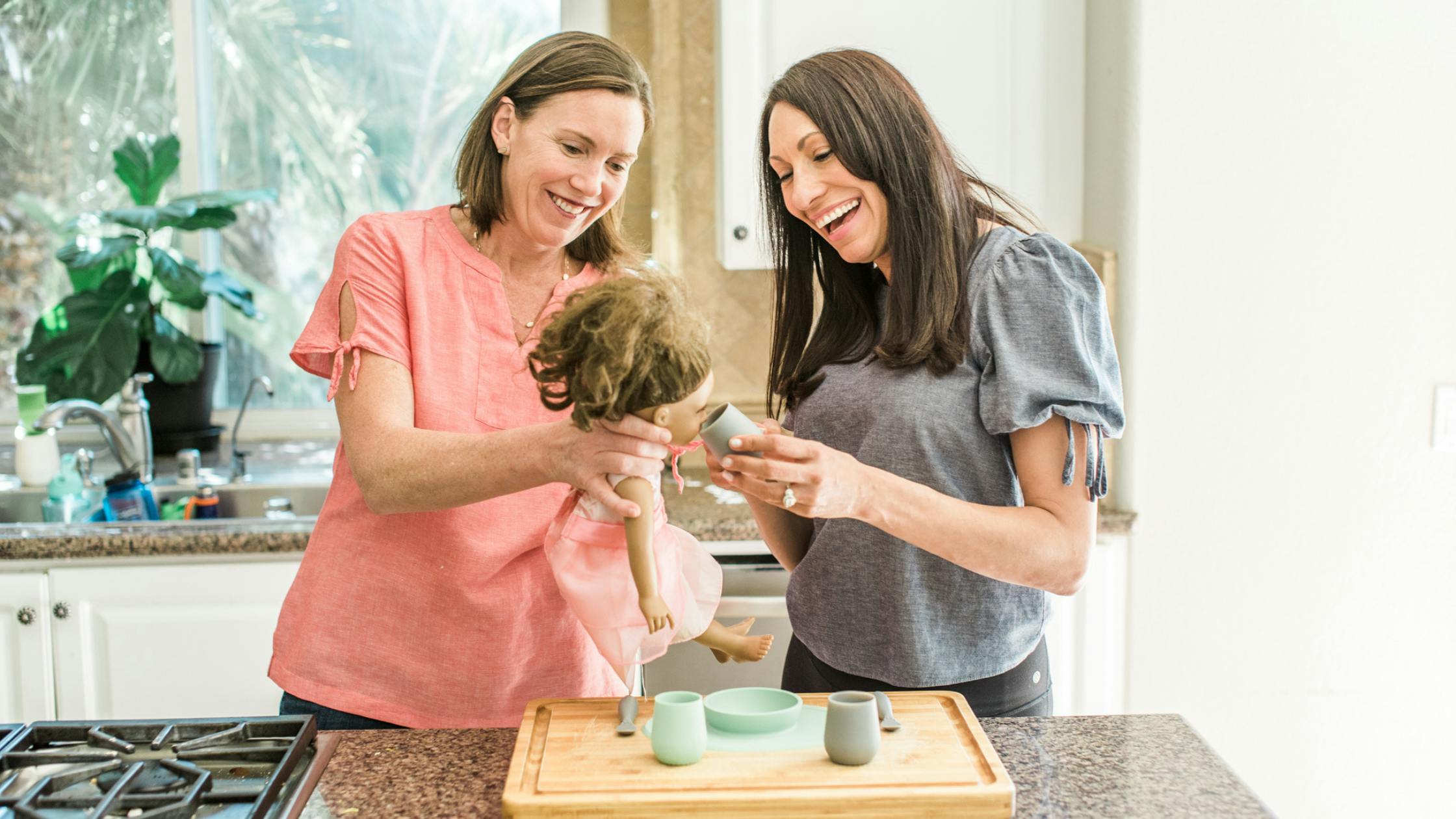
- This is the ezpz Developmental Cup Set that parents love and get 15% off with the code BABYLED here (this is an affiliate link)

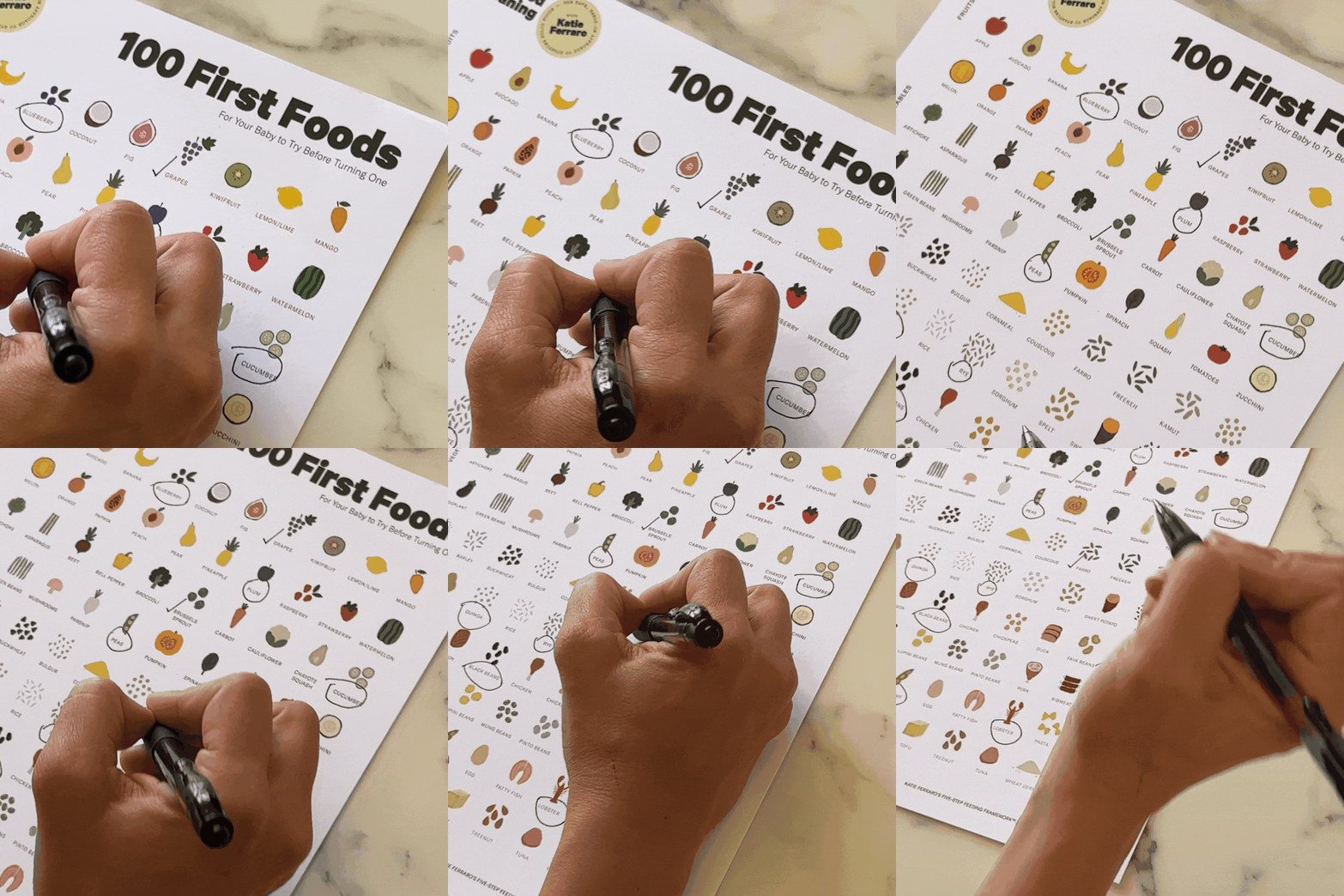
- Baby-Led Weaning with Katie Ferraro program with the 100 First Foods™ Daily Meal Plan, join here: https://babyledweaning.co/program and save $50 when you sign up using the code BLWPOD50
JOIN NOW AT $50 OFF CODE: BLWPOD50
- Baby-Led Weaning for Beginners free online workshop with 100 First Foods™ list to all attendees, register here: https://babyledweaning.co/baby-led-weaning-for-beginners
Other Episode Related to this Topic

Latest Episodes

The Past and the Curious (0s):
Grownups. If there's a child in your life who is interested in curious about or fascinated by people in places from history, then my podcast, the past and the Curious might just be a hit in your home. From the invention of microscopes to world, traveling dogs to fashions of the 1890s Gold Rush ghost towns and audiences going wild for walking competitions, we've got a little bit of it all hosted by children's author and museum educator, Mick Sullivan, that's me. The show is fun, funny, engaging, honest and beloved by kids and parents alike. Find the past and the curious at all the usual podcast places.
Dawn Winkelmann (41s):
And if we go straight to a straw cup and kind of skip the open cup, it takes a while for kids to be able to master that and that's when we'll start to really see those babies and young toddlers putting the whole straw in their mouth.
Katie Ferraro (55s):
Hey there, I'm Katie Ferraro, registered dietitian, college nutrition professor and mom of seven specializing in baby led weaning. Here on the baby led weaning with Katie Ferraro podcast. I help you strip out all of the noise and nonsense about feeding, giving you the confidence and knowledge You need to give your baby a safe start to solid foods using baby led weaning. Today's talk is all about straw cups and straw cups versus open cups, and which one comes first. Now, because of the developmental nature of this topic, I had to bring on an expert to talk us through the straw cups stuff And that is my dear friend the speech language pathologist and pediatric swallowing expert Dawn Winkelman.
Katie Ferraro (1m 40s):
So this is an interview that Dawn and I recorded a while back, but the message Dawn has is still very current and I think all parents need to hear it. Your baby has got to master Open Cup drinking before you bring the straw cup to the mealtime.
Ezpz (1m 56s):
Now Dawn is an SLP, she's an infant feeding expert, but Dawn also designs all of the easy peasy feeding gear. So Ezpz is a brand that makes baby led weaning gear. I use it daily in my infant feeding practice. I've used it with all seven of my kids. But Dawn created the award-winning easy peasy tiny cup for baby led weaning, as well as the ezpz mini cup and straw system. So we use that after the baby gets the hang of the Open Cup. As Dawn is going to explain today, If you wanna check out any of the ezpz feeding gear products, I'm a huge fan of all their stuff because Dawn designs it, they're so thoughtfully created to support independent feeding. My Ezpz affiliate discount code is located in the description wherever you're listening to or watching this episode. Or you can head to ezpzfun.com/babyled. On that page, I lined up all my favorite products for Baby Led Weaning. Their product line has exploded over the years. I think sometimes it's kind of hard to find like the best baby led weaning stuff, but I put my favorites, the ones I use every day in my infant feeding practice. They're for you@ezpzfun.com/babyled.
Katie Ferraro (3m 3s):
So with no further ado, let's dive in to the cup stuff with Dawn Winkelmann from Ezpz, talking about straw cup versus Open Cup and which one comes first.
Dawn Winkelmann (3m 18s):
Thank you so much for having me Katie.
Katie Ferraro (3m 20s):
Alright, now our audience who knows you, probably knows you as Miss Dawn SLP and you guys, she's a speech language pathologist also specializing in pediatric swallowing. But many of you may not be aware that like Dawn's expertise extends into product. She's actually an award winning product designer and much of our audience is familiar with the tiny cup and the mini cup that you designed for Easy peasy Dawn. But I'm wondering, could you tell us like a little bit of the backstory, what was the impetus for designing this new straw cup system for easy peasy?
Dawn Winkelmann (3m 49s):
Well, thank you Katie. The rationale behind this and the reason and the energy that made me so passionate about making a straw cup is that I was seeing babies and toddlers not making their straw cup milestones. And then I was also seeing parents having difficulties transitioning off of the bottle at the right time because they had not introduced a straw cup. And then toddlers were also having delayed speech, which the straw cup actually can help with your toddler's speech. So because of those reasons, I really wanted to design a system that would actually work for all families and for kids of all abilities.
Katie Ferraro (4m 26s):
Can you talk a little bit about feeding milestones and speech milestones? We have a whole separate episode and I'm gonna link to it you guys. It's six Reasons to Skip the Sippy Cup and Dawn did that one, it's one of the most downloaded interview episodes I've done. So she'll talk more about sippy cups in that one and why you skipped them. But could you just touch briefly on what milestones are related to feeding and speech that are tied in to straw cups?
Dawn Winkelmann (4m 47s):
Yeah, so around six months of age we want babies to be able to drink from an Open Cup And that is a milestone that usually is shocking for parents. And then around nine to 15 months we need to introduce a straw cup. And the rationale behind that from a speech standpoint is we're moving musculature of the mouth, specifically the lips in order to help increase babbling, which is actually gonna start during that time as well.
Katie Ferraro (5m 15s):
Okay Dawn, what is the difference between the beginner straw side versus the advanced straw side of your straw cup system? Like to me a straw is a straw, but then I saw your straw, I'm like well hold up this straw cups different. Yeah,
Dawn Winkelmann (5m 27s):
So the rationale behind all the changes in the straw cup that is very different than other cups on the market is basically my 25 plus years of experience being a feeding expert, teaching parents how to introduce a straw cup to kids. And there's so many unsafe things about straw cups out there. The first is the straw length. Most feeding therapists, we cut Straw vs in half when we're teaching straw drinking. And we do that because the shorter straw is easier and safer for children to learn how to drink out of than a long one because kids actually have to hold their breath to be able to suck up the fluid. And what happens is that you know, babies and toddlers can't hold their breath very long and they don't really have experience with that.
Dawn Winkelmann (6m 11s):
So having these really long Straw vs on put children at risk for having gagging coughing and liquid coming out of their mouth or nose and choking. So I was seeing so many children struggle with that, that I really wanted the straw link to be safe, make it easy for parents to be able to teach straw drinking and also be able to have these two sides like we were talking about, the first side is the beginning straw, which has the sensory bumps at the top of the straw. And what that does is actually give a child the sensory feedback that they need in order to be able to know where their lips are supposed to be. A lot of kids master straw drinking but they're putting their entire mouth over half of the straw and so they're actually doing more suckling than actually putting their lips around the straw and sucking.
Dawn Winkelmann (7m 1s):
So we want them to not suckle, we want them to actually suck. And so one of the safety features of the mini straw is having those sensory bumps there to be able to give kids that feedback and let them know where they're supposed to place their lips. And then also on that training end of the straw, it's curved too. And the rationale behind that is that we wanna keep kids' heads midline, usually with other Straw vs. They have to tilt their head back, which opens up their airway, allowing liquids to possibly go into their lungs. And so having that curvature and those sensory bumps on the training side of the straw really makes it easy to be able to introduce straw drinking. Now once parents see that their child is able to use that side of the straw safely and it could take a couple weeks or even a couple months, but they're consistently using that straw safely and they can just flip the straw over.
Dawn Winkelmann (7m 50s):
And then we have the advanced side of the straw, which does not have the curvature and does not have the sensory bumps and it looks like a regular straw.
Katie Ferraro (7m 57s):
My advanced drinkers, Gus and Hannah are loving taking the straw out and flipping it back and forth and back and forth like they're having so much fun with it isn't.
Dawn Winkelmann (8m 3s):
That's so great and we're really hearing more of that, that the kids are actually being able to do that on their own saying okay, hey, I'm fatigued at dinner and I kind of need the sensory bumps to be able to encourage me, but for breakfast and lunch when I'm not so fatigued I don't need it and I can use the advanced straw. So it's fun to actually watch kids being able to have that independence, which is what we all want. It's having babies lead the way with being able to help their own milestones.
Katie Ferraro (8m 29s):
And I love how you feeding therapists are always like cutting Straw vs in half and like you used to duct tape plates down to the table And that you see like these deficits in the existing products, but then you actually go out and design the solution that I'm sure like every feeding therapist is like, thank you Don. But as a parent too, like thank you because I have to admit there was a lot of limitations. I know I did a post last year, I reviewed 20 different weighted straw cups because people had asked for it and there wasn't one that I would've used in my own house. I'm like, I'll just skip it. So thank you for developing a product that parents appreciate that I know your colleagues that are feeding therapists really do as well.
Dawn Winkelmann (9m 3s):
Thank you.
Katie Ferraro (9m 3s):
Okay, so I know when I was a new mom and I was like learning about Weaning my babies off of breast or bottle and I was always confused about the order of things, so I just assumed it went breast or bottle to sippy cup and then to an Open Cup. And as I mentioned, you shared on our previous episode six reasons to skip the sippy cup with Dawn Winkelmann. She went all through the reasons why we don't wanna do sippy cups. But I'm curious If you could tell us why Open Cup drinking mastery, if I understand it correctly, should come before straw cup. Yes,
Dawn Winkelmann (9m 29s):
And the reason why is we want children to actually make the milestones around the age that we're expecting this development to occur. First is we want babies to be able to drink from an Open Cup held by an adult at six months and we're doing that to be able to establish the lip development. We're working on lip closure during that time. We're also starting solids during that time. And for those of you out there that are starting solids and your baby has an open mouth posture and all the food's coming out, nothing's being swallowed, this is an area that we really want to focus on is having that lip closure and you can teach your baby how to do that by mastering an Open Cup. But then around nine months we can start to introduce a straw cup.
Dawn Winkelmann (10m 13s):
Now I see some other feeding therapists and even parents trying to start that straw cup a little bit earlier. And what happens with that is that again, they're not able to hold their breath for very long. They're not able to actually have that lip rounding because we need to have lip closure first from a muscular standpoint before we have lip rounding next. And that usually again starts to happen around nine months. So we can start introducing a straw between nine and 15 months of age and be able to help that developmental progression. And then we're also changing up liquids during that time too. The liquids that we're putting into the Open Cup is breast milk or formula. And then the liquids that we're starting to put into the straw cup are breast milk formula, purees, and even water at that point.
Katie Ferraro (10m 58s):
So just to get that straight, you're basically saying, if I hear you correctly, that the lip closure is associated with the Open Cup drinking And that comes before the need for the baby to learn lip rounding, which is what they need the straw from. Is that right?
Dawn Winkelmann (11m 12s):
Yes, absolutely. And if we go straight to a straw cup and kind of skip the open cup, it takes a while for kids to be able to master that and that's when we'll start to really see those babies and young toddlers putting the whole straw in their mouth. And what happens with that is that we are using oral musculature in the wrong way. So we want to be able to develop the mouth to be able to not only make those feeding and swallowing milestones, but also for the speech milestones that are coming as well.
KiwiCo (11m 43s):
Hey, we're gonna take a quick break, but I'll be right back. I was up way too late last night listening to podcasts and cleaning out our toy closet. So I have a weird obsession with just giving away purging a lot of the toys. Okay. I love to gift them to other families when we've outgrown stuff, but I realized the very few things that we actually keep are our kiwi KiwiCo crates. I'm a huge fan of KiwiCo, specifically the KiwiCo panda crates. These are always all over our house and I have to help our kids pick them up and encourage them to pick, pick 'em up and put 'em away. But what I love about KiwiCo is these aren't just toys that sit on a shelf. These are hands-on fun and educational. When you give a KiwiCo crate, you're not just giving a toy, right? You're giving your kids the tools to create their own fun. I remember when our kids were babies and I actually started ordering KiwiCo, the first thing I noticed was how intentional everything felt. Like their products are not loud or flashy, they're just thoughtful. Like I remember watching one of the quads just like lock in on the toys and focus on it, turning it over, testing it, figuring it out in that, you know, kind of quiet, serious baby way. And I just like remember, I don't have to entertain them like I don't have to second guess myself. These are child led play and I'm a huge fan of anything baby led. So I do appreciate the trust factor with KiwiCo Panda Crate. Their products are designed by child development experts. They're designed in partnership with experts at Seattle Children's Hospital. The materials are made with care. They're free of BPA phthalates and lead. Everything is non-toxic water-based paints and finishes. If you want to unlock brain building play in your children without the overwhelm, I highly suggest you check out Kiwi CO's panda crate. You can get 20% off your first panda crate with the code Weaning at KiwiCo.com/panda. That's 20% off your first crate at KIWICO.com/panda code Weaning.
Katie Ferraro (14m 1s):
And one thing I've learned from working with you over the years is just to remind parents that developing these feeding milestones and achieving them, they don't happen in a vacuum that at the same time your baby's working towards feeding milestones. There's also working towards other developmental, including speech milestones. And I think it's so important that speech language pathologists are directly involved in infant feeding because as parents we need to remember it's there's the speech is coming next and we need to do the things in feeding that will actually help promote baby's ability to meet the speech milestones. And being able to drink out of an Open Cup is a huge one. And I finally see parents getting that message. And again, that's due to a lot of the work that you do, Dawn, which is reminding us that these things are all linked.
Dawn Winkelmann (14m 41s):
Yeah, it's really important. And you're right, more parents are learning about that because we're the experts in swallowing. And so it's interesting the the mouth is for respiration phonation and for swallowing, which is is our area of expertise. And that's why when parents ask me and they're like, oh, my baby's having difficulty swallowing, you want to find a speech language pathologist that specializes in swallowing. And that also is able to kind of keep going with speech too. And that's something that happens often is that a family will be struggling with some feeding issues and we start mastering those feeding concerns. And then of course, you know if when there's feeding delays, there usually is speech delays as well. So then we kind of switch our therapy from feeding goals and objectives to speech goals and objectives and kids can be out of feeding therapy much quicker because we're really mastering both of those areas at the same time.
Katie Ferraro (15m 32s):
Alright Dawn, let's talk about what to put in the straw cup. I know you and I are both proponents of breast milk and or formula only in the Open Cup early on, but what do you advise for parents as far as putting in the straw cup with regard to fluids? So
Dawn Winkelmann (15m 46s):
We can continue with breast milk or formula or like you say, you know, being able at 12 months to move on to cow's milk and I'll let you talk more about that. But we can also put in purees, we can put in smoothies and we can start putting in water. And so all of those different textures can actually do well in the mini cup and Straw Training System because I designed the diameter of the straw to be able to help thin liquids as well as thick liquids. And I wanted to do that for all these reasons, for texture, but also for kids who have dysphagia, which is a swallowing disorder. And a lot of children need to have their liquids thickened in order to be able to swallow safely.
Dawn Winkelmann (16m 29s):
And a lot of the straw cups out there are so narrow that they are unable to be able to use a straw cup and again, not being able to achieve that milestone. So I wanted our straw cup to be able to work for kids of all abilities and be able to be successful with that.
Katie Ferraro (16m 44s):
And If you guys have more questions about water and why both Dawn and I actually recommend on waiting on water, we have different reasons. Me as a dietician and dawn as a speech language pathologist, If you go back to episode 24, it's called water, When to Offer Your Baby Water and How Much, and there's lots of great questions answered in there as well. Okay, Dawn, I know with my oldest, I never did a straw cup. Like I don't even know if that they existed or I knew that they existed. But is it imperative that a baby learns how to drink out of a straw cup or If you just decided to go like to the Open Cup, can you keep your baby on an Open Cup or like do you definitely have to introduce this straw cup?
Dawn Winkelmann (17m 17s):
I really encourage parents to introduce this straw cup because we have a developmental milestone for that. It's also, again, triggering those muscles of the mouth that are needed for speech. And of course it's a convenience and safety issue too. When you are traveling, most families want to be able to have a straw cup if you're taking your child to daycare or to school, they're insisting on a straw cup versus an Open Cup. So is this skill that we need to master at home and to do it safely like using the training system that I developed and making it easy for children to be able to drink out of all types of cups, open cups, as well as straw cups.
Katie Ferraro (17m 53s):
And Dawn, I know you do like full blown hour and multiple hour log tradings on this. So to answer it in one question on a podcast might not be possible, but could you explain at least like high level overview of your three step developmental drinking program?
Dawn Winkelmann (18m 6s):
So my rationale for the developmental drinking system and why it's so important for parents is to be able to establish Open Cup drinking and straw cup drinking. So If you get the mini cup and Straw Training System on the back of the packaging has my three step system. So the first step is making sure that we're working on an Open Cup drinking, establishing those milestones. And then the second step is using the beginning training straw to be able to make your child feel comfortable and safe and secure with using a straw cup. And then once your child is able to do that successfully, you're in step three, which is the advanced training straw and you can do all of that with one product.
Katie Ferraro (18m 47s):
So don't throw the packaging out is what you're saying? Correct. Alright Dawn, where can our audience go to learn more about your work and in particular, the mini cup Straw Training System that you developed for Ezpz?
Dawn Winkelmann (18m 58s):
Yeah, so they can go to my website @MissDawnSLP.com, that's MissDawnslp.com, And they can purchase the products@ezpzfun.com.
Katie Ferraro (19m 11s):
Alright. And I'm gonna link up all of Dawn's resources, including some of the other episodes that we referenced in the show notes for this episode as well as if it's okay, Dawn, I wanna show the image that you guys have that has the back of the packaging that kind of explains how the system works because I think once people see that, they're like, oh, this is a really different straw cup than anything else that's ever been created.
Dawn Winkelmann (19m 30s):
Yes, absolutely. Thank you so much for sharing that. Sure.
Katie Ferraro (19m 32s):
And that'll be on the show notes for this episode@blwpodcast.com. And If you guys want to check out the ezpz straw cup that Don created, If you go to ezpzfun.com, the code KATIE10 always works for 10% off there. Well Dawn, thank you so much for being here. I really appreciate it. And congratulations on the straw cup. It's a really important part of the feeding world now.
Dawn Winkelmann (19m 53s):
Thank you so much for having me, and I hope that all of you explore some mealtime independence with the straw Cup.
Katie Ferraro (19m 59s):
Well, I hope you guys enjoyed that interview with Dawn Winkelmann. She is always so full of very, very, I'd say, actionable advice. I'm like, yes, I can actually do that. And I use all of her teaching. I literally do the five minutes of Open Cup practice every meal when I'm working with families and encourage them to do the same. I swear. Do that Open Cup practice five minutes after each meal. Your baby will be able to drink outta the Open Cup independently, albeit with a little spillage by the time they turn one. I'll go ahead and put all of the resources that Dawn mentioned in the show notes for today's episode, which you can find@blwpodcast.com/101. I also wanted to say a special thank you to our partners at AirWave Media.
Katie Ferraro (20m 39s):
If you guys like podcasts that feature food and science and using your brain, check out some of the podcasts from AirWave Media. We're online@blwpodcast.com. If you wanna check out all of Dawn's ezpz, baby led weaning products, go to ezpzfun.com/babyled. There's a discount code where you're listening to or watching this episode. Thanks so much for listening slash watching, and I'll see you guys next time. Bye now.
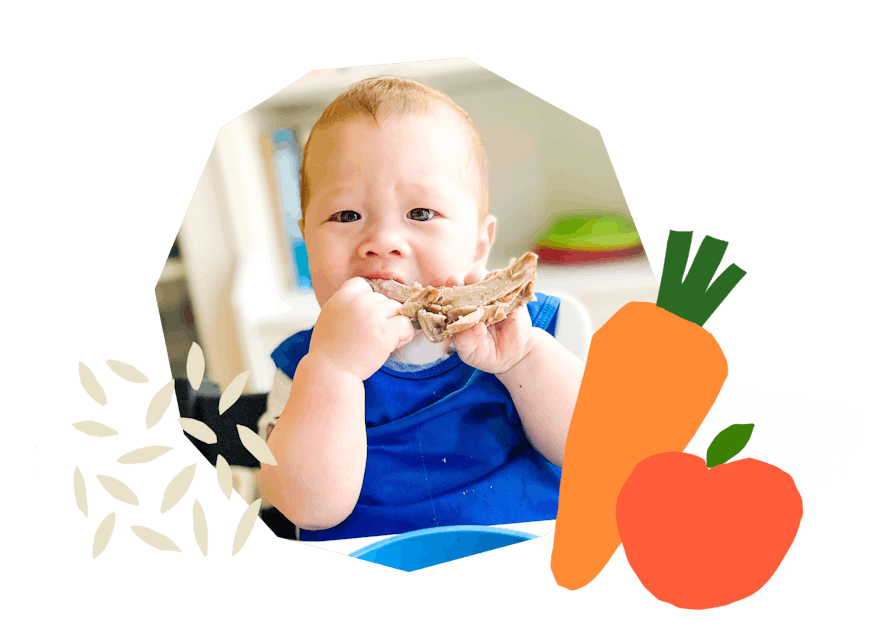
The Program Baby-Led Weaning with Katie Ferraro
A step-by-step digital program for starting solid foods safely and navigating the original 100 FIRST FOODS™ meal plan with baby-led weaning.
 EXPERT-LED, PROVEN APPROACH TO EATING REAL FOOD
 CONCISE VIDEO TRAININGS TO MASTER BABY-LED WEANING
 100 FIRST FOODS DAILY MEAL PLAN WITH FOOD PREP VIDEOS
Baby-Led Weaning for Beginners Free Workshop
Is your baby ready to start solid foods, but you’re not sure where to start? Get ready to give your baby a solid foundation to a lifetime of loving real food…even if you’re feeling overwhelmed or confused about this next stage of infant feeding.
Get baby-led weaning recipes and tips delivered to your email inbox.