
Is it Too Late to Start Baby-Led Weaning?
- Why it’s NOT too late to start baby-led weaning…even if you started with purees
- How to pick 5 new foods per week so your baby can catch up on finger foods
- When the flavor window closes and how to max out your baby’s foods before that
LISTEN TO THIS EPISODE
Episode Description
Am I too late to switch to baby-led weaning? What if I started spoon-feeding my baby but now I want to switch? How old is too old for a baby to learn how to self-feed?
If any of these questions have ever crossed your mind, this episode has all the answers!
We’re taking a look at what you do if you “missed” that 6-month mark for starting solids with baby-led weaning. Maybe you did traditional spoon-feeding and now your baby expects to be fed. Or what if you have an older baby and you’re just now feeling ready to transition off of purees?
Don’t distress: it is NOT too late for your baby to learn how to self-feed. I’ve got a few proven feeding tricks and tips that will help you fast-track your baby to self-feeding success...even if you think you’re getting a late start (you’re NOT! :)
Links from this Episode
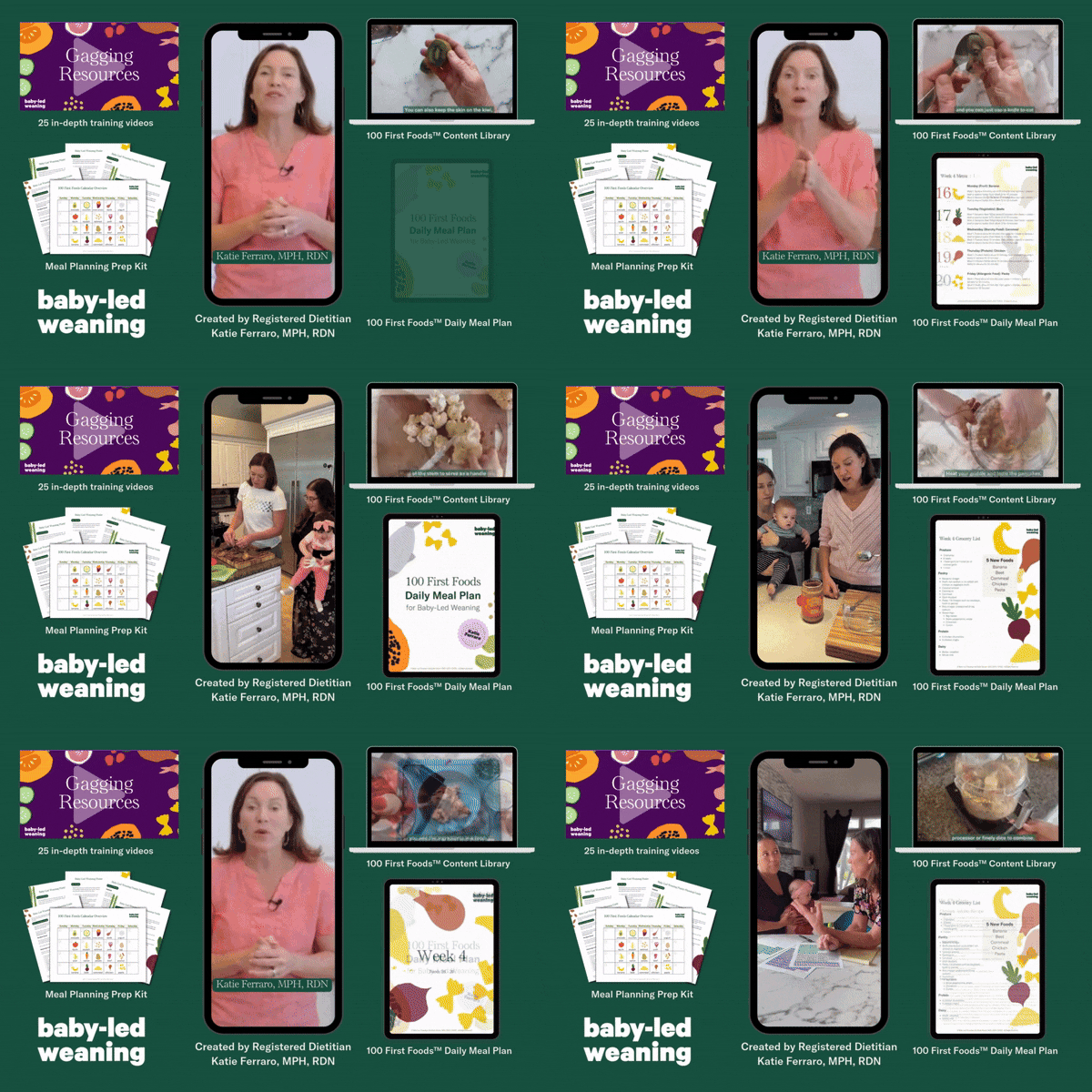
- Baby-Led Weaning with Katie Ferraro program with the 100 First Foods™ Daily Meal Plan, join here: https://babyledweaning.co/program and get $50 off when you sign up using the code BLWPOD50
JOIN NOW AT $50 OFF CODE: BLWPOD50
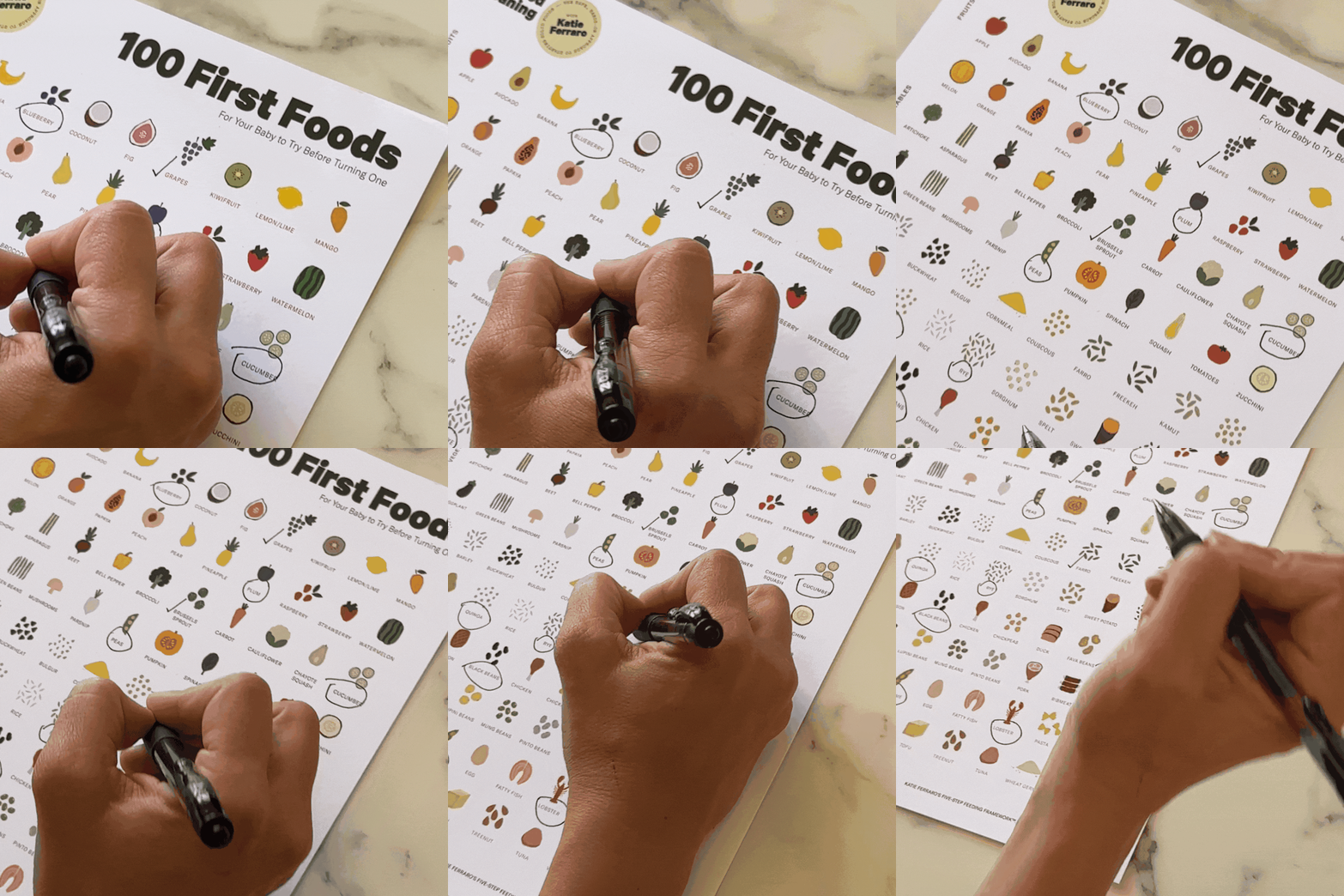
- Baby-Led Weaning for Beginners free online workshop with 100 First Foods™ list to all attendees, register here: https://babyledweaning.co/baby-led-weaning-for-beginners
Other Episodes Related to This Topic

Latest Episodes


Sierra (1s):
At Sierra, you'll always find apparel, footwear, and gear for 20 to 60% less than department and specialty store prices. But right now it's clearance time so you can save even more on everything you need to get active and outside. Visit your local Sierra store today.
Katie Ferraro (17s):
And so this mom is stressing out because her baby's only ever had purees and you see all her friends and those babies are eating finger foods and I'm trying to tell her, listen, your baby's still got that all important flavor window open. All right. That brief period of time where babies will like and accept a wide variety of food, you are not too late to catch up. Okay? It is completely appropriate for babies who are six months of age to begin eating finger foods. We just need you to be making the right finger foods for your baby's age and stage and your baby at eight months of age. What is appropriate for them is actually gonna look a little bit different than your friends whose eight month old babies have already been eating finger foods for two months. But here's how you can do it and help your baby get caught up.
Katie Ferraro (1m 0s):
Hey there. I'm Katie Ferraro, registered dietitian, college nutrition professor and mom of seven specializing in Baby-Led Weaning. Here on the Baby-led weaning with Katie Ferraro podcast. I help you strip out all of the noise and nonsense about feeding, giving you the confidence and knowledge you need to give your baby a safe start to solid foods using Baby-Led Weaning. All right, what if your baby is beyond the six month mark and now you want to do some finger foods? Okay, maybe you started with some purees 'cause you were just terrified of finger foods or you like really hit your stride with breastfeeding and you just didn't wanna mess things up with your schedule so you kind of delayed that transition to solid foods.
Katie Ferraro (1m 44s):
Sound familiar? Whatever the reason is, I get questions all the time. Is it Too Late to Start Baby-Led Weaning? And in today's episode, I'm gonna help tackle this common question for parents of babies who are past six months of age, but still want to raise an independent eater who likes and eats real food now. Hello, I'm Katie Ferraro. I'm a registered dietitian. I'm a college nutrition professor, mom of seven. I specialize in Baby-Led Weaning and I'm the creator of the original a 100 FIRST FOODS approach to starting Solid Foods. So through My program, Baby-Led Weaning with Katie Ferraro, I help parents give babies a safe start to solid foods. We teach them how to eat a 100 safe finger foods before turning one so that you can raise an independent eater who loves real food.
Katie Ferraro (2m 30s):
And I'm gonna show you exactly how you can make all of those foods on my 100 First Foods list safe for your baby's age and stage. So today we're gonna be talking to those of you who feel like you are a little bit late to the game. Am I too late? No. But I like to start out each of these mini solo training episodes with a Baby-Led Weaning tip of the day. And today's tip is not all babies are really ready to start solid foods right at six months of age. Okay? We get parents who stress out because they hear about the six month mark. But we're gonna talk about the reliable signs of readiness to eat. And for some of you, you might be worrying that you're too late to start and you're actually right on time.
Katie Ferraro (3m 10s):
Okay? So I wanna start also by telling you a quick little training story. I've been working recently with an adorable baby named Roman. So I've known Roman since he was born. He's literally like my dream baby because he was born on January 1st. So on July 1st, that's national Baby-Led Weaning day, and I always made that national Baby-Led Weaning day. Well, not always. I started it 2021 because if your proverbial baby was born on January 1st, on July 1st, that baby would turn six months old. And we are honoring the important work that Gill Rapley, the founding philosopher of Baby-Led Weaning. She did a ton of work to raise awareness about the importance of waiting until six months, okay?
Katie Ferraro (3m 50s):
Because historically, health professionals would say it's okay to start solid foods at four and five months of age. And we now know from research and child development researchers that babies are not ready to start solid foods at four and five months of age, right? Breast milk or formula is sufficient to meet your baby's needs for the first six months of life. So we wanna celebrate those six months. Do your thing with the infant milk. The first six months. Wait till if your baby was born on January 1st. Wait till July 1st. So baby Roman, in real life, I finally have a friend who had a baby born on July 1st, January 1st rather. And on July 1st, when he turns six months of age, I'm like texting her. I'm so excited. And she's like, this baby is nowhere close to sitting up. So I'm like, all right, send me a video. Definitely not close to sitting up.
Katie Ferraro (4m 31s):
All right, here's your, you know, she's in my program, do the pre feeding exercises. We did a lot of tummy time. There's some pre feeding tools, like she'd gone through all the pre feeding material and she's like sending me videos. Six months, two weeks, definitely not ready. I was like, all right, cool. We met at seven months, baby. Definitely not sitting up. Mom admit it. And she told me, I could share this with you. She definitely was not doing enough tummy time. She's like, he doesn't like it. And we had to have the conversation of like, Hey, there's a lot of things as a parent your child's not gonna wanna do, but you still need to help them do and tummy time so that your child can develop the head and the next strength required for sitting up on their own, which in turn will help them support a safe swallow is something you gotta do. So then I was talking to her parents, the grandparents who were also friends with, and I'm like, Hey, you guys are in town.
Katie Ferraro (5m 12s):
We got really late on with the tummy time and some of these sitting and rolling exercises. By seven months plus two weeks, this baby was finally sitting on his own. She was stressing out so much that he was late. Oh my gosh, he's not starting solid foods. My doctor's mad at me, all my friends', babies that are the same age, they're already eating, blah, blah, blah. It's like, Hey, every baby gets ready to eat on their own timeline. Your baby is not yet showing you the reliable signs of readiness to eat if your baby can't sit relatively on their own. They are not safe to start solid foods yet. And once he was sitting on his own, oh my gosh, we've just been working together for like two weeks now on foods. He has already crushed like 15, 16 foods.
Katie Ferraro (5m 53s):
They're moving really fast through the 100 First Foods list because this baby is really eager to eat. But it's so important that we didn't start until he was really ready to eat. Now, if you don't yet have a copy of my original a 100 First Foods list, I give that to everybody on my free online workshop called Baby-Led Weaning FOR BEGINNERS. I want you to have this list. I want you to print it out just like Roman's mom. She's got it right on her fridge. She's checking off the new foods. They're doing five new foods a week, but some weeks they're doing more than that. And we're gonna talk about how to catch up. If you feel like you've got a little bit of a late start, you can sign up for the free online workshop called Baby-Led Weaning FOR BEGINNERS. Go to Baby-Led Weaning.co/workshop. You can take this free workshop right now, later today when your baby naps tomorrow, whatever's convenient for you.
Katie Ferraro (6m 40s):
It's one hour. It's full of great videos that show you exactly everything you need to give your baby a safe start to solid foods. And you'll get that free workshop at the end of it. So grab the list, great place to start so that you feel prepared to get your baby moving through that list. And I want you to hang tight because in this episode, I'm gonna share exactly how often you can be offering solid foods to your baby and what schedule to follow if you feel like you need a little bit of help to catch up because you can, okay, it's not too late for you to take advantage of this all important flavor window, okay? We wanna capture your baby's ability when you're under that umbrella where your baby will like and accept a wide variety of foods.
Katie Ferraro (7m 20s):
We're gonna be talking about the flavor window today too. So let's dive in if you're worried if it's a little too late to start Baby-Led Weaning. Hey, we're gonna take a quick break, but I'll be right back.
OSEA (7m 36s):
As a dietitian with chronically dry skin, I'm also a big believer that what you put on your body is just as important as what you put in your body. And you know how some days your skin just feels thirsty, like it's begging for something more than lotion. I have that kind of skin where lotion just isn't gonna cut it. Actually, I remember when I was in high school, there was this girl in my current events class, and she leaned across the aisle to my desk and she said, you know, if you put lotion on your hands, they wouldn't look like that. And I was like, I do put lotion on my hands. I just need more than lotion. And I now use something more than lotion. I've recently been using OSEA a's Hyaluronic Body Serum. Now, this is not your average skincare product. It's literally like a tall glass of water for your skin and it soaks in immediately. So I put it on right after I shower. I do it every morning and every night, and my skin just drinks it up. It's very lightweight. It's cooling, honestly. It makes my skin feel refreshed in a way that no lotion I've ever met can do. So this is like very fast absorbing. It's this lightweight body serum. And what's cool, it's been clinically shown to instantly boost your skin's hydration by 161%. So it improves your natural moisture barrier. And I've got visibly smoother skin. The hero ingredient here is the hyaluronic acid. So OSEA blends three different weights of it, so it hydrates deep and locks in moisture all day. I've been using it undaria algae body oil, and that combo total game changer for my skin. As always, with OSEA products, they're clean, vegan, cruelty-free, and climate neutral certified. Their ingredients come from the ocean and they take care to protect it. I love knowing that what I'm putting on my body is good for me and for the planet. You can get healthy glowing skin for this season of your life with clean vegan skin and body care from OSEA. Get 10% off your first order site-wide with the code weaning. If you head to OSEA Malibu, that's OSEA malibu.com, you're gonna get free samples with every order and you get free shipping on orders over $50. So again, head to OSEA malibu.com and use the code weaning for 10% off.
Katie Ferraro (9m 57s):
All right, so when is the ideal time to start Baby-Led Weaning? As I mentioned in the introductory vignette about Baby Roman, not all babies ready to start right at six months of age. It's very important that We don't start before six months of age, which I think I've covered ad nauseum here on the podcast. But remember, infant milk, that's breast milk or formula is sufficient to meet your baby's needs for the first six months of their life. There is absolutely no upside to starting solid foods early. It can only increase the risk of bad things like the risk of choking or increase the risk of food allergies, increase the risk of some other developmental problems if we start solid foods too early. So we don't wanna do that. Let infant milk do its thing for the first six months once your baby crosses over that six month mark, or if they were born premature, we need to do their six month adjusted age.
Katie Ferraro (10m 45s):
So I've got a whole podcast episode that I'll link for you in the description about how to calculate your baby's adjusted age. But you need to be working off of that adjusted age if your baby was born prematurely. Now, once you get past the six month or six month adjusted age, what are the other signs of readiness that we're looking for? I talked about the importance of head control and their neck strength, their trunks, strength, head, neck, trunk. It's all connected, right? Your baby sitting up on their own is showing you that they have the ability to support a safe swallow. Okay? So all that tummy time, all those sitting, all those rolling exercises, I cover all of them in the pre feeding section of my program. If you've got a baby who's four or five or six months of age and you're just not ready to start solid foods yet, there's actually a lot of great activities that you can be doing with your baby to help them get ready even before you start solid foods.
Katie Ferraro (11m 34s):
So if you wanna check out the program, it's called Baby-Led Weaning with Katie Ferraro, go to Baby-Led Weaning.co/program. I've got tons of short, really easy to digest, no pun intended, expert led videos in there that will show you exactly what to be doing for your baby's age and stage. Now, sitting up on your own, your baby after six months of age will start be demonstrating that head and neck control that they need to support a safe swallow. They'll start reaching for and grabbing objects and bringing those objects to mouth. Okay? Because you can't feed yourself if you can't bring the things to your mouth. Babies bring everything to their mouth, And we want them to be able to bring that food to their mouth. They're gonna have an increased interest in the food that you are eating, okay? But I also wanna point out that that is not an independent sign of readiness to eat.
Katie Ferraro (12m 16s):
Your baby might be looking at the food that you're eating when they're four months of age, but that doesn't mean that they're ready to eat yet, okay? So you can't just have one of those signs. Okay? So we have a lot of six month babies that can't do the other stuff. Okay? We've got some babies looking at food that aren't six months yet, okay? You wanna wait till your baby has all those signs of readiness to eat before you start those all important first bites. Now, what if you started with purees? Can you switch? Absolutely. A lot of people mistakenly believe that Baby-Led Weaning just means skipping purees and it doesn't. Okay? Purees are a very important texture for your baby to learn how to master. They're just not the only texture that babies can eat. Okay? So it's perfectly fine for you to incorporate naturally occurring purees. Think about something like full fat, whole milk yogurt.
Katie Ferraro (12m 57s):
That's a great way to introduce your baby to the potentially allergenic food cow's milk. Okay? Now, we don't wanna put the yogurt on a spoon and put that in your baby's mouth. Okay? That's not Baby-Led Weaning. That's force feeding a baby by spoon. But we can put the full fat whole milk cows yogurt on a Baby-Led Weaning spoon, put that spoon in the baby's hand and the baby can bring the spoon to their mouth. Okay? So you can honor the self-feeding principles of Baby-Led Weaning and still allow your baby to self feed. And we do that using what's called the preloaded spoon approach.
Ezpz (13m 26s):
So if you go check out episode 64, it's called the Right Way to Use a Preloaded Spoon. That's an interview episode I did with Dawn Winkelmann. She's a speech language pathologist. She's the creator of the first Baby-Led Weaning spoon, the tiny spoon from Ezpz. That's the spoon that I use all the time. If you wanna check that spoon out, if you go to ezpzfun.com/babyled, you can see the spoon lined up there. The Code BABYLED also works for 15% off all of the feeding gear@ezpzfun.com.
Katie Ferraro (13m 55s):
Now, if you started with Purees, it's perfectly fine. I know your baby now knows how to swallow something other than infant milk. That's great. Let's make the jump to finger foods. Okay? It is developmentally appropriate for six month old babies who are also showing us the other reliable signs of readiness to eat. It is developmentally appropriate for them to start eating finger foods in phase one of my program. That's the first eight weeks when your baby eats from Foods one to Foods 40. So the first 40 foods, we show you how to make those foods from five different food categories, all 40 of those foods safe in finger food format. So if you're doing the spoon, turn it around, put it in your baby's hand, let them feed themselves, but also make that move to finger food and start doing finger foods multiple times a day right now.
Katie Ferraro (14m 40s):
Now, how often should you be offering solid foods? Okay, my recommendation is once you start, try not to skip days, okay? A general Rula thumb and the outline that the feeding schedules in our program follow recommend at six to seven months of age, we do solid foods one to two times per day. At eight to nine months of age. We'd love to see you bump that up to two to three times per day. And then by 10 months of age, your baby is eating three meals a day. If that mimics the meal patterns of your family. The ultimate goal is that by 12 months of age, most of your baby's nutrition can be coming from solid foods. Now, let's talk a little bit about the flavor window, what I also call the honeymoon feeding phase.
Katie Ferraro (15m 20s):
This is that brief window of time when your baby will like or accept a wide variety of foods, okay? The flavor window kind of dissipates once you cross over that one year mark, because babies are not as inclined to try that wide variety of food when they're toddlers, as they did when they were younger. So you really, really, really wanna take advantage of that flavor window. And that's why we really push this idea of diet diversity, which is offering your baby as wide of a variety of foods and flavors and tastes and textures as you can early and often. So if you have not been doing five new foods a week to date, I want you to start next Monday, follow my five step feeding framework.
Katie Ferraro (16m 1s):
And here's how that works. Every Monday we do a new fruit. Every Tuesday we do a new vegetable. Every Wednesday we do a new starchy food. Every Thursday we do a new protein food. And every Friday we do a new allergenic food. If you take a look at the 100 First Foods list, you can see that those a 100 foods are divided evenly into five food categories, fruit, vegetables, starchy foods, proteins, and allergenic foods. There's 20 foods in each category. You pick one food from each category, okay? Each week. So that's five foods per week. And in 20 short weeks, your baby has eaten a 100 foods, okay? And the reason why that's so important is because if you look at the traditional baby who's been spoon fed, so a baby who's had spoon foods pushed into their mouth, by the time they turn one, they have at most eight or 10 foods that they know how to eat.
Katie Ferraro (16m 49s):
And if you know about child development or you have toddlers, you know that picky eating or food neo phobia sets in when you cross over that one year mark. So in the second year of life, it is developmentally appropriate for children to experience some degree of picky eating, okay? And if you only have eight or 10 foods and that child loses those eight or 10 foods, then that becomes a really challenging child to feed, right? But if you have like a 100 foods that your child can eat and you lose eight or 10 of them to picky eating, it's not really a big deal, right? Because your baby can still eat 90 or 92 different foods. So that's the point of the 100 First Foods approach is to really lean into this flavor window and just basically get as many foods under your baby's belt as you can when they're going to eat foods like sardines and beets and lamb, and pretty much anything you put in front of them, okay?
Katie Ferraro (17m 36s):
If we think about Ellen Satter's, division of Responsibility in Feeding Theory, and Ellen Satter is a registered dietitian who is also a licensed feeding expert. She's a counselor. And her theory says that we as parents, we have a job, okay? Have a couple of jobs. We're in charge of what the baby eats and where they eat and when they eat, okay? But the baby is ultimately in charge of how much or even weather they eat. So you pick what the foods are, you're gonna pick a big variety of foods, hopefully a 100 before your baby turns one, and you're in charge of when they eat at set meal times following a schedule. 'cause we don't let children graze throughout the day and eat whenever they want, and you're in charge of where they eat safely seated in a high chair, which is a safe feeding environment. So you don't increase the risk of choking, okay? But your baby is ultimately in charge of how much or even whether they eat.
Katie Ferraro (18m 19s):
Okay? And these are the underlying principles of Baby-Led Weaning. I teach all about them in the program, Baby-Led Weaning with Katie Ferraro, if you wanna check it out. Again, that's at Baby-Led Weaning.co/program. I show you how to make all of the foods on the 100 First Foods list, and I'd love to help your baby get to that point as well. If you feel like you're a little bit late. We have a lot of parents in the program, especially working parents who are like, oh, I didn't really realize how much work this was gonna be, and I don't have a ton of time to make five new foods every week. We have families who are doing all five of the new foods on the weekend. So we have a weekend maintenance plan for working families where they'll just layer in all five of the new foods on the weekend. We have families that are doing more than five foods like baby Roman's family, because I got a little bit of a late start.
Katie Ferraro (19m 5s):
The only guidance there is that we don't actually introduce two new allergenic foods at the same time, right? 'cause if your baby had an allergic reaction to one of the new food proteins and you introduced two at the same time, how would you know which one it is? But other than that, okay, the other 80 foods on the 100 First Foods list that are not allergenic, it's perfectly safe to offer more than one of them in the same day for your baby. So I'll show you how to get caught up if you feel like you're late. Check that program out at Baby-Led Weaning.co/program and don't be scared or shy to try some new foods. I want you to start next Monday doing five new foods a week. And if you need some help on how to do that, I'm here to help you. I'll put the show notes for today's episode online@blwpodcast.com/57,
Airwave Media (19m 48s):
and a special thank you to our partners at AirWave Media. If you guys like podcasts that feature food and science and using your brain, check out some of the podcasts from AirWave Media. We're online@blwpodcast.com.
Katie Ferraro (19m 60s):
Thank you so much for listening, and I'll see you next time.
ESPN (20m 10s):
New season, new chaos in college football. Let's go. Big stage, big opportunity. This Labor Day weekend, wildness lives on A, B, CE, SLP N, and the all new E SLP N app. When do I start featuring top 10 teams like Clemson, Notre Dame, Alabama, and LSU, and Bill Belichick's debut at North Carolina. It's so special these teams collide. Don't miss a lineup filled with electric matchups. Welcome back to College Football Kickoff week, presented by Modelo Labor Day weekend on E SLP, N and A BC. Also available to stream on the all new E SLP N app.
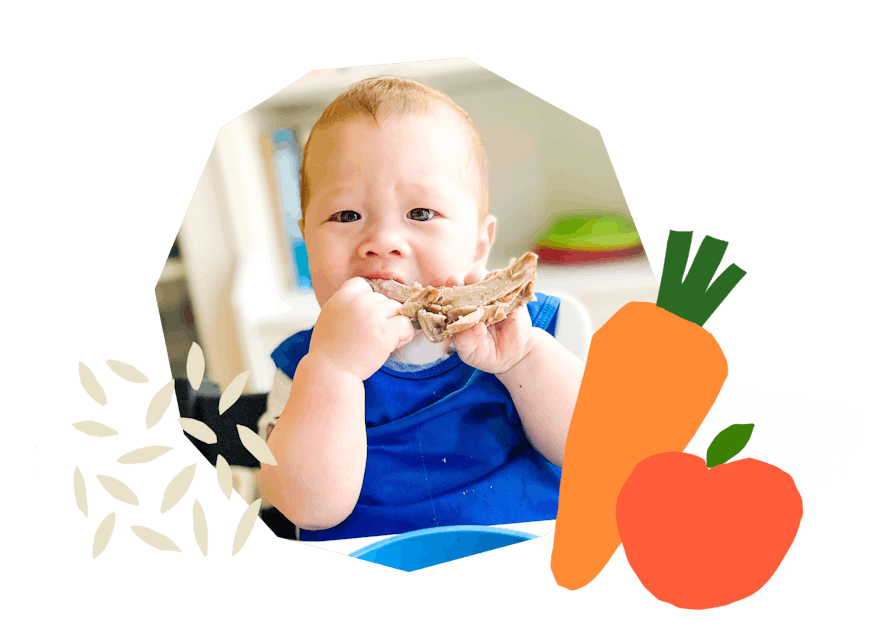
The Program Baby-Led Weaning with Katie Ferraro
A step-by-step digital program for starting solid foods safely and navigating the original 100 FIRST FOODS™ meal plan with baby-led weaning.
 EXPERT-LED, PROVEN APPROACH TO EATING REAL FOOD
 CONCISE VIDEO TRAININGS TO MASTER BABY-LED WEANING
 100 FIRST FOODS DAILY MEAL PLAN WITH FOOD PREP VIDEOS
Baby-Led Weaning for Beginners Free Workshop
Is your baby ready to start solid foods, but you’re not sure where to start? Get ready to give your baby a solid foundation to a lifetime of loving real food…even if you’re feeling overwhelmed or confused about this next stage of infant feeding.
Get baby-led weaning recipes and tips delivered to your email inbox.