
Baby Hunger & Fullness Cues: What They Are & How to Spot Them
- What hunger and fullness cues look like so you can confidently understand what your baby is telling you at mealtimes.
- How to respond to those cues in a way that supports your baby’s self-regulation and reduces mealtime stress for you.
- Why honoring your baby’s cues is a core part of baby-led weaning and helps you raise a more independent, confident eater.
LISTEN TO THIS EPISODE
Episode Description
Understanding your baby’s hunger and fullness cues is one of the most important parts of responsive feeding, but it’s also one of the most confusing for parents. In this episode, you’ll learn how to recognize early hunger cues, spot the signs that your baby is finished, and troubleshoot those moments when the cues just don’t make sense. Discover how honoring these signals supports self-regulation, reduces mealtime battles, and helps you raise a confident, independent eater with baby-led weaning.
Links from this Episode
- Baby-Led Weaning with Katie Ferraro program with the 100 First Foods™ Daily Meal Plan, join here: https://babyledweaning.co/program and get $50 off when you sign up using the code BLWPOD50
JOIN NOW AT $50 OFF CODE: BLWPOD50
- Baby-Led Weaning for Beginners free online workshop with 100 First Foods™ list to all attendees, register here: https://babyledweaning.co/baby-led-weaning-for-beginners
Other Episodes Related to this Topic

Latest Episodes

Hungry Root (0s):
I know that December is all about giving and giving to others. But if I may say, I sometimes do give gifts to myself. And the best gift that I gave myself this year was Hungry Root. Hungry Root takes the stress out of mealtimes by filling your cart with personalized picks and planning your week of meals, it gets smarter with every order. Like Hungry Root now knows I do not like beets. We accidentally got some beets in something and I made some tweaks Their, their technology is amazing with, there's over 15,000 recipes, first of all, that they choose from each week. My brain can't handle that. What I said is like, I want meals that are ready in just 15 minutes or less. There's this super wide grocery selection. There's things like smoothies and kids snacks and sweetss and salad kits, ready to eat, meals, supplements. It is so easy to find options that are gonna fit your whole family's taste and nutrition goals too, because I know that you're in the thick of it with baby life and holiday madness and you're working and trying to maybe maintain a friendship or relationship. Or two, figuring out food every day for your family is a lot. Hungry Root knows that they fill my cart with the exact groceries and recipes that I need. Nothing more, nothing less. Everything is based on my own dietary goals. Our family food preferences. A little bit about what my kids will actually eat, but also kind of pushing the boundaries, sometimes trying new foods. It literally gets better every single time we use it. No holiday crowds. No last minute store runs. No guesswork. Hungry Root gets us. My last box had this cinnamon oat bake. Now I want every morning. I love the pre chopped veggies, the easiest beef stir fry I've ever made with a sauce that like was so delicious. I, I would never think of that on my own is all I have to say. I love that. Hungry Root is now like my kitchen brain. It's all clean ingredients, no junk. The meals are done in under 15 minutes. Truly a holiday miracle. Give yourself one less thing to worry about this season. If you want to check out Hungry Root, please take advantage of this exclusive offer for our listeners. For a limited time, you can get 40% off your first box, plus get a free item in every box for life. So go to hungry root.com/weaning and use code weaning. That's hungry root.com/weaning code weaning to get 40% off your first box and a free item of your choice for life hungry root.com/weaning code weaning. And check it out. I think you'll love how much hungry Root's gonna help streamline the meal prep in your family's life.
Katie Ferraro (2m 32s):
Have you ever sat your baby down for a meal only to have them instantly push the food away? Or on the flip side, they're gonna eat nonstop one day and then the next day they barely touch anything. Okay, hunger and fullness skews can feel totally confusing when your baby starts solid foods. And the truth is, most parents aren't ever taught how to read those hunger and fullness cues, but that's actually your baby communicating with you, and you just need to know what you're looking out for. Hey there. I'm Katie Ferraro, registered dietitian, college nutrition professor and mom of seven specializing in baby-led weaning. Here on the baby-led weaning with Katie Ferraro podcast. I help you strip out all of the noise and nonsense about feeding, giving you the confidence and knowledge you need to give your baby a safe start to solid foods using baby led weaning.
Katie Ferraro (3m 26s):
Today I'm gonna be breaking down exactly how to spot your baby's hunger and fullness cues, and then how to respond in a way that supports your baby and their self-regulation. It's gonna reduce your mealtime stress, and ultimately this is gonna help you raise a confident independent eater. So if you've been guessing at whether your baby's hungry or whether you should stop offering food, I'm gonna help you make mealtimes so much easier. Let's get into it. I like to start each of these solo trainings with a baby lead weaning tip of the day. And today's tip is don't drip your baby's food. What does dripping mean? Dripping is when you put a piece of food out and then the baby picks it up and they eat it, and then you put another piece of food out and the baby picks it up and they eat it.
Katie Ferraro (4m 10s):
That is not baby lead weaning. You are the one controlling the rate and the pace that your baby's eating at. So that's parent-led feeding, and that's not baby led weaning, so don't trip the food. Instead, we want to pre-portion the food, which means putting the amount of food on the plate or the bowl that you think the baby will eat. Now, I know that hard is hard to guess. We're gonna talk a little bit about that. There's no such thing as portion sizes for babies though, so you kind of gotta guesstimate on this. I've got a whole training that I did called Don't Drip the food, how to Pre-Portioned Food for Baby-Led Weaning. That's at blwpodcast.com/133 a link to it in the description. But don't drip your baby's food, but hang tight too, because today I'm gonna be talking how your baby is sending you these little mixed messages all the time, even before the meal starts, and those cues are gonna fluctuate and they're gonna change.
Katie Ferraro (4m 59s):
So I wanna talk about how we can stay on our toes as the caregiver if our baby is mixing things up. Now, a quick story for you when it comes to talking about how all babies are different, one thing I gotta say is from my own personal experience about how to identify hunger and fullness skews, I had a little social experiment of my own going on when my quadruplet babies were starting solid foods every day. One of those babies would be the leader with regards to who was eating the most or he who was eating first or who was finishing a meal. So one day it would be Dylan and he would be mackin on food and Claire would be over in the corner not eating. And then the next day, Claire would start first, but Henry would start going faster than her.
Katie Ferraro (5m 41s):
It was like this little race every single day. But some days like Charlie wouldn't be participating or Henry would be participating, but Charlie wouldn't. And every single day it was different. And I was like trying to figure it out and what it meant. And what I really realized was it doesn't matter. Okay? You gotta do your best at anticipating what your baby is going to eat and then just adjust as necessary. My suggestion to you is to portion out the amount of food that you think your baby is going to eat and then to be following their hunger and fullness cues throughout the meal. So the point is, you do need to be there. You need to be present. We never want our babies to be eating unattended because of course, sad to think of a baby eating by themselves, but also unattended babies.
Katie Ferraro (6m 23s):
Babies should never be left unattended because if your baby chokes on food, you are not going to hear it because choking is a silent response. So we gotta be there observing the baby, and just keep in mind that all babies are gonna be eating at different paces and they're gonna be showing you different hunger and fullness cues. And just when you think about you haven't figured out, they're probably gonna change 'em too. But listening to those hunger and those fullness cues, that's part of responsive feeding. So we're gonna start first by talking about what is responsive feeding? And if I had to break it down, so responsive feeding is simply the idea that your baby is communicating hunger and fullness through their behavior. Okay? And so our role is to notice what those cues are and to respond in a way that supports their ability to eat the right amount for their body.
Katie Ferraro (7m 6s):
Okay? A little bit easier said than done, but before your baby can even talk, they're really already telling you a ton through their posture and their movements and their facial expressions. And responsive feeding means that you're not gonna override or ignore those signals, okay? You're not gonna try to control how much they eat, okay? What you are gonna do is create a predictable routine. You're gonna offer safe foods, then you're gonna step back and let your baby decide how much or even whether they want to eat. Okay? This is Ellen Satter's, division of responsibility of feeding theory, inaction. The baby decides how much or even whether they eat. Think about if you've ever breastfed or bottle fed your baby responsibly. You've already been practicing this skill, okay?
Katie Ferraro (7m 46s):
Or maybe you've practiced. We call paste bottle feeding, also known as baby-led bottle feeding, responsive feeding in the second half of infancy is baby-led weaning, okay? It's just an extension of that same stuff that you were doing in the first half with the bottle or the breast. But now we apply it to starting solid foods. So when your baby was very little, right? You read their early feeding cues, right? You, you knew what rooting was, you saw them fussing, they were turning toward the breast or the bottle, they were putting their hands to their mouth. You adjusted how and when you fed them, okay? A lot of you were baby wearing so you could be really close and attentive to when your baby started showing you those cues. Okay's, why? We don't always have the baby swaddled up. It's why we don't put those mittens on their hands.
Katie Ferraro (8m 26s):
We want to be able to observe those cues, okay? So that same back and forth, it continues even when we start solid foods. You're providing the structure, right? You're in charge of what the baby eats and where they eat and when they eat, but your baby's the one who's driving their own intake, okay? And this approach helps babies build self-regulation. It supports their growth. It sets the stage for more relaxed, enjoyable meal times for the whole family. Let's talk next about hunger hugs and what they look like. 'cause your baby actually actually is giving you a lot of clues that they're ready to eat. Most of those cues are gonna carry over from breastfeeding or bottle feeding into starting solid food. So it's not like there's a whole new language that you need to learn. Early hunger cues include things like bringing their hands to their mouth, a baby smacking their lips, a baby rooting or turning their head toward the food as you're getting a meal ready.
Katie Ferraro (9m 15s):
So you might notice your baby's been becoming certainly more alert and more focused on the food and what you're doing in the kitchen, or even leaning forward or reaching for the food once they're seated in the highchair. What these signs mean is like, Hey mom, dad, I'm hungry. I'm engaged, I'm interested. I want to explore this food stuff that you've been working with for a while, and now I'm ready to take place and take part of as well. So as your baby gets older and more practiced with baby led weaning, these cues are gonna get easier for you to read. And you're really gonna notice that around the eight month mark, if you started at six months of age, about eight weeks into this, around the eight month mark, most babies are gonna start really eating more substantial amounts of food, okay?
Katie Ferraro (9m 58s):
And you're gonna see even clearer signals that your baby wants to eat. They'll be vocalizing, there'll be like excitement, like sheer excitement when you bring the plate or the bowl out, or they'll be getting visibly impatient if that meal is taking too long. Crying is actually considered to be a late hunger cue. And ideally, we wanna catch the baby's hunger cues before the signs show up that your baby's really upset. And remember, just because you see a hunger cue, it doesn't mean you need to offer food immediately, okay? The goal is that by the time your baby turns 1-year-old, okay, we wanna be moving towards that point where they're having three predictable meals a day and most of their nutrition is coming from food. Okay? And this six to 12 month period, the weaning period is this practice period.
Katie Ferraro (10m 40s):
We're getting the dance together, figuring it out, just like you did with breastfeeding or bottle feeding. You gotta figure out the schedule that's gonna work for you. But ultimately, our goal is that most of your baby's nutrition is coming from food by the time they turn 12 months of age. And we want your baby to be able to eat when they're hungry and not to eat in the absence of hunger. So let's talk a little bit about fullness cues next. Okay? When your baby is finished with food, what does that look like? So just like when your baby shows you signs that they're hungry, they're also gonna show you signs that they're full. And these cues are just as important to honor. So with baby-led weaning fullness, cues often look like slowing down. Okay? Your baby's gonna be sealing their lips or turning their head or their body away from the food.
Katie Ferraro (11m 22s):
You may see them as they're older, start to push the food away. Older babies are definitely gonna be dropping food on the floor and just a a side there. You're younger, you're earlier eater at six and seven months of age when they drop food on the floor, that's generally not a fullness queue. You're six or seven month old who doesn't have their pencil or grasp yet, and who doesn't have very much experience picking up the food yet when they drop the food on the floor, it's generally 'cause they don't know what to do with it. Yet your older baby, nine or 10 months of age, who's got a lot of experience with food and knows what to do with it. When they're tossing the food on the floor, that's generally a fullness cue. So your baby's fullness cues as they get older will often you'll see them shifting to a sign that they wanna play more exploratory play.
Katie Ferraro (12m 5s):
Sometimes they'll be playing with their food. Okay? So these are all signs that your baby has reached their limit. They may be getting fussy, they may be getting crying, especially in the early eaters. They're doing a lot of work, right? They've just learned how to sit up. Now they're coordinating, they're sucking, and they're swallowing and they're breathing with sitting. And after, you know, 10, 15, 20 minutes of sitting in the high chair, a lot of these babies are getting really tired. So sometimes they'll be fussy and parents will say, oh, are they full? Well, early on when we start solid foods, we're not even really offering food to quote unquote make the feeling of hunger go away. Early on when we start solid foods, most of the baby's nutrition is still coming from infant milk, be that breast milk or formula. But as they get more proficient at food and they start eating more food and drinking less milk, then you'll notice, huh, wait a minute, they're using food to make the feelings of hunger go away.
Katie Ferraro (12m 53s):
Their hunger cues are becoming more pronounced and food is helping make hunger go away. But then their fullness cues are getting much more obvious. So it tends to be very obvious the older your baby gets when they're no longer interested. The key is trusting that your baby knows what their body needs. Even if they've eaten less than you, they usually do or less than you might have expected. So what we don't wanna see you do is to override your baby's fullness cues. You see a lot of parents do this, oh, I'm worried they didn't get enough. I'm gonna finish the meal off with a scoop of peanut butter, or I'm gonna give the baby yogurt 'cause I know they love that. Or I'll always add a fruit at the end 'cause I'm positive they'll eat it. Or let's just squeeze a pouch in their mouth to make sure they get enough.
Katie Ferraro (13m 34s):
Okay? Trust that your baby will eat the amount of food that you offer them and you don't need to top them off to quote unquote, make sure they got enough. Hey, we're gonna take a quick break, but I'll be right back.
Depop (13m 53s):
This message may be shocking to many millennials. If you are one, you might wanna sit down right now. Loads of people are searching the following on Depop, low rise jeans, halter top, velo, tracksuit, hookah, shell necklace, disc belt. You likely place these in the dark of your closet in 2004, never to be seen again. But if you can find it in yourself to dust them off, there are a lot of people who will give you money for them. Sell on Depop or taste recognizes taste.
Katie Ferraro (14m 27s):
It's also very normal for fullness cues to change as your baby grows. Okay? Around 10 or 11 months of age, a lot of parents panic 'cause their baby suddenly starts to eat less than they did at eight or nine months of age. I always like to remind parents that the rate of growth slows down as the baby approaches the one year mark, their appetite adjusts with that. You might see less intake at 10 and 11 months of age than you did at eight or nine months. So avoid the urge to coax your baby to just eat one more bite or finish what's on their plate end the meal. When your baby shows their fullness cues, that strengthens their ability to self-regulate. It also helps to prevent those power struggles at the table as they move into toddlerhood, which can be so annoying if you allow them to happen.
Katie Ferraro (15m 12s):
Okay? So remember the responsive feeding mantra you provide and your baby decides. All right, let's do a little troubleshooting. What you know, what do you do when the cues don't make sense? Okay? Sometimes your baby's hunger and fullness cues do not line up with what you expect, okay? This is very common during the weaning period, okay? Babies are unpredictable. You've probably learned that their routines are still taking shape. And if your baby comes to the table and immediately starts playing with food or tossing it for older babies, we know that means that they're not hungry. And oftentimes the culprit for that can be that they're getting too much milk or milk too close to meal times. So generally around the eight month mark is when we start moving the milk behind the meal, meaning that we're prioritizing the food first.
Katie Ferraro (15m 56s):
And I have a lot of content throughout my channels about how to schedule and prioritize food first so that you're not bringing a really full baby to the table when they actually want to be eating food. On the flip side, if your baby seems fussy during the meal or disinterested early on at six and seven month old baby who can't focus and can't concentrate and is fussy or crying, that's probably because they're hungry. So sometimes I'll be working with families, a parent coaching sessions at my house and they'll be like, oh yeah, yeah, I didn't give the baby a bottle. And I'm like, or I didn't nurse the baby before we came 'cause I wanted him to be hungry when we got here. And I'm like, oh my gosh. Well, your six and seven month old doesn't know how to use food to make hunger go away in phase one of baby led weaning. The first eight weeks of starting solid foods, we do not change the milk or the nap schedule at all.
Katie Ferraro (16m 41s):
You do your normal regular routine and you fit solid foods in one or two times in between that. 'cause again, your baby doesn't know how to use food to make hunger go away. Baby's cues early on are gonna be situational. Okay? You wanna zoom out and look at the whole picture. Okay, maybe they're fussy because they're tired, maybe they fussy because they're teething. Maybe we come back later in the day and try that same food and they might do well. The key is to be flexible. As your baby gets older, you're gonna start seeing more variability in their appetite, but you're also gonna see more consistency in their cues. Now, you're also gonna see, while, while they might be consistent in their cues, you will see some variability in their intake. Some days a baby will eat a lot of food. Some days like there are days where a baby will eat for breakfast like more than you actually eat for breakfast, like a nine or 10 month old baby.
Katie Ferraro (17m 24s):
Like, oh my gosh, that was more oatmeal than I eat. And then the next day they might not touch the oatmeal. You wanna continue to offer a variety of foods. We don't ever offer the same food every day 'cause babies need to be having a variety of foods. But keep in mind that some days they might not eat a food that they loved yesterday, or they might, you know, love a food that they didn't touch the day before. And that doesn't mean they don't like your food or something is wrong. It's just the normal fluctuation that's based on their growth, their sleep, or their developmental changes. So if the cues feel confusing, then just ask yourself, was the timing right? Were there distractions? Was the baby actually rested? Were they ready to eat? You can make small adjustments to your schedule or the feeding environment, or sometimes you can just chalk it up as a loss. Come back tomorrow and try the food again. Okay? The goal is not perfection.
Katie Ferraro (18m 6s):
It's learning to support your baby's patterns and listening to their ability to tune into their own body. I want you to remain strong and able to support responsive feeding at mealtimes. Supporting responsive feeding at mealtimes starts with creating a calm and predictable mealtime environment where your baby can actually show you their cues. Okay? That means minimizing distractions, keeping the mealtime screen free, offering safe foods that your baby can pick up and explore on their own, giving them 15 to 20 minutes of un rushed time in the highchair. It also means avoiding adult-led spoon feeding. Because when the adult controls the pace and the size of the bite and the overall amount eaten, that overrides your baby's natural signals.
Katie Ferraro (18m 50s):
Spoonfeeding. In that traditional sense, that is not a responsive feeding method. Adult-led spoonfeeding makes it much harder for your baby to listen to their own body's hunger and fullness cues. But with baby-led weaning, your baby's in the driver's seat, right? They're the ones bringing the food to their own mouth, which is exactly how they learn to self-regulate. So remember, you're doing baby led weaning 'cause you wanna raise an independent eater. Recognizing those hunger and those fullness cues and responding to them appropriately, that's an essential part of that process. So it's not always gonna be predictable. Some days your babies eat a lot. Some days they're barely gonna touch the food. That's normal. Your job is to provide the structure. You're doing a great job with that by offering balanced meals at predictable times.
Katie Ferraro (19m 31s):
You're modeling calm, mealtime behavior, even if you feel like chaos on the inside and you're trusting that your baby will do the rest, even if inside you're kind of worrying like, oh, did they really get enough on the outside? Just say, it's not my job to make my baby eat. Okay? When you consistently support this responsive feeding approach, you are helping your baby build those lifelong skills that they need around appetite and self-regulation and confidence with food. So be patient. This is a learning process for both of you, and every opportunity is an opportunity. So every meal is an opportunity for you to be doing this. Here's a quick win that I want you to take away at your baby's very next meal. Try this simple exercise before you put your baby in the high chair.
Katie Ferraro (20m 13s):
Pause for 10 to 15 seconds and observe. Is your baby showing you any hunger cues? Are they reaching for the food? Are they leaning forward? Are they getting excited as you prepare the meal? Then once the food is in front of them, step back and let your baby take the lead. Watch for the moment that they're eating naturally slows down or they start to shift into play. Avoid that temptation to encourage them to eat one more bite. Respond to that fullness cue whenever you see it. By calmly ending the meal, get this tiny shift where you're just checking for the hunger cue before the meal and honoring the fullness cue at the end of the meal. This is instantly going to help you become more natural at practicing responsive feeding, and it's gonna strengthen your baby's ability to self-regulate.
Katie Ferraro (20m 59s):
I have a couple more resources for you, like if you like this idea of responsive feeding, but like a lot of us, it doesn't come naturally to you. Let's learn from some of the experts. I've got a wonderful, wonderful episode in episode 34. Amy Peterson, who's an I-B-C-L-C, she's teaching us how to do paste bottle feeding. If you feed your baby by bottle, you gotta know about baby-led bottle feeding, also called paste bottle feeding. She teaches a lot about responsive feeding. It's a very simple technique. That's at Blwpodcast.com/34. Another wonderful resource is pretty much anything that Marsha Dawn Klein from the Get Permission Institute teaches. I was talking a little bit earlier about watching her baby led towards the food.
Katie Ferraro (21m 41s):
That's Marsha's idea of the Positive Tilt. She teaches more about that in episode 236. It's called Positive Tilt. Get Permission from Your Baby. Again, that's an interview with Marsha Dunn Klein. If you head to blwpodcast.com/236, you can find that I will put the show notes and all the links from today's episode online@blwpodcast.com/77. I wanna say a special thank you to our partners at AirWave Media. If you like podcasts that feature food and science and using your brain, check out some of the podcasts from AirWave Media. We're online@blwpodcast.com. You can find 500 podcast episodes over there.
Katie Ferraro (22m 24s):
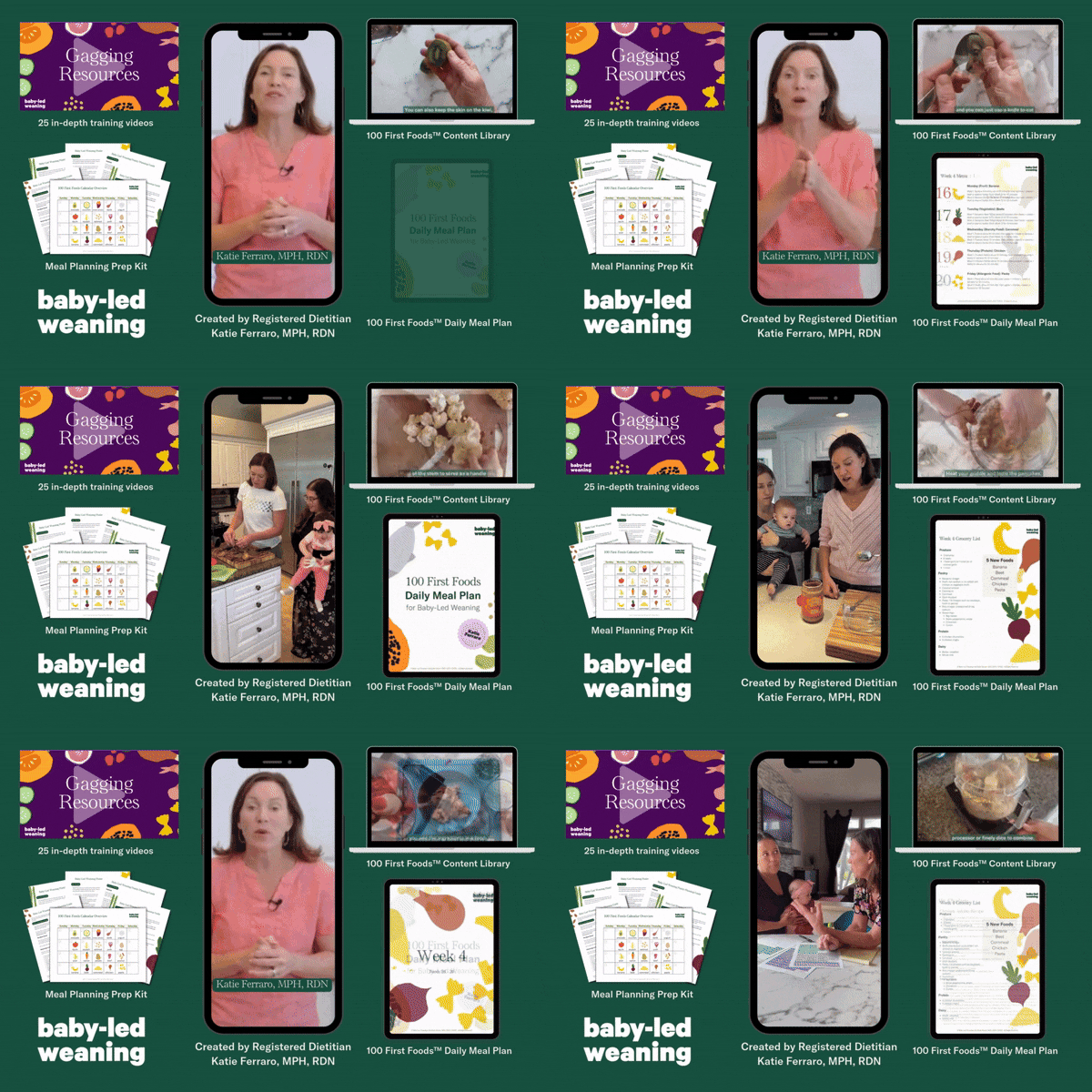
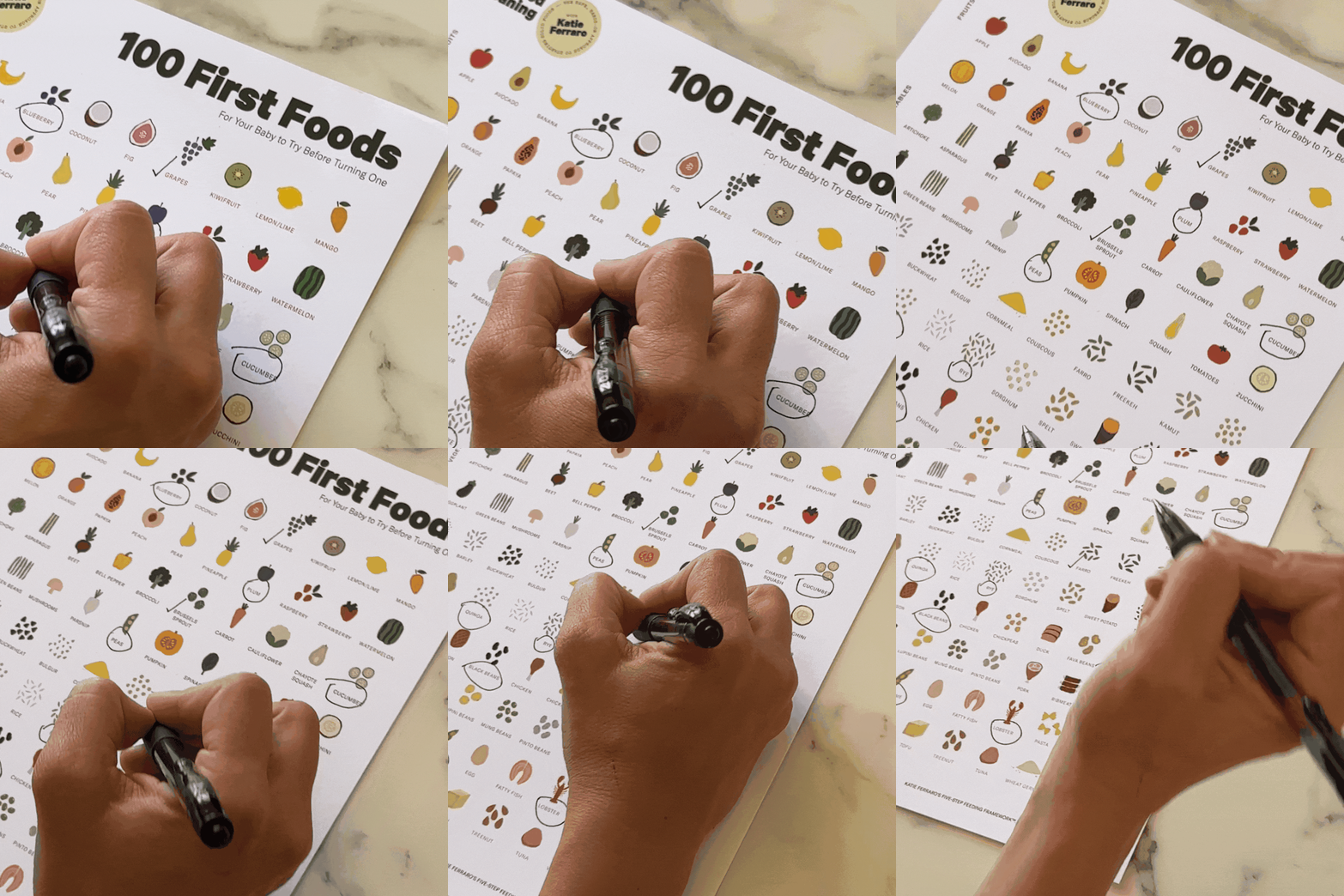
If you wanna grab a copy of my original 100 first Foods list, I give it to everybody on my free online workshop called Baby Led Weaning for Beginners. You can sign up and take this workshop and get that original a 100 first foods list@babyledweaning.co/workshop, or if you're ready to dive in and actually start making all those foods on the 100 first Foods list for your baby so you can put them in front of your baby and observe for those hunger and fullness skews. My program, baby led Weaning with Katie Ferraro is the most comprehensive step-by-step approach for showing you how to make those 100 first foods. I've got a 100 first Foods content library with all the videos and recipes and instructions to walk you through it. It's an expert led, I'm the expert.
Katie Ferraro (23m 5s):
I'm gonna show you how to make all that stuff step-by-step approach. I've also got a hundred first Foods daily meal plan in there with 20 weeks of done for you meal plan, so you literally don't have to think about what food to feed next. You can get signed up@babyledweaning.co/program, and if you're a friend or follower of the podcast, you can get $50 off when you join using the code BLW Pod 50. Again, that's at baby led weaning.co/program. Thank you so much for listening and watching, and I'll see you guys next time. Bye now.
The Program Baby-Led Weaning with Katie Ferraro
A step-by-step digital program for starting solid foods safely and navigating the original 100 FIRST FOODS™ meal plan with baby-led weaning.
 EXPERT-LED, PROVEN APPROACH TO EATING REAL FOOD
 CONCISE VIDEO TRAININGS TO MASTER BABY-LED WEANING
 100 FIRST FOODS DAILY MEAL PLAN WITH FOOD PREP VIDEOS
Baby-Led Weaning for Beginners Free Workshop
Is your baby ready to start solid foods, but you’re not sure where to start? Get ready to give your baby a solid foundation to a lifetime of loving real food…even if you’re feeling overwhelmed or confused about this next stage of infant feeding.
Get baby-led weaning recipes and tips delivered to your email inbox.