
How First Foods Shape Your Baby's Jaw, Airway and Sleep Habits with Kevin Boyd, DDS, MS
- How chewing real, safe foods actually does for your baby’s jaw and airway development and why this matters far beyond nutrition
- Why the textures your baby is exposed to when starting solid foods can influence breathing patterns, sleep quality, and long-term oral health
- Which types of real, safe first foods best support chewing skills and healthy jaw development when starting solid foods
LISTEN TO THIS EPISODE
Episode Description
The real foods your baby learns to eat don’t just provide nutrition, they also help build the jaw, shape the airway, and influence how your baby breathes and sleeps. When babies learn to chew real, safe foods instead of relying only on soft purées, they’re doing important developmental work with their mouths that supports healthy jaw and facial growth.
In this episode, I’m joined by Dr. Kevin Boyd, DDS, MS, a board-certified pediatric dentist with a background in human nutrition who specializes in airway-focused dentistry. We talk about how early feeding experiences influence jaw and airway development, why food texture matters when starting solid foods, and how these ideas align with baby-led weaning.
You’ll learn what to watch for as early signs of airway or jaw development concerns, what evolutionary data tells us about how babies were meant to learn to eat, and simple ways to support healthy oral development from the very beginning. If you’re starting solid foods and want to understand how feeding impacts more than just nutrition, this episode offers a whole new perspective on first foods.
About the Guest
- Dr. Kevin Boyd, DDS, MS is a board-certified pediatric dentist with a master’s degree in human nutrition and advanced training in pediatric dentistry.
- He specializes in pediatric airway dentistry, focusing on how jaw growth, facial development, and breathing patterns impact sleep, oral health, and long-term wellbeing.
- His work integrates evolutionary oral medicine with modern feeding practices, examining how diet, chewing, and early feeding experiences influence jaw and airway development in children.
Links from this Episode
- Find an Airway Health Solutions Airway Dentist near you using this locator: https://airwayhealthsolutions.com/locator
- Watch this training video by Ben Miraglia, DDS about Intercepting Sleep Disordered Breathing: https://airwayhealthsolutions.com/video
- Children's Airway First Foundation website is at:
- CAFF Website: https://www.childrensairwayfirst.org/
- REBIS Integrated Multidisciplinary Sleep Health Website: https://www.rebishealth.org/
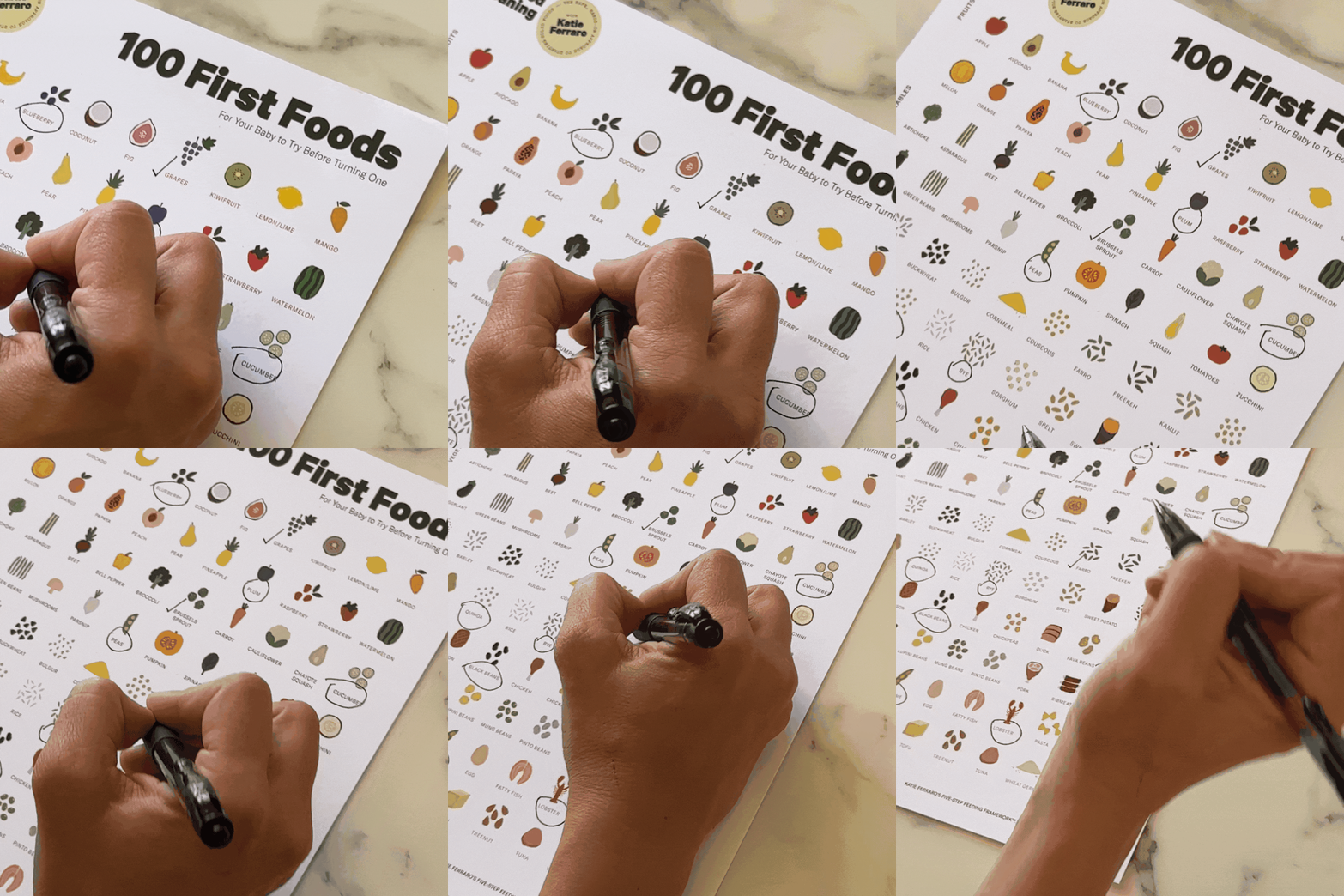
- Baby-Led Weaning with Katie Ferraro program with the 100 First Foods™ Daily Meal Plan, join here: https://babyledweaning.co/program and get $50 off using the code BLWPOD50: https://babyledweaning.co/program
JOIN NOW AT $50 OFF CODE: BLWPOD50
- Baby-Led Weaning for Beginners free online workshop with 100 First Foods™ list to all attendees, register here: https://babyledweaning.co/baby-led-weaning-for-beginners
Other Episodes Related to This Topic
- Episode 144 - What Did Babies Eat Before Baby Food was Invented? with Amy Bentley, PhD
- Episode 466 - Beginnings of a Bad Bite: How Purees Impact Jaw Growth with Ben Miraglia, DDS
- Episode 260 - Adapted Baby-Led Weaning for Children with Developmental Delays with Gill Rapley, PhD and Jill Rabin, MS, CCC-SLP/L, IBCLC

Latest Episodes


Rula (1s):
Can we be real about productivity for a moment, especially productivity post babies. I used to be the most productive person in the world because I really only had to worry about myself. And I feel like the more people that I've brought into the world, I'm like, what happened to all of my time? And why can't I get anything done? Let's be real. Our culture is weird about productivity. You are now just supposed to magically be able to still do all the things, right? Parent and work and manage a household. Maybe keep a friendship or two alive and never slow down. Oh yeah. And work out and maybe be nice to your partner or spouse. That to-do list, it just never gets done. I have two sisters and one of my sisters who's self-employed, she's like very productive. And we were talking the other day like, okay, what If you, she's like, imagine this. You got everything on your to-do list done in a day. Like what would that actually feel? Feel like you worked out, you fulfilled all your obligations. What would you feel like? And she said, you would feel like a robot, right? Guess what? You're not a robot. You're not a machine. If you're feeling burnt out or anxious or stuck, you are not alone. Therapy can help, but therapy also has to be accessible and affordable. And that's where RULA comes in. Rula connects you with a licensed therapist or psychiatrist based on your needs and your schedule. So you answer a few questions and Rula finds someone who matches your preference and they take your insurance. So the average copay, it's only $15 per session. Seriously. And because Rula supports every step of your journey, including checking in to make sure that you're actually making progress, it doesn't feel like you're doing this alone. Thousands have already trusted ruler to support them on their journey towards improved mental health and overall wellbeing. So If you head over to rula.com/weaning, you can get started today. After you sign up, they'll ask you where you heard about them. Please say Baby-led weaning with Katie Ferraro podcast to help support our show. Go to RULA.com/weaning and take the first step towards better mental health today because you deserve quality care from someone who cares And you are not a robot.
The Age of Napoleon Podcast (2m 8s):
The French Revolution set Europe ablaze. It was an age of enlightenment and progress, but also of tyranny and depression. It was an age of glory and an age of tragedy. One man stood above it all. This was the age of Napoleon. I'm Everett Rummage, host of the age of Napoleon podcast. Join me as I examined the life and times of one of the most fascinating and enigmatic characters in modern history. Look for the age of Napoleon. Wherever you find your podcasts,
Kevin Boyd, DDS, MS (2m 39s):
The kids that are doing this baby-led weaning, their lives are gonna be longer. And there's evidence to support this on birth cohort studies. One is called the Dunedin Study. Children who can sleep and breathe through their nose in Early childhood and continue to do so up until at least the age of 12 will have better self-control, impulse control, which portends they will have a longer lifespan and they will stay healthier into their extended lifespan. You are setting these kids up to either prevent or delay onset of Alzheimer's disease.
Katie Ferraro (3m 14s):
Hey there, I'm Katie Ferraro, registered dietitian, college nutrition professor and mom of seven specializing in baby led weaning. Here on the baby led weaning with Katie Ferraro podcast. I help you strip out all of the noise and nonsense about feeding, giving you the confidence and knowledge You need to give your baby a safe start to solid foods using baby led weaning. The types of foods that your baby is learning how to eat right now are actually shaping how their Jaw grows and how their airway develops, and even how they breathe and sleep, not just as a baby but for the rest of their life. And there's even research to suggest that the types of foods that babies learn how to eat in infancy can even play a role on whether or not they develop things like dementia and Alzheimer's.
Katie Ferraro (4m 4s):
Like, sorry, but that's kind of stressful I know for new parents to hear because early feeding is about a lot of things and food is multifaceted, right? This is not just about nutrition, food is about function, and it's about long-term health and research and dentistry. Sleep medicine and airway health show us that the way babies learn to chew and use their mouths in the first few years of life can influence things like mouth breathing and snoring and sleep quality and orthodontic needs. And hey, as a mom of seven kids who just paid for my first child to get her first set of braces, I am very interested in these long-term health outcomes tied to poor sleep, including cognitive decline later in life. And that's why my guest today is maybe surprisingly for a baby led weaning podcast to hear for you.
Katie Ferraro (4m 48s):
He's a pediatric dentist and the conversation today matters if you're starting solid foods using baby led weaning. Even if your baby doesn't have teeth yet, don't tune out. Dr. Kevin Boyd is a board certified pediatric dentist with a master's degree in human nutrition. He specializes in airway focused dentistry. And Dr. Kevs work looks at how early feeding experiences and chewing and oral development shape Jaw growth and airway health and sleep patterns in babies and young children. So Dr. Boyd does not teach baby led weaning, but his clinical work and research strongly support many of its core principles.
Katie Ferraro (5m 29s):
He's a huge advocate for baby led weaning. He's actually telling me a story after the interview about how he spoke at a conference with Gill Rapley, the co-author of the original baby-led weaning book, the founding philosopher, this approach like 15 years ago. And then he took a train with her back to London. He's like, I got to pick her brain like while by myself for this whole train ride. He's a huge proponent of baby led weaning because of the importance of babies learning to chew and eat real safe foods instead of just sucking on soft purees. So my intent for today's episode, and by the way, I have been trying to interview Dr. Boyd for a number of years now. He's a real tough one to nail down. I wanted to talk about how First Foods shape your baby's s Jaw and their airway and sleep habits. And we've done this topic a number of other times on the podcast that I'm gonna link to some of the other experts.
Katie Ferraro (6m 12s):
He's, he's a big name dropper, like everybody mentioned in the episode though, has already been on the podcast. I'm putting all there in the description as well. Every question I would ask him, he did that like the journalist thing where like block and bridge where you ask a question. Then he just literally answered a totally different question. There's even a point in the interview, and I'm gonna leave it in in the editing, where I was like, why don't you just ask the questions? I was like asking him a breastfeeding question. He's like, let's talk about sleep. And I was like, okay. It is all relevant though to his area of expertise. So I'm just gonna let him go. I'm not heavily editing this one at all because I think what Dr. Kev has to say is really important. And I love that he's at a position in his career where he can kind of just say exactly what's on his mind.
Katie Ferraro (6m 56s):
Dr. Kevin Boyd is probably very different from your own experience with pediatric dentists, certainly with mine. I really love his approach. He's a huge advocate for breastfeeding. He's a huge advocate for baby led weaning. He's a huge advocate for sleep health and airway health. And he was, he was giving me career advice, like what I should do after I get my IBCLC. He's like, Katie, you need to be a myofunctional therapist. You'd be the only dietician doing it. He does have a background in nutrition and wanna keep it because I think it's important that you understand his nutrition background. He's also a Peace Corps volunteer, as was I, this is the sloppy episode you guys, but it's nice and long, which the advertisers would love. 'cause then there's lots of spots for ads. But I love a Dr.
Katie Ferraro (7m 36s):
Kevin Boyd. I think he's amazing. He's got a lot of energy. And anytime we've got the pediatric dentist world onboard with baby led weaning, I'm here for it. So then I sent a message to like everybody that he mentioned in the episode afterward. I'm like, Dr. Boyd is your biggest fan. I just think this episode is a huge love fest. But it's also important because he freaked me out a little bit about like how our babies should be sleeping. And he's working on this new questionnaire about how babies should be quiet when they're sleeping and not mouth breathing and not drooling and not moving all over the place. And I'm thinking about like all of my children that do all of those things. So this is not intended to stress you out, but like if you're interested in airway health and sleep health, just listen to Dr. Kevin Boyd, 'cause he is literally the world's leader in this stuff. With no further ado, here is Dr.
Katie Ferraro (8m 17s):
Kevin Boyd. He's talking about how First Foods shape your baby's s Jaw, airway and sleep habits.
Kevin Boyd, DDS, MS (8m 26s):
Hello I am happy to be here.
Katie Ferraro (8m 28s):
Alright. Now you have a very interesting background. Before we get started, could you tell us a little bit about your area of work? And in particular, why are you interested in this intersection between nutrition and dental development?
Kevin Boyd, DDS, MS (8m 39s):
Well, I came into healthcare at educationally, qualified to become a registered dietician. And I thought, you know, I was in the Peace Corps for a while,
Katie Ferraro (8m 49s):
Timeout. I was a Peace Corps volunteer too. Dr. Boyd, where were you?
Kevin Boyd, DDS, MS (8m 53s):
Oh, I was in Honduras.
Katie Ferraro (8m 55s):
Oh, I was in Nepal.
Kevin Boyd, DDS, MS (8m 57s):
It was Peace Corps light. It was three months of trial. It was an experimental program in the seventies called Volunteers for International Development. And you could continue on for two years or you could leave. And I left and I went back to college and I went and got a Master's in nutrition. So I, I never really finished the two years, but I I, I just say that 'cause people know.
Katie Ferraro (9m 20s):
Oh, but once you're a Peace Corps volunteer, you're always a Peace Corps volunteer.
Kevin Boyd, DDS, MS (9m 23s):
Yeah, there you go. So I entered, I entered healthcare with a master's degree in nutrition and dietetics. And I actually, you know, when you were a And you're undergrad taking upper level graduate classes in nutrition and dietetics, I was a graduate assistant. I was teaching that at Michigan State. So, you know, I finished that and then thought I was gonna go on and finish the Peace Corps or, you know, go into research or whatever. And then I got into dental school. I didn't think I'd get in. So nutrition was my backup, but I got in first try. So there you have it.
Kevin Boyd, DDS, MS (10m 3s):
It's
Katie Ferraro (10m 3s):
Pretty cool. Our audience consists primarily of parents and caregivers of babies who are just about or recently started solid foods. So we're talking babies around the six month mark. They're learning about starting solid foods. They're interested in baby led weaning. Could you talk to us about how the process of learning to eat these real, you know, safely prepared finger foods, like those that you see with baby led weaning, how does that support healthy Jaw and facial development compared to a mostly pureed diet?
Kevin Boyd, DDS, MS (10m 32s):
Well, again, in our nutrition and dietetics training, you know, they call it nutrition. Really. It was a pretty intense biochemistry degree. We learned about nutrients And, you know, who needed them and what deficiencies were and what toxicity could be and how to administer to hospitalized patients. And, but we didn't, we didn't have one minute of training in biological food processing, chewing. We didn't, not, not a word was talked about it. And so the implication was babies can't chew.
Kevin Boyd, DDS, MS (11m 12s):
And you know, like I was telling you earlier, I grew up 45 miles from the Gerber canning factory in the late 18 hundreds. That's what it was called. And then there was a demand for adults who couldn't chew. They called them invalids. That's politically incorrect. But, you know, adults who had trauma or, or they were demented or they're just, you know, it was very difficult and or their teeth were all rotting out of their head or whatever. They couldn't chew. So they called them invalids. And Gerber started making soft canned food for invalids. And then it's like, well, wait a minute.
Kevin Boyd, DDS, MS (11m 54s):
Babies shouldn't chew either. They're invalids. And that was the assumption that was made. And Gerber responded to that, to that demand. There was, and they, so they started advertising baby foods for infants and Vals. And I sent you a copy of some of the advertisements that I have from the late 18 hundreds, early 19 hundreds. So that's how it all started. And obviously, you know what, Amy Bentley, who's a journalist at NYU, who wrote this book on inventing baby food, and it was almost like a expose, like on the tobacco industry.
Kevin Boyd, DDS, MS (12m 34s):
I mean, she wasn't really disparaging, but she, she brought out some, some real important realities about how the origins of baby food, the actual origins of baby food, go back about 300,000 years. Now remember, I'm, I'm doing postdoc work in anthropology at the University of Pennsylvania. I'm a visiting scholar there. And, and before the pandemic I was also doing some of this work at the University of Arkansas in anthropology. I I have an adjunct faculty appointment at Arkansas. And, and I'm a visiting scholar at Penn. We study ancient skulls. And, And, you know, really before the industrial revolution, let's just say, you know, the early night, early to mid 19th century, well, you know, that's when malocclusion, you know, meaning jaws that don't form right?
Kevin Boyd, DDS, MS (13m 27s):
The ortho, a need for an orthodontist. Okay? There was no need for an orthodontist until about three or 400 years ago. And it's like, that sounds like a long time, right? But we've been around, our genome is over 300,000 years old. We don't, we don't look the same as we did back then, but we were homo sapiens anatomically, modern homo sapiens. And no child would live long enough to develop malocclusion, meaning crooked teeth. They would, they died if they weren't baby led weaned. That was vital to, you know, and, and I say if, if a child, what's necessary to survival for a children is avoiding life-threatening mortal events like predation from a tiger, like, you know, having an infection or mom, there isn't no, maybe mom died, wasn't capable and there wasn't another mother in the tribe, meaning an allo mother who was lactating that could feed more than her own babies.
Kevin Boyd, DDS, MS (14m 32s):
That, that practice still goes on in, in hunter gatherers that are still around today. They're called exton hunter gatherers in the Amazon basin, mainly in, in certain parts of, you know, south American, Brazil, in the Amazon rainforest and things like that. So what I'm saying is, is that our jaws and faces and muscles of chewing muscles and bones that are required for optimal nasal breathing, which is the normal mode of respiration for all mammals, okay? Even dolphins, they have that blowhole, that's their nose.
Kevin Boyd, DDS, MS (15m 14s):
Okay? So we, we, we are designed for habitual nasal breathing. And baby led weaning is something that really start, you know, before the baby emerges as a neat, a newborn, they're building a nest for. Its their, the, the tongue is building a nest for itself to live in for the rest of its life. And it's called chewing on amniotic fluid. And that tongue is going up there and just really widening that palate and pushing that face forward so that when it emerges, it will continue to, nursing will continue to build that craniofacial respiratory complex.
Kevin Boyd, DDS, MS (15m 53s):
They're all connected. And then on about six months, solid foods would be introduced, first mastication from moms. They would chew it and spit it into kids' mouth. And then usually by 12 months of age, they were eating everything that everyone else in the tribe was eating. They were foragers, they were hunter gatherers, they were moving, they couldn't stay around and chop up baby food. Okay? If you're not gonna eat everything that everyone else is eating, sorry. You know, and it, it is really quite tragic If you look at it from today's eyes. I mean, some of these children, they had to be left behind because they weren't eating.
Kevin Boyd, DDS, MS (16m 34s):
And sorry, we can't wait for you. We've got a whole tribe of people here.
Katie Ferraro (16m 37s):
So when you do this research And you study the skulls, what do you see, how, how does it differ in these prehistoric communities, the structure of their jaws compared to babies that we see today, maybe at around somewhere between that six to 12 month mark. Do you, do you see more crowding? Is there more malocclusion? Like what are the differences?
Kevin Boyd, DDS, MS (16m 56s):
Well, we're looking mainly at the skeleton, Katie, we're, we're, you know, there's not a lot of teeth there. Some kids are born Oh
Katie Ferraro (17m 2s):
Yeah, good point.
Kevin Boyd, DDS, MS (17m 3s):
But you know, what we are looking at, and the one thing I'm most interested in is what I call sinlessness. Okay? Now I'm an example of that and I make fun of myself. But you look sideways, I don't have much of a chin. And when I, in the sixties, you know, my father was a dentist and he referred me to his buddy who's an orthodontist. And okay, you know, when he, when Kevs 12, we're gonna pull some teeth on him, we're gonna put him in headgear and he's gonna wear braces to his junior prom. And that all happened. Well, I'm got straight teeth, huh? But I really don't have good airway and I'm undergoing a semi surgical procedure.
Kevin Boyd, DDS, MS (17m 49s):
I'm gonna have py done on me, but I need double Jaw surgery. I'm, I'm too old for that. I, you know, I'm, I'm not gonna do that. But most kids nowadays, their chins are not forward enough and their upper jaws aren't wide enough. You know, you mentioned Ben Lia. Ben came up with something that I'd never heard before and he got it from somebody else. He told him he can't remember. But it's the upper Jaw. The maxilla is the criminal and the lower Jaw, the mandible is the victim. A lower Jaw cannot grow properly if the upper Jaw is not wide enough. Well, an upper Jaw will never develop its full width and, and potential if they're not nursing and weaning as we did, like when we were in, you know, our ancestors did, your baby led weaning that you and Joe Rapley have just done wonders.
Kevin Boyd, DDS, MS (18m 43s):
You have no, there's some things you really don't understand. What a wonderful thing you're doing. I know, you know, it's good, but we've discovered some things at a molecular level. You are helping children not only, you know, look better and feel better as kids. You know what? The kids that are doing this baby led weaning and then continue to be committed to eating fresh firm fibers, food four s fresh firm fibers food for the rest of their lives. Their lives are gonna be longer. And there's evidence to support this on birth cohort studies. One is called the Dunedin Study from New Zealand. Children who can sleep and breathe through their nose habitually, breathe through their nose while they're awake and asleep in early childhood and continue to do so up until at least the age of 12 will have better self-control, impulse control, which port tense, they will have a longer lifespan and they will stay healthier into their extended lifespan.
Kevin Boyd, DDS, MS (19m 45s):
Okay? Healthspan and lifespan. So that's what you're setting these kids up for. But guess what else, Katie and I didn't know this till about, oh, less than a year ago. You are setting these kids up to either prevent or delay onset of Alzheimer's disease. These kids are gonna live longer. But so what if they're living longer? If they're all getting dementia and Alzheimer's in their seventies or eighties, they're gonna have 20, 30 years a crappy life. No, we're setting these kids up to avoid amyloid production. The plaques that are in the brain, they, they can start developing in early childhood.
Katie Ferraro (20m 25s):
Hey, we're gonna take a quick break, but I'll be right back.
Hungry Root (20m 32s):
January always comes with this pressure to do everything perfect, right? Like eat better, get organized, and cook more at home. And honestly, like this is where things fall apart for me. 'cause life doesn't slow down just 'cause it's a new year, especially when you've got kids or a new baby And you have zero extra brain space. That is why Hungry Root continues to be such a lifesaver for me. So Hungry Root is not just another meal kit, it's a personalized grocery and recipe service that actually plans your food for you. So they fill my cart with meals and groceries, fit my health goals and my food references, and it's full of stuff my kids will actually eat and then delivers it all right to my door. The personalization is unreal because the more I use Hungry Root, the better it gets at knowing me. I'm trying to eat higher protein and less ultra processed food and I wanna keep things fast. My last box absolutely nailed it. It had these herb chicken bowls, a high protein pasta with veggies ready to go smoothie ingredients like full on family meals. Even my kids liked that. I didn't feel weird about serving. I also love their variety. 'cause Hungry Root now has over 50,000 chef crafted recipes to choose from every week, many of which are ready in less than 15 minutes. Plus there's more than a thousand grocery items like salad kits and grab and go meals. It works for real life, not just some like fantasy version of January. As far as the quality goes, there's already over 200 additives that Hungry Root screens out. So there's no artificial sweeteners or preservatives or high fructose corn syrup. Plus they carry brands that I already trust, like Vital Farms, Ithaca Hummus, and Harmless Harvest. So If you New Year goal is to stick with a plan that actually past January Hungry Root is gonna make that doable. You are gonna love Hungry Root as much as I do. For a limited time, get 40% off your first box plus a free item in every box for life. Go to hungry root.com/weaning and use the code weaning, that's hungry root.com/weaning code weaning for 40% off your first box and a free item of your choice for life.
Katie Ferraro (22m 31s):
It's great to hear this, the extension of the benefits of this just, I mean, not to pressure parents, but the decisions that we're making now, really, they do matter. Like you said, it's not just the number of years in your life, it's the amount of life in your years, right? And so we gotta look at the whole body perspective and it's so, I'm sorry. Sometimes as a dietician, you feel like you're shouting into the chasm. No, especially today, social media, no one's listening. It's so nice to have like, look, wow here, you and Dr. Rapley, like, you know, leading pediatric dentists, like also saying, Hey, listen up. Like this is a, this is a good, this is a good idea for babies to be challenging, you know, their palates and, and working these muscles that we were, you know, frankly born with.
Katie Ferraro (23m 13s):
And we have the ability to do this. I wanna ask your opinion, because I know there's a lot of parents listening. You've, you've been dropping some little, you know, nursing, breastfeeding, and I'm actually working on my IBCLC credential right now for lactation, which to help better support breastfeeding moms who are transitioning to solid foods. And you know, wow, like all the musculature that's involved in breastfeeding is just, you know, mind boggling. What about moms who didn't nurse and they're feeling, I know they're listening and like, not that they're feeling shame that they didn't nurse, there's plenty of other people doing that for them. But if, If you, if a baby bottle feeds and they are not breastfeeding, but then the six month mark turns around, we have a lot of parents who are like, I feel like this is my chance to start over with solid foods.
Katie Ferraro (23m 53s):
We kind of get a blank slate. Obviously the baby's continuing either, you know, they might be using a breast pump to express breast milk or they might be using commercial infant formula, but regardless, when they start solid foods, they think this is my chance to start over and I really, I wanna do baby led weaning and I wanna do better by my baby because our breastfeeding journey did not do well. Have you found from your research that even if they bottle fed and they didn't get that experience at the breast from birth at the six month mark, if they start with baby led weaning, is their potential there to develop the airway? Is that something you could say? I mean, maybe not definitively, but even just anecdotally.
Kevin Boyd, DDS, MS (24m 26s):
Yes, of course. I'm, I'm you mentioned pumped milk. Okay, human milk for human babies And you know, your own human milk for your own human baby or some other mom's milk. I mean, you, you, you've formula is based on cow's milk And you know, you're not related to those cows. So milk banks are really something coming of age if you're, If you can't lactate.
Katie Ferraro (24m 51s):
Yeah. But also addressing how incredibly expensive
Kevin Boyd, DDS, MS (24m 54s):
Milk bank,
Katie Ferraro (24m 55s):
Human donor milk is, if you're not in a NICU situation, mean that's I'm knowledge. I'm not that's a good knowledge.
Kevin Boyd, DDS, MS (24m 59s):
I'm, I'm not selling, you know, I'm not promoting, you know, human milk. I, I am the concept, but yeah, you know, I know it's expensive and prohibitive. However, any woman who can give their child at least 10 to 12 weeks of human milk, oh, I only breastfed for two months. Good for you, pat yourself on the back. That child's immune system is going to be so robust because you seeded that microflora and that microflora is going to enhance that baby's immune system as they grow into their extended lifespan and health span.
Katie Ferraro (25m 36s):
I wanna ask you a little bit more, I'm really fascinated by the research that you're doing. So I wanna say thank you for doing that because I think parents perk up when they're like, wait a minute. If we look at like, from an, you know, evolutionary standpoint, we know it's interesting to hear like, okay, how did babies and young children like eat back in the day? Historically, what is the research that you're doing and what your team is finding? What does it tell us about, you know, how, how, what are the foods that babies and children were eating then? And how does that compare to the modern, soft pureed diet of today? Like, use your expertise now as a pediatric dentist, how does that influence Jaw and airway development today? Like how is it changing the skeleton? I, I get that the, the teeth thing comes later, but like the actual skeleton of the children, which you know, lends to so much health outcomes, so many health outcomes down the road.
Katie Ferraro (26m 25s):
How does that differ based on, you know, the diets then versus now?
Kevin Boyd, DDS, MS (26m 28s):
There's a woman, the first pediatric dentist, Evangeline Jordan, Dr. Jordan, the pediatric dentist in 19 25, 26 textbook, she said we could eradicate tooth decay in one generation, dental caries we call it, by eating from the garden, eating from the farm, not from the grocery store or supermarket. Okay, that's one thing we could eradicate tooth decay. She also eludes to the fact that we could build strong jaws and avoid the need for orthodontics as well. And she was saying that in 1925, this is old, this is not new.
Kevin Boyd, DDS, MS (27m 8s):
So it's really, you know, firm fresh, fibrous food, you know, meat that comes from grass fed. And if you're a vegetarian, you can be a vegetarian, you don't need to feed fish. But really we need firm fresh fibers, food and water when you're thirsty, that is what builds the foundation for the c craniofacial respiratory complex. It's all one thing.
Katie Ferraro (27m 34s):
Can you talk a little bit, I think if you're not in the feeding or dentistry or ENT or airway space, maybe back us up a little bit and just, you talked a little bit about the oblig, you know, we're nasal breathers And you talked about the dolphins, but like if this stuff goes sideways And you start breathing through your mouth, like real high level, why is that a bad thing?
Kevin Boyd, DDS, MS (27m 55s):
First of all, air, ambient air, air from outside. All right. You've heard of the EPA environmental, are they
Katie Ferraro (28m 2s):
Still around? I'm not sure I checked lately.
Kevin Boyd, DDS, MS (28m 5s):
I know you're right. They might have gotten rid of them. Well, you know, air quality index, you've heard of that particulate matter in the air, you know, in, in certain cities, big cities, it's like, you know, maybe don't go outside today. I mean, it is just, there's, there's some bad stuff in the air. Well, my my question to people, you know, from the EPA, would it be better if a person's breathing through their nose or their mouth if the air quality is poor? Okay. Or let's just say you're out in the country and there is no pollutants in the air, but the air is colder than 98.6 Most of the time, unless you're in a rainforest, okay? It's also drier.
Kevin Boyd, DDS, MS (28m 46s):
So what air ha what happens to ambient outside air when you breathe through your nose is it gets warmed up to 98.6. It comes to about two thirds humidity, as is your body, regardless of how dry the air is, it's humidified. So it's warmed, it's humidified, it's mechanically filtered. You've got those little hairs in your nose and you've got turbinates that trap, big particulate matter. But you know what else terminates do? Tur, they're inside your nose turbine. That makes, it makes the air agitated and that causes a chemical reaction inside the lining of your sinuses to release a powerful antioxidant antimicrobial vasodilator, okay?
Kevin Boyd, DDS, MS (29m 35s):
Is called nitric oxide. You don't get that If you breathe through your mouth, you don't get the warmth, you don't get the humidity, you don't get mechanical filtration And you don't get chemical production of nitric oxide. So this establishing habit, the ability to habitually nasal breathe and baby led weaning, how's that happen? Alright, that it builds that. But if it, let's just say a parent is like, oh, I'm outside the window. I didn't and my kid's a mouth breather. Now get to somebody who understands this relationship. Well, do they teach that in dental school? Not yet. Okay.
Kevin Boyd, DDS, MS (30m 15s):
I'm in a task force at the American Dental Association for 10 years. Steve Carson, famous dentist, he's not a pediatric dentist, but he understands this and is assembled a faculty, several people we meet every year in July at the American Dental Association. And we are invite, we invite other speakers. We want to get the way dental schools and, and residencies and pediatric dentistry and orthodontics. The way they're taught that it includes this as a component of oral health. So most parents will say, I went to my dentist and they think this airway stuff is nonsense. We take care of teeth. And it's like, yeah, we do that too.
Kevin Boyd, DDS, MS (30m 56s):
But this whole field is changing. There is a airway health solutions. That's where Ben Lia, he started that Lauren,
Katie Ferraro (31m 4s):
And he's been on our podcast too, when he was fabulous. Like, 'cause I think you're right. A lot of parents have never heard of this. Or if they do, their doctor kind of poo-poos it. So, or the dentist does. Well,
Kevin Boyd, DDS, MS (31m 12s):
I I run the preschool aspect of, you know, the airway health solutions and Lauren Gates is gonna send you some things to put into your notes for people okay. To work. You can go to find a dentist to at least, they may not be able to fix it, but they'll know somebody who can. Myofunctional therapy is something that needs every child should be evaluated. And Katie, I I'm glad I, you know, you're gonna be a lactation consultant. Yeah. You should consider be, I don't think there's any dieticians that are myofunctional therapists yet. You would be the best myofunctional therapist. Oh my God. I hope you did consider
Katie Ferraro (31m 48s):
Doing that. And I know I personally had to. That's when I kind of got introduced to this. And I struggled with nursing my first baby and went to, she had a, she latched perfectly but couldn't transfer. She had had some nerve damage at birth. Went to an IBCLC who recommended a myofunctional therapist. And that's how I found an SLP in San Diego. Nicole Goldfarb, who's actually my neighbor and a good friend of mine. So she's been on our podcast too, talking about this. And I mean, she's, she's a little wild about all the airway stuff. But again, I, I love her podcast and I, she's a big baby led weaning advocate as well. But this stuff is all interconnected. I think some of this stuff is a little, I I need to learn more about it. In our personal case, it didn't help. But I do know a lot of nursing moms who struggled, who have benefited from it.
Katie Ferraro (32m 30s):
And, you know, it's an interesting combination of skill sets, the nutrition, the breastfeeding, And, you know, the, the, the oral airway stuff. So you're right, it doesn't do any harm for our professions instead of working in these silos. What do you mean we just do teeth? Or what do you mean, Katie? We just talk about iron. It's like, no, we don't. There's so, food is so, so, so multifaceted. Your body is so multifaceted. It's important to have these conversations across disciplines. And I do hope when you're having this annual meeting that you'll consider looping in dieticians. Because the problem I think with the pediatricians is they never talk to anyone except other pediatricians. They refuse to talk to dieticians, they won't talk to the pediatric dentist. And as a result, a lot of parents will go to their pediatricians and ask questions about starting solid foods.
Katie Ferraro (33m 15s):
And the pediatrician will say, eh, just do Gerber baby food because they don't learn anything about nutrition in medical school. And they fail to acknowledge that that's a shortcoming. And, and parents weren't, we're doing them a disservice. 'cause they do go to their doctor to learn about nutrition.
Kevin Boyd, DDS, MS (33m 28s):
Well, I hope you have an impact about the way nutrition and dietetics is taught to dietician, you know, people who are doing residencies and wanna be, you know, an RD The, the programs don't teach anything about atory competence.
Katie Ferraro (33m 44s):
Can I tell you my small win? Yeah. The eighth edition of the nutrition throughout the lifecycle book, which every single future dietician in the country uses in our nutrition throughout the lifecycle class. Finally, the eighth edition in the infant nutrition chapter, I got a sidebar after lobbying them, Cengage the publisher for years. There's a sidebar about baby led weaning, it's reference to the hilt with, and Gill Rapley helped me write it. I mean, they wouldn't even give me a picture, but promise you, in the ninth edition well get a picture. But there's a bunch of garbage in there about force feeding a baby by spoon at four months of age. And they're still teaching dieticians that. But we got, we got the, you know, the crack in the door of at least a sidebar talking about baby led weaning. Because there is, as you said, it's not only medically defensible, but it's evidence-based.
Katie Ferraro (34m 27s):
There's a large, incredible body of research that supports this as a safe and effective way for babies to start solid foods. We at least need to be talking about it in the education curriculum for future dieticians. Hey, we're gonna take a quick break, but I'll be right back
Sierra (34m 45s):
At Sierra Discover top workout gear at incredible prices, which might lead to another discovery. Your headphones haven't been connected this whole time. Awkward Discover top brands at unexpectedly low prices. Sierra, let's get moving All.
Katie Ferraro (35m 5s):
Dr. Kev, what are some early red flags that parents should watch out for that might suggest that their baby baby's gonna have some future airway or Jaw development issues or they're not on track. Like, is there things, are there things you can see prior to age one?
Kevin Boyd, DDS, MS (35m 20s):
Let's just talk about sleep. All right. I
Katie Ferraro (35m 23s):
Love that You're gonna ask, you're gonna answer whatever question you want. You.
Kevin Boyd, DDS, MS (35m 27s):
Yeah, this is great.
Katie Ferraro (35m 28s):
Well,
Kevin Boyd, DDS, MS (35m 29s):
I I can relate it to this. You
Katie Ferraro (35m 30s):
Ask the questions.
Kevin Boyd, DDS, MS (35m 32s):
Your, your jaws, your c craniofacial respiratory complex has to be optimally developed for what baby led weaning and sleeping, breathing through your nose habitually while you're awake and asleep for the rest of your life. I mean, that's, that's really what baby led weaning, you know, helps happen. Well, one of the things I tell parents to look for is your, you know, is your child sleeping? Okay, well certainly I give an I give an acronym. There's actually 24 25 questions you can ask. It's a validated risk assessment tool called the Pediatric Sleep Questionnaire. We're developing one at the a DA called cgap. I
Katie Ferraro (36m 11s):
Hope it's less than 25 questions. 'cause that's pretty long. Yeah,
Kevin Boyd, DDS, MS (36m 14s):
It's three questions or five. It's five
Katie Ferraro (36m 16s):
Questions. The TikTok version of the original validated questionnaires. Well,
Kevin Boyd, DDS, MS (36m 20s):
And we're getting it validated. It's very expensive and time consuming to validate it. But the pediatric sleep questionnaire was developed in 19, in 19 it was 2000. Oh, 20,001, 2001 by the University of Michigan. Anyway, I've condensed it to three questions and I I abbreviate it with a three letter acronym. DEQS, dairy Queen Sunday. That's how people can remember it. A dentist talking about Sundays and sugar. But Dairy Queen Sunday, dry, quiet and still, okay, dry. A child should not sweat. Okay? A child after potting training should not let the bed have to get up and go to the bathroom.
Kevin Boyd, DDS, MS (37m 2s):
They shouldn't drool. They shouldn't be thirsty and want water in the middle of the night. So that's the dry part. A child should be quiet, you shouldn't hear them breathing. Snoring, especially snoring mouth breathing, grinding their teeth when they have teeth, talking in their sleep, getting pounding their head on the pillow. Okay? Those are all things dry, quiet and still okay. They shouldn't change positions very much, maybe once in a while, but not habitually shifting to sleep with on their belly, with their butt up in the air. Because that opens the airway. That means the kid is trying to open up the airway and breathe better.
Kevin Boyd, DDS, MS (37m 46s):
Their, their, their sheets shouldn't look like there was a soccer game in their bed, you know, the night before. So dry, quiet. And still,
Katie Ferraro (37m 54s):
I'm thinking about every single one of my seven children, Dr. Boyd. And they would not pass the Dairy Queen Sunday test. And I'm like, I think every mom listening is like, wait a minute. That's, that's a lot of things my kids not doing.
Kevin Boyd, DDS, MS (38m 5s):
But there's signs. It, it, it doesn't mean you don't need to worry about that. You need to be aware that they should be dry, quiet still for the most part. There could be an issue with the shape of their Jaw. You know, again, when they have teeth by four or five years old, If you can't put a nickel between each of the upper front teeth, there's probably not a room for that child's tongue. Okay? It's all about tongue space. It also means that, you know, they'll say save up your money for braces. Well that's like an eye doctor saying to the mother of a 4-year-old who's severely nearsighted, save up your money for glasses. So what? They're gonna have trouble all the way till they're driving a car, but you'll save some money. You don't wanna do all these different phases of glasses, do you?
Kevin Boyd, DDS, MS (38m 47s):
Well of course nobody would say that. You wouldn't do that with any other affliction. Let's wait till it's stage four. Let's not fix it at pre-stage one. You know, you do that with kidney disease, you do it with cancer, you do it with, well certainly visual acuity problems. Why wouldn't you do it for the c craniofacial respiratory complex? Which is something related to how intelligent they're gonna be. How well they'll pay attention. How about their hearing? You know, conductive hearing loss is a problem associated with short, you know, with with narrow and, and retrusive backward jaws. How about blood pressure? Cardiovascular disease?
Kevin Boyd, DDS, MS (39m 27s):
I just gave a lecture in London, university of College London, you know what the title was? Katie? Geriatric Medicine for the pediatric Dentist.
Katie Ferraro (39m 37s):
Oh my gosh. You're fearmonger. But I mean that gets people's attention. You're freaking me out.
Kevin Boyd, DDS, MS (39m 42s):
Yeah. Well you know what, in fearmonger, thank you for insulting me because I really, that helps me. Like Kev, you're scaring people. Alright. I'm not doing that intentionally. I'm not not being deliberatively. It's
Katie Ferraro (39m 57s):
A good title. It's a good title. I can see why I got accepted. People pay
Kevin Boyd, DDS, MS (40m 1s):
Attention. It was professionals. It it's for do, it was for doctors and it that really needed to be shaken up a little bit. But thank you for, you know,
Katie Ferraro (40m 9s):
I didn't mean to insult you. I don't think you're a fearmonger, but I'm freaking out a little bit. 'cause my kids wouldn't pass your three questionnaire thing. And now I'm like, oh my gosh, are they gonna have dementia?
Kevin Boyd, DDS, MS (40m 16s):
Look at you gently corrected me. You're being sense that you're protecting your audience and that's, you're being very maternal right now. Again, I was raised by a single mom and she wouldn't have been as kind as you were so,
Katie Ferraro (40m 30s):
Well I'm probably being nicer to my audience than I am to my own children. I would like to help our audience because you did mention a resource where when you said like get yourself to a person who cares about airway stuff. Like, okay, there are some pediatric dentists who know about this. There are some oral myofacial functional therapists. There are some other expertise like SLPs. Who do you think parents should go? You got a mouth breather And you wanna do something about it. Your baby is drooling all over the place And you know, turning summer salts in the bed. Where should parents go? Help our parents know where do you go to get help with this? If your own dentist kind of poo-poos this. Only just take care of the teeth.
Kevin Boyd, DDS, MS (41m 7s):
First of all, make your primary care physician, your child's pediatrician or family physician who you know sees children, you make them aware of it. And you know, they're supposed to ask the question, does your child snore? And that's the American Academy of Pediatric Medicine.
Katie Ferraro (41m 24s):
Well, they're also supposed to screen for iron deficiency anemia 12 months. And that never happens either. So, you know, I mean they're very busy. I don't wanna disparage pediatricians. They got a lot going on.
Kevin Boyd, DDS, MS (41m 32s):
No, no, but I'm saying the a A P, they also have a policy statement on, on toxic stress. And they don't mean a kid's being nervous. Who am I gonna play with on the playground? They're not anxious about that. Oxidative stress, intermittent hypoxia. If a child is not breathing habitually through their nose while they're sleeping, whether they're a newborn or whether they're four or five years old, they have oxidative stress. Here's another thing, Katie, I'll leave you with. Do you know what every child, 100% of children with down syndrome by age 35 to 40 will be diagnosable with Alzheimer's disease. Did you know that? Why didn't I know that?
Kevin Boyd, DDS, MS (42m 13s):
Why did I just learn that? Why is that not in the healthcare public domain? Most healthcare professionals that treat kids do not know that every child with three 21st chromosomes produce amyloid precursor protein. They have three doses of it and is producing plaques, amyloid plaques in the brains of fetuses. These kids are developing amyloid plaques in utero. They don't need to be overweight, they don't need to have jaws that are caved in so they can't breathe through their nose.
Katie Ferraro (42m 46s):
And I wanna let you know, 'cause since I know you're in the Chicago area, do you know who Gill Rapley is? She's an SLP and
Kevin Boyd, DDS, MS (42m 53s):
No, Gill and I know each other very well and she's one.
Katie Ferraro (42m 55s):
And so her whole entire Adapted Baby led weaning approach. And for anyone listening, If you do know babies with Down syndrome, you know, historically you look at lists of, oh, this baby with this diagnosis can't do baby led weaning. And Jill Raven's entire life work has been to disprove that. I mean, she's had such success with babies doing baby led weaning with her and Jill Rap Lee's Adapted Baby led weaning approach. And it's, it's amazing to watch these baby succeeding. Yes, the timeline looks a little bit different. Yes, there are some different implements that they use, but don't tell me that a baby, just because they have Down Syndrome, doesn't deserve the right to learn how to feed themselves and experience all of the same benefits that these other babies do.
Kevin Boyd, DDS, MS (43m 33s):
I'm gonna do a little bit of self-promotion here and I usually don't do this, but If you RER as in Rachel, E as an elephant, B as a boy, I as identify S as in Sam, Reba Health. Okay. Reba health.org. Boulder, Colorado. And I'm probably gonna get you, and I'm gonna get Jill and I'm gonna get Nicole and, and try to get you to do a podcast for my, my faculty there. I've, I've been put in charge of developing,
Katie Ferraro (44m 11s):
Jill and Nicole are two of my best friends and we're talkers. So you're, there's gonna be a lot of editing involved. But I love those ladies.
Kevin Boyd, DDS, MS (44m 17s):
I have a, a dental faculty I'm developing there. They hired me to build into their network of medical sleep health clinics in dentistry. They don't do dentistry, restorative or anything like that. It's only sleep and breathing. And they want me to develop a pediatric, you know, network for pediatric dentistry to do orthodontics. And I've got a brilliant team there. I've got a PhD who wants to do, help me do research on the Down syndrome kids Ellen daughter, her name is, and If you go on there, you'll see, and anybody who's has a child with Down syndrome who wants to know more about this, please give them my personal email.
Kevin Boyd, DDS, MS (45m 3s):
Okay. Or go on Rebishealth And you know, you can read a little bit about my bio and what I'm trying to do there. But we're trying to develop a large population that we can study and help parents, you know, with this problem about preventing they've al they're already neurologically and neurodevelopmentally challenged. They don't need dementia. So, and they need to be a healthy weight and they need an occlusion, you know, a Jaw that will support habitual nasal breathing while they're awake and asleep. Minimize oxidative stress. I know it's a lot there, but, oh my gosh. Well
Katie Ferraro (45m 42s):
Thank you so much for your time. I appreciate this. It was a pleasure to meet you. I've been dying to meet you for a long time and it was, it was everything I dreamed it would be. I I got We gotta follow up on some other conversations though, and tell our audience though, like where's the best place if they, if they wanna reach out to you and learn more, follow your work. Like where are you online? We got rebus health.org, but it sounds like you're, you're, you got a lot going on.
Kevin Boyd, DDS, MS (46m 7s):
I'm in Chicago, you know Kevin Boyd, I'm at Lurie Children's Hospital, but I have a private practice there and also Airway Health Solutions, the the Okay. Will really help connect you with a dentist who at least can understand how to screen. Okay. It's
Katie Ferraro (46m 24s):
Important. Alright, will do. Well, thank you so much Dr. Boyd. I really appreciate it.
Kevin Boyd, DDS, MS (46m 29s):
Pleasures mine. You're amazing. Keep up the good work.
Katie Ferraro (46m 33s):
Okay. If you made it to the end of this interview, congratulations. I know it was long. I am only editing out very small parts of this episode because I think everything he said, although some of it was not in response to the question that I actually asked, was of a lot of interest to new parents, particularly if you're in the airway space, if the dentistry space, if you're interested in sleep health. Did he freak you out a little bit about like how your baby's supposed to be dry and quiet and still when they sleep, I'm like, this is not my children. The intent was not to stress you out. And I like how he thought that he offended me and I thought that I offended him. And I'm like, anyway, hope it didn't get awkward for you when you were listening there, but if you're still listening, it's probably 'cause your phone is like across the kitchen And you forgot to go move on to the next episode.
Katie Ferraro (47m 16s):
But I will put all of the references that he mentioned and the resources in the show notes for this episode, which you can find on the internet at blw podcast.com/86. A special thank you to our partners at AirWave Media. If you guys like podcasts that feature food and science and using your brain, check out some of the podcasts from AirWave Media. We're online at blw podcast.com. Thank you so much for listening or watching, and I'll see you next time. Bye.
Shopify (47m 45s):
Now, Starting a business can seem like a daunting task. Unless you have a partner like Shopify, they have the tools you need to start and grow your business. From designing a website to marketing, to selling and beyond, Shopify can help with everything you need. There's a reason millions of companies like Mattel, Heinz, and Allbirds continue to trust and use them with Shopify on your side. Turn your big business idea into sign up for your $1 per month trial at Shopify dot com slash special offer.
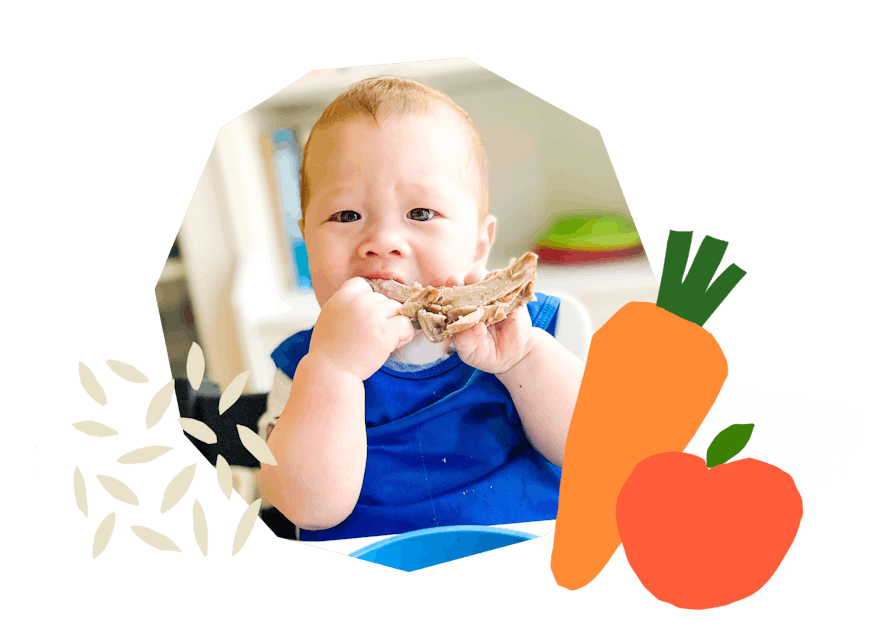
The Program Baby-Led Weaning with Katie Ferraro
A step-by-step digital program for starting solid foods safely and navigating the original 100 FIRST FOODS™ meal plan with baby-led weaning.
 EXPERT-LED, PROVEN APPROACH TO EATING REAL FOOD
 CONCISE VIDEO TRAININGS TO MASTER BABY-LED WEANING
 100 FIRST FOODS DAILY MEAL PLAN WITH FOOD PREP VIDEOS
Baby-Led Weaning for Beginners Free Workshop
Is your baby ready to start solid foods, but you’re not sure where to start? Get ready to give your baby a solid foundation to a lifetime of loving real food…even if you’re feeling overwhelmed or confused about this next stage of infant feeding.
Get baby-led weaning recipes and tips delivered to your email inbox.