
From Fear to Food: The New Rules for Introducing Allergenic Foods with Kelly Clear, MD, FAAP
- Why early introduction of allergenic foods is recommended and how it helps prevent food allergy
- How to safely get your baby to taste these allergenic foods…even if they don’t have teeth yet
- What to do if you baby has an allergic reaction…and why it probably doesn’t involve going to the ER
LISTEN TO THIS EPISODE
Episode Description
Worried about introducing allergenic foods like peanut, egg, or tree nuts to your baby? You’re not alone…but the latest research shows that early, consistent introduction can actually help prevent food allergies.
In this episode, I’m joined by Dr. Kelly Clear, MD, FAAP, pediatrician and Medical Director of FARE (Food Allergy Research & Education), to unpack the new rules for allergen introduction. We’re breaking down why so many parents still feel fear, what the Eat Early, Eat Often campaign is all about, and how to confidently feed allergenic foods—even if food allergies run in your family.
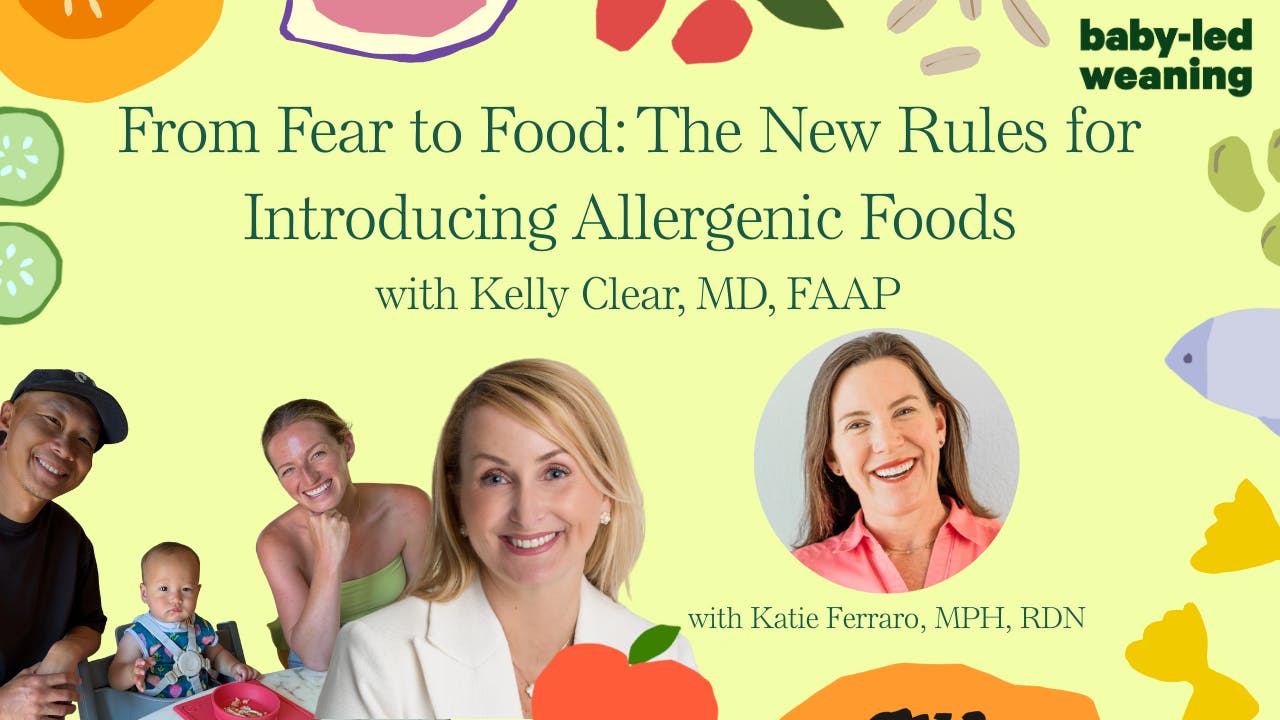
About the Guest
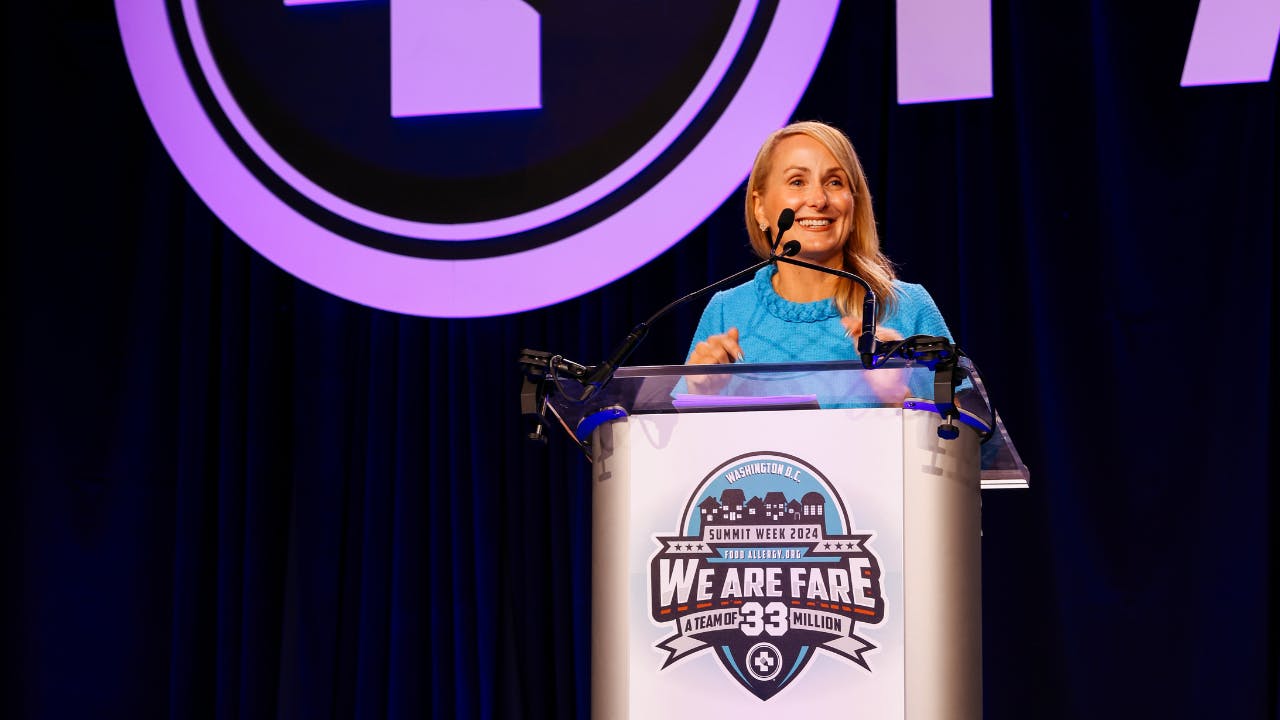
- Dr. Kelly Clear, MD, FAAP is a board-certified pediatrician and the Medical Director of FARE (Food Allergy Research & Education)
- Dr. Clear helps oversee FARE’s Eat Early, Eat Often campaign to empower parents and healthcare providers to help reduce the risk of food allergy with early allergen introduction
Links from this Episode
- Visit the FARE: Eat Early, Eat Often campaign page here
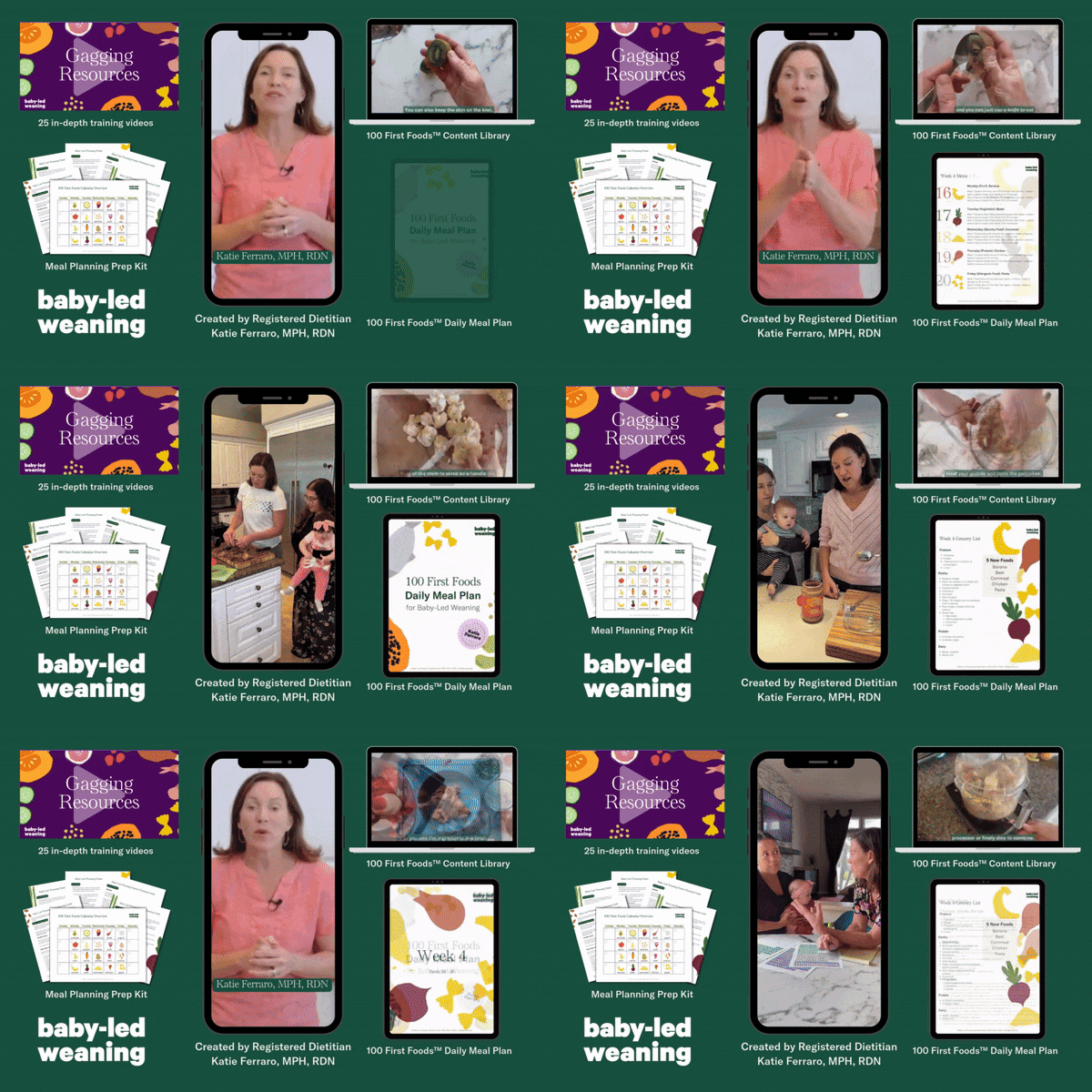
- Baby-Led Weaning with Katie Ferraro program with the 100 First Foods™ Daily Meal Plan, join here: https://babyledweaning.co/program and get $50 off when you sign up using the code BLWPOD50
JOIN NOW AT $50 OFF CODE: BLWPOD50
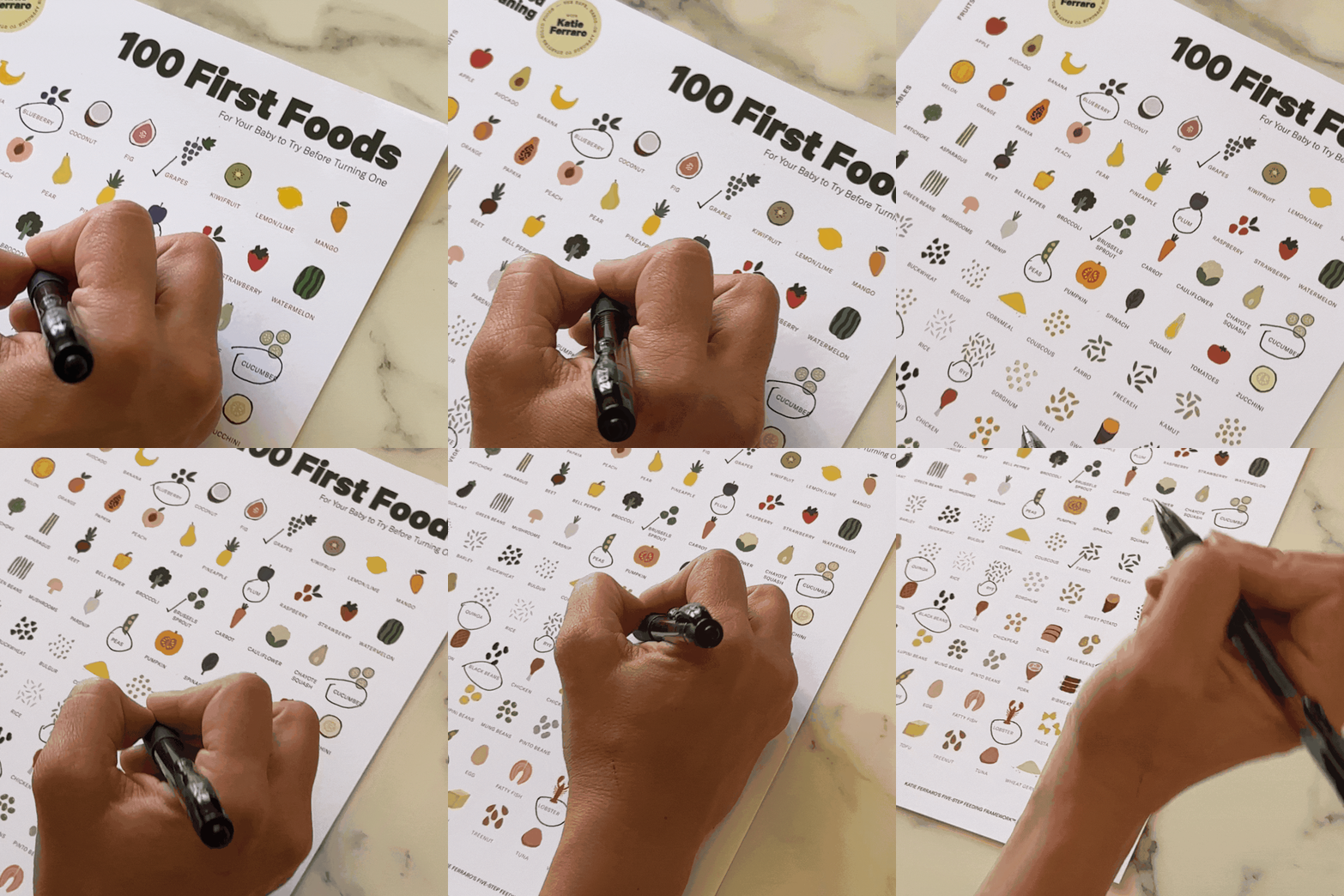
- Baby-Led Weaning for Beginners free online workshop with 100 First Foods™ list to all attendees, register here: https://babyledweaning.co/baby-led-weaning-for-beginners
Other Episodes Related to This Topic:
- Episode 368 - Using a Milk Ladder for Babies with Dairy Allergy with Carina Venter, PhD, RD
- Episode 380 - Why Doctors STILL Aren't Talking About Introducing Allergenic Foods with Ruchi Gupta, MD, MPH
- Episode 418 - Everything You Need to Know About FOOD ALLERGIES Update (Nutrition Labels, Research & Sesame) with Bob Earl, MPH, RDN

Latest Episodes


Hungry Root (0s):
I love this time of year. Okay, summer's fine, but fall is totally my jam. My birthday happens to be in September, plus my kids are all settled back in school. I can finally get my brain back into workspace. It's like all about a clean slate. And I like to set new goals. I get a little more structure and one of my goals this fall is eating more real food that actually fuels me. But without adding more work, enter Hungry Root. Hungry Root has really changed meal prep for me. They fill my grocery cart with smart, delicious choices that are easy to cook, totally tailored to me and my family's food preferences. I've been switching up a few things in my diet these days. Hungry Root, that totally gets it. I've been trying out some new almond milk yogurts. I had a new plant-based salad dressing the other day. We had this unreal mushroom risotto that showed up in our box with truffle oil the other night that made me feel like a super fancy chef. But my family actually loved it on a weeknight, the Hungry Root Smart Cart, it gets smarter with every order I love. I can still like tweak meals and groceries before they ship. I'm still operating outta my kitchen. But like Hungry Root has just taken away a lot of the mental load of the preparation because honestly, I spend all day prepping meal plans and recipes and working on baby-led weaning food for other people's babies when it comes time to feeding my own family. I really appreciate that Hungry Root has kind of stepped in and the quality top notch. There are no artificial sweeteners, no weird additives. There's brands that I already buy, like Vital Farms and Harmless Harvest. So if you wanna take advantage of all that Hungry Root has to offer to help streamline meal prep in your household, I'd love if you could take advantage of this exclusive offer for our listeners. For a limited time, you can get 40% off your first box, plus get a free item in every box for life. So if you go to Hungry Root.com/weaning and you use the code weaning, that's Hungry Root.com/weaning code weaning, you'll get 40% off your first box and a free item of your choice for life. A little icing on the cake there. Hungry Root.com/weaning code weaning. And check it out for your family.
Kelly Clear, MD, FAAP (2m 6s):
It is rare for the baby to have a full blown allergic reaction. In fact, very rare. Even if there is a reaction, you know the likelihood of it being mild is very, very high. You should be trying these new foods and enjoying it.
Katie Ferraro (2m 22s):
Hey there, I'm Katie Ferraro, registered dietitian, college nutrition professor and mom of seven specializing in baby-led weaning. Here on the Baby-Led Weaning with Katie Ferraro podcast. I help you strip out all of the noise and nonsense about feeding, giving you the confidence and knowledge you need to give your baby a safe start to solid foods using Baby-Led Weaning. What If introducing allergenic foods to your baby didn't have to be scary? For years, parents were told to actually wait on the allergenic foods, hold off on introducing your baby peanut egg or those other allergenic foods.
Katie Ferraro (3m 2s):
But now research shows the opposite. It's actually the case that early introduction, when you do it safely and consistently, that's what helps prevent food allergy down the road. But that shift in the guidance it has left so many parents feeling confused and overwhelmed and honestly afraid. Today I'm joined by Dr. Kelly Clear. She's a board certified pediatrician and she's the medical director at fair. So that stands for Food Allergy Research and Education. So FAIR is leading the charge in food allergy prevention. They have a new public health initiative called Eat Early, eat Often. Dr. Clear is here to break down what that means for you, what it means for your baby, what it means for helping to prevent food allergy.
Katie Ferraro (3m 48s):
I love Dr. Clear. She is so down to earth. She's the mom of four kids. We were talking about birth spacing. I had seven kids in three years. She had four kids in five years. One of her sons has food allergy and she's gonna talk a little bit about that. And it's interesting because of his age. So he is 13 years old and we're gonna talk a little bit about the LEAP study learning early about peanut allergy. And that's the study that really kind of flipped everything on its head about 10 years ago. So LEAP's been out for 10 years and she's gonna talk about how that kind of messed her up because what she learned as a doctor and an emergency room certified pediatrician and what she thought as a new parent and what she was doing as a parent. And then her kid gets these food allergies.
Katie Ferraro (4m 28s):
And if you're feeling confused or overwhelmed or just like, I don't really know if what I'm doing is helping to prevent food allergies or what if my baby has a food allergy? She's gonna kind of help synthesize and clarify all of that. We're gonna talk about why there's so much fear around introducing allergenic foods, what the new rules really are, and then how you can confidently introduce these new foods like peanut and egg and tree nut and more even if food allergies run in your family. So let's help move from a space of fear to confidently introducing allergenic foods so that you feel more empowered in your baby's feeding journey. Even if they do end up like Dr. Cleary when her kids having a food allergy, you're gonna be okay.
Katie Ferraro (5m 10s):
With no further ado, here is Dr. Kelly, Clear from fair. She's talking about From Fear to Food, the new rules for introducing allergenic foods.
Kelly Clear, MD, FAAP (5m 23s):
Thank you for having me here today because I think that learning about how to prevent a food allergy is so important. And I personally know that a, a pediatrician and as a parent I've got four kids and one of them out of the four has multiple anaphylactic food allergies. And I think back to the way that his life is different than my other three kids. And think about how I wish that what I knew now and where science is now and what we know now was actually what we were taught, you know, 13 years ago when he was younger. So I will let you know, my son is allergic to eggs, peanuts, and shellfish Eggs is really a tough one for us because it's everywhere, right?
Kelly Clear, MD, FAAP (6m 9s):
Egg is in all food. You know, so many foods that, you know, we're, we're cooking or making or you know, just it's a, a great source of of nutrition for kids and adults. And he has had, you know, multiple anaphylactic food allergies. He's had some as you know, a toddler. He's had some in his, you know, early childhood and they are scary moments for both he and I. And I am a pediatric emergency room trained physician, right? So, so when this has happened, and I can tell you our worst, you know, anaphylactic period was he was eating a, a pasta that I thought I knew everything that was in it.
Kelly Clear, MD, FAAP (6m 54s):
It was, he was two and a half and I sprinkled goats sheep smelled cheese on his pasta, not knowing that he was allergic to it. And all of a sudden two and a half looked at me and just said, I don't feel good. And next thing I know covered head to toe and hives, difficulty breathing. We started, you know, I gave him epinephrine, started some albuterol called 9 1 1. Lo and behold, he needed multiple albuterol, multiple albuterol, multiple epinephrine got admitted to the intensive care unit and that was our, you know, probably moment that I'll never forget of him anaphylax.
Kelly Clear, MD, FAAP (7m 36s):
But the day-to-day life is, is hard too. You know, he spent years eating alone at a table. He's never had a birthday, you know, a piece of birthday cake at a, at someone else's party. So if there's a way to prevent food allergies, I would love to be able to share that because now there is.
Katie Ferraro (7m 55s):
Okay, I have a few questions. Sheep's milk cheese, you said he is allergic to egg peanut and shellfish. Is he also allergic to cow's milk protein or what? What was it in there?
Kelly Clear, MD, FAAP (8m 5s):
So he was at that point, unbeknownst to me, what likely happened is that as an infant he was probably allergic to cow's milk but you know, became tolerant 'cause we kept giving it to him. And then just the slight protein difference in the sheep's milk was what caused his reaction.
Katie Ferraro (8m 23s):
Okay. And you mentioned you are, and I think this is so important for parents to hear, you are an emergency room trained pediatrician and yet this quote happened to you. This is nothing that you did, but 13 years ago what you were being advised on both in medical school and your training, but as a parent and from your pediatrician is different from what we know now. So let's say fast forward now you are talking to a friend who's a new mom here on this podcast. What do we do differently now for parents of infants then? You were advised to do 13 or more years ago.
Kelly Clear, MD, FAAP (9m 1s):
So 13 years ago, not only was I advised to avoid certain allergens until they were 1, 2, 3 years old, but I was also giving that guidance out because I was in my residency in fellowship and telling new parents the same thing. And what science started to recognize in the medical community started to recognize is that we're telling people avoid, avoid, avoid. You know, don't give peanuts until they're three. Don't give eggs until they're two. And all we kept seeing was food allergy incidents increasing in increasing, in increasing. And that's science thinking about why was that happening when you know, we're, we're giving this one piece of information, scientists then started to think, okay, well let's try to link this.
Kelly Clear, MD, FAAP (9m 45s):
They saw that babies in Israel who were eating bombas, which are peanut puffs really early in life were not developing peanut allergies. So then that was the trigger that said, okay, let's do a study. Let's figure out what the real, you know, guidance should be. And now you know, we really tell people to feed babies early and often starting you know, between four and six months when the baby is developmentally ready and start getting those foods into the baby because that is how you can prevent an allergy in up to 85% of the kids for peanut.
Katie Ferraro (10m 22s):
So Tell us a little bit about your role with FAIR and how does fair help families with food allergies? 'cause I'm curious, like you had this background a, a pediatrician, then you have a child with food allergies. Were you always interested in it and then found your way to fair or did you utilize fair as a resource and you know, how did that kind of come to sitaition?
Kelly Clear, MD, FAAP (10m 41s):
Right now my role is medical director at fair. So I oversee the education, I oversee lots of our, you know, webinars, talks that we're doing to professionals and to families and caregivers. When I was, you know, before I had a child with food allergy, I didn't really have a huge interest in food allergy to be honest. I was an emergency room physician, I was seeing kiddos coming in with anaphylaxis, I was treating them and I was sending them home. And now that I have a child with food allergy, I wish that I could go back to that self to give just extra guidance and extra support and tell parents who are coming in, you know, the real deal rather than this very quick, okay, they're fine, you go home.
Kelly Clear, MD, FAAP (11m 31s):
So at fair what we do is really try to educate patients and caregivers and healthcare professionals and try to give the information that now we know is true science, which is that we should be introducing allergens early to these infants. But you know, that's now what our goal is, is to basically in the next, you know, decade or two eradicate allergies because we're following this type of guidance that now will help prevent.
Katie Ferraro (12m 2s):
And I know when parents are listening and they hear like, oh my gosh, your story, right? Two and a half year old, little bit of sheep's milk cheese, full body hives admitted did the icu, this is scary stuff. Let's talk a little bit about that fear. You know, parents think, well I'm so scared to introduce those allergenic foods to the babies. I hear what you're saying. Dr. Clear research says early introduction can help prevent food allergies. How do you help address that fear component of like, well why would I introduce something to my child that could potentially kill them?
Kelly Clear, MD, FAAP (12m 33s):
Well, and and I had to convince myself, right? Because I definitely had a fear in feeding subsequent kids where the guidance was starting to change and, and I had to introduce to them, you know, these allergens at the the time that, you know, four to six months. And I think what I rely on is, is the data and are it is these studies that have been now 10 plus years, that this is real science and I and are preventing food allergy. So the one big study, which is the LEAP study learning early about peanut allergy, they took over 600 infants between four and 11 years.
Kelly Clear, MD, FAAP (13m 13s):
11 months old that had either severe eczema, egg allergy or both. And they really looked at them for five years and gave half of them, you know, assigned to having peanut and the other half not. And what they found in that study was there, there's an 81% reduction in these very high risk babies 'cause they all had severe eczema and egg in developing a peanut allergy. That alone for me helps to quell that fear of, we now know that science is there, but as a mom you're always gonna have a little bit of fear. So I think knowing what you're looking for is also really important.
Katie Ferraro (13m 49s):
And I think that empowerment piece, right, when you teach parents, listen, you, there's a lot of things in life we can't control, right? You cannot control, you know, family history of eczema or food allergies. But like the one thing you can control is early introduction of these potentially allergenic foods. Like the one thing we have power over is offering our babies these foods early and often. And that's the one thing that we can do as parents to help lower the risk of food allergy down the road. So I wanna ask you a little bit about Fair's new campaign, it's called Eat Early, eat Often. What's the science behind this slogan and what does it mean practically for parents who are starting solid foods?
Kelly Clear, MD, FAAP (14m 27s):
So the science behind it is actually the study that we just mentioned, the LEAP study, the learning early about peanut allergy. And that's really where all this guidance came from. You know, way back when, again I started with my son, the guidance was very different. So now as that's changing, we're really relying on the science. So we are now saying four to six months old when that baby is developmentally ready to start eating food. So everyone on this call probably knows that, but you know, sitting unsupported, showing interest in eating, these are great times that you're embracing, right? Feeding your baby is is fun and should be enjoyable.
Kelly Clear, MD, FAAP (15m 8s):
But that is kind of what we're saying now is once you start feeding you know foods to your baby, you should be adding in those allergens as well. And that will really help to decrease the risk of your baby developing a food allergy.
Katie Ferraro (15m 24s):
And that, I know it's hard and parents are overwhelmed that this transition you've gotten, you know, your NAP schedule down, you're breastfeeding or you're a bottle schedule down, you're like, oh my gosh, now I gotta change everything. And what we wanna encourage parents is this idea of diet diversity, right? We can't just get stuck on avocado, banana, and sweet potato, like those are great starter foods, but I know part of the reason why we put together our whole a 100 First Foods program is to show parents all of the different foods that babies can eat. And I think that once parents realize, oh my gosh, you know, there's benefit to different textures and different nutrients and different food proteins, especially when it comes to food allergies. Not to stress you out, but if you do one or two new food a day, it's perfectly safe, right?
Katie Ferraro (16m 5s):
We don't need to wait three to five days between new foods. And I really applaud all of the experts that work with Fair. We've had Corina Ventures been on this podcast probably 15 times at this point, Marion Grouch coming on and really teaching parents the science behind that. You know, if your baby is going to have an allergic reaction to food, the vast majority of those reactions are going to occur within minutes and up to no more than two hours following that ingestion. So you don't, it's like you offer your baby a shrimp cake and then you wait three days and the diaper's weird and you're like, oh my gosh, they're allergic to shrimp. It doesn't work like that. So if we can educate parents about how food allergy really works and how to make food safe and how to make them developmentally or to offer them in ways that are appropriate for babies, we can get these foods safely into the babies and they enjoy eating them.
Katie Ferraro (16m 50s):
I think that's one of the things that's so fun is watching the babies pick up the food and feed it to themselves. And it really helps lift that burden off the parents when they're like, okay, we've done peanut five, six or seven times, great, let's move on to tree nut. Let's move on to egg. And we see these parents, you know, in our program, they're getting through the top nine allergenic foods in the first nine weeks of introducing solid foods and they feel good about that. Not to say that their baby won't have an allergic reaction down the road, but you don't know unless you try. So I was wondering if you had some words of wisdom for parents who are just kind of on the fence like, oh, I was thinking about doing some allergenic foods, but I'm not really sure if I want to. What can they do to really incorporate that maybe as the next new food that they do with their baby today?
Kelly Clear, MD, FAAP (17m 32s):
Things I think that people, you know, really need to understand is some of the things that hold them back from introducing this food is a fear of having a reaction. And I think it is really important to point out and to note that if in the infant stage a baby has a reaction, it is much more mild than if the child was older. So the studies have shown that, you know, when babies who are four to six months are having a reaction, it tends to, it tends on the vast majority to be just involving the skin and a little bit of swelling so that, that in and of itself should give comfort to lots of parents in feeding that baby.
Kelly Clear, MD, FAAP (18m 14s):
It is rare for the baby to have, you know, a full blown allergic reaction. In fact, very rare. So I think that that knowledge that even if there is a reaction, it is going, you know, the likelihood of it being mild is very, very high. So really you, you should be trying these new foods and enjoying it. Like I, I hope that people can take a deep breath and actually have fun with feeding their baby these new foods. You know, especially at this time.
KiwiCo (18m 44s):
Hey, we're gonna take a quick break, but I'll be right back. When I was a kid, one of my favorite memories was my dad used to take me outside on Saturdays and let me help him fix the sprinklers in our yard, which somehow were perpetually broken. At first I thought it was just about, you know, getting the water back on, but he would show me how to figure out where the problem was and how to take things apart and put them back together. It didn't feel like work. I kinda felt, oh my gosh, I'm solving a puzzle. And without even realizing it, I was learning problem solving and patience and that satisfaction of fixing something with my own two hands. And that's exactly why I love Kiwi Co because our kids get that same spark of learning through fun hands-on projects. And I know that you're also in the baby and the toddler stage and Kiwi Co has crates for you too. The Kiwi co hand a crate is designed for ages zero to 36 months with research backed activities for babies that engage all five senses. And for your curious toddlers, the Kiwi Co koala crate for ages three to six helps little scientists discover the world through pretend play in our house. The kids get so proud when they finish a project. My twin son Gus, he just felt a mini catapult and the look on his face when he launched his first pompom across the room, just priceless. And the best part is that these projects, they don't just sit on a shelf, they get used and played with over and over again. So if you want something that keeps your kids engaged off of screens, excited about learning, Kiwi Co makes it easy to spend quality time together while building creativity and confidence so you and your kids can tinker, create and innovate with Kiwi Co as well. Get up to 50% off your first crate@kiwico.com promo code weaning that's up to 50% off your first crate at KIWI CO.com promo code weaning.
Katie Ferraro (20m 44s):
Can we talk a little bit about, you know, dosing? I think parents will often ask questions, okay, well how much peanut does my baby need? And how often, because we make recommendations and we say things like, offer these foods early and often and parents are like, okay, exactly how early, exactly how often. And I know that, that that science and we have to be honest with parents, it's, it's not there yet. So how do you reconcile that with parents who do want really specific recommendations when we don't? You know, I, I'm in the same boat as you when I was studying to be a dietician 25 years ago, we told parents, you know, oh, don't do egg white until after age one and don't do fish until two and peanut tree nut until three. None of that was based on science. That was like purely anecdotal. And now we know the exact opposite is true and we should be introducing those foods earlier.
Katie Ferraro (21m 27s):
How do we avoid making these same mistakes When, and not giving too broad of recommendations for parents when they wanna know how much and how often, if we're saying early and often
Kelly Clear, MD, FAAP (21m 36s):
For the parents that really want to know the, the data from the studies, right? It's two teaspoons of peanut butter, creamy peanut butter really thinned out in either pureed fruit, vegetable breast milk formula, anything that's really thinning that out so that it's appropriate for that baby to eat. But we also know that babies are all different, right? And to get that amount of food into a baby all of the time can be really stressful and nearly impossible. So that is why we kind of keep it broad and Eat Early and eat often because baby's not, they might not want it that first time, but we gotta keep offering, we gotta keep trying and we, we've gotta also give ourselves a little bit of grace that it's not going to be perfect every time that, you know, we're feeding our baby just in terms of how much they're eating.
Kelly Clear, MD, FAAP (22m 32s):
And, and sometimes I think that when we do give those numbers, people get fixated on it and then they're focused on, you know, kind of that medical like quality of feeding rather than the joy of feeding. That's fine. And that's what I would hope people don't do.
Katie Ferraro (22m 47s):
And even as a dietitian, I mean the dietician parents are the most guilty of that. Like, well how many grams of it? And they'll look up the protocol from the LEAP study and it's like, hey, maybe that's what they did in the leap study. But there's nothing to say that any more or any less peanut butter would've been any more or any less effective. Like there's not a magic bullet amount of peanut butter. It's this notion of, hey, if you look at the group of Israeli children that were introduced to peanut protein early and often there was an 81% reduction in peanut allergy down the road. Like let's zoom out and look at the big picture here. We gotta stop telling parents to not introduce peanut and then we're working towards maybe knowing exactly how much. But I think I like this idea of, you know, let's not get, it's not that important how many milligrams and grams that they're eating 'cause that's not how children learn how to eat.
Katie Ferraro (23m 31s):
And I, I personally as a baby-led weaning specialist don't want parents to get fixated on how much peanut protein is getting into the baby because at that point they start to introduce pressure tactics, which we know leads to food refusal and food aversions. And then we've got way bigger problems down the road or problems just as big as food allergy to be honest. So, so let your baby do the thing that they were born to do, which is to gravitate towards eating foods, but it's on us as parents to be responsible for what they're eating and we've got to remember to incorporate those allergenic foods early and often. So Dr. Clear, a couple more questions that I know parents have. If a baby does have a mild reaction to an allergenic food, and I love that you reminded parents, if you guys didn't catch that, the reaction that your baby may have to a food if they do have a food allergy will be much more mild if you do this in infancy, the older they get, the more severe the reactions get.
Katie Ferraro (24m 23s):
If they've never had that food protein in their body. So let's say there's some few hives, how should parents respond? When should they seek medical care? If they're doing a food like peanut or tree nut and they do see some skin involvement, some hives after the baby's tried it,
Kelly Clear, MD, FAAP (24m 38s):
Advice would be to, you should touch base with your healthcare professional, whether it's your pediatrician or an a, you know, it doesn't have to be an allergist for sure. And in fact, that's one thing that I would stress is that if you see a few hives around a mouth, you don't need to seek allergy care at that moment. I would touch base with your pediatrician's office and say, Hey, this is what I saw, what are the next steps? Because I think that when you're introducing you, what you don't wanna do is fully stop, wait six months for an allergy appointment and then kind of miss that window of introducing foods. But I always say just to be safe, call your pediatrician, talk to them, call, you know, call someone who's been through this as well to give you the mental support but then call your pediatrician to get the medical support.
Katie Ferraro (25m 26s):
And I'd also encourage parents too, if that does happen, take pictures, make notes of what the baby ate. Were there any other ingredients involved? Like the question about the sheep's milk, like well what else was in that pasta that possibly, you know, was that also the baby's first time having wheat and are we possibly talking about a wheat allergy here as opposed to cow's milk protein, make note of what the baby ate, how much they ate, what reaction did you see? And at what time? Like so how long following the ingestion did the baby have the reaction? And what sort of symptoms did you see? Make notes of those things so that you can go with kind of a full picture to your healthcare practitioner. And I appreciate what you said, you don't have to go to an allergist. A a pediatrician is trained to help you assess the situation and together you can make the decision if additional care would be needed.
Katie Ferraro (26m 9s):
But I agree with you, you don't wanna, you know, fully hold off on introducing allergenic foods because you're gonna go past that protective window. We had recently, Dr. David Succus was on the podcast from nationwide children's teaching parents about the research that shows that, you know, the protective window for that early introduction appears to close around the 11th month mark. We want your baby to try all of those potentially allergenic foods before 11 months of age. Not to put any pressure on you, but like there's at least nine allergenic foods and we want your baby to have them multiple times. So you gotta get cracking on this. And as I like to tell my husband, if you fail to plan, you plan to fail. So let's have a little bit of a system for getting these foods and, and an opportunity for your baby to try these foods.
Katie Ferraro (26m 51s):
So it's something to certainly be thinking about as your baby starts. Solid foods. Dr. Clear, where can parents go to find credible and practical guidance on how to introduce allergenic foods safely and confidently?
Kelly Clear, MD, FAAP (27m 3s):
At fair, we've created a resource@foodallergyprevention.org and this was created really through the work of an expert panel and many, you know, renowned allergist, immunologist, dieticians, you know, just parents, caregivers, what can be done and that that resource actually can give lots of information on you know, how to feed your baby and to do that safely and what the guidelines are.
Katie Ferraro (27m 35s):
Well thank you so much for taking the time to explain the new food rules. I think you're, so, I appreciate you. I know it's the, the middle of the summer and you've got four kids and you're dealing with life and work and I think you're so uniquely qualified to be leading fair because obviously you're qualified from a professional standpoint, but as a mom with four kids, some of your kids are on the side of, before the LEAP study came out and we were using old guidance and some of your kids were born on the other side of it and you have a child with food allergy and you're dealing with what parents today are dealing with, which is like, wait a minute, there's some healthcare professionals still giving older information. And there's some of us looking at, well there's this newer data that's not even really that new at this point.
Katie Ferraro (28m 14s):
It's 10 years old, but parents are dealing with all of this different, these inputs. And I would remind them that fair@foodallergy.org is just a wonderful resource. I find myself going there multiple times a week. I'm always checking the statistics. 'cause people say, okay, well, you know, is fish allergy more common in babies than shellfish allergy? I always, I always start my search there because you have such wonderful resources and for healthcare professionals as well, I've taken your advanced pediatric food allergy training for dieticians. There's, there's so many great resources there on your website. So I I just encourage people, parents and healthcare professionals, if you have any questions about food allergy, start your search at fair Because it really is the, I think the global leader as far as information goes that that's really well synthesized.
Katie Ferraro (28m 60s):
I mean, I love all the international allergy groups, but sometimes it, the data's too overwhelming. You guys do such a nice job of making it really useful for parents and professionals. So thank you for that.
Kelly Clear, MD, FAAP (29m 10s):
Thank You. And, and look, this is a hard process, right? You, you mentioned that we hear different things from pediatricians if we've got kids of varying ages. I remember hearing different things from my own mom and mother-in-law, right? Because they went through this in a different way. They were told very different things. So I think we've got to rely on the, the data now, rely on our pediatricians and, you know, get going with getting these allergens in them early.
Katie Ferraro (29m 37s):
I remember in the year 2000's, it was the first year I became a dietitian. I was at fci, the Food and Nutrition conference in expo. And I remember being in a presentation and it was about food allergy. And just as an aside, the person giving the presentation was like, oh. And when I was breastfeeding my baby, I was, I was eating a peanut butter sandwich and I dropped a bit of peanut butter on the baby's head and that's why my baby has peanut allergy. And I was like, that's stuck in my head until I started working in this world. And it was like, just things like that saying things in passing like that I, I wasn't food allergies, babies, all that stuff wasn't even on my radar. And then when I started working in this world, I was like, oh, that's like, that's what we used to say about how food allergies happened. And I remember that at a professional conference, a credentialed expert said that.
Katie Ferraro (30m 20s):
So there's a lot of work to be done. It's job security, Dr. Clear.
Kelly Clear, MD, FAAP (30m 24s):
And, and it's hard when science changes, it is hard to get, you know, people to adapt to it, whether that's the healthcare professional or the family themselves, right? So that, that is what is hard. But what we can convey is that the science is real, the science is there. This guidance can help prevent a food allergy in many, many, many of the babies. Over 80% of them that are offered it.
OSEA (30m 50s):
Hey, we're gonna take a quick break, but I'll be right back. We recently stayed in a rental house and rental houses stress me out more than hotels for a number of reasons. I just on the whole have too many children for rental houses. But this one had the most aggressive signage about not using their towels for makeup removal. So you know how like you stay at a rental house and they have those like passive aggressive signs. Sometimes they're aggressive, aggressive about like, please do not use these white towels to remove your mascara or your makeup. And then like if you forgot your makeup remover, there's no soap there, then you're kind of up a creek or they'll give you disposable makeup remover towelettes, except those ones are packed with chemicals and then they always burn my eyes. I just wish someone would make a rental house size container of OSEA's Ocean Wave Cleanser. So OSEA is a company that I only recently started using, but they've been around for over 25 years. And it shows the OSEA skincare products are thoughtful, clean, vegan, and cruelty free. And I love knowing that they're also climate neutral certified. It's skincare that feels luxurious, but it's also responsible. And here's the deal with the OSEA Ocean Wave Cleanser. So it's a cleansing oil plus makeup remover in one product. So it has this gentle bi phase water light cleansing oil. It really effectively dissolves your makeup plus impurities and excess sebum. But then the secret ingredient kicks in and that's undaria seaweed leaves. And this leaves your skin feeling so soft, so nourished, you're perfectly prepped for like, it's got a double cleanse basically of your whole skincare routine. So I massage it in, rinse it with warm water, and then I wipe it with a reusable bamboo cloth that I clean myself because I do not live at a rental house. My skin feels clean, smooth, never tight or dry, just soft and balanced. The OSEA Ocean Wave Cleanser uses Seaweed plus Gentle Botanicals and antioxidants. It literally feels like a mini reset button. It's how I end every day, even the chaotic ones when I'm not on vacation. You can get healthy glowing skin for this season of your life with clean, vegan skin and body care from OSEA. You can get 10% off your first order, anything from their site when you use the code weaning at OSEA malibu.com, you get free samples with every order, which I love, and free shipping on orders over $50. Head to OSEA malibu.com and use the code weaning for 10% off.
Katie Ferraro (33m 21s):
I saw some quote today, it was like in my journal where I'm supposed to write all the things and not, not like journaling, like just my list of things I didn't get done today. And it was like change requires movement and movement requires friction and people don't like friction. And like that's true. Like I literally in my dms at least once a week, hear from a parent who's like, my pediatrician told me to hold off on egg white until after age one. What should I do? And I'm like, not to be flippant, get a new pediatrician because that's more than 20-year-old advice at this point. Like I get it that pediatricians have a lot to do. But if you are still telling parents to hold off on egg white till after age one, you, you're pretty much living under a rock at this point is, is my personal opinion. Sorry, you probably are not allowed to comment on that, but, but parents are hearing that stuff.
Katie Ferraro (34m 2s):
I'm just saying.
Kelly Clear, MD, FAAP (34m 2s):
And we do have resources to make it easier even for the healthcare practitioners because what we recognize is some of the, the doctors who are caring for young babies, they, they don't have the time to sit down and go through how to thin the peanut butter and how to use creamy and not chunky and how to get all these foods in so that you're really getting them in. And then to address that anxiety factor, right? So there's so much, but that's where, you know, we hope that pediatricians and any kind of physician or PA or NP uses our resources to make that easier for them, to allow them to give a handout to briefly talk about something so that it generates questions from that parent.
Katie Ferraro (34m 47s):
Absolutely. Well you guys are doing a wonderful job, especially with this campaign. Thank you for bringing attention to this because I know working in the infant space, I mean that's my jam is the early introduction and a lot of times in the allergy world or you go to the different commodity boards, oh, we're only interested in talking to the parents because they're the decision makers. It's like, who do you think buys the foods for the babies? It's the parents. And how do you think we prevent food allergy? It's with the baby's first bite. So I think you guys are very smart to be focusing on infant feeding and you think everyone would be, but not all the health groups in food allergy are as focused on infant as you guys are. So thank you for doing that.
Kelly Clear, MD, FAAP (35m 22s):
One of the things that I just read in a paper a couple of days ago was the old, you know, adage that an ounce of prevention is worth a pound of cure. And I think that that is just truly so fitting for Feeding Babies allergens early.
Katie Ferraro (35m 39s):
Tell us one more time where Fair is located on the internet so people can go look it up if they have questions or want to learn more.
Kelly Clear, MD, FAAP (35m 44s):
So you can go to food allergy.org to learn more and food allergy prevention.org for prevention resources specifically. Well,
Katie Ferraro (35m 53s):
Thank you so much, Dr. Clear. I really appreciate it.
Kelly Clear, MD, FAAP (35m 58s):
Thank you.
Katie Ferraro (35m 58s):
Well, I hope you guys enjoyed that interview with Dr. Clear. She is so down to earth, I've never met her in person before this interview. I know a lot of the other people from Fair 'cause I did a lot of pediatric food allergy training and I've worked a lot with the different experts from the food allergy group. And you've heard a lot of them probably on this podcast, particularly Corina Venter, Marian Grouch, they do a lot of the infant feeding stuff. But for this new campaign, Tiffany, who's the dietitian at Fair recommended interviewing Dr. Clear, I'm so glad I met her because she's super down to earth. I love a mom of four kids who's also working, who's also funny. She's really funny. Some of the stuff we couldn't keep for the interview, not that it was inappropriate, she was just funny. And I really, really appreciate her insight as a mom and a working mom and someone who recognizes that this stuff is hard, that science comes out and it always doesn't get distilled down into ways that work for parents and it doesn't always work for pediatricians.
Katie Ferraro (36m 51s):
And pediatricians don't always have a ton of time, like she said, to show you how to make the peanut butter safe for your baby. And that's why there's resources out there like fair if you go to food allergy.org or food allergy prevention.org, that's where their new campaign is. I'm also gonna put the links that Dr. Clear talked about on the show notes page for this episode. So if you go to blwpodcast.com/60, you can check them out there. As always, if you need a copy of my 100 First Foods list to offer your baby a hundred different foods, including all of the top nine allergenic foods, I give that list away to everybody for free on my online workshop called BABY-LED WEANING FOR BEGINNERS. You can sign up for that workshop at baby-led weaning.co/Workshop, and if you already have the list and you're ready to get started making all the foods on the 100 First Foods list safe and getting all of those top nine allergenic foods in for your baby in the first nine weeks of starting Solid Foods.
Katie Ferraro (37m 43s):
My program is Baby-led Weaning with Katie Ferraro, and that's at baby led weaning.co/program and a special thank you to our partners at Airwave Media. If you like podcasts that feature food and science in using your brain, check out some of the podcasts from AirWave. We're online@blwpodcast.com. Thank you so much for listening and I'll see you next time. Bye.
Rula (38m 11s):
Now. I know because you're a podcast listener and since you listen to podcasts, you have no doubt heard podcast ads for online therapy, and I know you're probably listening to podcasts because you're a busy parent, right? You've got a lot going on. You're in charge of your baby, of your family, maybe your job friendships, family relationships, and these things are stressful. If you're approaching burnout or your anxiety or your stress is piling up, then yeah, high quality therapy can help. But here's the problem. Most online therapy platforms focus on connecting clients with licensed therapists, but they often fall short when it comes to help with medication management. RULA is a healthcare company and a provider group that's working to change that RULA provides in-network covered care. And RULA patients typically pay just $15 per therapy session when they're using insurance. So RULA has a wide range of licensed professionals, including psychiatrists who help you get the care that you need. RULA is the place to go for your mental health care, even if you're not sure exactly what you need, because affordable and accessible mental healthcare should not be out of reach, but too often it is. Thousands of people are already using RULA to get affordable high quality therapy. That's actually covered by insurance. Visit rula.com/weaning to get started, and after you sign up, they'll ask you how you heard about them. Please help support this show. Let them know I sent you. That's RULA a.com/weaning because you deserve mental health care that works with you and not against your budget.
The Program Baby-Led Weaning with Katie Ferraro
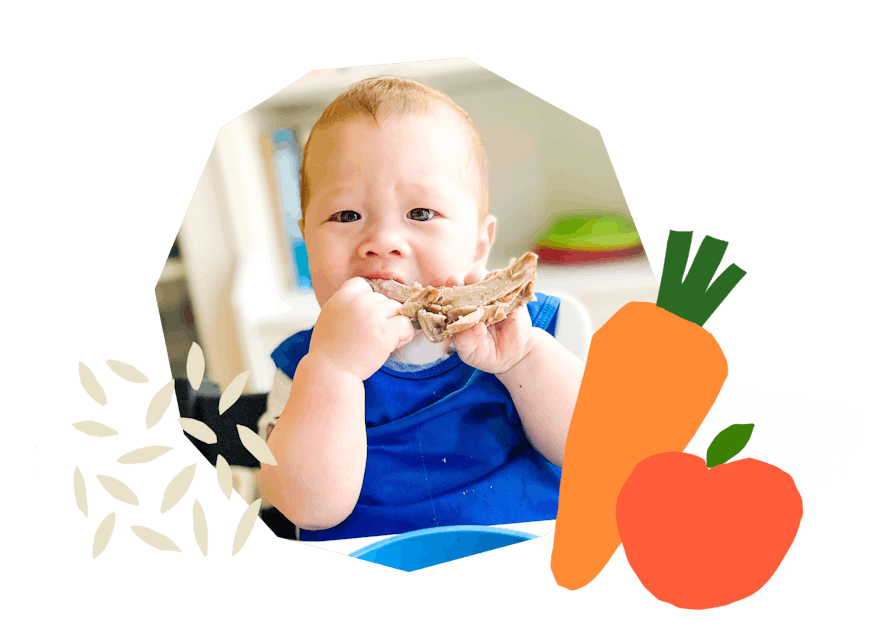
A step-by-step digital program for starting solid foods safely and navigating the original 100 FIRST FOODS™ meal plan with baby-led weaning.
 EXPERT-LED, PROVEN APPROACH TO EATING REAL FOOD
 CONCISE VIDEO TRAININGS TO MASTER BABY-LED WEANING
 100 FIRST FOODS DAILY MEAL PLAN WITH FOOD PREP VIDEOS
Baby-Led Weaning for Beginners Free Workshop
Is your baby ready to start solid foods, but you’re not sure where to start? Get ready to give your baby a solid foundation to a lifetime of loving real food…even if you’re feeling overwhelmed or confused about this next stage of infant feeding.
Get baby-led weaning recipes and tips delivered to your email inbox.