
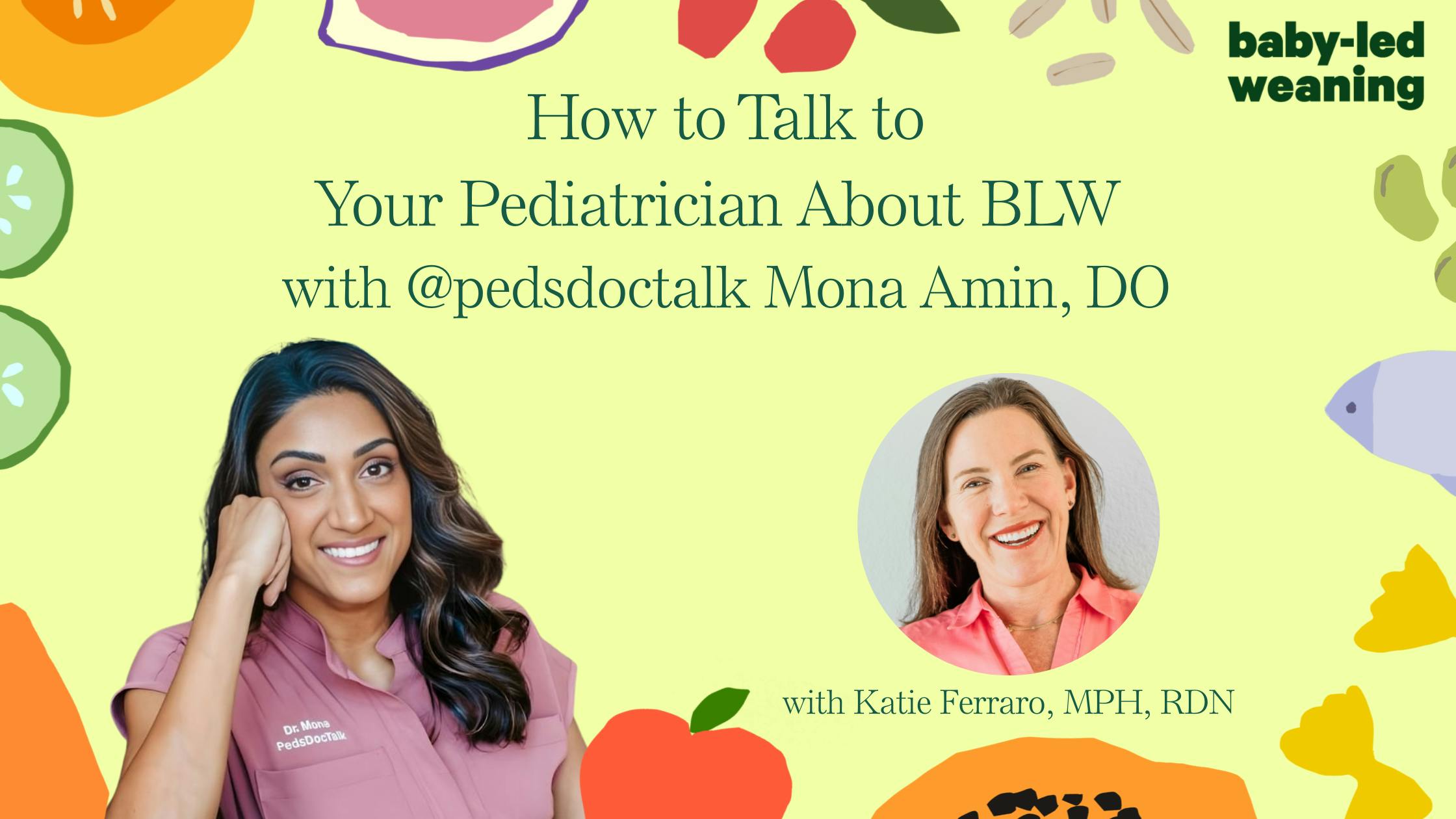
How to Talk to Your Pediatrician About BLW with @pedsdoctalk Mona Amin, DO
- How to talk to your pediatrician about baby-led weaning when they’re skeptical, without getting defensive or backing down
- What to say when the concerns are choking, gagging, allergenic foods, or iron (and how to separate real medical issues from outdated advice)
- Why starting solid foods looked different from baby to baby and how Dr. Mona handled baby-led weaning differently with her second baby

LISTEN TO THIS EPISODE
Episode Description
If you want to do baby-led weaning but you’re worried your pediatrician won’t support it, this episode will help you walk into that conversation with more confidence. You’ll learn what to say when a doctor raises concerns about choking, gagging, allergenic foods, or “what to feed,” plus how to tell the difference between a true medical red flag and a provider who just isn’t up to date. Pediatrician and mom of two Mona Amin, DO (@pedsdoctalk) also shares what starting solid foods looked like with her first baby—and what changed (a lot!) with her second—so you can feel more prepared no matter what your feeding journey looks like.
About the Guest
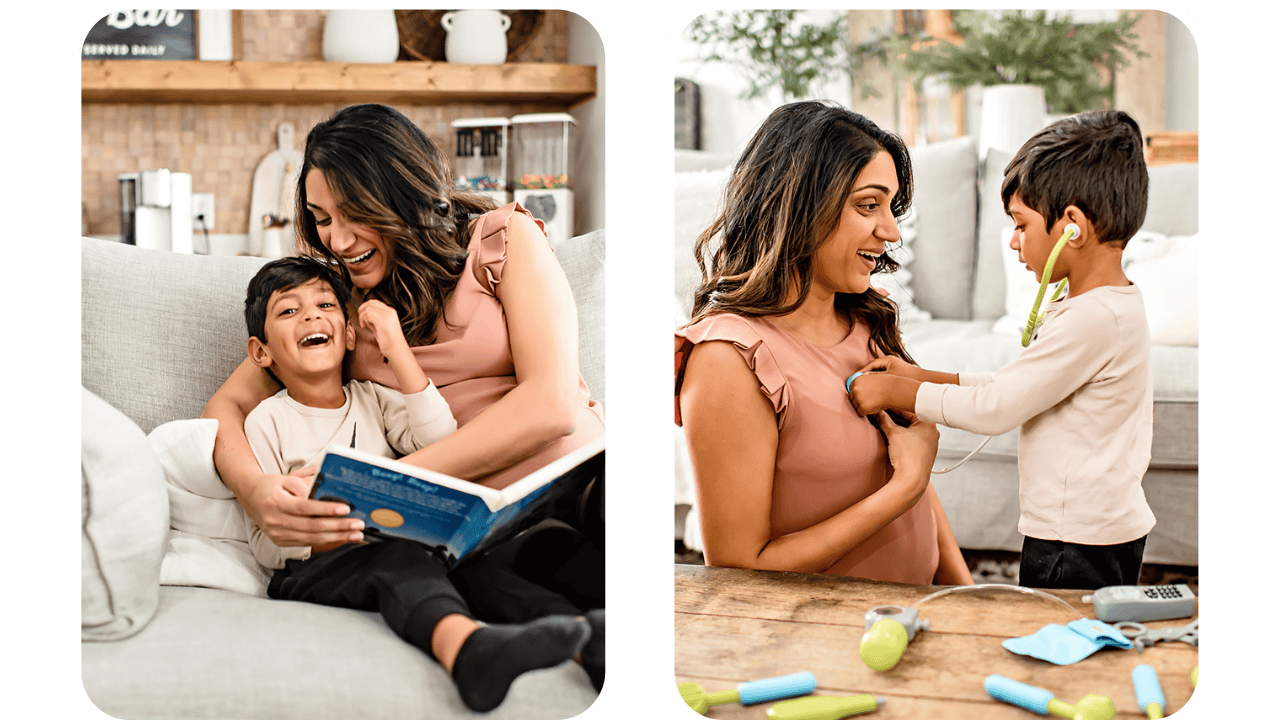
- Dr. Mona Amin is a pediatrician and osteopathic physician (DO) who’s known online as @pedsdoctalk, sharing evidence-based guidance for parents on baby and toddler health.
- She’s a mom of two who’s lived the “starting solid foods” learning curve in real life…first with Ryaan, then again with Vera (including a very different gagging experience).
- Currently the Chief Medical Officer at Poppins, a text-based pediatric health and parenting platform that helps families get reassurance and action plans from clinicians.
Links from this Episode
- Follow Dr. Mona Amin on Instagram @pedsdoctalk
- Check out Dr. Mona’s podcast The Peds Doc Talk podcast here
- Her website is here & her YouTube Channel is here
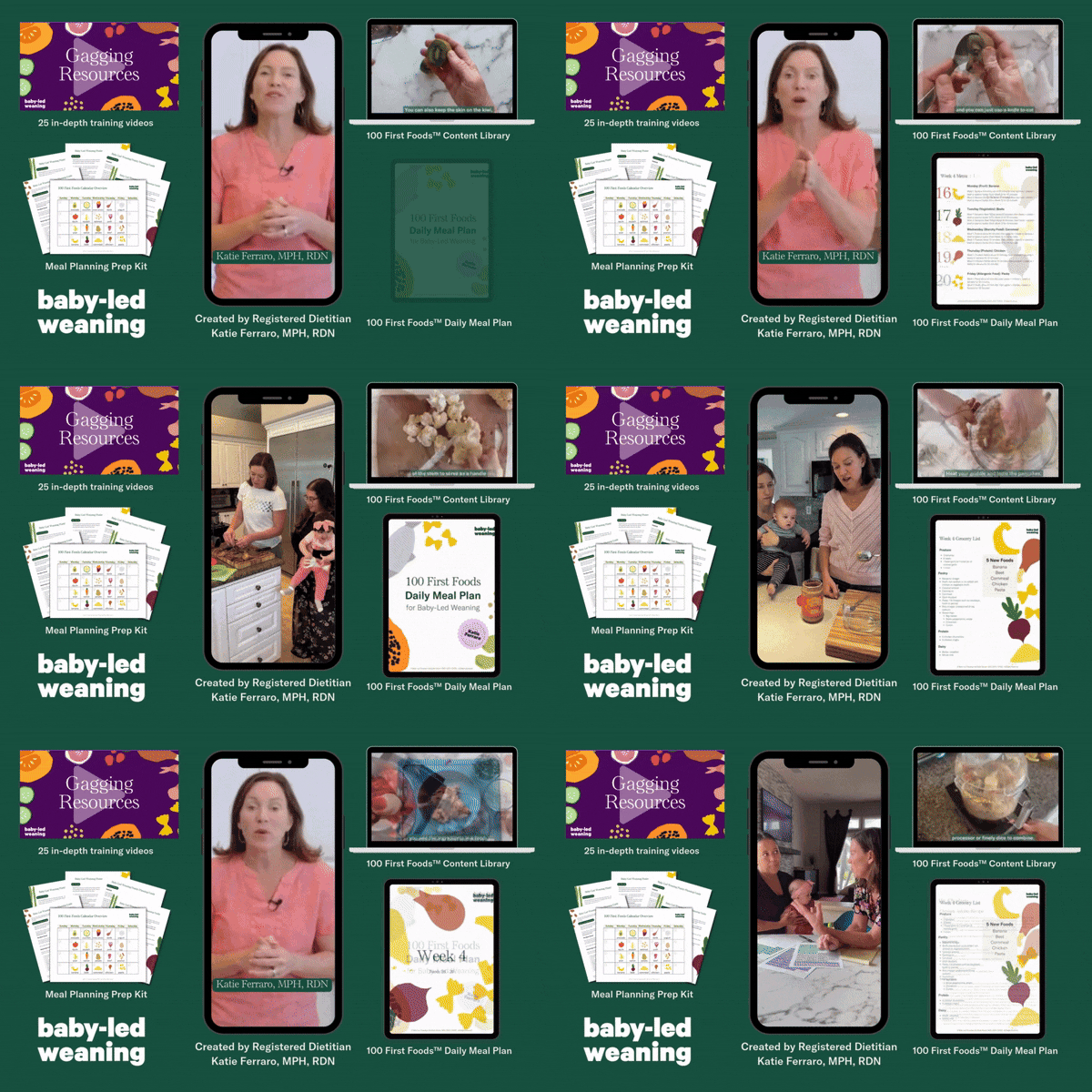
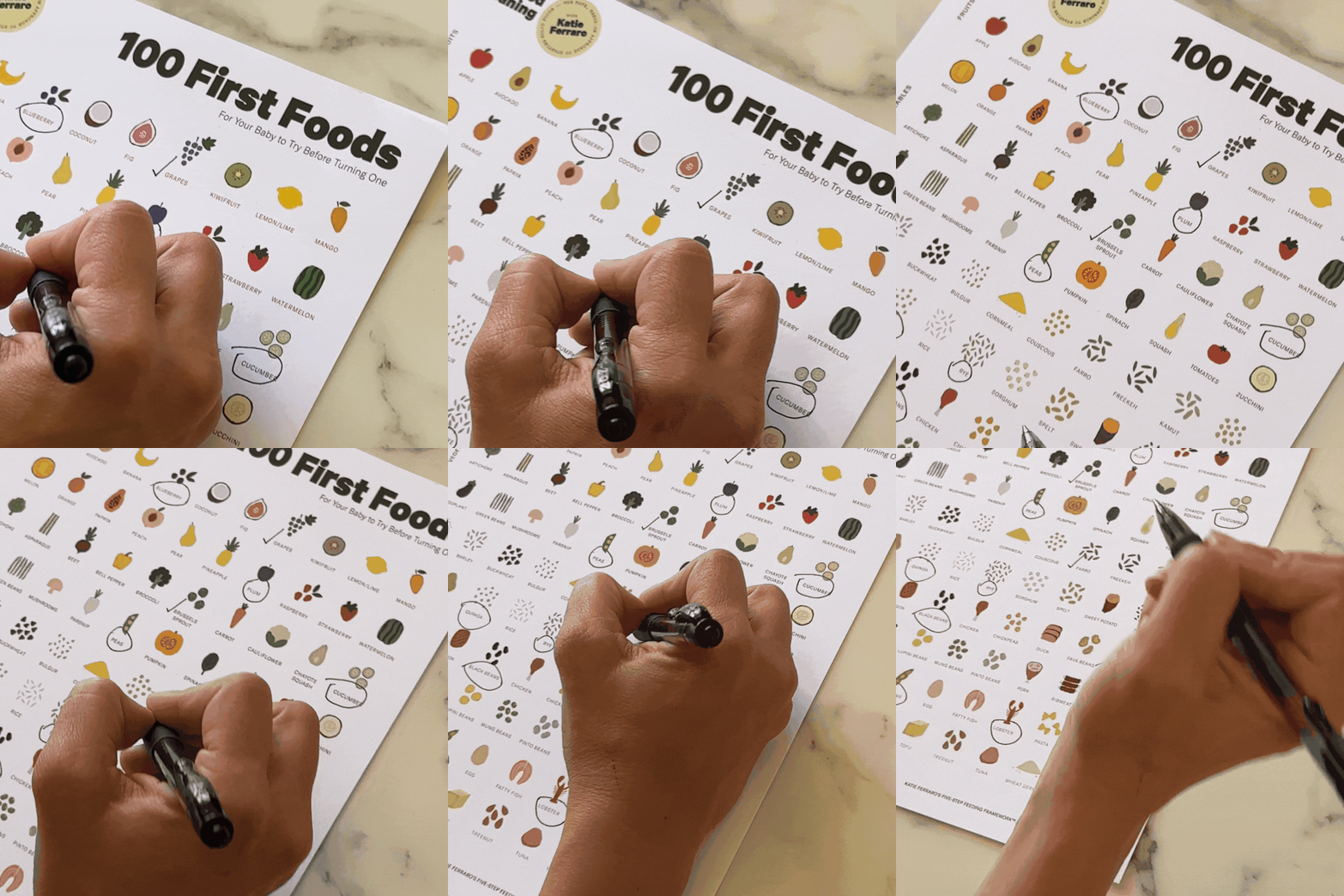
- Baby-Led Weaning with Katie Ferraro program with the 100 First Foods™ Daily Meal Plan, join here: https://babyledweaning.co/program and save $50 when you sign up using the code BLWPOD50
JOIN NOW AT $50 OFF CODE: BLWPOD50
- Baby-Led Weaning for Beginners free online workshop with 100 First Foods™ list to all attendees, register here: https://babyledweaning.co/baby-led-weaning-for-beginners
Other Episodes Related to this Topic

Latest Episodes

The 10 News (0s):
Pam, are you here to game with me In a minute, Ryan? But first it's time to share what's happening on the 10 News podcast. The 10 News is a kids news podcast for curious eight to 12 year olds that even grownups can learn from. What else Is there to say That we cover everything from the Supreme Court and the war in Ukraine to Pokemon and Minecraft? And we'll always tell you 10 things you need to know And we're available wherever you get your podcasts. Is it game time now, Pam? It's game time rise. Let's go.
Mona Amin (32s):
The reaction that I got a lot from family members was that why are we making him so independent so early, you know, And that was comments from in-laws, you know? Or are you sure they can do that? One of the other big things is they didn't know how to prepare the food, So I would have to spend more time teaching them how to prepare the food, making sure it's safe more so than a puree.
Katie Ferraro (53s):
Hey there, I'm Katie Ferraro, registered dietitian, college nutrition professor and mom of seven specializing in baby led weaning. Here on the Baby led weaning with Katie Ferraro podcast. I help you strip out all of the noise and nonsense about feeding, giving you the confidence and knowledge You need to give your baby a safe start to solid foods using baby led weaning. Does your doctor roll their eyes when you ask about baby led weaning? Some doctors do. I hope yours doesn't. But my guest today is a doctor and a Pediatrician who loves the idea of a baby being able to feed themselves.
Katie Ferraro (1m 33s):
My guest is Dr. Mona Amin. She is a Pediatrician, she's a mom of two. She's been a guest on the podcast a number of times. We actually recorded this episode for the first time over five years ago, so we're rerecording it because now she's had a totally different experience with her second baby and I wanted to get her opinion another baby in to see, okay, what's different the second time around when you start solid foods with your own baby, but also how does that affect the way you work with parents as a Pediatrician when they're asking you questions about starting solid foods? Because not all doctors have a really good understanding of infant feeding. The truth is, in North America, more than 90% of physicians have never taken a dedicated nutrition class, and pediatricians are responsible for doing a lot of things at those well checks, right?
Katie Ferraro (2m 22s):
Whether you're talking about starting solid foods at four months, which is ideal, or sometimes they wait till six months, which is sometimes a little too late. But regardless, there's a lot of other stuff to cover, right? And so Dr. Mona's gonna break it down how she handles the conversations around gagging and choking, introducing potentially allergenic foods, and then what foods do I even make? And also how do you deal with a doctor who maybe is not super on board with baby led weaning? So again, this is Dr. Mona Amin on social media. She's at peds doc talk and she's gonna be breaking it down about How to talk to your doctor about baby led weaning.
Mona Amin (3m 0s):
Always happy to connect with you and happy to be here.
Katie Ferraro (3m 2s):
Alright, tell us a little bit about your background. If there's folks out there who don't know what you do as a Pediatrician, how'd you get into this field? And then also could you explain really briefly what a do is to, if people aren't aware?
Mona Amin (3m 14s):
Yeah, thank you for having me again. So I ended up in pediatrics. I think a very cliche answer would be that I love children, but a lot of it is that I love going upstream as possible to create healthy foundations for children. And I realized in order to do that we gotta get to the parents to get them to have the buy-in to understand how important an early foundation is for healthy sleep, healthy feeding, healthy relationship with emotions and self-worth. So a lot of my education, a lot of my time in with with patients and also online is educating parents about the why in child development, the psychology, why kids act the way they do, how to approach it in a healthy, healthy way with healthy communication.
Mona Amin (3m 54s):
And I am a do, and I love talking about being an osteopathic physician. It's different than allopathic medicine. So you have your MDs medical doctor or you have your osteopathic doctor. So doctor of osteopathy in that we go through the same amount of training in terms of years to become a doctor. But our medical school training is very focused on the whole body approach. So our curriculum is very based on, we see pathology, we talk about the nutrition aspect, we talk about the environment aspect, we talk about everything that can contribute to an issue versus just looking at an issue. And so you'll find a lot of dos are very using that buzzword of holistic, we're like the true holistic doctors And that we approach everything as a whole unit, body, mind, and spirit.
Mona Amin (4m 39s):
And there are MDs who do that as well, but in the do world, it's very much built in into our curriculum. You're
Katie Ferraro (4m 45s):
Like the legit OG, holistic guys. Like it doesn't bother me when a do says the word holistic everyone else. I'm like, hmm, okay,
Mona Amin (4m 52s):
Yes, no, we get the true holistic medicine to me is understanding what the body can do itself, but also what we need to help the body do. So celebrating modern medicine but also celebrating that we can do home remedies And that, you know, there's some things that we can do there so that we can find that nice healthy, holistic approach to healing the body is what we do as dos.
Katie Ferraro (5m 12s):
So I know you recently left your like daily pediatric practice, but you were seeing patients up until recently and I wanna hear what you're doing now, but did you feel like when you were doing like, you know, you were in the thick of it as a Pediatrician, did you have time to adequately counsel parents about starting solid foods for their baby? So if they would come in for a well check when their baby was four months or six months of age, and then what were the most common questions that parents were asking you about baby led weaning in what I know is a very short period of time that you have to talk about these things?
Mona Amin (5m 40s):
Yeah, I think to answer that first question about do we have enough time, definitely I felt like I, I only had time if the family had no other questions about anything else. Usually at that four month visit, I'm having that conversation because it's gonna happen at the six month visit or beyond. And so just kind of prepping them. And so if they had a lot of questions about sleep, if they had questions about development in inpatient medicine or outpatient medicine, when I was in seeing patients in person, you didn't have as much, you only had like 15, 20 minutes, you know, and if a patient's waiting it could be cut down. And so it was very frustrating because I could give that guidance, but a lot of it ended up being handouts or a lot of it was me going over with, you know, the patient having patients waiting.
Mona Amin (6m 21s):
But my patients knew that if they were waiting it's because I was giving everyone their due time. So yeah, the conversations that usually came around baby led weaning was people who already knew what it was and so they were asking me questions or the longer conversations was me explaining to the family who's never heard of baby led weaning what it is. And that buy-in takes a lot longer, right? Like hey, yeah,
Katie Ferraro (6m 43s):
I feel like there's no way in 12 minutes you're gonna like I, I mean again, I have 500 podcast episodes on baby led weaning and people are still like, huh?
Mona Amin (6m 50s):
Yeah. And so that's what it was. You know, it definitely, I, I had an, I obviously love baby led weaning. I love talking about it. I think it's such an important thing that pediatricians should be talking about giving families the options on how they want to do it. But they don't know unless they know, right? They don't know unless they have their options. Know that a Pediatrician supports it. And so that is kind of what I would see, but sometimes I would just take that extra time and it meant people waiting, but at least I got my information out there and then referring them to other resources that can help them, you know, do the feeding in a safe, helpful way.
Katie Ferraro (7m 22s):
I know as a parent, especially when I was new at parenting and I wasn't sure where to go on something, my, I have seven kids, but my Pediatrician had five kids and he was very laid back and I would be like, Hey, what would you do if this were your kid? And for me that question a lot of times, like If you really do have a good relationship with and trust your Pediatrician, a lot of times I felt like we would just cut to the chase there and be like, okay, here's how I really feel about this. So I know when you and I first did this interview, Ryan was six and a half months old, you were just starting solid foods. Close your eyes, take us back there If you can to that time and place. You just had one kid, do you remember how you felt or how your family reacted when you guys started Solid Foods with Ryan?
Mona Amin (8m 2s):
Ooh, I love it. We did. So we, as you know, and I think you know this, but your listeners may not, so we started with some purees with allergenic foods, like not like on a routine, just as kind of just tastes and stuff, but we started more heavy baby led weaning style, like the self-feeding, you know, steamed vegetables, steamed sweet potato avocado spears around six and a half months like you said. And it was great. He was actually a really great eater from the beginning in terms of being excited about it. Now he would do his whole like throwing of the food like I'm done all of that normal, very, you know, very normal baby toddler things. But the reaction that I got a lot from family members was that, you know, why are we making him so independent so early?
Mona Amin (8m 46s):
You know, And that was comments from in-laws, you know? Or are you sure they can do that? One of the other big things is they didn't know how to prepare the food. So I would have to spend more time teaching them how to prepare the food, making sure it's safe more so than a puree. I did have a nanny at that moment for him that was very hesitant to baby lead wean. So she, unless I was in the house, meaning working from home telemedicine, she would end up giving him puree. And honestly it was a hybrid, right? Sometimes I don't wanna force someone to do something and then it's unsafe. So if I was around, I would prepare the food, I would be in the house so that she could the apartment so she could give that. But if it was something that with time that they got comfortable with, I would love that.
Mona Amin (9m 27s):
But many times it can be the sort of hybrid situation based on the comfort of the other caregivers. And then I would say, okay, dinner I can do baby led weaning style lunch. He's getting puree but he's going to incorporate the self-feeding. So yep, at the end of the day what I always like to be clear about is that you can introduce puree, but the, if you're gonna, when I think things get wary is when you start forcing the child, right? Like you, like a lot of puree feeding as we know from a lot of families is like scoop and in the mouth, in the mouth it's adult leg. There's no pausing, there's no receptive, okay? Like let the baby open their mouth. So as long as they're receptive And that you are following cues, I don't mind, I didn't mind the puree.
Mona Amin (10m 8s):
So I taught my nanny more about how to be a responsive feeder with puree. How to allow him to self-feed the puree with a loaded spoon so she didn't feel as concerned. And then by, you know, eight months she felt more a little bit better. As she watched me, she felt even better. So we were doing full baby led weaning by around seven months with her on board and maybe doing like some spaghetti, getting messy, you know, some very boiled, you know, soft pastas. And she really got on board with it. Once she started to see that, okay, he's not gagging, he can do it, that it was good.
Katie Ferraro (10m 41s):
Hey, we're gonna take a quick break, but I'll be right back.
Hungry Root (10m 49s):
This episode is sponsored by Hungry Root. You know that saying about the cobbler's kids never having any shoes. I feel that to my core because I cook and prep food and tweak recipes for babies all day long in my business. But then the burden of trying to figure out what to feed my actual family for dinner, it just looms large at the end of every workday. And I know I sound like a broken record going on about Hungry Root, but it is one of the things that has truly simplified my life lately. It's been extra helpful 'cause I feel like Hungry Root finally gets me. Here's what I mean. Hungry Root is a personalized grocery and recipe service that plans your food for you. So it fills your cart with meals and groceries that fit your health goals, your food preferences, and your budget. And then delivers everything right to your door. So the mental load relief is real. Like even if I only use Hungry Root for one or two dinners a week, that's a few nights where I know I don't have to do like what are we eating? Do we have the ingredients? Is anybody gonna complain? Like spiraling outta control? I just opened the app, I pick what looks good, it's basically handled. Plus there is so much variety. There are over 50,000 chef crafted recipes with many ready in 15 minutes or less. Plus there's over a thousand grocery items now too. I know you're gonna love Hungry Root as much as I do for a limited time. You can get 40% off your first box plus get a free item in every box for life. Go to Hungry Root.com/weaning isn, use the code weaning, that's Hungry Root.com/weaning code weaning to get 40% off your first box and a free item of your choice for life.
Katie Ferraro (12m 28s):
And you bring up a very important point there that purees are an important, important texture for babies to master. Baby led weaning does not mean skipping purees. It is an important texture for babies to master. It's just that purees are not the only texture that babies can eat. So we can honor the self-feeding principles of baby-led, led weaning ISN still allow them to have, you know, full fat home milk, yogurt and unsweetened apple sauce oatmeal, those types of consistencies. We can just do that using what we call the preloaded spoon technique. And you, you can teach that to your in-laws or If you have someone helping you or your partner or the baby you, you put the prairie on the spoon, you put it in the baby's hand at the beginning, you gently, sometimes hand under hand need to guide that spoon to their mouth. But those babies are smart, they've been watching you for six months, they get the hang of it very quickly.
Katie Ferraro (13m 10s):
They're the ones bringing it to their mouth as long as the baby is the one guiding the experience. That's baby led weaning. And I think that alleviates a lot of parents' anxiety. Like, oh, it doesn't just mean they're eating like, you know, hunks of chicken from day one. We're, we're talking about a variety of textures here. So fast forward now you have two kids. I'm curious how starting solid foods was the second time around with Vera. Like do you feel that you were a little bit more hands off? Because I do remember when we talked the first time, like you had typical first time mom anxiety around choking and food allergies and we find a lot of time with parents, they kind of discover baby led weaning with their second baby. They might have done conventional adult-led spoonfeeding the first time.
Katie Ferraro (13m 50s):
The second time they're like, wait a minute, I wanna try something different. But you are unique in that you did some baby led weaning with your first child and then you, you seem to be all in on it on the second one. I don't know if that's just like what you see from social media, but anything different for you the second time around with your babies?
Mona Amin (14m 5s):
Yeah, and and gratefully I didn't have the fear of choking allergies because I'm a Pediatrician. Yeah, I knew that those things were there, but you're right, like the, the trifecta of fears that I see in my office are what the heck do I feed the baby and then choking and allergies. Like those are the three things. And so thankfully I felt good about the choking, reducing the choking risk and re reducing or, and also allergy exposure. I think my first time mom stressor was what do I give her? Give him, okay. Yeah. Like that was more my
Katie Ferraro (14m 29s):
Stressor. And I think you had the in-law stuff like grandparents helping and then like, are you sure that the baby can eat this? And you're trying to have that conversation like not that you're personally scared about choking, but people in the feeding environment are scared about choking, which is very real.
Mona Amin (14m 42s):
Yeah, with my daughter, I felt way more confident with the what to feed. I think I just dumbed it down a lot more like, okay, let's just stay to the basics. We don't need to get too fancy. And also really going, leaning into that, let's see, let's just make what we eat in a easy to handle way for the baby, right? Like a a six month old and so whatever meal we were eating, can we make this deconstructed? Can we make it into a way that we don't have to make separate meals? And then just if that wasn't possible, meal planning and just having some backups like again steam sweet potato, some avocado spear, some basics that were not like worrying so much about like the, the what we're feeding. My daughter struggled a lot with gagging. Okay. So that was a new thing, new territory for me that she was, had a very sensitive gag reflex and so she would vomit sometimes with feeds.
Mona Amin (15m 26s):
She would, you know, it was something that she always had when we first started, but by seven and a half, eight months it got better. We used a lot of oral teethers so like, you know, letting her map the mouth, so like those teething tubes you can see online, really helpful for her mouthing objects. So she really got the hang of like, okay, things can go in her mouth having stuff
Katie Ferraro (15m 44s):
In her mouth, it's not milk. Yeah.
Mona Amin (15m 46s):
Right. And the gag reflex isn't gonna be as strong. And so that, that helped a lot. But that gagging made it very hard for the other caregivers, especially my husband. I was un I understood it. Our na our nanny at this point, a different nanny understood it. But even so she was like, oh man. And so we took it a little bit slower with the progression, meaning Ryan was progressing through different types of baby led weaning foods very quickly. But with Vera, my daughter, it took a little bit longer to kind of get her to like different things. But we kept exposing, you know, we exposed her, we practiced like with some oral teethers mango pits and then she finally got the hang of it and she is a much better eater if you're gonna compare, we shouldn't compare. I understand.
Mona Amin (16m 26s):
But she eats so well. I mean diversity, salmon, filets, vegetables, I mean this girl is like a foodie. My son is really good also. But like my daughter is just like a, an affinity to vegetables, an affinity to self-feeding. And to be honest, both of my kids, because we did the baby led weaning and I, and I don't wanna say that it's only baby led weaning, I like to use the term self-feeding principles. We really instilled self-feeding principles even with puree, they are really good feeders and like even when they were toddlers, both of them like young toddlers, they would not want me feeding them Like anyone who comes near them with a spoon, they'd be like, no I do. And I love that like they were able to listen to their cues, they were able to eat until they were full.
Mona Amin (17m 6s):
So you know, in this conversation what it goes down to is whether you choose to give purees or choose the more baby led weaning style, I cannot stress the importance of self-feeding principles like self-feeding principles, whether whatever style you're doing is the core of feeding to me. Like introducing that concept as early as we can because that is a huge way of them learning how to have the autonomy around food. And also it'll save you a lot of energy to have to like sit there with the spoon, get it. Yep.
Katie Ferraro (17m 32s):
You get it. And I, I would say I think you're a great advocate for this idea of self feeding. That is what baby led weaning is. If you talk to Jill Rapley, the founding philosopher of baby led weaning who co-wrote the original baby led weaning book, her findings throughout decades of her work was that it's not that babies dislike the food being offered to them. They dislike the feeding being done to them. And if we think about that, that's, I mean If you boil it down, that's force feeding a baby by spoon, right? That quintessential picture of the baby pushing the food away from them. But if we wait until the baby is truly ready to eat and you as an I-B-C-L-C know this better than anyone else, that breast milk is sufficient to meet your baby's needs for the first six months of life. Just because we can shove a spoon of food down a four month old's throat does not mean that we should.
Katie Ferraro (18m 14s):
So waiting till they're truly ready, offering a variety of foods, not stressing about how much they eat. I know a lot of this is easier said than done, but honestly the baby will naturally take to it and it makes your life so much easier as a parent. And I know you see a lot of anxiety around feeding as well as many things in parenting. What do you say to a mom who comes into your office like, Hey Dr. Mona, I wanna do baby led weaning, but I'm really scared about choking or I'm really scared about food allergies or I don't know what foods to make. Those are, that's the trifecta. You nailed it right there. How do you help them get over that fear so that they will allow the baby to do the things that they're inherently designed to do, which is to feed themselves.
Mona Amin (18m 52s):
Yeah. The first thing I I like to talk about is what you had mentioned about the, the force feeding thing. And it's so interesting to me because a lot of families are so obsessed with the amount of food like you mentioned, And that can stress them out when they're starting the feeding journey. And so first thing I like to say is that this is not the goal at the beginning. And the goal as even as they get older is not to get them a certain amount of food, right? Like you said beautifully, you're still having that breast milk or formula be their main source of nutrition until they start to get the hang of it. And you're incorporating one meal at a time. You're watching how their bowels hand, you handle it, you're watching everything. And So I also described to somehow as how you wouldn't force feed a bottle or your breast into their mouth when you're breastfeeding or formula feeding.
Mona Amin (19m 32s):
Why all of a sudden are we trying to force feed food? Same concept. Like it's just an interesting concept to me that there's this feeling of like a reward or feeling of like, I'm a good parent if I feed my kid and they take the food, but that is gonna go down a a, a very, very negative rabbit hole very quickly. And So I explained to them that concept of that we want the baby to lead the amount, right? And the moment we introduce pressure, the moment we introduce a lot more stress into any parenting experience, right? Potty training, feeding, we can't force what goes in, we can't force what goes out. And so teaching them that. And then when it comes to those trifecta of things, the first one I would say is the what to prepare. You know, I always say like, you know, there's different resources online that you can go to on like what to prepare.
Mona Amin (20m 13s):
But I kind of give them like a, like a, a dumb down list. We actually have one in our office and then I also have resources and I direct them to other resources and I'm like, just start with one item advance as you as they tolerate it. Like you know, you can do like again, like we talk about avocado and so soup potato as your first Yeah. But there's so many different things that you can start with. So make it easy for yourself. And so trying to come up with like something that feels sustainable to the family and they have to do their own homework to think about their finances a
Katie Ferraro (20m 41s):
Hundred percent. If they don't eat avocado or they're not available, like the idea of modifying your family foods. That's the point of it. Like babies have always eaten food, modified versions of the foods, the rest of the family eats. Only in the last a hundred years there's a aisle of weird food and pouches at target for babies to eat. I mean that's, that's new.
Mona Amin (20m 57s):
And then with the choking one, one of the biggest things is them understanding that you can choking is something that is gonna happen anytime in their life. Like I think people are so obsessed with babies choking and kids choking. Yeah. I'm like, you know, adults can choke too. So,
Katie Ferraro (21m 9s):
And the risk is higher the older they get. If when they're outta the high chair walking around, tripping, falling, that's when the grape becomes the choking hazard. Not when they're sitting safely in their high chair.
Mona Amin (21m 18s):
Right. And that's exactly it. I'm like, you know, and I and I, So I'm like, hey, we have to work on the fact that we're gonna sit, sit them down, you're gonna have the meal, how to prepare the food, you know, especially when we're starting out. And then how to advance I gagging is a huge thing that I'm able to personally educate on now. Yeah. I've already had the professional experience but so many parents are afraid that gagging is choking. So explaining the difference between gagging and choking and how when they're gagging, let them work it out, talk to them, walk them through, do not get up and start slamming their back. Just a lot of the instinct, oh my gosh, the amount of times my grandma, the grandmas wanted to just start getting up and like hitting my daughter's back when she was gagging. I'm like, sit down. Like sit down, sit on your hands.
Katie Ferraro (21m 56s):
Let
Mona Amin (21m 56s):
Her work it out. Yeah. Let her work it out. And so explaining the difference between gagging and choking. How to prepare exactly what you said about sitting right. I know as a Pediatrician the choking risk is increased when they're running around, when the objects are obviously too hard or too big for them. But you're starting slow and you're building up and as you get comfortable you're gonna see, okay, when I'm seated I can now not mash the blueberry. And it's such a, like, it's a progressive thing like you know, obviously when I started out I was mashing all my daughter's blueberries and now she's two and a half and I watch her, we teach her how to chew, she's seated, we know that she can handle a nons smash blueberry. But of course if you're seeing this as a six month old, I'm gonna tell you to like mash things up, you know, make sure we're not doing that.
Mona Amin (22m 38s):
And so it's such a progressive thing. And then the last thing is allergies. Telling them the importance of introducing it, explaining that you do not have to buy like special powders. It can all just be done naturally with like, you know, watered down peanut butter or breast milk and peanut butter. And so just kind of explaining all of that and the importance I think people forget, I think the fear makes people not wanna do it. Oh
Katie Ferraro (23m 0s):
Yeah. Why would I give my baby something that could possibly cause a food allergy? Well, 'cause it's the only thing you can do to lower the risk of food allergy.
Mona Amin (23m 7s):
Yeah. And I, I mean at nine when I have a family come in who has not seen me yet and they're not progressing past puree, the question I ask myself is, is this a baby thing? Like, is the fact that the baby can't swallow or is a parent thing or is a parental fear thing? And most more times than not, it is a parental fear of not wanting to progress. And I'm like a hundred percent we talk about it and I explain to them, I'm like, here, this is why it's important and I wish we would've talked about this sooner, but you're seeing me now. But I explained to them the importance of it, how to start. And then obviously if they're still struggling, I I refer them to a feeding therapist because I need someone walking them through more than I can on a regular basis on like the importance of pushing past purees. And I think we, me and you have talked about the importance of that, how we can't let our fear overtake that because from a developmental perspective it is really important that the child experiences other textures besides puree, especially by that eight month mark.
Mona Amin (23m 57s):
Like I want that kid to experience that like it, it should be something that can happen earlier. 'cause I know it can happen, but you need to encourage that. And a baby who's only eating puree at seven and a half, eight months for me, I'm like, hey, like what is going on here? Is it you that is worried or is the baby not able to handle that? And if it's a baby not able to handle that, we need to get help.
CarMax (24m 17s):
Hey, we're gonna take a quick break, but I'll be right back. This episode is brought to you by CarMax. Wanna buy a car the easy way? Start at CarMax, wanna browse with confidence? Get pre-qualified with no impact on your credit score and shop within your budget. From luxury to family rides, CarMax has options for almost every price range, including over 25,000 cars under $25,000. Wanna get started? Head to carmax.com for details and get pre-qualified today. Wanna drive CarMax?
Katie Ferraro (24m 59s):
And If you talk to feeding therapists, they'll tell you the vast majority of what a feeding therapist sees in the second year of life could largely have been prevented. Were the baby allowed to start exploring with textures around six months of age And like feeding therapy's not cheap. Like it's important to, you know, it's, it's hard but you get six months, right? You start out six months where a hundred percent of that baby's nutrition is coming from breast milk or formula. And by the one year mark, most of your baby's nutrition can be coming from food. Of course continue to breastfeed If you baby and mom want to. But you get a lot of time here to practice. But it is on, you know, babies don't magically wake up on their first birthday and know how to eat a hundred different foods unless the parents are offering a variety of food. So tell me as we wrap up here, what projects are you working on right now that really light you up and excite you?
Mona Amin (25m 44s):
Oh, I have a lot of projects that I'm, I'm light that are lightening me up. But one of the biggest things is I'm working, I'm now the chief medical officer of a telehealth company called Poppins. Okay,
Katie Ferraro (25m 52s):
What do they do? I see you talking about it but I've never heard of them before you started talking about 'em.
Mona Amin (25m 55s):
They are a text-based parenting and health 20 health platform. So you join as a monthly membership and you get access to clinicians for concerns you may have about, about health stuff. So obviously just say your child has a fever and you have a question or you're not sure If you need to go to the doctor in person or ER or urgent care. We do a lot of that guidance and as me and you have both talked about a lot, a lot of what parents need is a lot of reassurance and a lot of action plans. And so we're able to provide that because a lot of it is like, do I need to do this at this point? Is there anything to be concerned about? Do
Katie Ferraro (26m 29s):
I need to go sit in front of the emergency department and offer my baby peanut from my minivan? Yes. No.
Mona Amin (26m 33s):
And also like we're able to prescribe medications if it's something that needs medication for, obviously we have limitations with telehealth, but we're able to do quite a bit with telehealth. That's awesome. And then we have have a parenting lens, like an angle that helps with obviously parenting issues and we're trying to build, you know, we obviously wanna hire therapists like more specialized people. So a feeding therapist on there to do, again, it's all virtual, it's all via text-based, adding in video calls and things like that. But a family's able to send us like video photo of concerns. We go back and forth, we follow up. And so it's really great continuity. It's really GA great care. I also see patients on the platform once a week very so I'm cool, not completely removed from clinical medicine.
Mona Amin (27m 13s):
And then I also just oversee the clinical staff and make sure like all of the things that are running are running smoothly. Patient satisfaction, but also clinician satisfaction is really good there.
Katie Ferraro (27m 22s):
And do you have to have insurance to have access to that platform? How does
Mona Amin (27m 26s):
It work? No. So right now it's no insurance, but by, I dunno, by the time this airs, we may have started accepting insurances, but we will, we're working with insurance companies on how we can start accepting insurance. So that may be coming in the down the pipeline, but it's something we're actively working on. But right now it's outside of insurance, just a right now, $20 for the health 50, $50 for everything a month. Which when you think about a copay, a copays of gotten, oh my gosh, anywhere from 20 to
Katie Ferraro (27m 49s):
50. Oh you think about how many parents are not able to have insurance and this is a wonderful life. Like it's a
Mona Amin (27m 53s):
Really great resource and it's like really I have, I've already, the families that I've talked to have just loved it and honestly being able to build it from the ground up with a team has been awesome to see. It's a lot of work. But just to see how telehealth can have a huge positive impact is kind of what I'm trying to do, right? How can we make this awesome product that is not sacrificing quality medicine by just giving out prescriptions. We don't want that, but also serving families where they need it. You know, from
Katie Ferraro (28m 19s):
A referral standpoint, do you have registered dietician in your network if the families need to see them?
Mona Amin (28m 23s):
So that's what we're actually, again, we're all building on that. It takes time to build all these things. But yes, we're, we're trying to get a registered dietician on, okay, we're trying to get a lactation consultant on right now we have clinicians, we have parenting coaches, and we have a sleep consultant. But we're trying to get all those credentials on. But as you can imagine, all of that takes time trying to figure out hundred percent licensing logistics because we are across 50 states. Yeah. For parenting and around six states for medicine and all that takes a while to get, make sure that we have all the, well
Katie Ferraro (28m 50s):
Don't forget the registered dietician is the expert in nutrition. It's the only nationally recognized nutrition credentials. So for folks out there where you go to get your nutrition advice, you occasionally will run into a physician like Dr. Mona who knows a lot about nutrition. But the reality is more than 90% of physicians in this country have never had a dedicated nutrition class. And so it is important that we're talking to our colleagues And that we do refer when appropriate. Like you mentioned, you don't have all the time in the world if a baby's not doing purees to go spend an hour talking about it, but your feeding therapist colleagues can registered dietician there. Our WIC colleagues are there for families that need it. So there are lots of people out here to help you as a parent to navigate this space because it is challenging, especially when you layer social media and news into it about what my baby should be eating.
Katie Ferraro (29m 32s):
But there are credentialed experts out there like Dr. Mona and myself to help you. So tell us where can our listeners go to learn more about you and your work to support your small business, but also to learn about your new endeavor that you're working with as
Mona Amin (29m 43s):
Well? Yeah, so peds doc talk wherever you are, online or on social. So the website is ps do talk.com, Instagram, TikTok, YouTube, the podcast, just search peds doc talk on those platforms and you'll find me. I am everywhere where parents are. So that was a, And that was just something that was really important to me. 'cause everyone learns in different ways. Wonder So you can find out everything I'm doing. Wonder.
Katie Ferraro (30m 2s):
Yeah. Well thank you so much for being here. I appreciate it. It's great to see you as always.
Mona Amin (30m 6s):
Yes. Nice to see you too. Thank you.
Katie Ferraro (30m 9s):
Well, I hope you guys enjoyed that interview with Dr. Mona Amin again on social. She's at peds.talk. I think she's one of the Pediatrician who really gets it with regards to someone who spends a lot of time on social media. She understands the anxieties and the pressures and the stress that parents are going through. I loved the way she said like in her own family, she just kind of dumbed it down for starting solid foods. Like what are the foods that we're eating and how can we make them safe for our babies? I'm gonna put the show notes for today's episode online@bwpodcast.com/96. You can check out some of Dr. Mona's resources. She's got a lot of stuff about starting solid foods, but a lot of the other areas as a Pediatrician and a do, she covers the whole gamut.
Katie Ferraro (30m 49s):
With regards to your baby's first couple years of life, Blwpodcast.com/96. A special thank you to our partners at AirWave Media. I believe her podcast is on AirWave Media now too. If you guys like podcasts that feature food and science in using your brain, check out some of the podcasts from AirWave Media. We're online@blwpodcast.com. Thanks so much for listening. I'll see you next time.
The Art of History Podcast (31m 18s):
We've all been there. You're standing in a museum staring at a painting and all you can think is, I don't get it. To me, knowing the story behind an artwork is a huge part of knowing how to look at it. I'm Amanda, the host of the Art of History podcast, where we view history through the lens of some really great works of art. Each episode we dive deep into the bigger picture, behind some familiar and maybe not so familiar pieces. Check out Art of history now, wherever you get your podcasts.
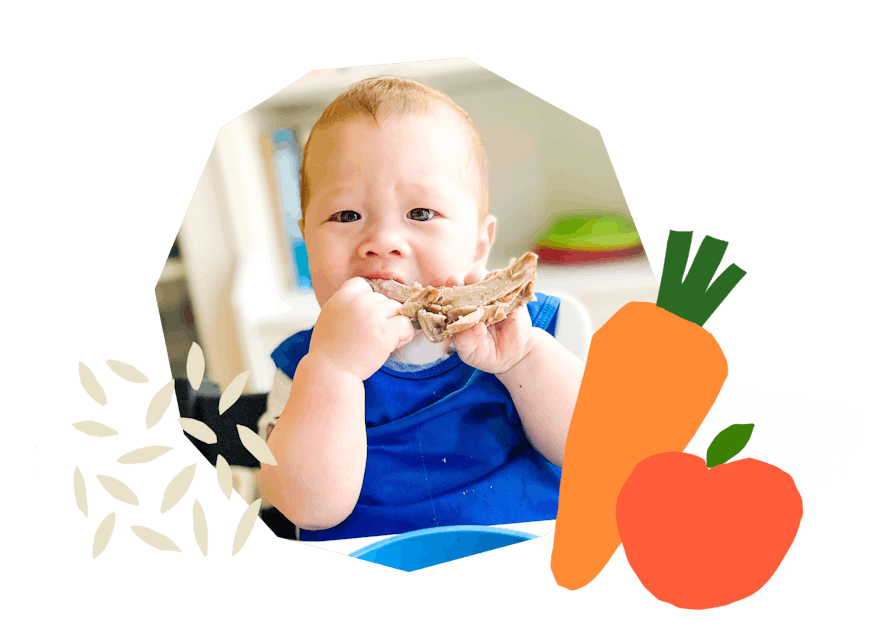
The Program Baby-Led Weaning with Katie Ferraro
A step-by-step digital program for starting solid foods safely and navigating the original 100 FIRST FOODS™ meal plan with baby-led weaning.
 EXPERT-LED, PROVEN APPROACH TO EATING REAL FOOD
 CONCISE VIDEO TRAININGS TO MASTER BABY-LED WEANING
 100 FIRST FOODS DAILY MEAL PLAN WITH FOOD PREP VIDEOS
Baby-Led Weaning for Beginners Free Workshop
Is your baby ready to start solid foods, but you’re not sure where to start? Get ready to give your baby a solid foundation to a lifetime of loving real food…even if you’re feeling overwhelmed or confused about this next stage of infant feeding.
Get baby-led weaning recipes and tips delivered to your email inbox.