
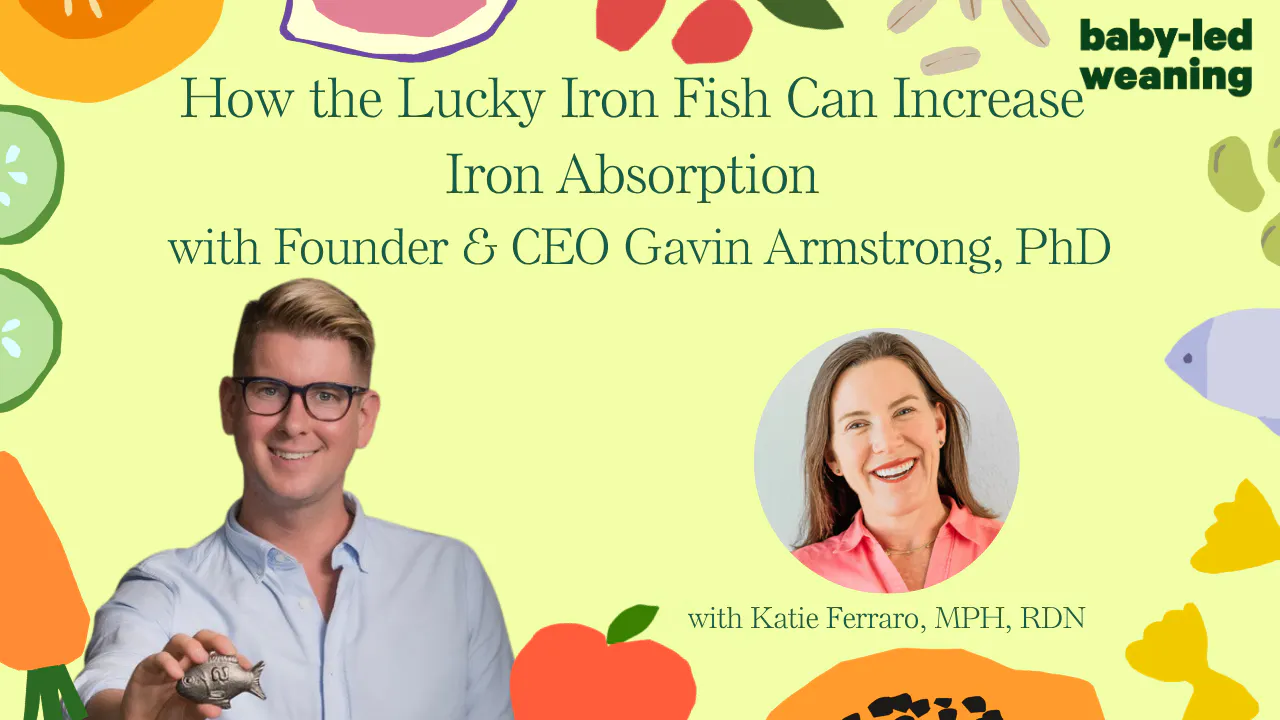
How the Lucky Iron Fish Can Increase Iron Absorption with Founder & CEO Gavin Armstrong, PhD
- How the Lucky Iron Fish works in everyday cooking to help increase iron in the foods your baby is already eating
- Why iron matters so much when your baby is starting solid foods, and what simple strategies can help support iron intake and absorption
- What Gavin Armstrong, PhD learned from developing the Lucky Iron Fish and how that idea grew into a tool used by families around the world
LISTEN TO THIS EPISODE
Episode Description
Iron is one of the nutrients parents worry about most when starting solid foods, and this episode introduces a surprisingly simple tool that may help. I’m joined by Gavin Armstrong, PhD, founder of Lucky Iron Fish, to talk about how this iron cooking tool works, how families use it in real life, and what parents should know about safety and iron intake for babies.
About the Guest
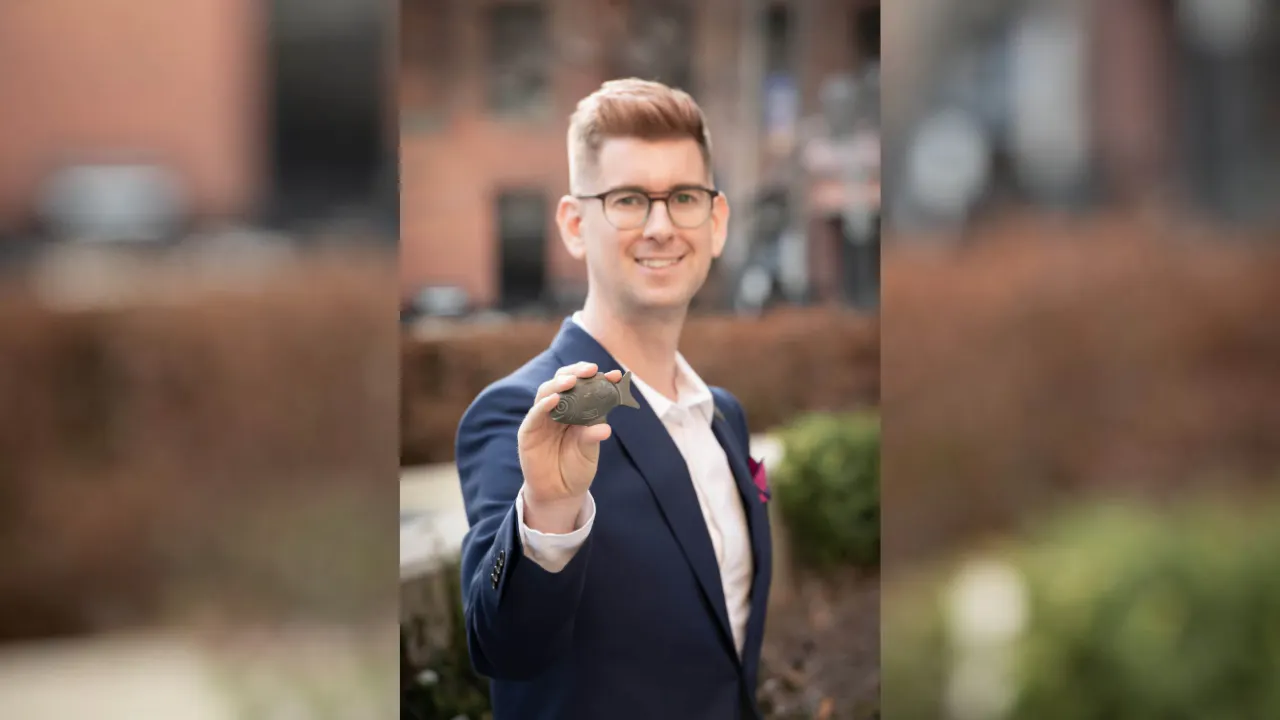
- Gavin Armstrong is the founder and president of Lucky Iron Fish Enterprise– Canadian social enterprise.
- First Canadian to receive the William J Clinton Award for international work against hunger
- Bachelor of Commerce and PhD in Biomedical Science from the University of Guelph
Links from this Episode
- Learn more about Founder & CEO Gavin Armstrong on his Webpage and Linkedin here
- Additional information about the clinical research related to the Lucky Iron Fish is here
- Follow Lucky Iron Fish on IG, Twitter
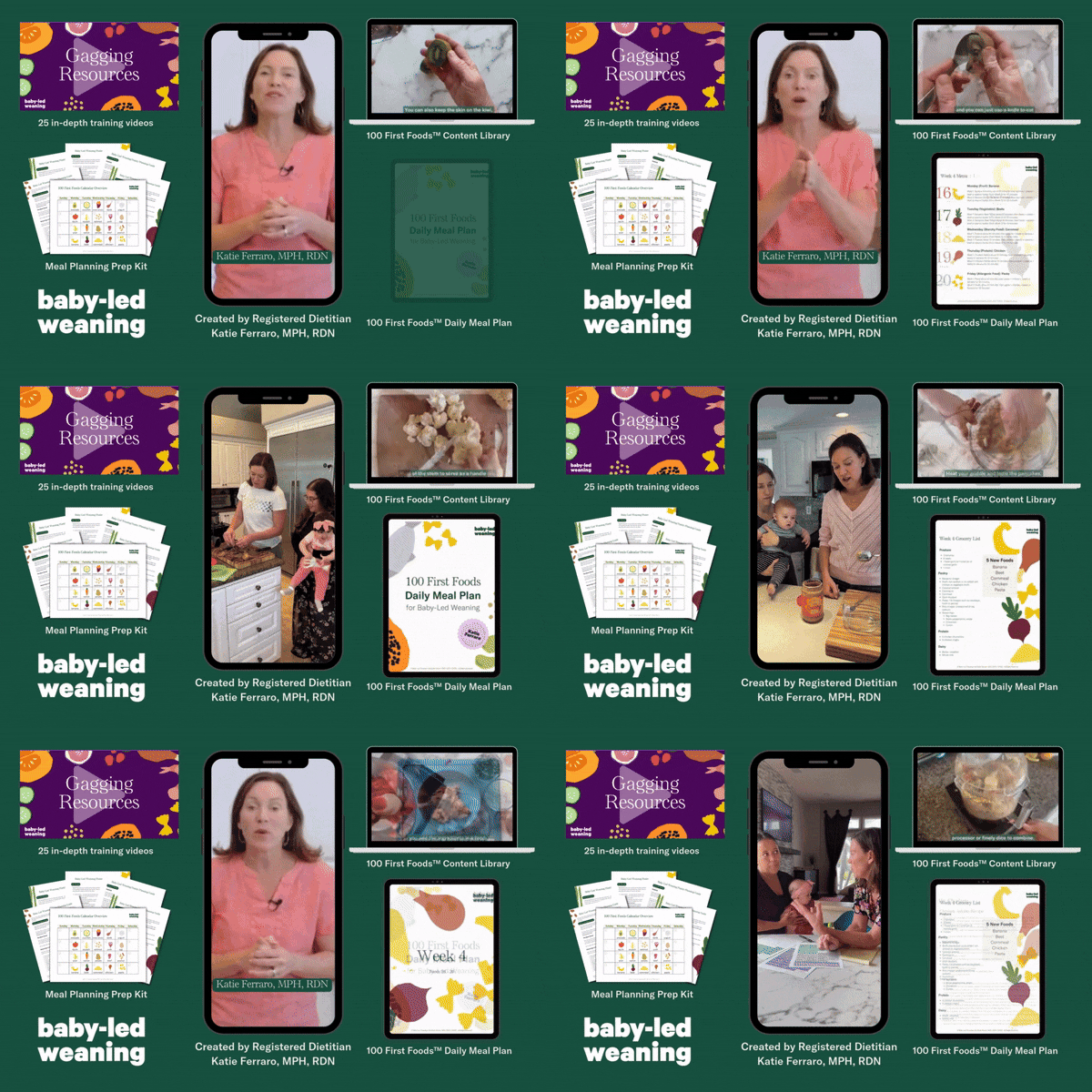
- Baby-Led Weaning with Katie Ferraro program with the 100 First Foods™ Daily Meal Plan, join here: https://babyledweaning.co/program and save $50 when you sign up using the code BLWPOD50
JOIN NOW AT $50 OFF CODE: BLWPOD50
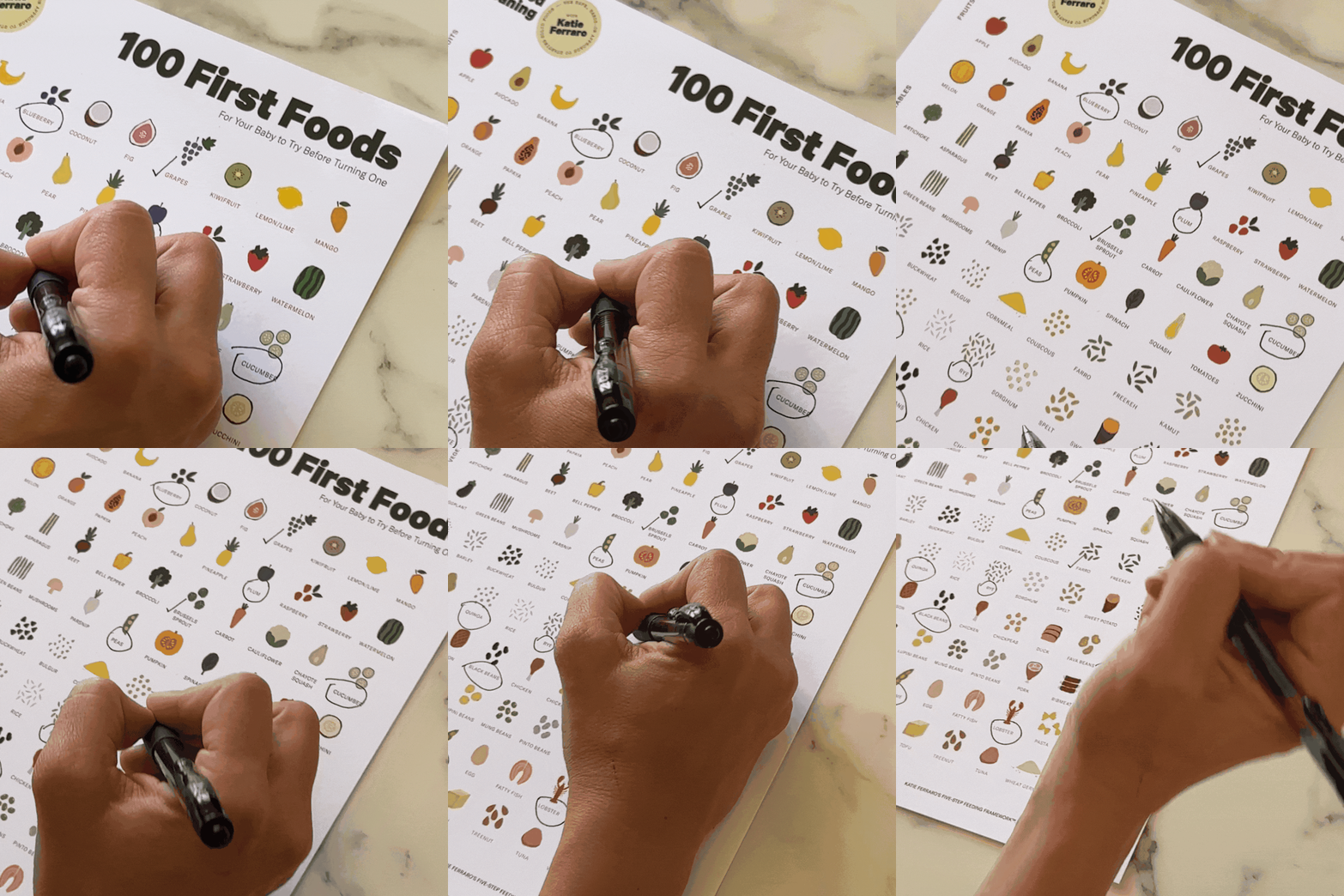
- Baby-Led Weaning for Beginners free online workshop with 100 First Foods™ list to all attendees, register here: https://babyledweaning.co/baby-led-weaning-for-beginners
Resources & Research
- Armstrong, G. R., Dewey, C. E., & Summerlee, A. J. (2017). Iron release from the Lucky Iron Fish:safety considerations. Asia Pacific Journal of Clinical Nutrition, 26(1), 148–155.https://doi.org/10.6133/apjcn.102015.14
- Charles, C. V., Dewey, C. E., Daniell, W. E., & Summerlee, A. J. S. (2011). Iron-deficiency anemia in rural Cambodia: community trial of a novel iron supplementation technique. European Journal of Public Health, 21(1), 43–48. https://doi.org/10.1093/eurpub/ckp237
- Charles C.V., Dewey C.E., Hall A, Hak C, Channary S, et al. (2015) A Randomized Control Trial Using a Fish-Shaped Iron Ingot for the Amelioration of Iron Deficiency Anemia in Rural Cambodian Women. Trop Med Surg 3: 195. doi:10.4172/2329-9088.1000195 https://www.semanticscholar.org/paper/A-Randomized-Control-Trial-Using-a-Fish-Shaped-Iron-Charles-Dewey/d1ed2db799228f6db330e0b56c413ea99a63b873
- Christopher, C.V., Alastair J. S., S., & Cate E., D. (2011). Iron content of Cambodian foods when prepared in cooking pots containing an iron ingot. Tropical Medicine & International Health, 16(12), 1518–1524. https://doi.org/10.1111/j.1365-3156.2011.02878.x
- Gavin R Armstrong and Alastair JS Summerlee (2014) The Etiology, Treatment and Effective Prevention of Iron Deficiency and Iron Deficiency Anemia in Women and Young Children Worldwide: A Review. J Women’s Health Care 4: 213. doi: 10.4172/2167-0420.1000213 https://www.longdom.org/open-access/the-etiology-treatment-and-effective-prevention-of-iron-deficiency-and-iron-deficiency-anemia-in-women-2167-0420.1000213.pdf
- NCHADS - Ministry of Health of Cambodia, & University of Guelph. (n.d.). Lucky Iron Fish Home Fortification of Iron. https://ichgcp.net/clinical-trials-registry/NCT02341586
- Rappaport, A. I., Whitfield, K. C., Chapman, G. E., Yada, R. Y., Kheang, K. M., Louise, J., Summerlee, A.J., Armstrong, G. R., & Green, T. J. (2017). Randomized controlled trial assessing the efficacy of a reusable fish-shaped iron ingot to increase hemoglobin concentration in anemic, rural Cambodian women. The American Journal of Clinical Nutrition, 106(2), 667–674. https://doi.org/10.3945/ajcn.117.152785
- Rodriguez-Ramiro, I., Perfecto, A., & Fairweather-Tait, S. J. (2017). Dietary Factors Modulate Iron Uptake in Caco-2 Cells from an Iron Ingot Used as a Home Fortificant to Prevent Iron Deficiency. Nutrients, 9(9), 1005.https://doi.org/10.3390/nu9091005

Latest Episodes


Starbucks (0s):
Protein is now at Starbucks and it's never tasted so good. You can add protein cold foam to your favorite drink or try one of our new protein lattes or matcha. Try it today at Starbucks
Lucky Iron Fish (15s):
When you boil the Lucky Iron Fish for 10 minutes with just any kind of acidity, iron comes off the surface of the product and then is absorbed into the liquid. Every time you boil the fish, you're getting a little dose of iron. About six to eight milligrams.
Katie Ferraro (30s):
Hey there, I'm Katie Ferraro, registered dietitian, college nutrition professor and mom of seven specializing in baby-led weaning. Here on the baby-led weaning with Katie Ferraro podcast. I help you strip out all of the noise and nonsense about feeding, giving you the confidence and knowledge You need to give your baby a safe start to solid foods using baby led weaning. Is iron something that you're worried about? I know when my own babies were starting solid foods, I was so stressed about iron 'cause I was worried, gosh, we're starting to drink less breast milk in formula and they're starting to eat more food but we're not doing white rice fortified cereal.
Katie Ferraro (1m 14s):
So are they getting enough iron from the foods that I'm offering? And I know parents stress about iron and for good reason because the iron that your baby got at the tail end of pregnancy, it starts to decline a little bit around the six month mark, which is when we start solid foods. So today we're gonna be talking about iron and I'm going to be interviewing a really interesting guy. His name is Gavin Armstrong. He's the Founder and CEO of Lucky Iron Fish. So Lucky Iron Fish is a really interesting product. It's an iron ingot, that's an interesting word. You use it in your kitchen while cooking to add iron to the liquid portion of a meal.
Katie Ferraro (1m 54s):
So we know that iron is important as a nutrient in early infancy. I love this idea of the Lucky Iron Fish. I actually heard about Lucky Iron Fish like way back in the day when I was studying public health nutrition because there's a lot of like really cool research studies that Gavin's gonna talk about that they've done in different communities for helping to increase iron absorption. So I actually recorded this interview a while back but I wanted to bring it back because the message is still incredibly relevant. So whether you're at that stage where your baby is getting all their iron from breast spoken formula and you're about to start solid foods or you've already made that transition and you're worrying like ugh, at my next doctor's appointment, if they do that heel stick or the finger stick is my baby's hemoglobin gonna be okay?
Katie Ferraro (2m 39s):
I want you just to have another little thing in your toolkit that you can think about as far as the lucky iron fish goes. So if you're feeling the pressure that parents get like Oh my gosh, I gotta do everything and now I have to make sure my baby gets enough iron too, I want you to take a deep breath, okay, you do not need to do this perfectly okay, but I know that you do need practical information that's gonna help you feel more confident about offering your baby real food and that's something but Gavin and I both believe strongly in. So with no further ado, here's my interview with Gavin Armstrong PhD on how the lucky iron fish can increase iron absorption for your baby and in your family.
Gavin Armstrong PhD (3m 22s):
Thanks for having me.
Katie Ferraro (3m 23s):
Alright, can you tell us a little bit about yourself and then how the idea of the lucky Iron fish began and maybe back us up and even tell us what the Lucky Iron Fish is 'cause I'm sure that's new to many of our listeners. Sure.
Gavin Armstrong PhD (3m 33s):
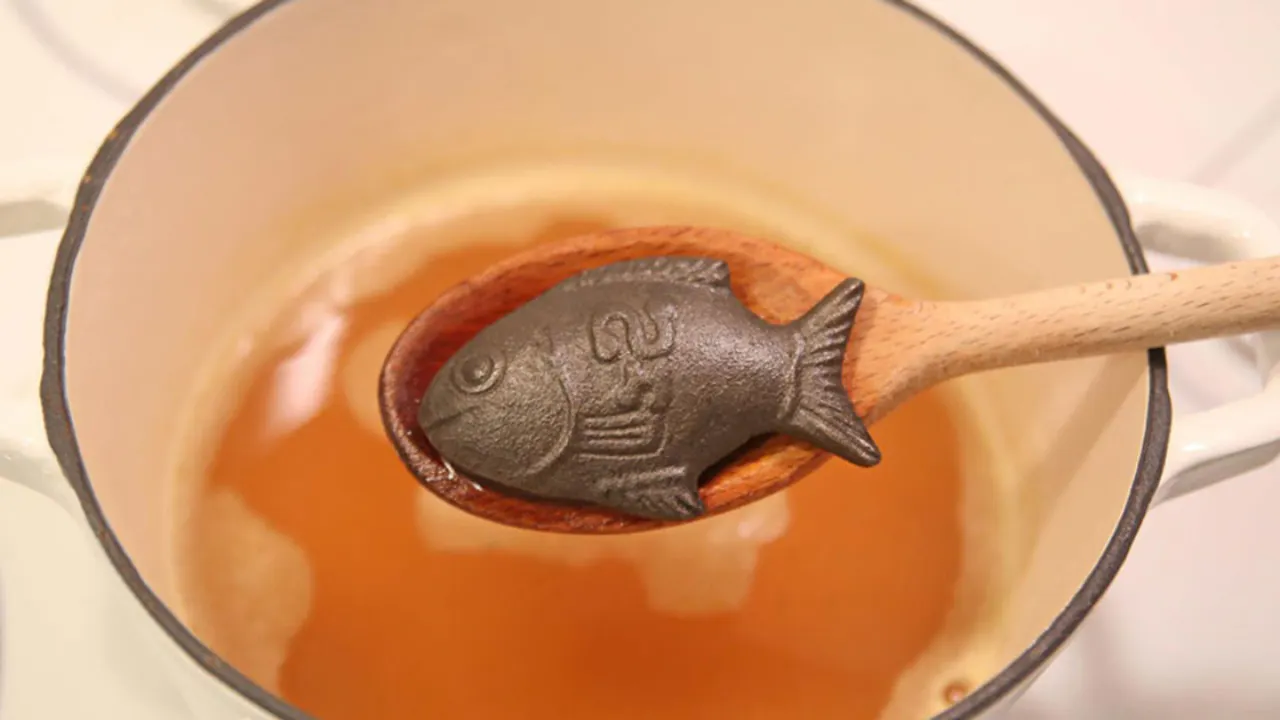
So the Lucky Iron Fish is a simple solution for iron deficiency, which is the world's largest nutritional challenge, negatively impacting over 2 billion people around the planet. So almost a third of the world's population is suffering from this preventable condition. And the Lucky Iron Fish is a cooking tool that adds natural and healthy iron into your meals. I got involved in university, I did my PhD on this concept and I met with an another student named Chris Charles who was doing research in Cambodia and was looking at ways of fortifying food with iron, with cast iron and had developed what was called the Happy fish. And he did this because he found that If you were, If you could add a block of iron to food and it would fortify that with the iron, but women in Cambodia thought it looked like a piece of garbage that he picked off the side of the road and and no one wanted to cook with it.
Gavin Armstrong PhD (4m 22s):
But in Cambodian culture a fish is seen as a symbol of luck and so we shaped that block of iron like a fish. Women wanted to use it and because they thought it would bring luck to their household and then when they felt healthier they would say it was the luck of the fish that did that. And I got involved and did my PhD on the concept as well, further innovated it and commercialized it and now we have this incredible social enterprise that's operating around the world. So
Katie Ferraro (4m 46s):
How long has your company or business Lucky Iron Fish been in operation for?
Gavin Armstrong PhD (4m 51s):
So I founded Lucky Iron Fish in 2012.
Katie Ferraro (4m 53s):
Alright, So could you tell us a little bit about iron transfer from an iron product like lucky iron fish? Like how much iron or does it actually transfer iron or does it cause increase of iron absorption from other foods? What's the mechanism by which your product helps with iron deficiency anemia?
Gavin Armstrong PhD (5m 9s):
So the lucky iron fish is made from a special kind of iron called electrolytic iron, which is actually a really tiny particle size fine powder that's been compressed into the shape of the fish. And When you boil the Lucky Iron Fish for 10 minutes with just any kind of acidity could be just a drop of lemon or lime or stalk or curry, something like that. The iron comes off the surface of the product and then is absorbed into the liquid. And so Every time you boil the fish, you're getting a little dose of iron. About six to eight milligrams of iron is absorbed and that's what you'll have per use because of the way it's designed. Lucky iron fish can be reused every day for up to five years.
Gavin Armstrong PhD (5m 49s):
So it's a one-time purchase for half a decade's worth of iron.
Katie Ferraro (5m 52s):
Then how exactly do you use it? Like could you gimme examples of like, let's say there's a mom who is concerned about iron, she knows that you know babies, iron stores, they got from mom at the tail end of pregnancy starting to dissipate around six months of age. How would they actually like use this in a household kitchen?
Gavin Armstrong PhD (6m 7s):
So if you're any kind of liquid-based meal, so soup curry, you can just throw the fish in for 10 minutes. You can also make iron water. So just boil a pot of water with a little lemon and put it in the fridge. You can use that water in juice, you can make ice cubes with it, you can use that water with grains as well like rice or couscous quinoa. So it's really simple just throwing it in for 10 minutes and any kind of liquid based meal or just water and that would be the simplest way of getting it.
Katie Ferraro (6m 31s):
So one thing I know that's so hard about you know, iron metabolism, iron absorption is there's so many factors that can both inhibit and promote iron absorption in the body. So when we looked at the research about lucky iron fish and you know people say does it work okay, how do you estimate exactly the quantitative effect of this? Can you guys say that it increases iron absorption by x percent or transfers Y milligrams of iron? How do you know since there's so many variables in iron metabolism?
Gavin Armstrong PhD (6m 58s):
Yeah, so we've done multiple clinical trials ourselves and we've worked with independent academic institutions who have done their own research evaluating the efficacy of the lucky iron fish. And in each of the trials we had a group that did not use an intervention. We had a group that used the lucky iron fish And we had a group that used iron supplement pills. And what we saw in all of the studies, except for one, was that using the lucky iron fish was just as effective as the iron supplement pills in improving iron status and reducing anemia. But we had a compliance rate of between 80 and 90% where the supplement groups had compliance rates of around 30 to 40%. And that's because the lucky iron fish does not cause those negative side effects that the supplements can cause.
Gavin Armstrong PhD (7m 43s):
And so it's not only an affordable solution, a sustainable solution, but it has that appeal from not having those side effects. And I mentioned one study where it didn't work and the population in a province in Cambodia and Craver here were actually suffering from thalassemia, not just iron deficiency anemia, which is a hemoglobin apathy. And so we never would've thought that the lucky iron fish would've worked for someone with thalassemia. And so what that study demonstrated was it did not improve the iron status nor did the iron supplement pills, but it also didn't cause any toxicity and So it didn't have an adverse effect which was important to find out at the end as well.
Katie Ferraro (8m 18s):
I think a lot of people who've used traditional iron supplements are well aware of some of the side effects, constipation being one. Another one is that it can turn the stool very black, which can just be off putting If you use the lucky iron fish. And let's say I love your idea of making ice cubes out of it. Do you experience constipation or changes in stool color from the byproduct of the lucky iron fish?
Gavin Armstrong PhD (8m 36s):
Because the lucky iron fish is releasing a small and gentle amount of iron, you don't get those negative side effects. So it's just six to eight milligrams of iron. Iron supplements can have upwards of, you know, 30, 40, a hundred milligrams of iron depending on the absorbability. So what that means is the fish is gonna be more gentle and and not have those negative impacts. It will take a little longer to have an impact on your health though we see improvements between three and six months of regular use. Whereas with an iron supplement pill you may see those results a bit quicker.
Katie Ferraro (9m 5s):
So Gavin, what are some of your favorite recipes to make that you use the iron fish for?
Gavin Armstrong PhD (9m 9s):
So I spent years living in Cambodia doing the research for this and So I love making curries and I'll throw it in every time I'm, I'm making something like that, like a fish, a mo or a green curry, red curry, I, I always plop it in for the final 10 minutes.
Katie Ferraro (9m 21s):
I like to use it a lot for soups. So I know you have some recipes on your website. One of the ones I made a lot is that there's a carrot ginger soup and a lot of parents don't recognize, you know, babies can eat soup. Like we're teaching babies at six months of age how to start using a spoon. We do a preloaded spoon in baby led weaning. When you make soups traditionally they would be quite high in sodium but you can use low sodium broth or Gavin's idea, you know you can just use the lucky iron fish water in place of the high sodium broth. Not only are you avoiding the sodium, which is great for babies, but then you're also being able to introduce them to more iron, which of course we know is important. Can we talk a little bit about vitamin C? So we know that vitamin C helps human bodies absorb iron more readily. Do you have to have a vitamin C compound in the recipe that you're making in order to enhance the body's absorption from the lucky iron fish byproduct?
Gavin Armstrong PhD (10m 7s):
So you do need some type of acidity 'cause you do need to alter the pH of the liquid, which will help the iron come off the surface. But it will also help the iron be absorbed in the stomach. And we know that vitamin C is very effective at helping with the absorbability. So that's why If you do, I mean citrus is great or tomato, we have a study that was done in India that made dull, which had the appropriate amount of pH change. And So it does need that to help the iron come off the surface. And it has that added benefit of also helping it be absorbed by the stomach. Does
Katie Ferraro (10m 37s):
Adding the lucky iron fish to foods change the taste of the foods?
Gavin Armstrong PhD (10m 41s):
So If you use the product properly, which is just 10 minutes in one liter of water with a tiny bit of acidity, like a few drops of lemon, most people do not taste any kind of change in what they're boiling. And one of my chapters in my thesis was actually how could you misuse the product? So what happens If you did 10 fish for an hour kind of thing or what happens If you use half a liter or five liters? And what we saw was it didn't release a dangerous amount of iron, but you do start to see the water or liquid become altered. So it starts to get a metallic smell, it can change color. And so we do encourage people just to use a tiny amount of acidity just for 10 minutes. It's still a safe to consume, but I understand that you don't want to have that unpleasant taste or smell.
Gavin Armstrong PhD (11m 22s):
But also if you're cooking something like a soup or a curry, that will also mask that taste as well. It's more when you're having just drinking water where you might taste the difference.
Katie Ferraro (11m 31s):
I can imagine that chapter about ways you could possibly misuse. It was probably fun to put together. Let's think of all the ways people could possibly misuse this. I'm curious about people with hemochromatosis or iron overload disease that this could be potentially problematic for them. Is that a concern?
Gavin Armstrong PhD (11m 45s):
Yeah, we definitely don't recommend anyone who has hemochromatosis to use this product and If you do have hemochromatosis, you wouldn't want to be adding a lucky iron fish into your meal just like you wouldn't be taking iron supplements. And we do have that warning on our website and on the packaging.
Katie Ferraro (11m 59s):
I'm always interested in what's the most appropriate way to clean the lucky iron fish. What do you suggest?
Gavin Armstrong PhD (12m 3s):
Just soap and water after it's cooled, obviously you don't wanna burn your hands, it's, it's really easy to maintain. You do wanna make sure it's very dry after you clean it because you can get some discoloration or rust if there is any rust on the product. Just using, I use a lemon actually to help get it off or you can use like a, a pot scrubber. It's not gonna be dangerous, but I appreciate you don't want to have a rusty fish. We also sell a protection oil, which is used to help prevent the product from rusting and helps keep it clean.
Fandango (12m 30s):
Hey, we're gonna take a quick break but I'll be right back. This episode is brought to you by Fandango. People say fans are too distracted these days, but the truth is when a great movie hits the screen, you show up, you stay glued, invested part of the story and without fans like you, there'd be no cinema magic, no shared moments. So head to fandango.com to get tickets stream or rent or buy top movies and series Fandango loves fans.
Katie Ferraro (13m 8s):
Okay, let's talk a little bit about cooking for babies. Is the lucky iron fish safe to use for babies or what are the parameters that you guys recommend around use of like in infancy?
Gavin Armstrong PhD (13m 19s):
So iron supplementation is not recommended for infant six months or or younger. So we recommend at least seven months of age before you would start using this product or upwards of a of a year. You should speak to your, your healthcare professional if you're gonna start to add any type of iron into, into the diet.
Katie Ferraro (13m 36s):
How about cast iron skillets? I think it's like confusing to a lot of pars or if they're new to cooking and a lot of our audiences like all right, I have to finally start preparing helpful foods. I'm learning all these things about nutrition. If you cook with a cast iron skillet and the lucky iron fish, does it like double or triple iron availability? Does it work like that?
Gavin Armstrong PhD (13m 52s):
So the concept of the lucky iron fish did come from the thought process behind cast iron pans because they can release some iron in into the food. A challenge with cast iron pans is that different temperatures can release different amounts of iron So it can be inconsistent so you might not get enough to make a clinical impact to change your iron status. And also depending what you're cooking with different oils and things, it can actually create a shield on the surface that's gonna also prevent iron from leaching off. So you can use cast iron skillets to get some iron. I use one but it might not be enough to, to actually make an impact on iron deficiency. So If you were to use the lucky iron fish with a cast iron skillet, you're just topping up the iron so you're, you know, you'd be getting between six to eight milligrams on top of whatever else that you were consuming.
Katie Ferraro (14m 37s):
So I noticed on your website, in addition to a lucky iron fish, which I've had for years, I see you have a lucky iron leaf. What's the story behind that?
Gavin Armstrong PhD (14m 44s):
So I, I mentioned that we used a symbol of a fish in Cambodia because it was seen as a symbol of luck and as we started to grow and work in other countries, the symbol of a fish still worked. It still had a lot of prominence in different cultures and religions and it just makes sense. You put a fish in your pot, you people eat fish. But when we scaled into India with such an incredible large vegetarian population, women were hesitant to use the fish. Now it's not actually, you know, a real fish, it's vegan certified, but just the name Lucky Iron Fish instantly turned off vegetarian women. So we did the same approach And we developed the lucky Shakti Leaf, which is just the leaf shape of the same product And we started selling that internationally 'cause we had different customers, mainly vegans who like that story a bit more and wanted to purchase that for themselves.
Katie Ferraro (15m 29s):
So as I understand it, your company Lucky Iron Fish, not only are you selling this product, but then you're also engaged in a number of different endeavors for a social impact standpoint. Could you share a little bit about how you're giving back to the communities in which you work and which your partners work?
Gavin Armstrong PhD (15m 43s):
Yeah, so the Lucky Iron Fish is sold direct to consumers online through our website, lucky iron fish.com or some other sites like Amazon. And we take a portion of each of those sales And we put it towards donating units for free to families in need around the world. And that's gone to clinics in Rwanda and Tanzania, Indonesia emergency response efforts, but also food banks in Canada and the US indigenous health centers in Northern Ontario. And we understand that iron deficiency is a global problem and it also exists in our backyard as well. And so with our impact fund, which is the funds we use from each sale we put towards donating units for free,
Katie Ferraro (16m 22s):
I think I read that you guys are available in somewhat like 88 different countries. And then just looking at the list of partners, I see Peace Corps on there. I'm a former Return Peace Corps volunteer. I was a Peace Corps volunteer in Nepal working in reproductive health. And that's where I actually first learned about using iron devices such as yours for supplementation. A lot of the research kind of carried over from Cambodia, which was in the same geographical region. What are some of the other partners that you guys work with on a global scale?
Gavin Armstrong PhD (16m 48s):
Yeah, so we also sell the Lucky Iron Fish to NGOs in large volumes. And so we work with groups like World Vision Care International Catholic Relief Services, global Medic to help get large volumes of the lucky iron fish out to vulnerable populations around the world. So we've got programs in Peru, Tanzania, Benin, Senegal, we're looking to scale up in Indonesia and India. So we're definitely quite a global, have a global presence to help combat this massive complex challenge.
Katie Ferraro (17m 17s):
And I think it's so important and I love that you're reiterating just this magnitude and the scale of iron deficiency. So often parents are like my audience, very, very honed in on six to 12 months in iron and iron deficiency. But what we forget is that in toddlerhood and childhood iron deficiency still remains the largest micronutrient deficiency worldwide. So this is something that's important for your children, even beyond infancy, do adult communities use this as well or is it pretty much just tailored to families who are impacting kids and And infants?
Gavin Armstrong PhD (17m 47s):
Yeah, I mean in terms of children, the first first thousand days are really critical for development and especially cognitive development. And so there's been studies that have shown that if you're iron deficient you'll have reduced cognitive development in children, which is, you know, something serious that will have an impact for the rest of that child's life. And so we definitely work with communities where there are children who are suffering from iron deficiency, but you need iron throughout your life. It is mainly women and children who suffer from iron deficiency, especially those who are low income. So the programs we do, whether that's here in in North America or working abroad with our NGO partners are mainly targeted towards women and children.
Katie Ferraro (18m 23s):
Anything else that we didn't cover that you do wanna talk about?
Gavin Armstrong PhD (18m 26s):
I mean, I could say that we have a really dedicated customer service team that gets questions, all sorts of different questions from moms about how to cook and care for the lucky iron fish. And so we absolutely love to engage with our customers and and hear from them and also understand what challenges they might have so we can change our communication strategy. We do have a cookbook as well that we've put on our website and it not only has great recipes that you can use the Lucky Iron Fish with, but we've had some of our NGO partners submit recipes from communities where we work. So we actually have recipes from Peru, from Haiti, from Tanzania, from Benin to sort of reflect the global elements of our work, which is really cool that you get to cook something just the same way a mother, you know, across the world is using too.
Katie Ferraro (19m 10s):
And that's So important to our community as well, just really trying to share that babies can have so many more foods And we oftentimes give them credit for the recipes on your website are amazing, almost all of which can be adapted to be made safe for babies. And I'll link to all of the resources that Gavin's mentioning in the show notes for this episode. If you go to blwpodcast.com/104, we'll link to their website how you can purchase it, the recipes. Where else can our audience go to learn more about your product or where's the best place for them to go? Gavin,
Gavin Armstrong PhD (19m 42s):
I mean, lucky iron fish.com is our our site. We keep all of our resources there. We really strive for transparency and so we have all of our clinical trials posted on the site. You can learn more about Iron. We have an Iron 101 page and you can also follow us on social media, on Facebook, Twitter, and Instagram at Lucky Iron Fish. We do lots of Q and As and Instagram lives And we really like to continue to engage with our customers.
Katie Ferraro (20m 7s):
Well thank you so much for sharing about The Lucky Iron Fish. I think it's such a new and unique concept to a lot of parents, but you guys are not only doing a world of good for families on an individual level, but also for communities around the world. So thank you again for being here.
Gavin Armstrong PhD (20m 20s):
So thank you so much for having me.
Katie Ferraro (20m 22s):
Well I hope you guys enjoyed that interview with Gavin from Lucky Iron Fish. Check out their product. It's kind of a cool, like it's a gift that I buy sometimes to give to friends and moms who are stressing out about iron. I'll put the links to his product and they have some other cool things on their website these days on the show notes, which you can find@blwpodcast.com/104. We talked a bit about the different ways that you can help increase iron absorption and I just wanna remember, I don't, I don't wanna stress you out, I just like iron to be top of mind, but I don't want you to stress out about it. Including iron foods in the weaning diet is important. If you have my copy of the hundred Baby-Led Weaning.
Katie Ferraro (21m 6s):
It's a one hour online video workshop. It's the best place to start learning about starting solid foods with baby led weaning. If you head to baby led weaning.co/workshop, you can get signed up and everybody on that free training gets a copy of my original 100 First Foods list. If you already have the list, it's on your fridge, you're working through the foods If you need help, a literal play by play breakdown of exactly how to make every food on that list safe, 20 weeks of done for you meal plans, exactly what food to feed on, what day, and how to make it safe all in one place. Then check out My program Baby-led weaning with Katie Ferraro. That's at baby led weaning.co/program.
Katie Ferraro (21m 47s):
I have a $50 off discount code for podcast listeners. If you peek at wherever you're listening to or watching this video, you can grab that discount code and get started today. I've been talking to lots of parents inside of the program lately, just trying to learn like how to use the program and what can I do to make it better. 'cause I personally have made all 300 of the recipes in that program and I'm always tweaking and working to make the recipes better and the program better. And so many of the parents are coming off of the podcast. A lot of parents who are like, I don't do social media and I feel you, I have to do social media 'cause there's a lot of moms there too. I wish I didn't it, but for those of you that are here on the podcast, I love that you're still coming off the podcast. I am a podcast listener. I've always got my Earpods in when I'm doing my dishes and my late night laundry and all the multitasking that moms have to do.
Katie Ferraro (22m 33s):
So I love those of you that are here listening on the podcast as well. Use that $50 discount code to get started in the program. Thanks so much for listening. Show notes are@blwpodcast.com. Oh and special thank you to our partners at Airwave Media. If you guys like podcasts that feature food and science and using your brain, check out some of the podcast from Airwave Media. We're online, this episode's at blw podcast.com/104. Thanks so much for listening. I'll see you next time.
Mindful Mama Podcast (23m 4s):
What do you do when your toddler melts down or your teen shuts down? I want to introduce you to the Mindful Mama Podcast. I'm Hunter Clark Fields' author of Raising Good Humans and your host. For the past 10 years, I used to be a yelling overwhelmed mom until I found mindfulness and practical parenting tools that changed everything. Each week I bring you honest conversations and expert advice to help you regulate your emotions, manage your kids' behavior with compassion, and break the cycle of reactive parenting. Whether you're raising toddlers or teens, you'll find real strategies for conscious parenting. Screen time, A DHD and more. Listen to the Mindful Mama Podcast wherever you get your podcasts because you can raise kind, confident kids without losing your cool.
The Program Baby-Led Weaning with Katie Ferraro
A step-by-step digital program for starting solid foods safely and navigating the original 100 FIRST FOODS™ meal plan with baby-led weaning.
 EXPERT-LED, PROVEN APPROACH TO EATING REAL FOOD
 CONCISE VIDEO TRAININGS TO MASTER BABY-LED WEANING
 100 FIRST FOODS DAILY MEAL PLAN WITH FOOD PREP VIDEOS
Baby-Led Weaning for Beginners Free Workshop
Is your baby ready to start solid foods, but you’re not sure where to start? Get ready to give your baby a solid foundation to a lifetime of loving real food…even if you’re feeling overwhelmed or confused about this next stage of infant feeding.
Get baby-led weaning recipes and tips delivered to your email inbox.