
Podcast
#123: HELP! My Baby has a Contact Rash from a New Food with Ron Sunog, MD
In this episode
- Why a rash around your baby’s mouth after eating is often not a food allergy…and how to tell the difference between a contact rash and a true allergic reaction
- What to do if your baby gets redness, bumps, or irritation around their mouth after trying a new food
- How drool, teething, and sensitive skin can make food-related rashes look scary…even when they are usually not dangerous
Episode Description
What should you do if your baby gets a rash around their mouth after trying a new food? Before you panic and assume it’s a food allergy, listen to this episode.
I’m joined by pediatrician Dr. Ron Sunog to explain the difference between a harmless contact rash and a true allergic reaction. You’ll learn why certain foods can irritate your baby’s sensitive skin, what signs actually matter, and when it’s safe to offer that food again.
If you’re just starting solid foods and feeling nervous about introducing new foods…especially the Top 9 allergenic foods, this episode will help you feel calmer, more confident, and prepared.
About the Guest
- Dr. Ron Sunog is a board-certified pediatrician with more than 30 years of experience caring for babies and families.
- He specializes in food allergy prevention and helping parents safely introduce allergenic foods early and often.
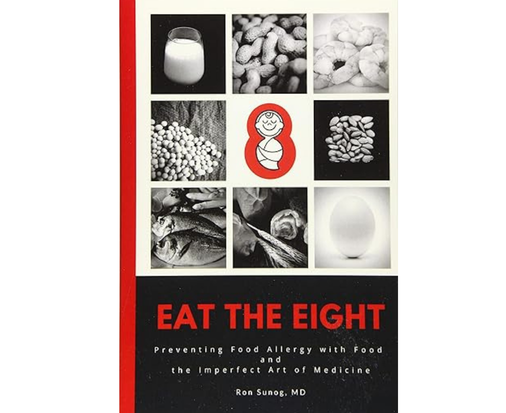
- Dr. Sunog is the author of Eat the Eight: Preventing Food Allergy with Food and the Imperfect Art of Medicine.

Links from this Episode
- Dr. Sunog’s book: Eat the Eight: Preventing Food Allergies with Food and the Imperfect Art of Medicine
- Sign up for Katie & Dr. Sunog’s free online workshop WHAT DO I DO IF MY BABY HAS AN ALLERGIC REACTION TO FOOD: How to Identify, Respond to and Manage Reactions to Foods in Babies Without Freaking Out or Becoming Fearful of Trying New Allergenic Foods. Everyone in the workshop gets a copy of our free Food Allergy Emergency Reaction Map....hang this one on your fridge and you’ll never have to wonder if you’re taking the right steps in the event your baby has a reaction to food. Click here to sign up.
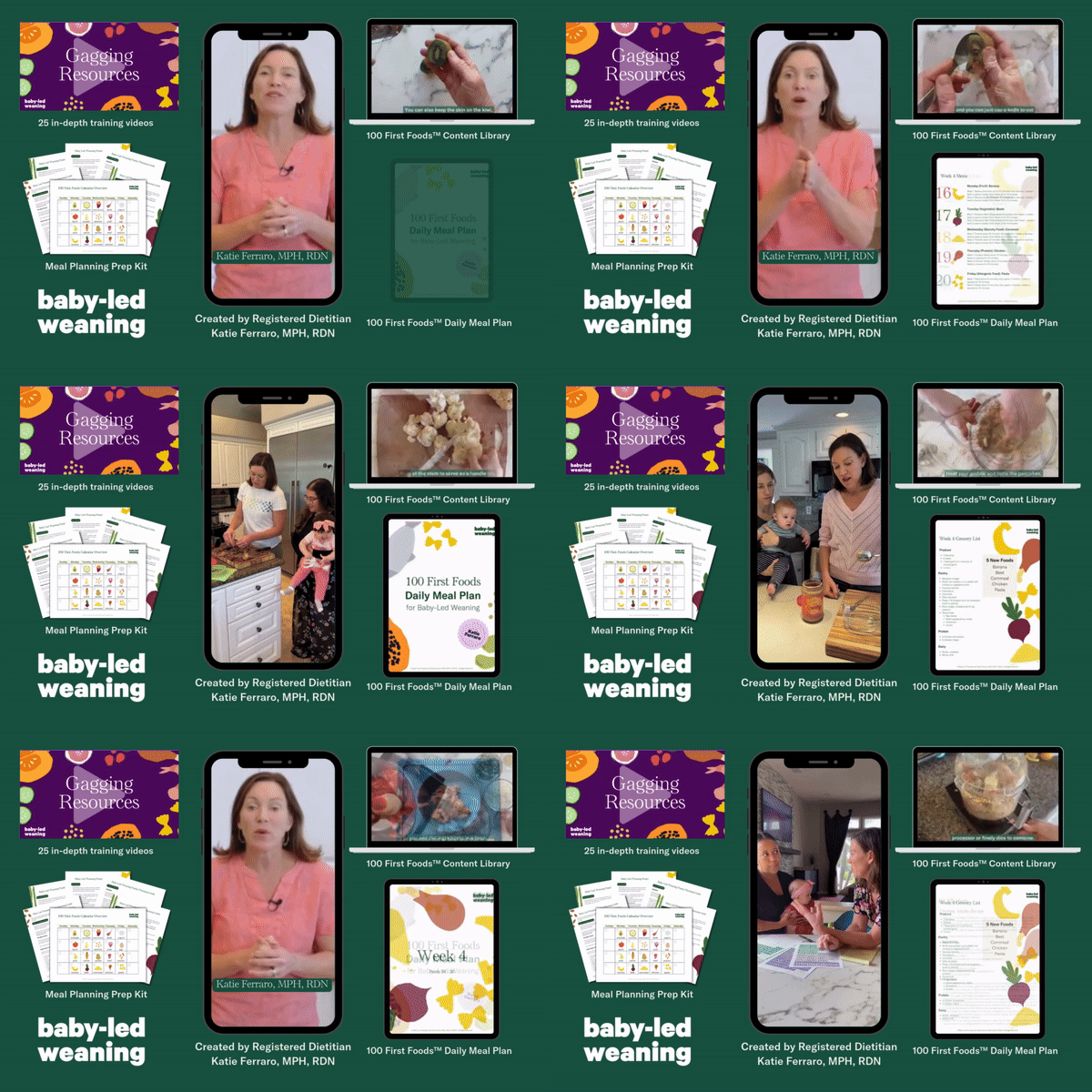
- Baby-Led Weaning with Katie Ferraro program with the 100 First Foods™ Daily Meal Plan, join here: https://babyledweaning.co/program and get $50 off when you sign up using the code BLWPOD50
JOIN NOW AT $50 OFF CODE: BLWPOD50
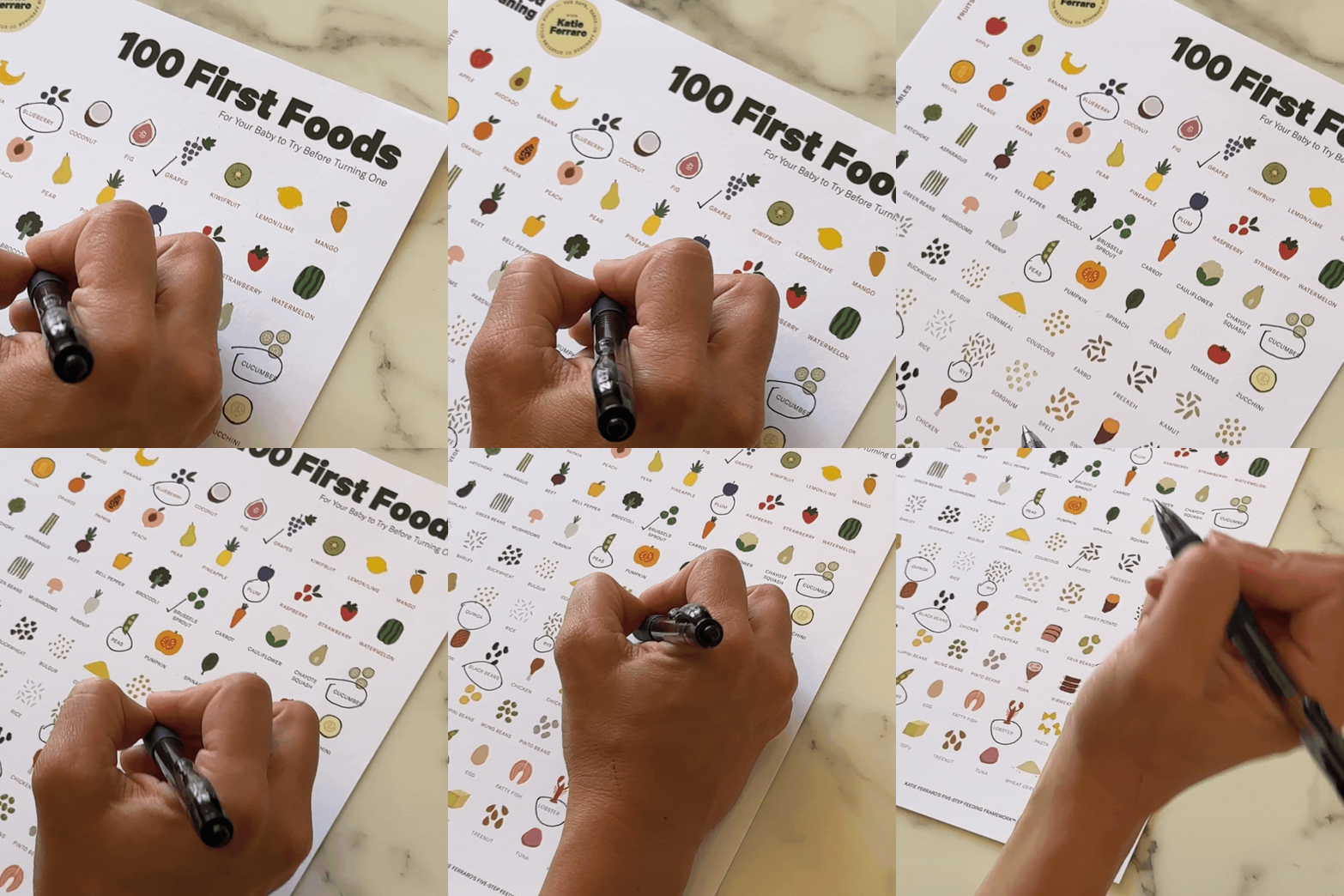
- Baby-Led Weaning for Beginners free online workshop with 100 First Foods™ list to all attendees, register here: https://babyledweaning.co/baby-led-weaning-for-beginners
Other Episodes Related to This Topic:
- Episode 11 - How to Introduce Allergenic Foods to Your Baby
- Episode 58 - What do I do if My Baby Has an Allergic Reaction? with Ron Sunog, MD
- Episode 274 - Baby Has Skin Reactions to Milk, Egg and Peanut: What Should I Do Next? with Carina Venter, PhD, RDN
Click here for episode transcript
Once Upon a Dance (0s):
This episode is sponsored by Once Upon A Dance. You know, I talk a lot here about helping your baby explore the world through food, but as your child gets older, there are so many other ways we can help them explore, imagine, and build confidence. And one of those ways is through movement. Now, I personally did not grow up doing dance myself. It wasn't a part of my childhood, but all three of my girls did dance. And I have to say it was such a formative experience for them. It wasn't just about learning steps or performing on stage. Dance helped them practice discipline, confidence, creativity, perseverance, and being part of something bigger than themselves. And that's why I love the idea behind Once Upon a Dance, these are interactive children's books that turn story time into movement time. So your child isn't just sitting and listening, they're twirling, leaping, imagining, and connecting with you through the story. Once Upon a Dance offers award-winning dance along stories created by a former dance teacher with her daughter Ballina Kay. As a gentle guide and positive role model, the stories celebrate friendship, family, self-acceptance, empathy, practice, perseverance and kindness, all through whimsical adventures featuring things kids love, like unicorns, bats, puppies, cats and more. So whether you're listening with the baby now or you also maybe have a toddler, a preschooler, or an older child at home who loves to move, this is such a sweet way to bring books, imagination and activity together, swap screen time for connection, get your kids off the couch and into a story. Jump twirl and leap on over to once upon a dance.com or find once upon a dance books wherever you buy books online. That's once upon a dance.com.
Whisker (1m 45s):
Today's episode is sponsored by Whisker makers of the Litter Robot, the self cleaning litter box for cat families who do not need one more gross chore on their list. Because You know how every stage of parenting comes with a whole new category of cleanup, right? First it's the pump parts and then the dirty diapers you're getting used to. And when you're starting solid foods, suddenly you're scraping sweet potato out of crevices of the highchair that you never knew existed, right? But for cat parents adding daily litter box duty on top of all of that, that is a lot. And honestly, it's the litter box part. The thing that always made me hesitate about cats, not the cat, the litter, the scooping, the smell, the whole daily maintenance situation. And that's why Litter Robot by a Whisker makes so much sense. It automatically cycles after every use. So you're not scooping every day and you're not handling waste like you would with a regular litter box. I especially love the No Contact Benefit Litter Robot handles the dirty work so that nobody in the house has to be assigned daily litter duty. And with the Whisker app, you can stay on top of things without thinking about litter all day. The app can notify you about your unit, like completed clean cycles, litter and drawer levels, or when the unit needs attention. So whether you already have a cat or you're thinking about getting one or you just want one less household chore to manage Whisker helps Take litter box duty off of your daily list, maintain your cat's litter while focusing on your family. Learn more about Whisker litter robot models and their starter kits today so that you can get set up for this busy season of parenting. Take an additional $50 off bundles with the code weaning when you shop Whisker.com/weaning. That's an additional $50 off bundles with code weaning at Whisker.com/weaning.
Ron Sunog, MD (3m 38s):
If a baby has atopic dermatitis, it's not caused by a food, it's something they're born with and makes them more susceptible to developing food allergy. One way to combat that susceptibility to developing food allergies, to actually give them the foods.
Katie Ferraro (3m 53s):
Hey there, I'm Katie Ferraro, registered dietitian, college nutrition professor and mom of seven specializing in baby led weaning. Here on the baby led weaning with Katie Ferraro podcast. I help you strip out all of the noise and nonsense about feeding, giving you the confidence and knowledge you need to give you baby a safe start to solid foods using baby led weaning. What if the rash around your baby's mouth after they try a new food is not a food allergy? This is one of the most panic inducing parts of starting solid foods. Your baby tries, let's say tomato sauce, strawberries, yogurt, peanut egg, or another new food. And then suddenly there's redness bumps or a rash around their mouth and your brain goes straight to Is this an allergic reaction?
Katie Ferraro (4m 41s):
Do I stop feeding this food? Do I need to call the doctor? Did I do something wrong? In today's episode, I'm joined by my good friend and pediatrician, Dr. Ron Sunog. He is gonna help us understand the difference between a contact rash and a true allergic reaction. He'll show you what to watch out for and then what to do next if your baby's skin does get irritated after eating. Dr. Sunog is one of my favorite people in the infant feeding world. He is a pediatrician. He's a particular interest in using food to help lower the risk of food allergy. Dr. Sunog is the author of a book called Eat the Eight, and he wrote that for doctors and for parents about how to interpret the latest data on the early introduction of allergenic foods to help lower the risk of food allergy.
Katie Ferraro (5m 23s):
One quick note before we jump in. This interview was recorded a while back when we commonly referred to the major allergenic foods as the Big eight. So hence the title of Dr. Sunna's book is called Eat the Eight. For that reason. Since then, sesame has been added to the list, so you'll hear me in other content referred to these as the top nine allergenic foods. And Those are now the nine and allergenic foods that account for about 90% of food allergy. So the terminology has changed, but the information and the research in this episode about contact rash, food allergy and safely introducing allergenic foods is still current and incredibly helpful and relevant. And I still get a lot of questions about contact rashes, which is exactly why I wanted to bring this episode back for you.
Katie Ferraro (6m 5s):
And if introducing Allergenic Foods is one of the parts of baby led weaning that feels the most overwhelming, I can help you take the guesswork out of that. Inside of My program, BABY led weaning with Katie Ferraro, you get access to my 100 First Foods Daily Meal Plan. This is where I walk you day by day, step by step through exactly how to safely offer your baby a variety of foods, including all of the top nine allergenic foods. We do them in a phase wise manner. You get them all done in the first nine weeks of the program in an approach that's calm, organized, and everything for you is set up in one place. There's a $50 off code to join the program If you wanna get started today.
Katie Ferraro (6m 45s):
That's in the description wherever you're listening to this episode. And with no further ado, here is Dr. Ron Sunog on what to do if your baby has a contact rash from a new food.
Ron Sunog, MD (6m 59s):
Thanks for having me. It's always fun.
Katie Ferraro (7m 1s):
This topic is a hot topic with parents because parents freak out when their babies try a new food and there's any changes in skin. So we're gonna talk about what some of the signs of true food allergy but are, but like what does the term contact rash means for moms like or and caretakers and dads who are listening, how does it differ from a full-blown allergic reaction? If you don't mind, maybe just like setting it up for us as far as like the terminology goes. Sure.
Ron Sunog, MD (7m 27s):
So like so many areas in medicine and as we're discovering an allergy, people use these words and throw them around very interchangeably and to some extent they really are interchangeable, but although that makes it easier to talk about, it also can lead to confusion. So the simplest way to think about it is the umbrella term, let's call it, is eczema. And eczema is skin that is dry. Usually the litter bit red, itchy and most people have had or seen eczema at some point. And it just looks like what a lot of people would just say, oh, I have this dry rash.
Ron Sunog, MD (8m 10s):
And then the question is, well what's the cause of it? And so there are a number of causes and what really the two causes that we're really thinking about and talking about here are number one, what would be called atopic dermatitis. And number two, contact dermatitis. I would say also many people would be familiar with it contact dermatitis. Okay, if for no other reason, for example poison ivy, that's a great example. That is contact dermatitis.
Katie Ferraro (8m 38s):
I wanna say something funny 'cause the other day we had, I was interviewing the founder of an all natural skincare line for babies and she was talking, we're talking about how like bogus natural stuff is like in food and in skincare and she's like, yeah, like If you think about it, poison ivy is a natural botanical and plant product, but do you want it on your body? So I was just kind of funny to hear the poison vy analogy again,
Ron Sunog, MD (8m 59s):
Right? Yeah, I, I often use the example of a hemlock. Hemlock is natural but you wouldn't eat it. So, and here's the major difference. Atopic dermatitis is their reason. Infants get that is a problem with the skin barrier and there's a problem with a protein in the skin. And infants then will develop again eczema again. So using the term eczema to describe the rash that you can see And that people experience when infants get it for what appears to be sort of no reason they didn't, you know, come across poison ivy and they didn't touch any particular potentially irritating product or object.
Ron Sunog, MD (9m 44s):
And, and it could be that too, of course. I mean could it be the detergent, could it be something in clothing, et cetera, et cetera. But if there's no particular cause found, it's probably what we call atopic dermatitis. Then we've got what we call contact dermatitis and that's basically just irritation in the skin. So you don't need to have atopic dermatitis to experience contact dermatitis. Again, somebody who's never had eczema their whole life can come in contact with poison IV and get the rash. Somebody who doesn't have a problem with most things comes across a particular detergent that irritates their skin and they get the rash. Those are the two main differentiations in what we're talking about here.
Katie Ferraro (10m 26s):
And does the baby drooling And that presence of drool in conjunction with the new protein or whatever component it is of the food that's irritating them, does the drool make it worse around the face?
Ron Sunog, MD (10m 36s):
Right. So you can have a baby who has no atopic dermatitis and again, let me say the litter more about that first. Sure. Atopic dermatitis is a problem with the barrier of the skin and is a problem that is connected to other, what we call atopic diseases in life. So, and people call it the atopic march and you go from atopic dermatitis to food allergy to fancy word for runny nose from allergy rhinitis, allergic rhinitis and asthma. Those are all atopic diseases. Okay, so drool around the mouth, that's just irritation. Here's an example, maybe not so much in San Diego, but if you're in a climate where it's cold and or dry, your hands are wet, you don't dry your hands.
Ron Sunog, MD (11m 24s):
Well for example, here where I am in in the Boston area, you don't dry your hands well and you let them air dry in the super dry air we have here in the winter and then they start to get dry and itchy. That's a kind of eczema, okay? But it's not atopic dermatitis, it's not even really contact dermatitis since it wasn't contact with anything. Okay, so getting back to the drool, it's just the irritation. What is it in the drool that irritates, you know, anybody knows you lick your lips too much and let the hair dry and and you get that, you know, red circle kind of around your lips, the, the, you know, the dry redness. So, and here I'm gonna just go on the litter bit more is where the litter bit of the confusion comes in.
Ron Sunog, MD (12m 7s):
You can have atopic dermatitis, which is an inborn problem with the skin that leads to an eczematous rash. And that can in fact be made worse by a number of things, including foods, but they're not being caused by the food. They can just be exacerbated, the rash can be exacerbated by the food. So there's a difference there.
Katie Ferraro (12m 28s):
How likely are contact rashes for babies? Like are there statistics on there? Is this something we see all the time like parents should be aware of or like this almost never happens? Can you quantify it?
Ron Sunog, MD (12m 39s):
So no, I can't specifically quantify it. So I can mostly speak from my experience and you know, from what I've read, there are statistics on eczema, specifically atopic dermatitis in infants. And as far as contact dermatitis, I'm not aware of any statistics, but I would say there's almost nobody who isn't, let's call it sensitive to something. Again, to go back to poison ivy, about 85% of people if they come in contact with poison ivy will develop a poison IV rash. They will get eczema from the poison ivy. The other 15% do not. And so for any particular irritant it varies. So no, I don't have exact numbers on that.
KiwiCo (13m 20s):
Hey, we're gonna take a quick break, but I'll be right back. Last summer I had this like epiphany moment where I looked around and I realized my kids are basically doing the same three things on repeat snack argue screens. And I remember thinking, okay, how are you supposed to make summer feel fun and adventurous without turning it into a full-time job for myself? And that's why this year I am very grateful for KiwiCo Kiwi CO's Summer Adventure series has been such a lifesaver in our house. So KiwiCo delivers kits directly to your house that are, in my opinion, a godsend because again, I don't have all day to figure out stuff that we're going to be doing. We're doing the make and play kits because they came to my house in KiwiCo said we are, what I love is how they instantly turn into an activity that actually sticks. So we opened up one crate, the kids get absorbed, they're trying something new, they get stuck, they figure it out again without asking me and without me needing to like swoop in and fix it or figure everything out. And then they wanted to take it outside and they kept going and they're like, mom watch mom watch. Which I'm sorry, that's like my favorite type of like mom, mom, mom, mom, mom for the summer. I love that noise as long as they want me to watch something that they actually put together by themselves. This summer Adventure series is designed to get kids outside and exploring and away from screens. They get six hands on projects over six weeks with fun activities that go with each one. And it's super convenient because KiwiCo does the legwork for you. You can even choose to get all of the crates delivered at once or you can have them arrive like kind of drip over a period of six weeks. So If you want to build the best summer ever, do check out KiwiCo, get $10 off your summer adventure series at KiwiCo.com slash summer promo code weaning, that's K-I-W-I-C-O.com/summer promo code weaning for $10 off.
Katie Ferraro (15m 23s):
What about if your baby does get a contact rash? Let's say you're trying a new food that's like unlikely to cause an allergy. Tomatoes are the one that comes to mind a lot. A lot of babies will if they have tomato sauce on their face or they're trying, if we do cherry tomatoes, we quarter them for babies once they have their pencil or grasping can pick it up and eat it. If you baby tries tomatoes, then all of a sudden there's some red rashy stuff around their mouth. What should the parents do? Do they keep feeding that food? Do they observe? Like what's your suggestion if it's not like full blown signs of a food allergy, but just this dermatitis, what do they do next?
Ron Sunog, MD (15m 54s):
Right. So what really happens there is of course the parent starts to worry, is this an allergic reaction? And what you described is not, it's pretty much that simple. So what do you do? Well again, if there were any irritant causing your baby to have a rash, I would remove the irritant. And you know, if possible, again, it's the litter, it's the litter harder with a baby, you know, and particularly round the mouth, but provide something to soothe that rash, which basically for the most part means, you know, the litter bit of moisturizer or something like that. I would wait till it goes away. And then from a safety point of view, feel absolutely safe about giving that food again. And you know, maybe as they get older and drool less, maybe it doesn't happen again.
Ron Sunog, MD (16m 39s):
If it remains an irritant, you might want to avoid it simply because it's irritating, but not because it's allergic and not because you have to fear it in any way.
Katie Ferraro (16m 48s):
And I think that's a really important point that you make. So oftentimes we run into parents who are like, well, when in doubt, leave it out. I'm just gonna like never feed the baby tomatoes again. It's like, well listen, your baby doesn't have a true food allergy to tomatoes. Is it really feasible for you to be essentially unnecessarily withholding this food? Especially food like tomatoes, great source of vitamin C helps your baby absorb the iron from the other foods they're eating is in a lot of foods, but just 'cause they get the litter R if it goes away on its own. Am I hearing you say that it's not really something you need to worry about?
Ron Sunog, MD (17m 18s):
Absolutely. And eliminating foods from a diet, I mean, when it's necessary you have to do that, but when it's not necessary, it sure is a pain starting with having to be vigilant about it and worry about it. And then If you think it's really allergic worrying that your baby will have a more serious reaction, et cetera, et cetera, no need to go down that road if it's not necessary.
Katie Ferraro (17m 41s):
Okay. Parents love to take pictures of their babies, but I know you're always suggesting that parents should take a picture of what's happening around the mouth if there is a contact reaction. Is that correct? Would you suggest that?
Ron Sunog, MD (17m 53s):
I would suggest it If you are not sure picture's worth a thousand words despite, you know, someone can listen to this podcast, someone can read, et cetera, et cetera. And still, when faced with it in reality, feel anxious about it. So sure, take a picture, you're going to stop the food right then and there just because it's irritating, not for any other reason. And you know, don't make a plan to never give that food again. But sure, you don't wanna give it until you feel more certain. Take that picture, show it to your provider, your pediatrician, see what they say.
Katie Ferraro (18m 24s):
All right. Now I have another question about eczema. You explained it the litter bit, but I know we work on some projects together in the world of allergy, and I've learned from you, and we talk about parents will sometimes say, oh, x, Y or Z food causes my baby's eczema to flare up. And you're always pointing out that eczema is more of a risk factor than it is necessarily a symptom of food allergy. A, am I hearing you correctly? And B, could you clarify that for parents who might be like, oh, so maybe like some dairy that makes the eczema worse is not really the worst thing. Yeah,
Ron Sunog, MD (18m 55s):
So that is a really important thing to clarify. So again, if a baby has atopic dermatitis, it's not caused by a food, it's something they're born with and it in fact makes them more susceptible to developing food allergy. One way to combat that susceptibility to developing food allergies is to actually give them the foods. Now you do sometimes run into the litter problem in that if the eczema is atopic dermatitis, other things can exacerbate it, make it worse. So for example, any parent of a baby with eczema that is atopic dermatitis and that's going to be most of it in infancy, knows that if their skin gets dry, just like If you don't dry your hands, well in cold, dry weather that atopic dermatitis is going to get worse.
Ron Sunog, MD (19m 42s):
Okay? In that same way, some foods seem to simply make it get worse. So it's not a direct reaction to the food, it's not caused by the food, but the rash can't get worse because of the food. Would you have to totally avoid that food? I would say almost never. Not, never. Sometimes you just can't help it. Sometimes, every time you give a particular food, the eczema just gets so bad and whatever you do, you can't make it better. And So, you know, for simple comfort, you may choose in the end to avoid that food. That's going to not happen very often. The real answer is to treat the heck outta the eczema, and then you should be able to continue giving that food.
Ron Sunog, MD (20m 23s):
And if it's one of the eight, or let's call it nine most allergenic foods, adding sesame to the original eight, you keep giving those foods because If you don't, avoiding those foods in combination with the fact that the baby has atopic dermatitis actually increases their risk of developing food allergy.
Katie Ferraro (20m 42s):
All right. Now, I know the point of today's episode is to talk about contact rash, which at the end of the day is not a major deal and usually is gonna go away on its own, and you're totally safe to reintroduce the food in most cases. But I would be remiss if we didn't talk about How to Identify the signs of true food allergy. What is the opposite? Like when should we worry and be like, oh, this is more than a contact rash.
Ron Sunog, MD (21m 5s):
So to put in the word in terms of rash, specifically hives, If you see hives, and the easiest way to imagine a hive is it looks pretty much like a mosquito bite. They can be, you know, bigger than what you picture as a mosquito bite. They can be smaller, they can be one, several, many. And if it's not hives, if it's just particularly around the mouth or or wherever the substance may have touched the infant, if it's just dryness, the litter bit of redness, not a raised mosquito bite looking thing, it's almost certainly not a food allergy reaction. And of course there are other food allergy reactions that aren't rash.
Ron Sunog, MD (21m 45s):
And So you need to watch for those too. So the other things to watch for are swelling, which can be swelling of, you know, lips, tongue, difficulty breathing, which would include cough, wheezing, breathing, hard or fast and vomiting, and then more sort of what we call systemic or generalized reactions. And infant can get super fussy or can get very lethargic, and that's from things happening physiologically in the body that you're not going to be able to see in other ways. So Those are all the things to watch for. An easy way to think of it is you've got the eczematous looking rash, the contact dermatitis, just some redness and irritation and everything else, and it's just that redness and irritation.
Ron Sunog, MD (22m 30s):
You're basically home free. It's fine.
Katie Ferraro (22m 32s):
Well, thank you so much Dr. Sunog. I think you just put a lot of parents at ease that they're the litter bit more prepared about what to do in the event that their baby does have a contact rash.
Ron Sunog, MD (22m 41s):
Great. Glad to do it.
Katie Ferraro (22m 43s):
Well, I hope you enjoyed that interview with Dr. Sunog. He is one of my favorite people to chat with. He always makes me feel just so calm. You're talking about things that are really scary to parents, like, oh my gosh, my baby's face blew up after he ate a new food. And he's just like, you're fine, you're good. Here's what you do next I'm gonna put all of the references and resources that Dr. Sunog mentioned on the show notes page for this episode, which you can find@plwpodcast.com/123. And a special thank you to our partners at AirWave Media. If you like podcasts that feature food and science and using your brain, check out some of the podcasts from AirWave Media or online@bwpodcast.com. Thanks so much for listening, and I'll see you next time. Bye now.
Columbia (23m 32s):
You can't reason with the sun. Trust us. We've tried this summer, it's time to put that angry ball of fire on mute. Columbia's Omnish Shade technology is engineered to protect you from the sun's harsh rays that can burn and damage your skin. The sun is relentless, but so is our gear. Level up your summer at Columbia dot com to spend more time outside and less time slathering on Allo lotion. You're welcome. Columbia engineered for whatever.


THE PROGRAM
Baby-Led Weaning with Katie Ferraro
Stop guessing and get confident with the step-by-step digital guide and community that makes starting solid foods fun!
 Expert-Led, Proven Approach to Eating Real Food
 Concise Video Trainings to Master Baby-Led Weaning
 100 First Foods™ Daily Meal Plan + Food Prep Videos


FREE MASTERCLASS
Baby-Led Weaning for Beginners
Ditch adult-led spoon-feeding and raise an independent, adventurous eater...who actually loves to eat real food!
Free 1 Hour Video Training
 Taught by Katie Ferraro, Registered Dietitian
Free 100 First Foods™ List Given to All Attendees
Taught by Katie Ferraro, Registered Dietitian
Free 100 First Foods™ List Given to All Attendees