
Podcast
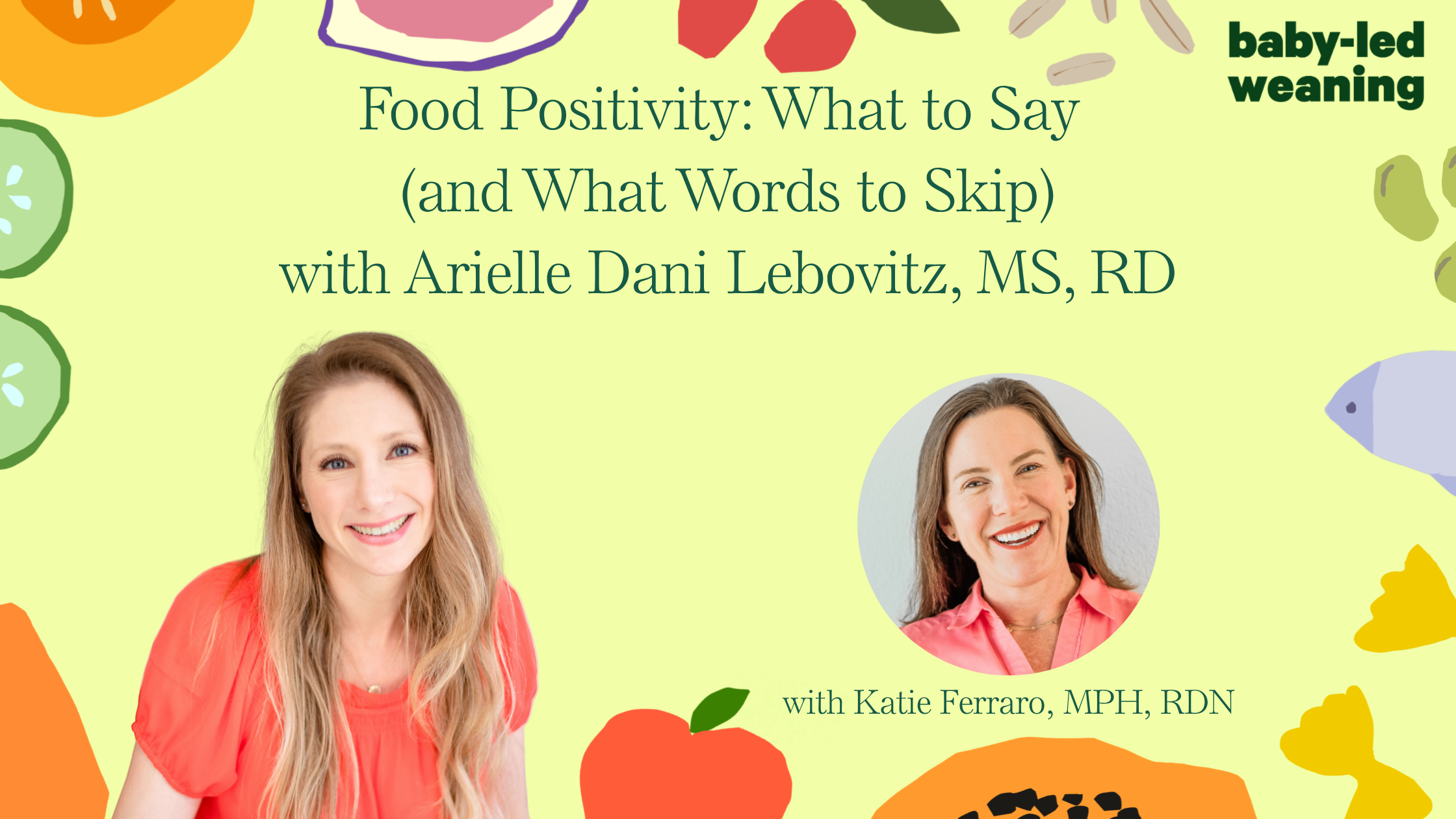
#120: Food Positivity: What to Say (and What Words to Skip) with Arielle Dani Lebovitz, MS, RD
In this episode
- What “well-meaning” mealtime phrases can accidentally add pressure (and what to say instead)
- How trust-centered feeding works when your baby barely eats (and you’re tempted to push)
- How to talk about food and bodies in a way that supports confidence, curiosity, and self-trust
Episode Description
If you’re worried about saying the wrong thing when your baby is starting solid foods, this episode is for you. In this conversation with registered dietitian and Food Positivity co-author Arielle “Dani” Lebovitz, MS, RD, you’ll learn how everyday comments (often said with love) can shape your baby’s relationship with food and their body long before they can talk.
We cover simple, real-life language swaps that reduce pressure at meals, help you build trust (even on days your baby barely eats), and set the foundation for a healthy food relationship without guilt, bribing, or battles. You’ll walk away with practical phrases to use right away and “words to skip” that quietly reinforce food shame
About the Guest
- Arielle Dani Lebovitz is a pediatric dietitian, author, and founder of Kid Food Explorers, helping families raise confident, curious, and adventurous eaters.
- She creates evidence-based resources that make food discovery fun and pressure-free for children.
- With expertise in pediatric nutrition, feeding development, and food positivity, Dani empowers parents to build healthy, lifelong relationships with food while reducing mealtime stress and picky eating challenges.
Links from this Episode
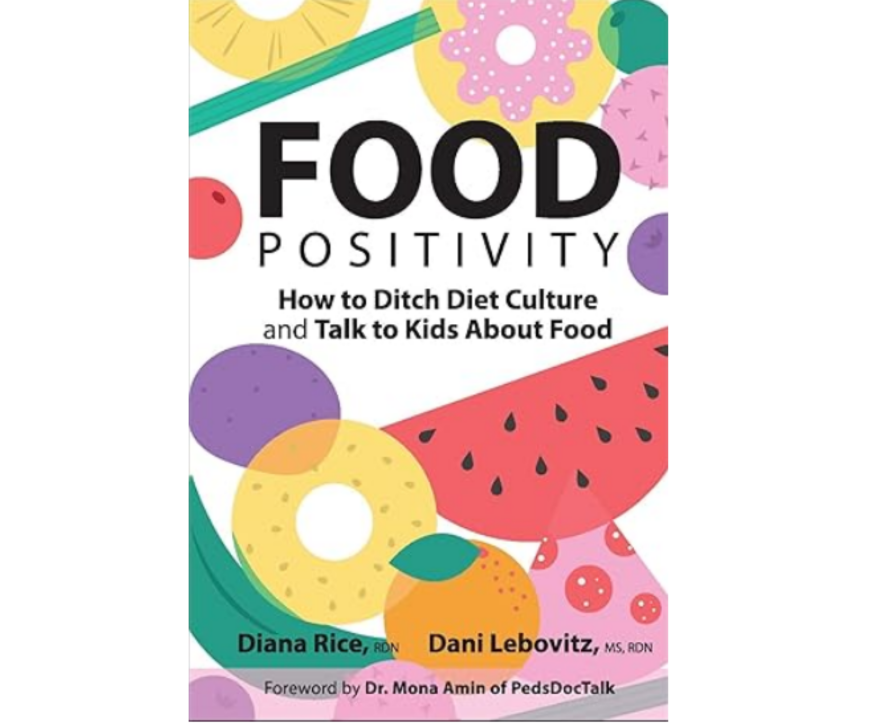
- Read Dani’s new book Food Positivity: How to Ditch Diet Culture and Talk to Kids About Food available on Amazon here (affiliate link):https://amzn.to/3S03UN9
- What to Say and Do when Feeding Kids Feels Hard scripts from Dani are available here https://kidfoodexplorers.com/freebie-food-explorer-scripts/
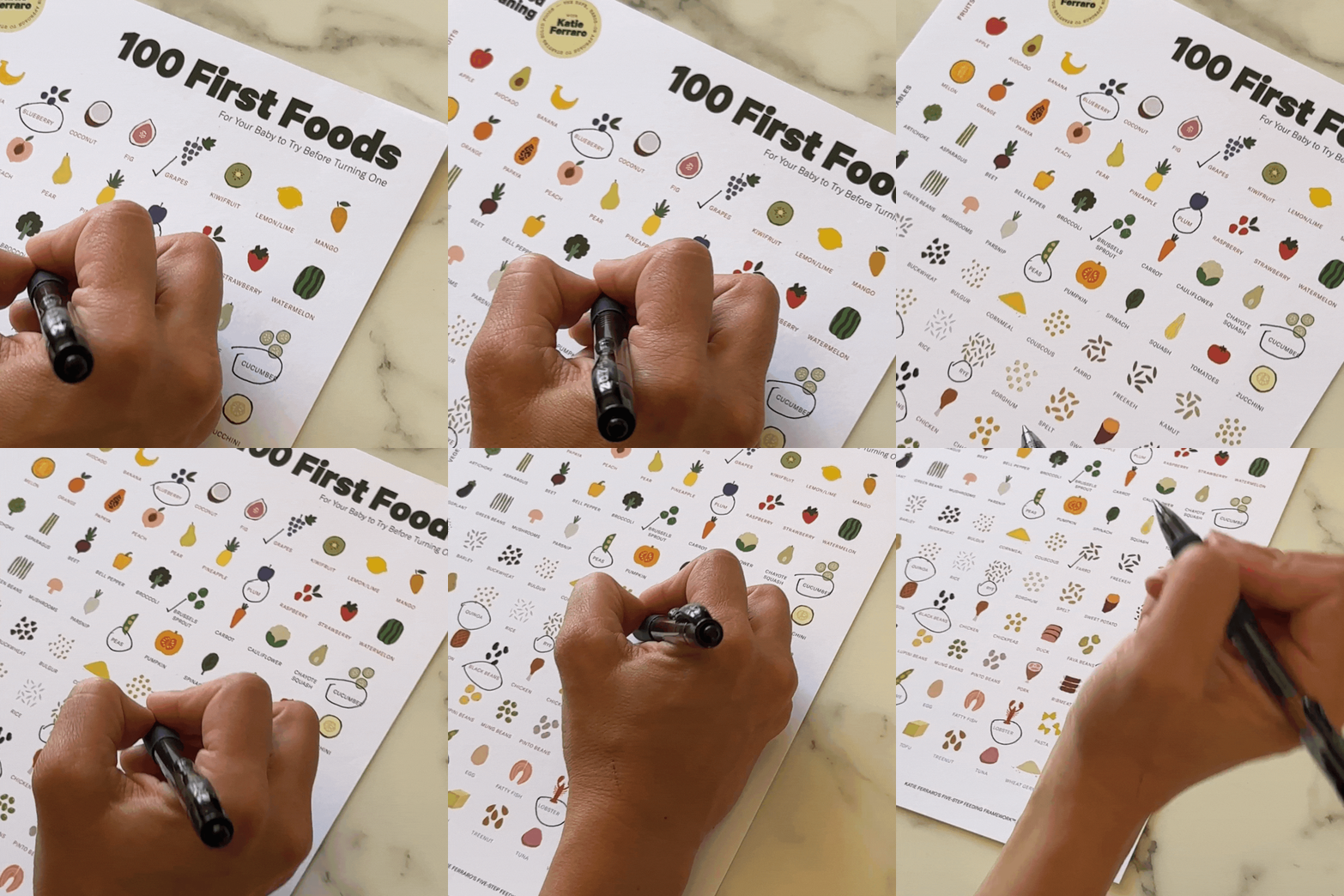
- Baby-Led Weaning with Katie Ferraro program with the 100 First Foods™ Daily Meal Plan, join here: https://babyledweaning.co/program and save $50 when you sign up using the code BLWPOD50
JOIN NOW AT $50 OFF CODE: BLWPOD50
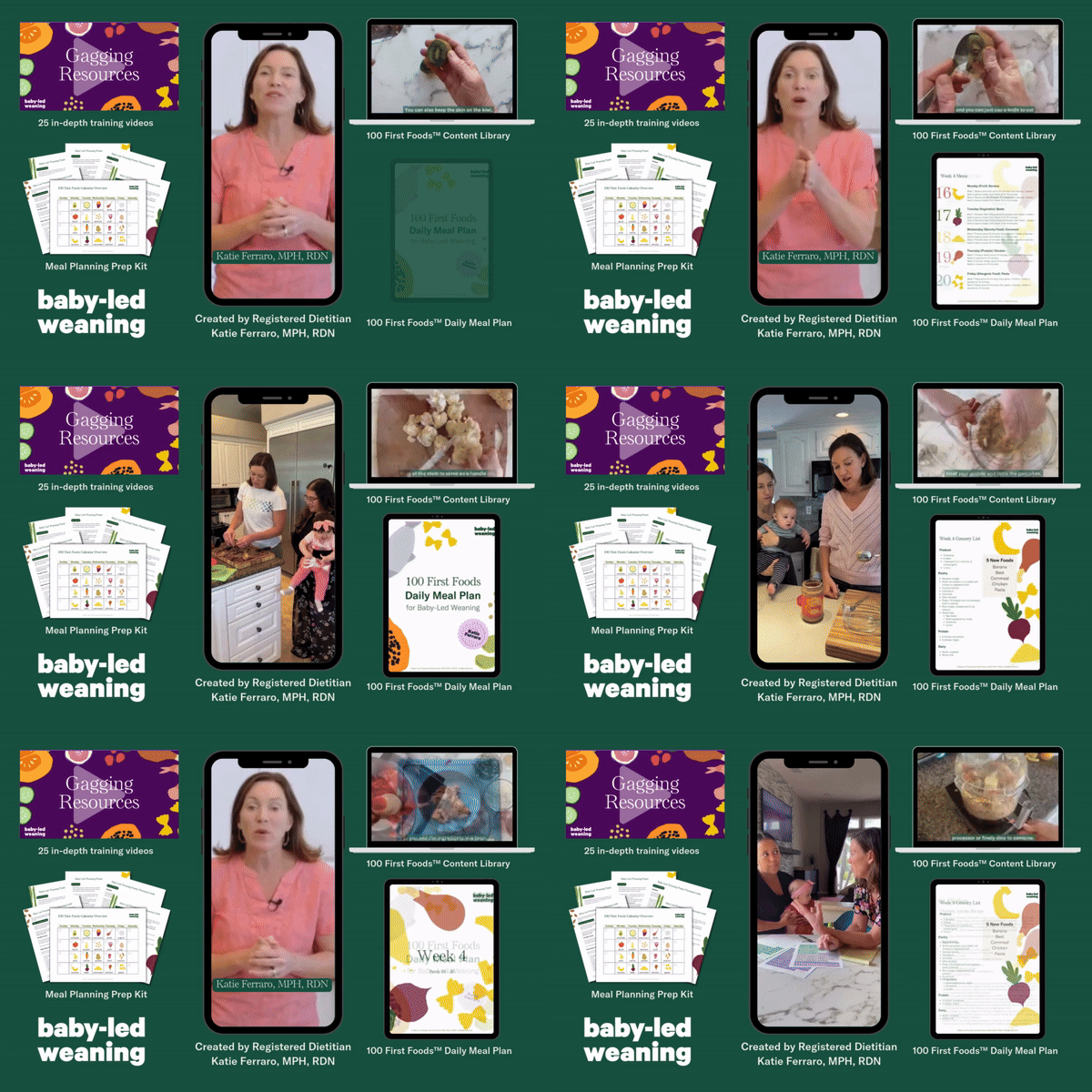
- Baby-Led Weaning for Beginners free online workshop with 100 First Foods™ list to all attendees, register here: https://babyledweaning.co/baby-led-weaning-for-beginners
Other Episodes Related to This Topic:
- Episode 72 - How to Create a Pressure-Free Feeding Environment with Jessica Setnick, MS, RD, CEDRD-S
- Episode 412 - What To Do if Your Baby Plays with Food with @kid.food.explorers Dani Lebovitz, MS, RDN
Click Here for Episode Transcript
Once Upon a Dance (0s):
This episode is sponsored by Once Upon A Dance. You know, I talk a lot here about helping your baby explore the world through food, but as your child gets older, there are so many other ways we can help them explore, imagine, and build confidence. And one of those ways is through movement. Now, I personally did not grow up doing dance myself. It wasn't a part of my childhood, but all three of my girls did dance. And I have to say it was such a formative experience for them. It wasn't just about learning steps or performing on stage. Dance helped them practice discipline, confidence, creativity, perseverance, and being part of something bigger than themselves. And that's why I love the idea behind Once Upon a Dance, these are interactive children's books that turn story time into movement time. So your child isn't just sitting and listening, they're twirling, leaping, imagining, and connecting with you through the story. Once Upon a Dance offers award-winning dance along stories created by a former dance teacher with her daughter, Ballina Kay. As a gentle guide and positive role model, the stories celebrate friendship, family, self-acceptance, empathy, practice, perseverance and kindness, all through whimsical adventures featuring things kids love, like unicorns, bats, puppies, cats and more. So whether you're listening with the baby now, or you also maybe have a toddler, a preschooler, or an older child at home who loves to move, this is such a sweet way to bring books, imagination and Activity together, swap screen time for connection, get your kids off the couch and into a story. Jump twirl and leap on over to Once Upon a Dance dot com or find Once Upon a Dance books wherever you buy books online. That's Once Upon a Dance dot com.
Whisker (1m 45s):
Today's episode is sponsored by Whisker makers of the Litter Robot, the self cleaning litter box for cat families who do not need one more gross chore on their list. Because You know how every stage of parenting comes with a whole new category of cleanup, right? First it's the pump parts and then the dirty diapers you're getting used to. And when you're starting solid foods, suddenly you're scraping sweet potato out of crevices of the highchair that you never knew existed, right? But for cat parents adding daily litter box duty on top of all of that, that is a lot. And honestly, it's the litter box part. The thing that always made me hesitate about cats, not the cat, the litter, the scooping, the smell, the whole daily maintenance situation. And that's why Litter Robot by a Whisker makes so much sense. It automatically cycles after every use. So you're not scooping every day and you're not handling waste like you would with a regular litter box. I especially love the No Contact Benefit Litter Robot handles the dirty work so that nobody in the house has to be assigned daily litter duty. And with the Whisker app, you can stay on top of things without thinking about litter all day. The app can notify you about your unit, like completed clean cycles, litter and drawer levels, or when the unit needs attention. So whether you already have a cat or you're thinking about getting one, or you just want one less household chore to manage, Whisker helps Take Litter Box duty off of your daily list, maintain your cat's litter while focusing on your family. Learn more about Whisker litter robot models and their starter kits today so that you can get set up for this busy season of parenting. Take an additional $50 off bundles with the code weaning when you shop Whisker dot com slash weaning. That's an additional $50 off bundles with code weaning at Whisker dot com slash weaning.
Arielle Dani Lebovitz (3m 40s):
Instead of adding pressure or encouraging a child to eat, one thing I like to say is simply say less. Your kids are already learning. They're already experiencing their in the moment with you.
Katie Ferraro (3m 55s):
Hey there, I'm Katie Ferraro, registered dietitian, college nutrition professor and mom of seven specializing in baby led weaning. Here on the baby led weaning with Katie Ferraro podcast. I help you strip out all of the noise and nonsense about feeding, giving you the confidence and knowledge you need to give you baby a safe start to solid foods using baby led weaning. You know that moment when your baby takes a bite of whatever food you've been preparing for them and you get so excited and you blur out, oh my gosh, yay, good job. And you're like, cheerleading the heck outta them. Well, here's the question. You think you're praising your baby, but are you actually pressuring them?
Katie Ferraro (4m 36s):
Because even the sweetest, most well-meaning comments can accidentally turn eating into a performance. And when your baby's just starting out with solid foods, the goal is not more bites or clean plates. Actually, our goal is to provide our baby a space to explore, to let their curiosity come out, to give them a comfortable, safe space where they're starting to establish trust at the table. And we can actually do this from our baby's very first bites, and that's what we're gonna be talking about with today. My friend Ariel Dani Lebovitz is here. Dani is a registered dietician. She is the co-author of a new book called Food Positivity, how to Ditch Diet Culture and Talk to Kids about Food.
Katie Ferraro (5m 20s):
Now, Danny's been on the podcast in the past because she writes these beautiful books. So she's a dietician, but she's also an author. She actually lives in Germany. She's back and forth between the United States and Germany. Her husband is US Military, she's a mom of three girls. I met her through nutrition and the baby led weaning space. She's actually stayed at my house with her kids and her dogs. She is the person I'll have, You know who, I'm not saying I am a dog person. I really actively dislike dogs before I met her. But when she came with her dogs, I was like, maybe I could get into dogs. And then she's like, Katie, do you have a dog now? I can't believe it. So I kind of credit her with turning me into a dog person. But anyway, she writes these amazing books, and so she's, she's Kids Food Explorers on Instagram. So she writes a lot about exploring with food.
Katie Ferraro (6m 1s):
So whenever parents ask me like, do I have any resources for older kids, like toddlers or school age kids that are having trouble exploring with new foods? I say, personally, no. But I always refer to Danny's books. They're absolutely beautiful. She makes workbooks and coloring books and exploring books. She's got like books, just beautiful books. And she works with this amazing illustrator whose name is Mary Navarro. So Mary did the cover of the new Food Positivity book, And I actually didn't even know that Dani was writing a Food Positivity book until I saw it on Dr. Mona Amin's Instagram. So P'S doc talk. So Dr. Mona wrote the Forward for the Food Positivity book, And I was like, Hey Dani, were you gonna tell me you're writing about Food Positivity now?
Katie Ferraro (6m 41s):
And she's like, oh my gosh, I've been under a rock developing all these frameworks for this new book that she co-authored with another dietician. So this is a little bit of a departure from some of the books that Dani historically has written, but I really enjoyed this because I sometimes feel guilty. I'm like, oh my gosh, am I like, am I doing this wrong? Especially with older kids, like am I, am I setting them up to have food issues down the road? Like I'm really comfortable feeding babies, but like with bigger kids, am I saying the wrong words? And is Dani is so good at breaking down about what Food Positivity really looks like in everyday life. She's gonna give us a few tips about what words to skip, what phrases are good to use instead, how to build a healthy relationship with food without guilt, without bribing, without battles.
Katie Ferraro (7m 26s):
If you've ever worried at mealtime like, oh my gosh, am I using the right words about food because I don't want my baby to grow up with the same food issues that I had? You are going to love this conversation. I really recommend Danny's book Food Positivity. And so with no further ado, I wanna introduce Ariel Dani Lebovitz talking about Food Positivity, What to Say and What Words to Skip. When we're talking to kids about food,
Arielle Dani Lebovitz (7m 55s):
I want parents to hear and understand this from a place of compassion because all this language and the words that we use that you might hear today that I'm hoping to help you shift, I know that it comes from a place of love and it comes from a place of worry And that we all want the very same things with our kiddos is that we want to nourish them well. We want to support our babies in the best way we know how with the tools that we had. And what I want you to understand is that babies are learning in all of those moments.
Arielle Dani Lebovitz (8m 36s):
And when you understand that they're learning and you understand that there are other tools in your tool belt, then you can help support them in a different way.
Katie Ferraro (8m 48s):
All right, Dani, how did you get interested in writing about the topic of Food Positivity? Because I'm familiar with your previous work and this is a pretty remarkable shift. I love it, but I would love to hear the backstory just real quickly.
Arielle Dani Lebovitz (9m 1s):
I actually really love that question because from an outside perspective, I can totally see why this looks or it feels like a shift, but it doesn't feel like a shift to me because all of the work that I have always been doing, the deeper work is in helping children. And it's helping children learn about food through developmentally appropriate and hands-on experiences. And what that taught me very quickly is that children are always learning about food, but not in the ways that we as adults or parents think that they're learning. And so what we need to do to bring other parents up to speed is help them understand and see how our kiddos are actually learning, learning.
Arielle Dani Lebovitz (9m 51s):
Because I think that as parents, we are always working so hard and we wanna do the quote unquote the the right thing. And I think oftentimes we, we feel confused or guilty, we're like we're, we're messing things up. And I think that so much of what feeding advice focuses on is what to feed kids
Katie Ferraro (10m 16s):
A hundred percent. Parents get so bogged down in that the what part as opposed to what actually matters, especially baby led weaning, which is letting babies learn how to eat. So could you tell me what are some of the most common well-meaning phrases that you hear parents say that accidentally create food guilt or body shame?
Arielle Dani Lebovitz (10m 34s):
Yes, there are a lot of phrases, And I like to, in the book, we refer to them as food chalk traps. So I think some of the most common we hear are like the restriction and scarcity kind of words. And that is like, finish your dinner If you want dessert or that food is junk food. And the key with what I am hoping to communicate is that what you meant and what you hoped your child took away from that is I want you to make sure that we get all the nutrients that you need before, before filling up on sweets.
Arielle Dani Lebovitz (11m 17s):
But oftentimes what kids hear is, oh, I need to eat this food in order to earn dessert. And so my favorite foods are wrong even if I love dessert. And so then the hidden takeaway becomes this feeling of guilt or shame.
Katie Ferraro (11m 38s):
So I love the idea of trust too, because I know one of the, You know, the most important guiding principles of baby led weaning is trust. And you talk in your book a lot about a trust centered approach. So could you talk a little more about what that trust centered approach looks like in real life when you're starting solid foods, especially if it's a day where your baby's hardly eating that much and you're worried like maybe they're not gonna be getting enough nutrition. How do you rely on that trust centered approach?
Arielle Dani Lebovitz (12m 4s):
I think that trust centered approach can feel really abstract and with you better than anybody else knows that with starting solids, it's not not just about the nutrition intake. In fact, the first several months is all about learning And that trust is part of that learning experience. Your baby is learning how food feels, how textures work, how to move things, just move things around in their mouth. They're learning how to swallow, they're learning their hunger and fullness cues and how you as the parent are responding to those cues. And all of tho that responsiveness, all of those things is what is broadening that trust center approach and changing what parents look at as success.
Arielle Dani Lebovitz (12m 56s):
It's not, success is not the bite swallowed. I would love actually to hear how you measure success with baby led weaning And that trust approach.
Katie Ferraro (13m 5s):
I agree with you, it's not the amount that the baby swallows and sometimes we talk about, it's the amount of time that you're allowing the baby to sit and explore with the food. So we even sometimes talk about for the parents, like letting that baby even just sit and explore with that food for 20 minutes without you touching the baby or talking to the baby If you can. And a lot of parents find that really hard.
KiwiCo (13m 23s):
Hey, we're gonna take a quick break, but I'll be right back. Last summer I had this like epiphany moment where I looked around And I realized my kids are basically doing the same three things on repeat snack, argue screens. And I remember thinking, okay, how are you supposed to make summer feel fun and adventurous without turning it into a full-time job for myself? And that's why this year I am very grateful for KiwiCo Kiwi CO's Summer Adventure series has been such a lifesaver in our house. So KiwiCo delivers kits directly to your house that are, in my opinion, a godsend because again, I don't have all day to figure out stuff that we're going to be doing. We're doing the make and play kits because they came to my house in KiwiCo said, we are, what I love is how they instantly turn into an activity that actually sticks. So we opened up one crate, the kids get absorbed, they're trying something new, they get stuck, they figure it out again without asking me and without me needing to like swoop in and fix it or figure everything out. And then they wanted to take it outside and they kept going and they're like, mom watch, mom watch. Which I'm sorry, that's like my favorite type of like, mom, mom, mom, mom, mom for the summer. I love that noise as long as they want me to watch something that they actually put together by themselves. This summer Adventure series is designed to get kids outside and exploring and away from screens. They get six hands on projects over six weeks with fun activities that go with each one. And it's super convenient because KiwiCo does the legwork for you. You can even choose to get all of the crates delivered at once, or you can have them arrive like kind of drip over a period of six weeks. So If you want to build the best summer ever, do check out KiwiCo, get $10 off your summer adventure series at KiwiCo.com/summer promo code weaning, that's K-I-W-I-C-O.com/summer promo code weaning for $10 off.
Katie Ferraro (15m 25s):
I'd like to talk about language because you have such a great way of turning the script to a positive thing. I think instead of saying, You know, I could read a book that tells me all the things not to say, like I have a tendency to default to like, don't do that. Don't throw it on the floor, don't do that. Like, but what are some simple language swaps parents can use to avoid pressure? So instead of saying one more bite or bribing them with dessert, or You know, we say don't praise your baby when they eat well, what are some things we can do to say, to actually keep the meals more positive?
Arielle Dani Lebovitz (15m 54s):
I think what you were also kind of alluding to is this positive pressure and negative pressure, and both of these types of pressure impact the way a child eats. So instead of adding pressure or encouraging a child to eat, one thing I like to say is simply say less. Your kids are already learning, they're already experiencing, they're in the moment with you. I think that as a parent, If you are just modeling enjoyment, you are talking about what you are experiencing. I have a free tool that gives you scripts to use in the moment, but really what I hope your listeners can take away is that there isn't one perfect script.
Arielle Dani Lebovitz (16m 37s):
It is acknowledging that this is a learning moment, being present with your kiddo and modeling your enjoyment. You don't have to say or encourage them to eat because they can watch. And that's the way kids, babies learn. They, they're watching, they're responsive to the things that you are showing them as well.
Katie Ferraro (16m 56s):
So what are your top words to skip when it comes to talking about bodies and appearance around kids? Like what are some better alternatives that can kind of still feel natural? Like, like what are the words that like, just like make your skin crawl when you hear other parents say them, not to make them feel judgmental, don't call anyone out, but like, just tell me what those words are.
Arielle Dani Lebovitz (17m 12s):
I first would say making any word a bad word. What I really like to think about is reframing and celebrating that diversity in all bodies and kind of identifying how amazing it is that everybody is different. So when somebody uses the word, we'll use the word fat, You know, fat is another descriptive word. The way that we use it or in context can give it power. And instead of using it as something for judgment, it could be a descriptor like, oh, I have a big fat belly. Belly. And it's not like a negative thing. So I think modeling and celebrating that diversity instead of focusing on just one word that a parent wants to avoid, I think treating yourself, your body with the kindness that you want your child to treat their own body will teach them exactly what you want them to learn.
Katie Ferraro (18m 10s):
That's beautiful. Now what about for parents who want to break the cycle, but they're carrying their own baggage around food and body image? What's one small change that they can start with today that will actually stick?
Arielle Dani Lebovitz (18m 22s):
We need to get this idea of perfection out of our minds. There's no such thing as perfect. I think we are all doing the best we can with what we've got on any given day. And If you needed to make one shift, If you heard something that you feel like, oh, I wish I, I could have done this better. After hearing this conversation, I want you to think about this repair instead of perfection. If you can acknowledge, Hey, I, I think I said something that might have hurt your feelings, get curious, ask questions, engage with them and acknowledge, validate their feelings, and talk about how you are working on making shifts to do better.
Arielle Dani Lebovitz (19m 13s):
I think that that is the most beautiful gift and thing you can do. You're not just supporting your child, you are learning alongside them and supporting them while you do
Katie Ferraro (19m 25s):
Well. Your book, Food Positivity, how to Ditch Diet, culture, and Talk to kids about Food is Available Now, where do you want our audience to go to purchase your book and to support your small business?
Arielle Dani Lebovitz (19m 35s):
They can purchase the book wherever books are sold, And that includes their favorite book sellers, so Barnes and Nobles, Amazon, Walmart, wherever you like to shop for books. And you can find all of my other books and resources at kid food explorers com.
Katie Ferraro (19m 50s):
Well, thank you so much for your time today, Dani. I love all of your resources. Just adding this to the list of like all the beautiful produced books that you have. You are amazing and I'm constantly impressed by everything you're able to put out on top of being a mom and everything else that you do. So thank you so much for your time and for bringing this book into the world for us.
Arielle Dani Lebovitz (20m 8s):
Thank you so much. I really appreciate it.
Katie Ferraro (20m 11s):
Well, I hope you guys enjoyed that interview with registered dietician Ariel Dani Lebovitz. She is the author of Food Positivity, how to Ditch Diet Culture and Talk to Kids About Food. I'll put a link to the book that she co-authored, but also she mentioned a sample scripts freebie that she has What to Say and do when feeding kids feels hard. Dani's so good at writing frameworks, at writing scripts. I also, I mentioned in the intro, but I just love all of her workbooks too, especially If you have older kids that love like drawing and workbooks, coloring books, especially if they need help kind of getting reintroduced to some of the foods. You might've fed them when they were babies, but they're not so keen on as bigger kids.
Katie Ferraro (20m 51s):
You've got to check out Dani's work. She is just so incredibly talented. I don't know how she writes all these books like she lives in Germany. Her husband currently at the time of this recording is working like 14 hour days. Her kids are home from school, she's got three girls. I'm like, how did you just like write another book? She's super mom. Anyway, it's all gonna be on the show notes page for this episode, which you can find@blwpodcast.com/120. And a special thank you to our partners at Airwave Media. If you like podcasts that feature food and science and using your brain, check out some of the podcasts from Airwave Media. We're online@blwpodcast.com. Thank you so much for listening. I'll see you next time.


THE PROGRAM
Baby-Led Weaning with Katie Ferraro
Stop guessing and get confident with the step-by-step digital guide and community that makes starting solid foods fun!
 Expert-Led, Proven Approach to Eating Real Food
 Concise Video Trainings to Master Baby-Led Weaning
 100 First Foods™ Daily Meal Plan + Food Prep Videos


FREE MASTERCLASS
Baby-Led Weaning for Beginners
Ditch adult-led spoon-feeding and raise an independent, adventurous eater...who actually loves to eat real food!
Free 1 Hour Video Training
 Taught by Katie Ferraro, Registered Dietitian
Free 100 First Foods™ List Given to All Attendees
Taught by Katie Ferraro, Registered Dietitian
Free 100 First Foods™ List Given to All Attendees